
Reviewed · CANYONING EXPERIENCES
Azores: Canyoning in Salto do Cabrito
Salto do Cabrito turns a waterfall walk into real action. This 4-hour canyoning outing on São Miguel mixes rappels, swimming spots, and optional thrills in a volcanic canyon near Ribeira Grande.
Two things I especially like: the hands-on guide attention you get at every technique, and the fact that the activity includes the full setup, from wetsuit to helmet, plus photos and videos. Most people can handle it, but you should know about the slippery, scrambly terrain and the fact that it is not a good match for certain medical limits.
In This Review
- Key highlights worth getting excited about
- Salto do Cabrito: a volcanic canyon where water does the entertaining
- Getting there from Ponta Delgada: timing that helps you stay relaxed
- What the first hour is really like: gear, briefings, and calm coaching
- The walk to the canyon start: short, scenic, and not totally effortless
- Entering the canyon: rappels, water, and the volcanic feeling of being small
- Rappels from 4 to 16 meters: how to handle the nerves without overthinking
- Zip-line and the optional 3-meter jump: thrills with a real opt-out mindset
- Do you need to swim? Comfortable in water beats swimming skill
- Fitness reality check: who will love it, and who should skip it
- What’s included for $111: value in gear, insurance, and the memory kit
- Group size and guide attention: the difference between scary and manageable
- Season changes the canyon: why your exact drops may vary
- What to pack so you enjoy the day instead of managing discomfort
- Should you book Salto do Cabrito canyoning? My decision guide
- FAQ
- How long is the Salto do Cabrito canyoning experience?
- Where is the meeting point for the tour?
- Is hotel pickup available?
- What rappel heights and optional thrills should I expect?
- Do I need to know how to swim?
- What kind of people is this activity not suitable for?
Key highlights worth getting excited about
- Waterfall rappels up to 16 meters with a guided, step-by-step approach
- Optional zip-line for extra adrenaline without forcing you to do it
- Optional jump about 3 meters that depends on local conditions
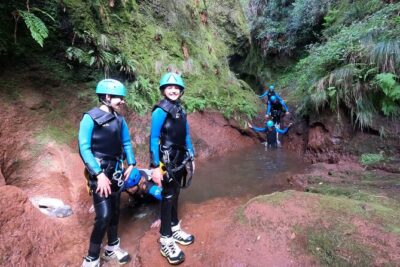
- Provided gear that fits the wet work: harness, wetsuit, socks, helmet, boots
- Small-group feel so you get help when you need it
- Photos and videos included, so you keep the proof without using your phone in the water
Salto do Cabrito: a volcanic canyon where water does the entertaining
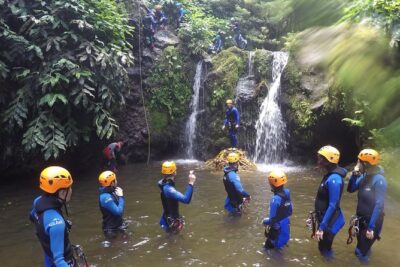
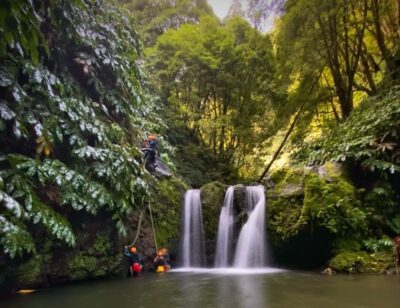
Salto do Cabrito is the kind of place Azores does best. You start at a real waterfall area near Ribeira Grande and Caldeira Velha, and then the canyon action begins as the stream cuts through a lush, volcanic setting. In other words, you are not just watching scenery, you are moving through it.
What makes this spot work so well for canyoning is the mix of short walking and repeated water challenges. You hit multiple drops, not just one dramatic moment. That keeps the day flowing, and it helps beginners build confidence because each station is its own mini goal.
And yes, the volcanic setting means the water and rocks can be changeable. Expect a fun day, but also accept that the exact moves can shift depending on seasons and local water flow.
More Portuguese streams taken downhill:
- Canyoning in Madeira Island- Level 1★ 5.0 · 1,125 reviews
- From Funchal: Intermediate (Level 2) Canyoning Adventure★ 4.9 · 1,111 reviews
- Madeira: Beginner Canyoning – Level 1★ 5.0 · 1,072 reviews
- Canyoning Experience at Ribeira Grande★ 5.0 · 965 reviews
Getting there from Ponta Delgada: timing that helps you stay relaxed
Most people base in Ponta Delgada, and the start area is about a 20-minute drive away. Pickup is optional, and it is available within Ponta Delgada city, with drop-off at the same location afterward.
You should plan on an early morning start. Approximate pickup times are:
- High season (April to October): between 8:20 and 8:40 a.m.
- Low season (November to March): between 8:50 and 9:10 a.m.
If you are driving yourself, the meeting point is the Salto do Cabrito parking lot in Ribeira Grande. The map pin is here: https://maps.app.goo.gl/APNKiJXJy6HTu3Dx6
Why timing matters: in canyoning, you want daylight and calm logistics. Starting on schedule means you are not rushing into wet gear, and you can focus on learning the techniques instead of worrying about being late.
What the first hour is really like: gear, briefings, and calm coaching
Right when you arrive, the day starts with equipment distribution and a safety briefing. This is not just a quick speech. The activity includes multiple rappels, and there are optional elements like a zip-line and jumps, so the guides have to make sure you understand how to move, how to secure yourself, and what to do when surfaces are slick.
You might be guided by experienced instructors including people like Claudio, Joao, Diogo, Ricardo, Rodrigo, and Ines. Across different groups, the common thread in how these guides work is clear: they stay patient, help you through each step, and keep you safe even if you feel nervous at first.
Then comes a new briefing with a few more instructions, and that is when your brain finally clicks into gear-on-canyon mode.
The walk to the canyon start: short, scenic, and not totally effortless
After the initial setup, you walk about 30 minutes on average to reach the canyoning site. This is not a long hike, but it is part of the experience. You are moving toward the area where the drops and waterfalls line up.
This walk can include uneven ground, and the overall activity is described as moderate to good fitness. You might deal with unstable terrain, slippery rocks, muddy slopes, and short uphill or downhill scrambles.
Practical tip: comfortable shoes matter more than you think. Even if the real action is in the water, the access part can be the moment you feel most off-balance.
Entering the canyon: rappels, water, and the volcanic feeling of being small
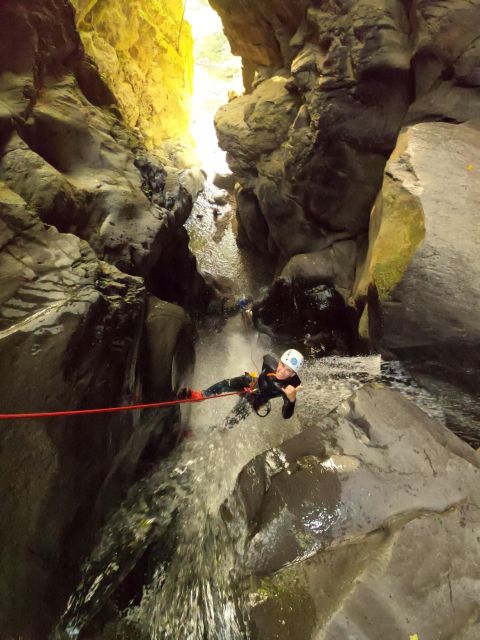
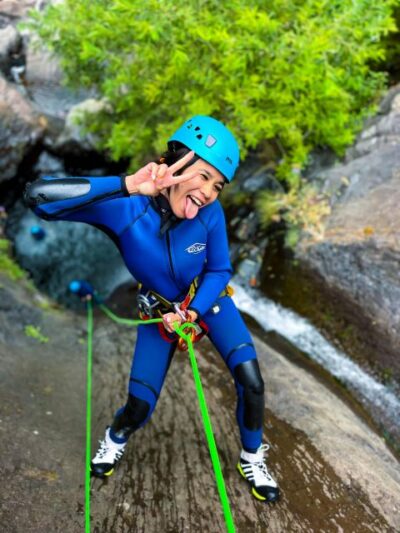
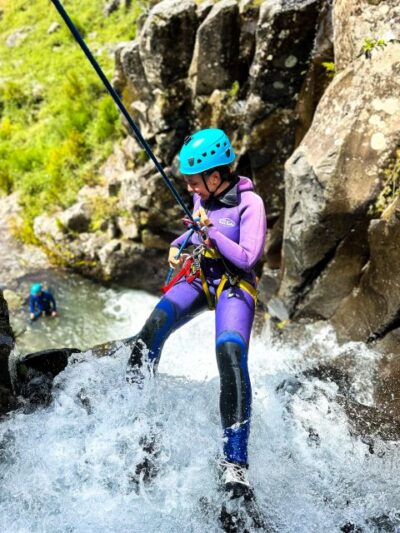
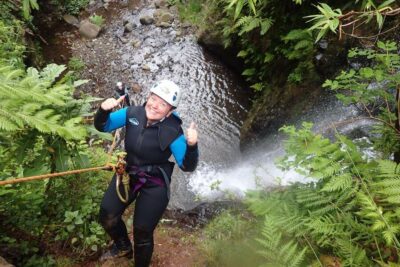
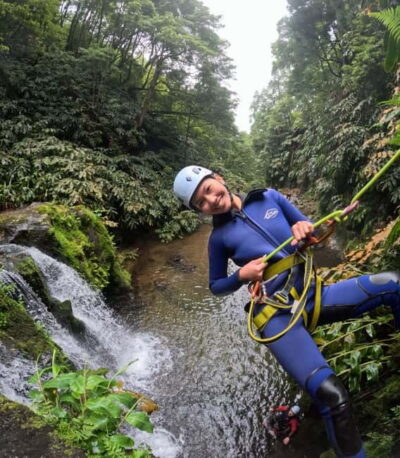
Once you reach the canyon, the descent begins. The tour moves through several waterfalls, and you can expect repeated rappels rather than a single one-and-done drop. Rappel heights range from about 4 to 16 meters, and the highest rappel is approximately 16 meters.
Here is what I like about this design for real people: you get a rhythm. You learn the basics, then you apply them again and again. Each drop is a checkpoint, so you are not stuck thinking about the biggest height the entire time.
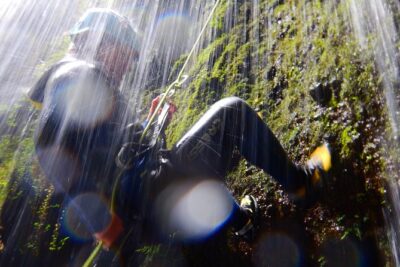
You also get a lot of scenery, because the canyon funnels you alongside green growth and volcanic rock. One standout moment described by participants is a penultimate rappel that goes through a waterfall. That is the kind of scene where your body feels the spray and your focus narrows to the technique and your footing.
More Things to Do in the Azores
Rappels from 4 to 16 meters: how to handle the nerves without overthinking
Rappeling is the core skill of this canyoning experience. You are attached to your harness system and guided through the descent steps. If you are scared of heights, you still can do this. The key is taking it one station at a time and letting the guide handle the positioning and cues.
If you have never done canyoning before, look for comfort-building tasks early in the day. People often start feeling better once they realize the guides are actively checking how they secure themselves, and that you can step back into focus if you need a breather.
Also, remember the conditions can change with season. Water flow and the exact itinerary, including which jumps or rappels are used, can vary through the year. That means the guide may adjust what you do to match the safest, best-feeling option on the day.
Zip-line and the optional 3-meter jump: thrills with a real opt-out mindset
This is where the day can jump from exciting to unforgettable.
You have an option of a zip-line, and you also have the chance to do a jump of approximately 3 meters. The important word here is optional. You do not need to force yourself. Canyoning works best when you pick the level of adrenaline that matches you that day.
What I recommend: if you are moderately nervous, start with the rappels and treat the zip-line and jump as decisions you make after you have felt the flow of the canyon. Once your body has gone through the first few techniques, it is easier to judge whether the optional parts feel fun or just risky.
The best groups create that calm space for choosing. In the experiences people describe, guides keep you supported and make it clear that opting out is normal.
Do you need to swim? Comfortable in water beats swimming skill
You do not need to know how to swim for this activity. What you do need is comfort being in the water. Let the team know if you are not comfortable, because they can adjust how they guide you through steps where you might be in and around the stream.
You should plan for wet conditions. This is why the tour includes a wetsuit, socks, helmet, and boots. You will be doing water contact during rappels, and there can be moments where you need to move along slick areas.
What to bring helps here too. Bring a towel and swimwear so you can dry off and change afterward.
Fitness reality check: who will love it, and who should skip it
This activity is not “easy,” but it is not only for extreme athletes either. The fitness guidance is moderate to good, mainly because of the terrain: slippery rocks, muddy slopes, and some short scrambles. The success factor is not raw strength, it is balance, focus, and listening.
Also, it is not recommended for:
- People with back problems
- Pregnant women
- People with mobility impairments
- People with heart problems
There are age and size limits too:
- Not suitable for children under 14
- Not suitable for children under 20 kg
- Not suitable for people under 120 cm (3 ft 9 in)
- Not suitable for people over 264 lbs (120 kg)
If you are fit, willing to get wet, and comfortable following safety cues, this is exactly the kind of outing that feels like a real story, not a background activity.
What’s included for $111: value in gear, insurance, and the memory kit
At about $111 per person, you are paying for far more than just standing next to a waterfall. The included package covers:
- Accredited guides
- All canyoning equipment (harness, wetsuits, socks, helmet, boots)
- Insurance
- Photos and videos
- Optional hotel pickup and drop-off within Ponta Delgada city
For value, the big win is not having to source rental gear. Wet equipment is specialized, and you do not want to guess on sizing when you will be moving on slippery rock. The insurance and the guided setup are also part of what keeps the experience from feeling like a DIY risk.
The photo and video inclusion is a practical bonus. You will do a lot of moving and water time, and you will not want to manage a phone. You get the record without turning your day into a juggling act.
Group size and guide attention: the difference between scary and manageable
Small groups help a lot in canyoning. With fewer people, guides can check each participant more directly and keep instructions clear.
In the kind of experiences people describe, guides consistently create a comfortable atmosphere, including for those who start out feeling out of their depth. People talk about being encouraged through stations, with patience when someone hesitates, and support when steps feel intense.
This matters because canyoning is physical and mental at the same time. You need to trust the process, not just survive it. A good guide turns a scary moment into a manageable one.
Season changes the canyon: why your exact drops may vary
Canyoning does not run on one fixed script. The itinerary, including jumps, rappels, and techniques, depends on local conditions and seasons. Terrain, the stream flow, and how water hits the rocks can change throughout the year.
That is not a downside. It is how you avoid doing a dangerous move when conditions are wrong, while still getting a fun canyon run.
If you are traveling in shoulder season, keep a flexible mindset. You might do the same style of challenge, but the order and which optional elements are active could differ.
What to pack so you enjoy the day instead of managing discomfort
Here is your practical packing list based on what the tour recommends:
- Comfortable shoes
- Towel
- Comfortable clothes
- Hair tie
- Personal medication (bring it with you)
- Reusable water bottle
- Swimwear
I also suggest you bring a small plan for after you are done: wet clothes can cool you down fast, especially on a breezy morning. A towel and quick dry option help you feel human again when you’re back near the parking lot.
Should you book Salto do Cabrito canyoning? My decision guide
Book this if you want a half-day that mixes real adrenaline with real coaching. If you like challenges and you are willing to get wet, you will likely love how the day is structured around repeated moments of success. The rappels up to 16 meters, the volcanic scenery, and optional extras like zip-line and a 3-meter jump make this feel like a full experience, not just a quick photo stop.
Skip it if any of these apply: you have back issues, heart problems, mobility limitations, you are pregnant, or you simply know that slippery, muddy terrain will stress you out more than you can handle. And if you are very short or under the specified weight and height limits, this one will not fit.
If you are the type who freezes when you feel nervous, go in with the right expectations: the guides are there to slow things down and help you through each technique. You do not need to be a daredevil. You just need to show up ready to learn.
FAQ
How long is the Salto do Cabrito canyoning experience?
The experience lasts about 4 hours.
Where is the meeting point for the tour?
You meet in the Salto do Cabrito parking lot in Ribeira Grande.
Is hotel pickup available?
Pickup is optional. It is available within Ponta Delgada city limits, and you are dropped off back at or near where you started. If you are outside that area, you need to contact in advance.
What rappel heights and optional thrills should I expect?
You can do rappels between 4 and 16 meters, with the highest rappel around 16 meters. There is also an option for a zip-line, and an optional jump of about 3 meters, depending on local conditions.
Do I need to know how to swim?
No, you do not need to know how to swim. You should be comfortable in the water, and you should tell the team if you are not.
What kind of people is this activity not suitable for?
It is not recommended for pregnant women, people with back problems, mobility impairments, or heart problems. There are also age, height, and weight restrictions listed for children and participants.
What Azores sent us most recently
- São Jorge: Island, Forest Reserve & Fajãs Guided Tour
★ 4.9 · 42 reviews - São Jorge Island Panoramic Adventure – 4 Hour Tour
★ 4.9 · 44 reviews - Faial Island: Unique boat tour to the Capelinhos volcano
★ 4.9 · 50 reviews - Sete Cidades & Lagoa do Fogo – Full-Day Tour
★ 4.9 · 56 reviews - Full Day Tour with Lunch and Local Guide Certificate
★ 5.0 · 61 reviews - Guided Buggy & Quad Adventure – Sete Cidades Volcanic Crater
★ 5.0 · 76 reviews - From Ponta Delgada: Lagoa do Fogo Half-Day Jeep Tour
★ 4.6 · 95 reviews - Lagoa do Fogo: Biologist-guided Volcano e-Tour +Hot Springs
★ 4.6 · 97 reviews
Canyoning Experiences, compared.
Browse the lists this tour appears in