
Reviewed · WHALE WATCHING
Azores Whale Watching Tour – Ponta Delgada
Whale time in Ponta Delgada comes fast. I like how this Azores cetacean outing pairs open-boat coastal searching with marine biologists who talk you through what you’re seeing. It’s one of those tours where the ocean is the main character, and you’re just along for the action.
What I really love is the trip’s focus on real sightings, not just a ride. You get a cetacean sightings guarantee, with a full refund if the boat finds no whales or dolphins, which makes the price feel less like a gamble.
My main caution is rough conditions, especially on the speedboat. Expect wind and spray, and if you’re motion sensitive, plan for that before you board.
In This Review
- Key things I’d circle on your map
- What you’re really buying in Ponta Delgada
- Meeting at Marina Pêro de Teive, and how the tour starts
- Two boat choices: catamaran comfort versus speedboat thrill
- How the route adapts once dolphins and whales show up
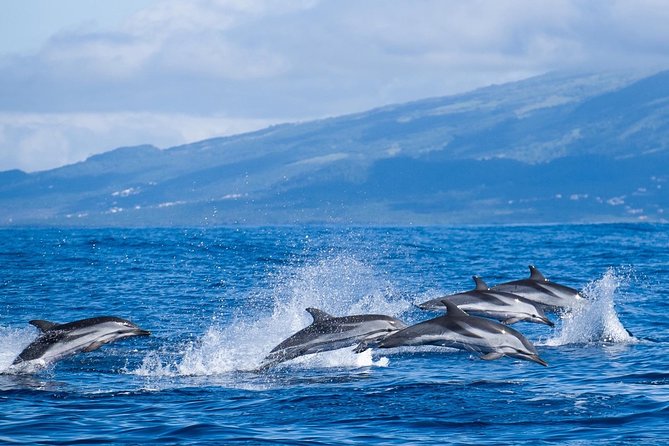
- What you might see: dolphins first, whales when the ocean cooperates
- The wildlife search experience: what the time at sea feels like
- Practical packing: wind, spray, and motion sickness
- Comfort and logistics that matter more than you’d think
- Who this tour suits best
- Should you book this Azores whale and dolphin tour from Ponta Delgada?
- FAQ
- How long is the Azores whale watching tour from Ponta Delgada?
- Are whales guaranteed on this tour?
- What boat options are available?
- Is there a toilet onboard?
- Where do I meet the tour?
- What should I do if I get sea sick?
Key things I’d circle on your map
- Guaranteed whales or dolphins: full refund if you see neither
- Two boat styles: catamaran for comfort, rigid inflatable speedboat for a closer, faster feel
- Marine biologists onboard for on-the-spot identification and conservation context
- Route adapts to sightings along southern-coast observation points
- Up to 3 hours at sea to actually give the search time it needs
- Family friendly in practice, but sea conditions can affect children’s participation
What you’re really buying in Ponta Delgada
This is an Azores whale watching tour built around a simple promise: you go out from Ponta Delgada on the Atlantic, you scan for dolphins and whales, and you learn what you’re seeing while you’re on the water. It’s not a zoo-style “look at this animal in a tank” experience. It’s more like joining a smart search team that happens to be cruising the coastline.
At $78.60 per person for roughly 2 to 3 hours, the value comes from two places. First, the tour is designed around real wildlife sightings, with the cetacean sightings guarantee tied to whales or dolphins. Second, you’re not just watching, you’re listening to marine experts who help you connect the dots between what’s in the water and what it means in the Azores ecosystem.
It also helps that this isn’t a giant cattle-boat operation. The group is capped at 75 travelers, so you get a bit more room to breathe and a better chance to hear the guide when important info comes up.
More Things to Do in the Azores
- From Ponta Delgada: Whale and Dolphin Watching Trip★ 4.7 · 4,109 reviews
- Azores: Whale Watching & Islet Boat Tour w/ Marine Biologist★ 4.7 · 2,945 reviews
- São Miguel West: Full-Day Van Tour with Lunch★ 4.9 · 1,948 reviews
- São Miguel West Full Day Tour with Setes Cidades Including Lunch★ 5.0 · 1,605 reviews
Meeting at Marina Pêro de Teive, and how the tour starts
You meet at Picos de Aventura – Animação e Lazer, located at Marina Pêro de Teive, Avenida João Bosco Mota Amaral, 9500-771 Ponta Delgada, Portugal. Plan to arrive 15 to 20 minutes early so you can check in, get your gear, and settle before the briefing.
The early part of the experience is the part people often skip mentally, but it matters. You get a 15 to 20 minute safety briefing and introduction, led by marine biologists. They cover what to expect, how to stay safe on an open boat, and what species might show up during the outing. They also talk about local conservation efforts, which makes the wildlife sightings feel more meaningful instead of just “cool, we saw something.”
If you’re using your phone for the mobile ticket, this is also where you’ll want to make sure it’s ready to show. No one wants to hunt for Wi-Fi while the boat is already rolling.
Two boat choices: catamaran comfort versus speedboat thrill
You’ll choose between two boat types depending on the trip option available: a catamaran or a rigid inflatable speedboat.
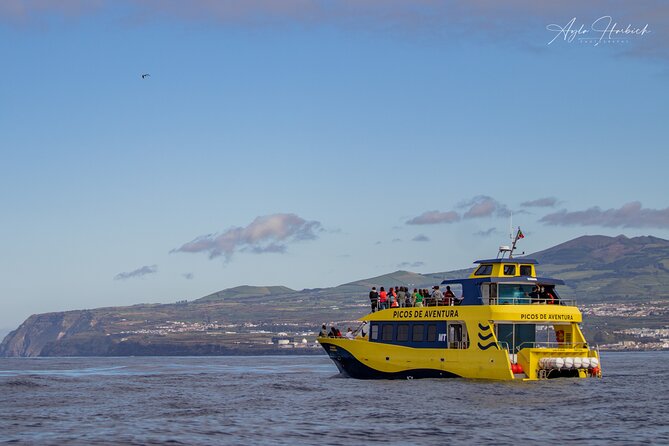
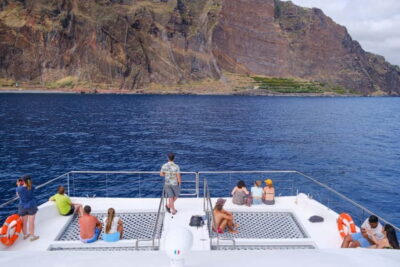
The catamaran is the steadier-feeling option. It has more space to move around and a covered cabin where you can relax out of the wind. It also includes toilets, which is a small thing until you’re 45 minutes into the ride and really appreciate a real facility. From the waterline view, you still get good sightlines, especially when you position yourself near the viewing area.
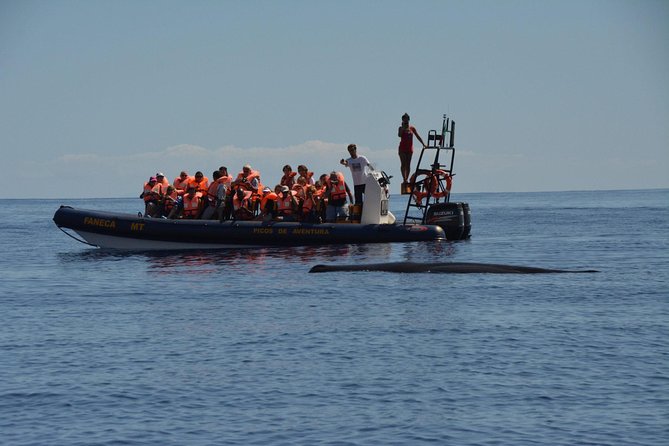
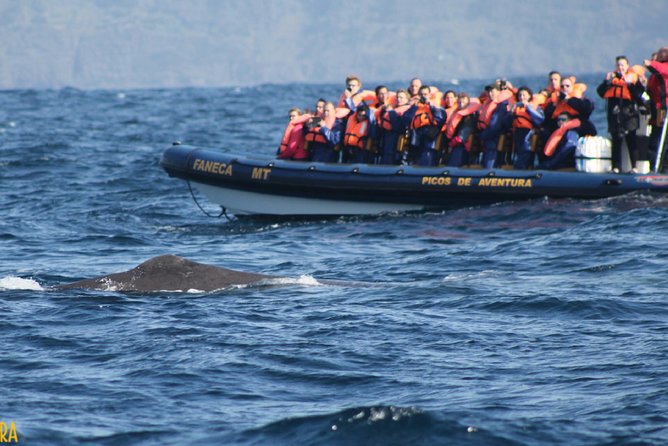
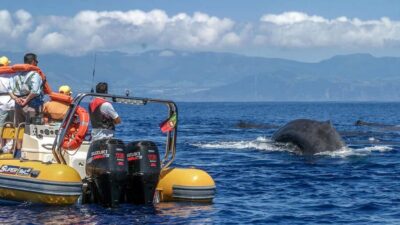
The rigid inflatable speedboat is the “hold onto your hat” choice. It’s faster, and it tends to feel more intense because you’re lower to the water and you feel more of the wave action. The trade-off is that it can feel more thrilling and close-to-the-water. The trade-off is also that it can get choppy and windy, and some people end up soaked, especially if the weather is less cooperative.
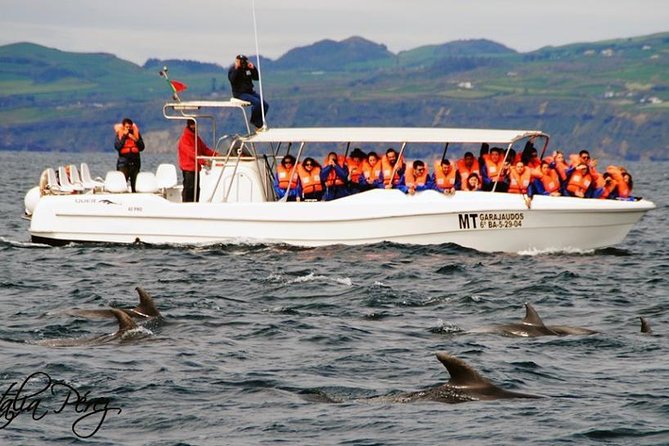
No matter which boat you’re on, you’ll be told what to wear and where to stand. If you’re on a smaller boat, a rain coat and life vest are mandatory. Even if you’re on a catamaran, bring something warm. Wind changes fast on open water, and you’ll be outside for the search.
How the route adapts once dolphins and whales show up
Here’s what makes this tour feel smart: the route varies with recent dolphin and whale activity. The crew uses a series of observation points along the southern coast, and then they adjust based on what the sea is doing that day.
Translation for you: you’re not stuck on one fixed “walk to the waterfall” style schedule. If animals are reported nearby, you have a better chance of reaching them while the window of opportunity is still open. That’s one reason the tour tends to feel efficient, even though you’ll spend a good chunk of time on the water.
This also explains why tour timing can vary slightly. The time at sea can run up to about 3 hours, and the exact locations you visit depend on where the animals are showing up.
What you might see: dolphins first, whales when the ocean cooperates
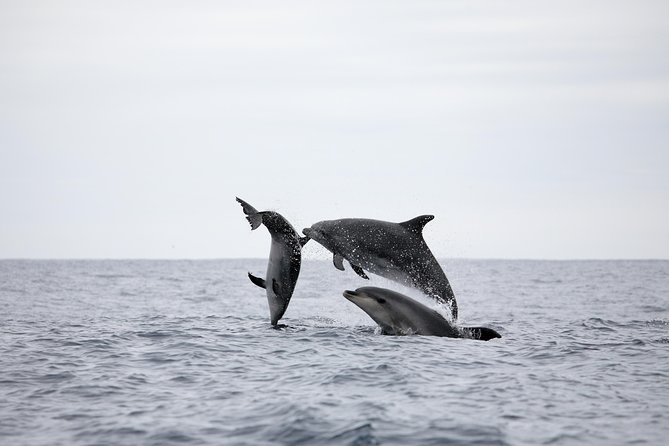
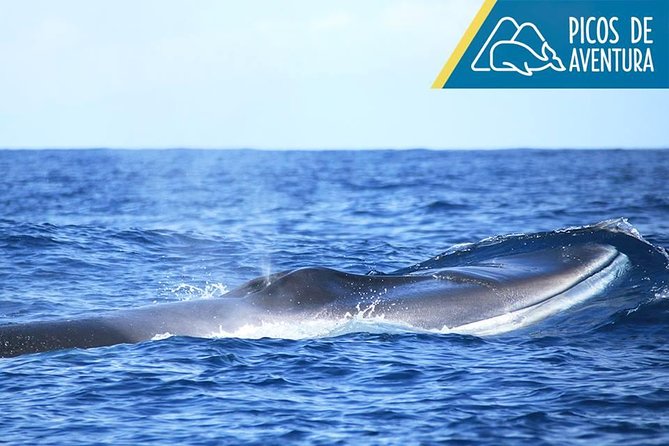
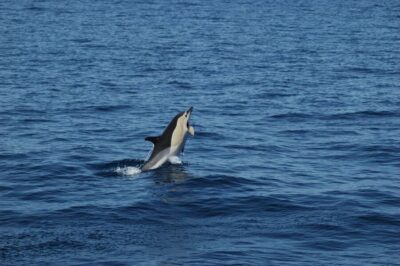
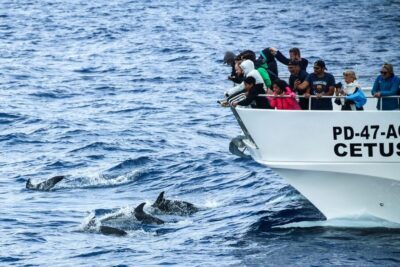
The tour is built for whales and dolphins, and it’s common to see dolphins. The expectation is scanning for dolphins like spotted dolphins and bottlenose dolphins, plus other cetaceans that travel the archipelago during migration periods. You may also encounter different whale species, and the water off the Azores can bring a wide range of sightings.
The most important thing to know is that sightings are never 100 percent predictable. That’s not the operator being vague. It’s nature being nature. Even so, the tour is set up to minimize disappointment through that whales or dolphins guarantee. If you see neither whales nor dolphins, you should qualify for a full refund.
One helpful detail from the operator’s own success-rate sharing: in August, they reported going out on 28 different days and seeing large species on 27 of those sorties. That doesn’t remove risk, but it’s a reassuring data point if you’re choosing travel dates.
When the light changes over the Azores, try these:

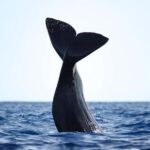

The wildlife search experience: what the time at sea feels like
You’ll spend part of the outing just getting out to the areas where cetaceans are likely. People often assume whale watching is all “spot, zoom in, take photos, done.” In reality, the ride out is part of the pacing. You’re watching too, and you’re starting to learn what to scan for before anything appears.
Once you reach a likely zone, you typically settle in and focus. That’s when the biologists’ commentary really helps, because you’re not just looking at a moving dot in the ocean. You’re learning how to interpret behavior, how to tell species apart when you get brief views, and why timing and geography matter here.
The best moments are usually when dolphins pop up repeatedly. You might see multiple dolphin species in the same outing. When whales appear, sightings can be shorter or longer depending on conditions and animal behavior, so the guides keep the group attentive and moving only when it helps you see more.
Also: the majority of the trip can be spent actually out on the water, not just traveling. So if you’re budgeting a half-day, this is one of those tours that uses your time well.
Practical packing: wind, spray, and motion sickness
This is an open-boat experience. Even on a calmer day, you’ll get wind. If there’s a breeze, it can cut through quickly.
My go-to checklist for this type of Azores outing:
- Bring a warm layer you can wear on top of clothes. A sweater matters more than you think.
- Use the included rain coat if you’re on a smaller boat, and consider it even if you’re on a catamaran. It’s not only about staying dry. It also helps block wind.
- If you get sea sick, plan ahead. A lot of people recommend taking motion sickness medication before boarding, and choosing the catamaran can feel smoother than the speedboat.
- Keep your phone and camera secure. On the speedboat, spray can happen fast, and you may end up soaked. If lockers are available onboard, use them for anything you don’t want to risk.
One more small tip: bring something you can sip and snack on if you need it. Food and drinks aren’t included, and a search can keep you out longer than you’d expect.
Comfort and logistics that matter more than you’d think
This tour has a few details that make it easier to say yes.
First, there are two boat setups, so you can match the experience to your comfort level. Want less motion and more amenities? Go catamaran. Want faster action and closer water contact? Go speedboat.
Second, the catamaran’s covered cabin and toilets are a genuine comfort win. It helps you stay focused on spotting wildlife instead of negotiating with your body.
Third, the tour ends back at the meeting point in Ponta Delgada. That makes it easy to plan lunch or a post-tour wander without stress.
Finally, the tour is offered in English and uses a mobile ticket. That’s simple and practical for a busy travel day.
Who this tour suits best
This is popular with kids, and it’s easy to see why. You’re not stuck in a classroom. You’re on the ocean, and the guides keep the experience engaging. The catch is weather. Sea conditions may limit participation for children for safety reasons, so check the forecast and be flexible with your expectations.
This tour is also a great fit if you’re:
- Doing a first Azores day and want an iconic nature experience
- Interested in learning what you’re seeing, not just ticking off animals
- Traveling with mixed comfort levels, since you can choose a catamaran if you’re sensitive to motion
If you’re the type who hates wind and rough water, I’d steer you toward the catamaran option. If you’re the type who wants speed and doesn’t mind being tossed a bit, the rigid inflatable can be a fun ride.
Should you book this Azores whale and dolphin tour from Ponta Delgada?
I think it’s a solid booking if you want a high-probability marine experience and you’re realistic about nature. The guarantee (full refund if no whales or dolphins are spotted) makes this feel safer than many wildlife tours. And the presence of marine biologists onboard gives the outing more meaning than a sightseeing cruise.
Book it if you can handle wind and open water. If you’re prone to motion sickness, choose the catamaran and take precautions early. Also consider timing. If you’re traveling during the warmer months, the operator’s own seasonal success rates suggest a stronger chance of seeing large species.
Don’t book it expecting a guaranteed whale show. Think in terms of dolphin likely, whales possible, and a guided learning experience either way.
FAQ
How long is the Azores whale watching tour from Ponta Delgada?
The trip runs about 2 to 3 hours, with time at sea depending on where wildlife is located that day.
Are whales guaranteed on this tour?
Whales are not guaranteed, but cetacean sightings are. You should receive a full refund if the tour does not spot any whales or dolphins.
What boat options are available?
You can go on either a catamaran or a rigid inflatable speedboat. The catamaran offers more space and a covered cabin, while the speedboat is faster and closer to the water.
Is there a toilet onboard?
The catamaran option includes toilets for convenience.
Where do I meet the tour?
You meet at Picos de Aventura – Animação e Lazer at Marina Pêro de Teive, Avenida João Bosco Mota Amaral, 9500-771 Ponta Delgada, Portugal. Arrive 15 to 20 minutes early.
What should I do if I get sea sick?
This can be rough on the speedboat. If you’re motion sensitive, bring medication and consider choosing the catamaran option, which tends to feel less affected by waves.
What the Azores sent us most recently
- Canyoning Experience at Ribeira Grande
★ 4.8 · 117 reviews - Vila Franca Do Campo: Introduction to Scuba Diving Tour
★ 5.0 · 117 reviews - Azores Canyoning Adventure in São Miguel – Half-day
★ 4.5 · 122 reviews - E-bike Sete Cidades- “All Mountain” bike program
★ 5.0 · 126 reviews - Ponta Delgada: Pineapple wine tasting and pineapple tour
★ 4.8 · 127 reviews - São Miguel 2-Day Tour: East & West Highlights Adventure
★ 5.0 · 130 reviews - From Angra: Terceira Island Full-Day Tour
★ 4.9 · 133 reviews - Rabo de Peixe: Sperm Whale Sanctuary Expedition
★ 4.8 · 135 reviews
Whale Watching, compared.
Whale Watching & Islet Boat Tour w/ Marine Biologist
Read our review →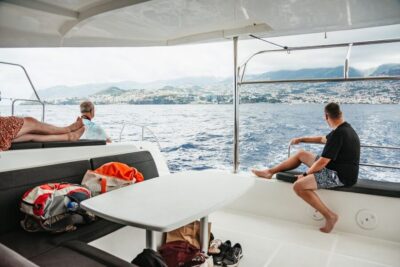
Funchal Bay: Dolphin & Whale Watch Luxury Catamaran Cruise
Read our review →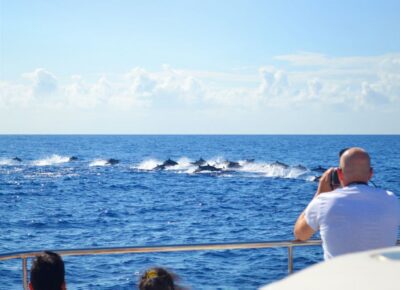
All Inclusive Whale and Dolphin Watching Luxury Tour
Read our review →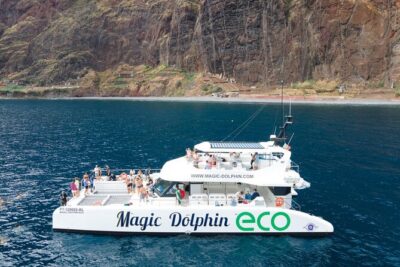
Madeira Dolphin and Whale Watching on a Ecological Catamaran
Read our review →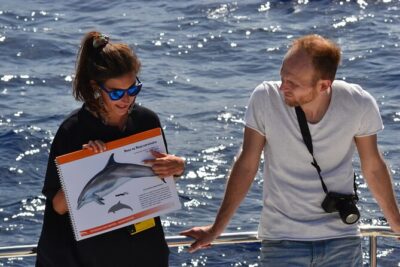
Browse the lists this tour appears in