
Reviewed · SINTRA & CASCAIS TOURS
Beginners, intermediate and advanced surf lessons
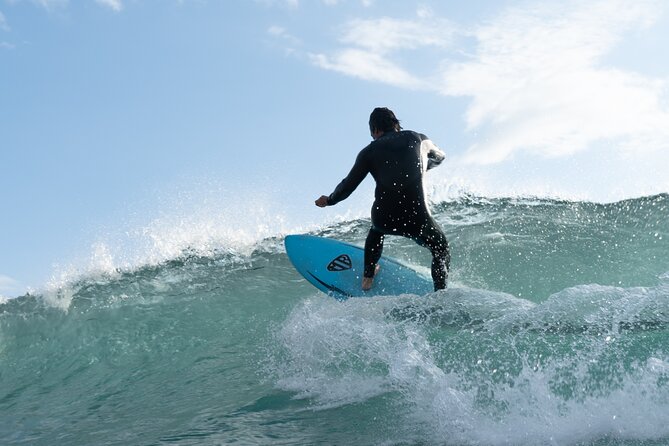
Surfing lessons in Ericeira are built to help fast. You get a 2-hour class in the Ericeira World Surfing Reserve, with technique work on land and real waves time. Two things I really like are that Billabong gear is included (suit, boards, and boots) and the teaching is aimed at real skill building for beginners through advanced surfers.
The lesson flow is practical, not just talk. You do a brief intro to surfing history, cover the safety rules, warm up, and then you put it together in the ocean for about 1 1/2 hours. One drawback to consider is simple but important: the activity needs good weather, so poor conditions can mean a date change or a full refund.
In This Review
- Key highlights I’d plan around
- Ericeira World Surfing Reserve, not just any beach break
- The 2-hour plan: land warmup, then real wave time
- Billabong gear included, so you can focus on technique
- Coaching that teaches the why, not just the what
- Beginners, intermediate, and advanced: what changes by level
- Price and value: why $66.38 can make sense
- Where to meet, what timing means, and how to plan your day
- Practical tips so you get more out of each wave
- Who should book this surf lesson
- Should you book it?
- FAQ
- What levels are included in the surf lessons?
- How long is the surf lesson, and how much time is spent in the ocean?
- What equipment is provided?
- Is the lesson taught in English?
- Where does the lesson meet?
- Are meals and drinks included?
- What if the weather is bad or I need to cancel?
Key highlights I’d plan around
- Small group size (max 6 people) keeps coaching more personal.
- 2 hours total, with about 1 1/2 hours in the water.
- All levels taught: beginner, intermediate, and advanced.
- Billabong suit, boards (pranches), and boots included so you start comfortably.
- Clear instruction plus encouragement, with praise specifically for coach Ricardo’s explanations.
- A safety-first class, including rules and how to move correctly on the board.
Ericeira World Surfing Reserve, not just any beach break
This surf lesson takes place in the Ericeira World Surfing Reserve area. That matters because you are not learning in a random spot where conditions are unpredictable and the teaching focus can get fuzzy. Instead, the setting is chosen for serious surf learning, so the instruction can stay grounded in what you actually need in the water.
Also, Ericeira is known for surf culture, and that shows in how the lesson is structured. You do more than paddle out and hope for the best. Before you ride, you learn what to do with your body, how to stand correctly, and how to think about safety first. That makes the whole session feel like it has a plan, even if waves do what waves do.
Finally, the class is offered in English, which makes it easier to absorb the coaching and ask questions. If you’ve ever been stuck guessing what a surf instructor is telling you, this setup saves time and stress.
More of Sintra’s hills and the Cascais shore:
- Surf Experience in Cascais★ 5.0 · 423 reviews
- Cascais: Sunset Boat Trip with Welcome Drinks★ 4.7 · 248 reviews
- Lisbon: Sintra Private Day Trip with Pena Palace & Wine Tasting★ 5.0 · 226 reviews
- Cascais: Dolphin Watching Speedboat Tour★ 4.9 · 156 reviews
The 2-hour plan: land warmup, then real wave time
The schedule is clear and it uses your time well. Plan for an experience that runs about 2 hours total, including a longer ocean session.
Here’s what the session looks like, in the order you’ll experience it:
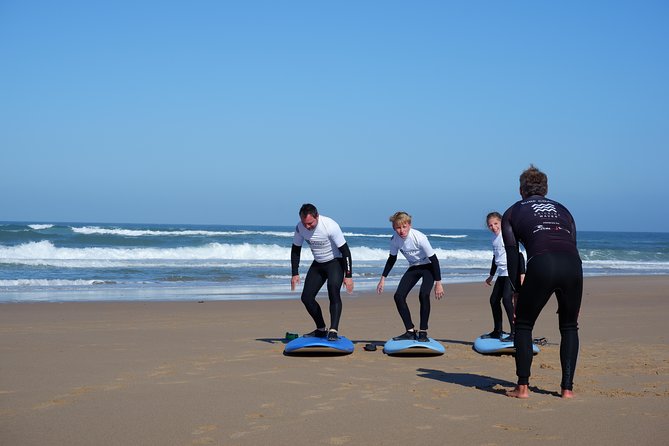
First comes a brief presentation. You get some context on surfing, including a short history segment. It’s not there to win a trivia contest. It helps you understand the culture and the basics of how surf technique evolved, which can make the rest of the lesson feel more meaningful.
Next is the setup stage. You go over the material you’ll use, then the safety rules. This part is key, especially for beginners. Surf has real hazards, from board control to timing and other surfers in the water. When the rules are explained early, you’re less likely to panic later.
Then you learn the movements to stand on the board correctly. That is usually the biggest gap between watching surfers and actually riding. Standing isn’t just about “getting up.” You learn the body sequence and the mechanics so it feels repeatable, not like random luck.
After that, there’s a warmup. Think of it as bridging land skills to ocean action. It helps you loosen up, practice the motions your instructor just taught, and get your legs ready for the moment you’re balancing on a moving board.
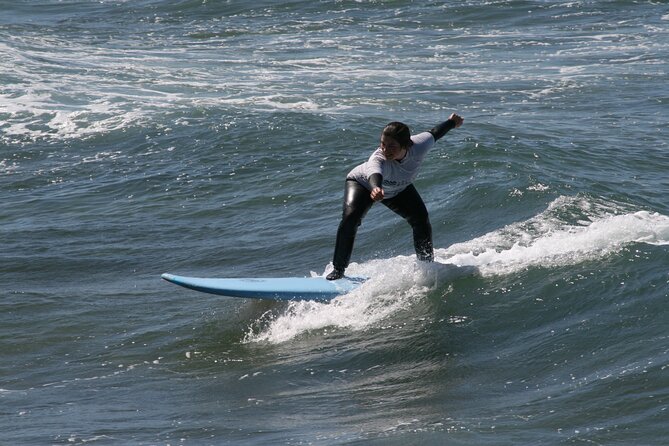
Finally, you get ocean practice for about 1 1/2 hours. This is where the lesson earns its keep. You’ll apply what you learned, with coaching aimed at turning those steps into instincts.
A small detail I appreciate is that the class is designed so even advanced surfers are still doing structured technique and not just free surf. The goal stays consistent: better control, better wave reading, and improved form.
Billabong gear included, so you can focus on technique
One reason this lesson feels like good value is what comes in the box. You get Billabong surfing gear: a surfing suit, boards (pranches), and boots. That means you don’t have to show up worrying about whether you’ll find equipment at the last minute, whether it fits, or whether it’s the right type for learning.
It also helps with comfort. Surfing with the wrong setup is exhausting. If you’re cold or uncomfortable, your technique collapses. Getting the suit and boots included gives you a better chance to stay focused during warmup and while you’re repeating the stand-up steps.
The board (the prancha) is equally important. Beginner surfboards typically have features that help you catch waves sooner and with less struggle. You might not get a “choice” based on personal preference, since the lesson includes the equipment. But for learning, that usually works in your favor.
And because the instruction is paired with the gear you’re using, you’re not guessing how the technique translates to the board in front of you. The lesson stays connected from land coaching to ocean performance.
Coaching that teaches the why, not just the what
A big part of what makes this lesson work is the teaching approach. The class includes a safety-first briefing and then builds toward standing technique. That progression matters because it reduces common beginner mistakes. You’ll spend less time “figuring it out” and more time practicing correct movement.
In the positive feedback, coach Ricardo is singled out for explaining clearly and encouraging students. That kind of communication is more than nice. When you’re trying something that feels awkward, you need calm coaching and specific corrections. You also need motivation, especially when a first attempt doesn’t work.
One thing I find helpful is that the lesson blends structure with encouragement. You are not just being told what to do, you are also guided through how to do it. That reduces frustration when waves shift and you don’t get the result instantly.
The small-group format supports this. With a maximum of 6 people, your instructor can keep an eye on form and respond without turning the class into a conveyor belt.
Beginners, intermediate, and advanced: what changes by level
This is one of those “all levels” lessons that does not feel like a one-size-fits-all training session. The course is designed for beginners, intermediate, and advanced surfers, which means the instruction can adjust based on where you are now.
For beginners, the class focus naturally leans toward basics:
- standing movements that feel correct and repeatable
- safety rules and wave etiquette
- warmup and getting comfortable with paddling and board control
For intermediates, you can expect more refinement. Even if the overall structure stays the same, intermediate coaching often means correcting balance and improving the timing of your pop-up. It can also mean practicing better positioning so you spend more energy on riding and less on scrambling.
For advanced surfers, the same foundation still matters. You’ll likely spend less time on “how to stand” and more time on technique details and board control. Even advanced surfers benefit from a structured reminder of safety rules and movement mechanics, because those details are what keep sessions productive instead of chaotic.
If you fall between levels, don’t overthink it. The lesson is built to teach technique with the goal of better control, regardless of your current skill.
More Atlantic whitewater to learn in:
Price and value: why $66.38 can make sense
At $66.38 per person for about 2 hours, this surf lesson is priced like a serious activity, not a casual try-out. The value comes from what’s included and how the time is used.
Here’s what you get for your money:
- 2 hours total of instruction and coaching
- about 1 1/2 hours in the ocean
- Billabong suit, boards (pranches), and boots
- an air-conditioned vehicle
- instruction in English
- small groups, up to 6 people
When gear is included, it reduces hidden costs. Surf lessons that don’t provide equipment often force you to rent something on top of the lesson fee, or they make you show up with your own kit and hope it fits well. Here, the lesson is set up so you can start learning immediately.
The air-conditioned vehicle also adds comfort. Even when the ocean is the main attraction, getting to and from the water area can be part of how enjoyable the day feels.
One cost item to note: meals and drinks are not included. If you plan your day, add time for a snack or meal before or after so you don’t end up hungry while you’re trying to focus on technique.
If you’re booking in advance, that also helps. This activity is often reserved about 21 days ahead on average, so booking sooner tends to give you more time options.
Where to meet, what timing means, and how to plan your day
Your meeting point is listed as Estacionamento Praia de Ribeira d’Ilhas, 2655-319 Ericeira, Portugal. The activity ends back at the same meeting point.
Opening hours run from 8:00 AM to 9:00 PM, Monday through Sunday. That flexibility matters because surf conditions can vary, and the operator can choose the safest, best timing based on the day.
Also, the lesson requires moderate physical fitness. That’s pretty standard for surfing, but it’s worth taking seriously. You’ll be paddling, getting up, and repeating movements. If you have mobility limits or any medical concerns, it’s smart to check with the provider before booking.
Finally, a quick reality check: this lesson depends on good weather. If conditions are poor, you may be offered a different date or a full refund. That means you should keep your schedule flexible, especially if you’re traveling in a season where conditions can swing.
Practical tips so you get more out of each wave
You’ll learn the standing technique and safety rules, but your mindset still matters. Here are a few practical ways to make the session click faster.
- Listen early, especially during safety rules. It’s not “just protocol,” it’s how you avoid the annoying moments that derail learning.
- Treat warmup as part of the lesson, not a break. If you do the warmup movements with intent, your first attempts in the ocean tend to feel more natural.
- Aim for good form over speed. The instructor is teaching movements for a reason, and rushing usually makes you wobble more.
- Stay mentally calm when you wipe out. Surf has a learning curve. If you can keep breathing and reset quickly, you’ll get more attempts in the water, and that leads to faster progress.
Also, because the group is small, you can ask questions. If you don’t understand what your instructor means by a movement cue, ask right away. That is how you turn coaching into results.
Who should book this surf lesson
This is a strong match if you:
- are a beginner who wants clear instruction and equipment included
- are intermediate and want structured technique practice in a small group
- are an advanced surfer who still values safety coaching and mechanics-focused reminders
- want an English-speaking instructor and a lesson that doesn’t waste time
- prefer a more personal class size, since the group is capped at 6 people
It might be less ideal if:
- you want a super long surf session, because the core ocean time is about 1 1/2 hours within a 2-hour total experience
- you can’t be flexible with weather-related changes
Should you book it?
If you want surf progress that feels guided and efficient, I’d book this. The best part is the structure: warmup, technique work on land, safety rules, then a meaningful chunk of time in the water. Add included Billabong gear and the small-group format, and the $66.38 price starts to look fair, not inflated.
If you’re choosing between a cheaper lesson and this one, think about what you’d be paying for equipment and how much time you’d lose figuring things out on the day. This lesson is set up so you can start learning quickly and stay focused on what actually changes your surfing.
Just plan for weather. If the forecast is poor, the operator will adjust, and you’ll either get a new date or a full refund. If you can handle that scheduling wiggle, you’re in good shape.
FAQ
What levels are included in the surf lessons?
The lesson is offered for beginners, intermediate surfers, and advanced surfers.
How long is the surf lesson, and how much time is spent in the ocean?
The total duration is about 2 hours, with approximately 1 1/2 hours spent practicing in the ocean.
What equipment is provided?
You’ll receive Billabong surfing suits, boards (pranches), and boots.
Is the lesson taught in English?
Yes, the lesson is offered in English.
Where does the lesson meet?
The start meeting point is Estacionamento Praia de Ribeira d’Ilhas, 2655-319 Ericeira, Portugal, and the activity ends back at the meeting point.
Are meals and drinks included?
No, meals and drinks are not included.
What if the weather is bad or I need to cancel?
The activity requires good weather. If it’s canceled due to poor weather, you’ll be offered a different date or a full refund. You can cancel for a full refund up to 24 hours before the experience starts.
More Workshops in Cascais
- Surf Lesson on Praia de Carcavelos
★ 5.0 · 84 reviews - Your First Surf Class!
★ 5.0 · 53 reviews - Lisbon: Pastel de Nata Baking Class
★ 4.9 · 2,106 reviews
What Cascais sent us most recently
- Cascais: Glamour and Decay by The Lisbon Coastline – Private Tour
★ 5.0 · 44 reviews - Cascais Private Sailing 2h Cruise with a drink
★ 5.0 · 48 reviews - Your First Surf Class!
★ 5.0 · 53 reviews - Relaxed E-bike in the backroads of Cascais and Sintra
★ 5.0 · 62 reviews - Lisbon: E-bike Trip from the Sintra Mountains to Cascais Sea
★ 5.0 · 67 reviews - Open-Water Swimming in Cascais
★ 5.0 · 72 reviews - Surf Lesson on Praia de Carcavelos
★ 5.0 · 84 reviews - Cascais Deep-Sea Fishing Trip
★ 4.9 · 94 reviews
Sintra & Cascais Tours, compared.

Sintra, Pena, Regaleira, Cabo da Roca & Cascais
Read our review →

Sintra, Pena, Regaleira, Cabo da Roca, and Cascais
Read our review →
Sintra and Cascais Small-Group Day Trip from Lisbon
Read our review →
Sintra, Pena, Regaleira, Cabo Roca Coast & Cascais
Read our review →
Sintra, Pena, Cabo da Roca, Cascais Tour with Pickup
Read our review →

Small Group Tour to Sintra, Pena Palace, Cabo Roca and Cascais
Read our review →Browse the lists this tour appears in