
Reviewed · TUK-TUKS
Expert Plus Lisbon Tour with Local Guide in Private Eco Tuk Tuk
Lisbon moves fast, but your legs do not have to. This private, 100% electric eco tuk tuk tour gives you a focused route through major sights, with photo stops planned so you spend more time looking and less time figuring out streets.
I especially like the limited-walking plan, because Lisbon is steep and cobbled, and hills can eat up a whole day. Guides I saw highlighted, like Vitor, Sylvia, Lionel, and Diniz, are praised for clear English, friendly pacing, and taking good photo moments along the way. The main drawback is that it is still a guided route with preset stops, so you can’t swap in your own must-sees on the fly.
In This Review
- Key highlights you should care about
- Electric Tuk Tuk Lisbon: The limited-walking smart choice
- A practical heads-up on the trade-offs
- Tagus River views and 25th April Bridge from the best seat in town
- Pastéis de Belém: real-deal custard tarts, minus the long wait
- Jerónimos Monastery: Manueline architecture you can actually appreciate
- Belém Tower Garden and the Portuguese empire vibe
- Monument to the Discoveries: built for anniversaries, set for reflection
- A museum moment by the river, then back into town
- Cais do Sodré to Chiado: nightlife streets and old Lisbon culture
- Bairro Alto and Baixa: get your bearings fast
- Sé de Lisboa and the Alfama viewpoints that make you stop and stare
- Graça and São Vicente de Fora: local Lisbon in less tourist mode
- Praça do Comércio: the river square that ties everything together
- Price and value: when this private tour makes sense
- Who should book this, and who might prefer another plan
- Final verdict: should you book this eco tuk tuk?
- FAQ
- How long is the tour?
- Is this tour private?
- Is the tuk tuk electric?
- Are tickets included for Jerónimos Monastery and Belém Tower?
- Do I get pickup if I’m arriving by cruise ship?
- What are the age and weight rules?
Key highlights you should care about
- Electric tuk tuk comfort for steep neighborhoods, with drivers who help you get on
- Skip-the-line comfort at Pastéis de Belém, so you get the pastry without the long wait
- Belém World Heritage sights in a tight schedule, with Manueline architecture at Jerónimos
- Planned photo stops along the Tagus River and viewpoints, including Largo das Portas do Sol
- Private by default: only your group rides, with a fixed maximum of 4 passengers per tuk tuk
- Flexible tour length from 1 to 4 hours, with the route adjusted to match your time
Electric Tuk Tuk Lisbon: The limited-walking smart choice
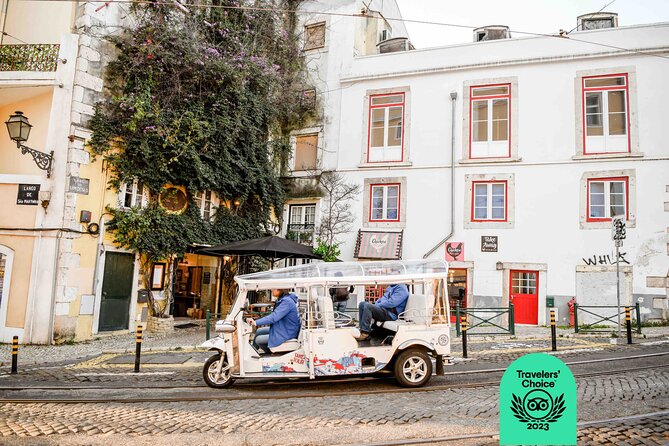
If Lisbon is your first stop in Portugal, you probably want the big picture fast. That’s where an electric tuk tuk tour shines. You get lifted above the stress of steep stairs and long uphill drags, while your guide handles the turns, the timing, and the best angles for photos.
This one is private, with a vehicle for your group only. The tuk tuks are electric and designed for comfort, and the included blankets and protective covers are there for the weather side of Lisbon, which can shift quickly. (Even if you come in perfect sunshine, you’ll still feel better with a layer handy.)
Also, it starts without queues or waiting times. That matters because Lisbon attractions often run on tight timetables, and you do not want to lose your prime energy hours to lines.
More Private Tours in Lisbon
- True 4Hour Private Tuk Tuk Tour: Discover Lisbon with a Local!★ 5.0 · 8,008 reviews
- Lisbon: Private Guided Tuk-Tuk Tour with Hotel Pickup★ 4.9 · 4,552 reviews
- Private Lisbon Sightseeing Tuk-Tuk Tour: Alfama, Belém & More★ 5.0 · 4,277 reviews
- Lisbon Highlights: Private Tuk Tuk Tour Adventure Sightseeing★ 5.0 · 3,284 reviews
A practical heads-up on the trade-offs
It’s not a flexible open-ended taxi tour. You follow a route with preset stops, and photo stops are part of the plan. If you want to wander freely for hours, you might find this format a bit structured.
Tagus River views and 25th April Bridge from the best seat in town
The tour gets rolling along the Tagus River, with views of the 25th April Bridge. It’s a suspension bridge painted that recognizable reddish tone, and it’s often compared to San Francisco’s Golden Gate Bridge because of the similar bridge style and color.
From the tuk tuk, the view hits in a satisfying way, not just as a background photo. You get the big river context, which helps when you later walk (or look) around Belém, the port area, and the monuments connected to Portuguese voyages.
Expect a steady mix of movement and brief stops. You are not stuck in one spot for ages. You’re being oriented.
Pastéis de Belém: real-deal custard tarts, minus the long wait
Pastéis de Belém is one of those places where everyone has heard the hype. Here’s what you actually get: you stop at the birthplace of the original custard tart style, made since 1837 by monks connected to the Hieronymites Monastery. The pastry shop is famous enough that lines can get long, which is why the stop includes skipping the long line.
This is also where the tour earns an immediate win for first-time visitors. You spend your limited time on the experience, not the queue.
A detail worth knowing: the custard tart connection is not just branding. The idea is that the tart you’re eating comes from a religious community tradition and later inspired the broader family of custard pastries you’ll see across Portugal, including Pastéis de Nata.
If you want the strongest first bite, go in with your expectations tuned: this is a pastry stop, not a sit-down meal. Bring water if you’re doing multiple stops back-to-back.
Jerónimos Monastery: Manueline architecture you can actually appreciate
Next up is Mosteiro dos Jerónimos, often called Jerónimos Monastery. This is where you see Manueline architecture, a style that feels ornate without being random. It’s tied to Lisbon’s Age of Discovery, because the monastery sits close to the harbor where Portuguese navigators prepared for major voyages.
Construction began in 1501 and took about 100 years to complete. It was classified as a UNESCO World Heritage Site in 1983, which is your clue that this is not just pretty buildings. It’s a major historical landmark.
One key point for your planning: admission to the monastery is not included. The tour stop is short, which works if you mainly want the exterior, the setting, and the feel of the place. If you want more time inside, you can, but you’ll likely need additional ticket time that’s not part of the included experience.
In practice, this stop is most satisfying when you treat it as a focused “see it well from the outside and absorb the details” moment, then decide if you want to return later for a longer interior visit.
More Tuk Tuk Tours in Lisbon



Belém Tower Garden and the Portuguese empire vibe

Belém Tower is one of those landmarks that instantly tells you what period of history you are looking at. The tour stops around the Belém Tower Garden, and you get a sense of how the fortification worked as both a fortress and a ceremonial gateway.
The tower is a 16th-century fortification, and it connects to the era when Portugal was building an overseas empire. That bigger story matters because the sights around Belém can otherwise feel like separate monuments. When you have the Tagus river, the harbor context, and the voyage-era explanations from your guide, everything starts to click.
Admission ticket is not included here either. So again, think of it as a strong “see it, photograph it, understand it” stop. If you want to go inside or linger for architecture study, plan for a separate visit day or add time on your own.
Monument to the Discoveries: built for anniversaries, set for reflection
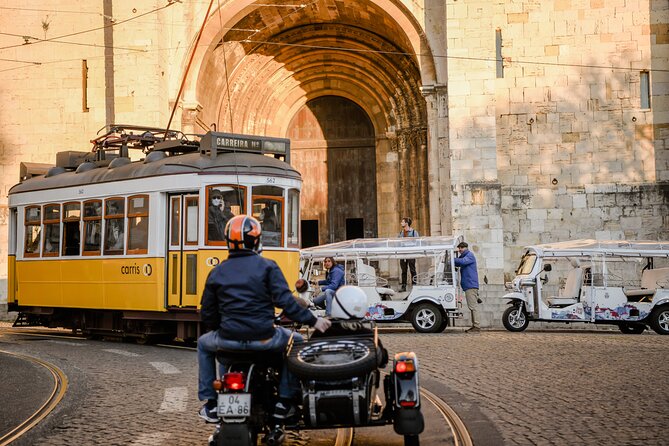
Along the river you’ll also see the Monument to the Discoveries. This one highlights ships leaving for trade and exploration, especially toward India and the Orient. The monument was built between November 1958 and January 1960 to celebrate the fifth centennial anniversary related to Infante Henry the Navigator.
It’s a little jarring in a good way. You expect ancient history, but the monument itself is modern, meaning it’s a later national storytelling project. That can help you read Lisbon in layers, not as a single timeline.
The stop is brief, and admission is not included, so prioritize photos and a quick read of the figures and symbolism. Then get moving.
A museum moment by the river, then back into town

After the main Belém cluster, the tour route can include a stop connected to the Museum of Art, Architecture and Technology. The building described is wave-like, and the site includes a thermoelectric power station nearby.
The big practical value here is orientation. You start to see how Lisbon’s waterfront evolved from working harbor to heritage zone to modern cultural spaces. Even if you do not plan to go in, having the visual link helps.
From there, the route shifts toward central Lisbon neighborhoods where the pace stays quick but the context is what you’re really collecting.
Cais do Sodré to Chiado: nightlife streets and old Lisbon culture
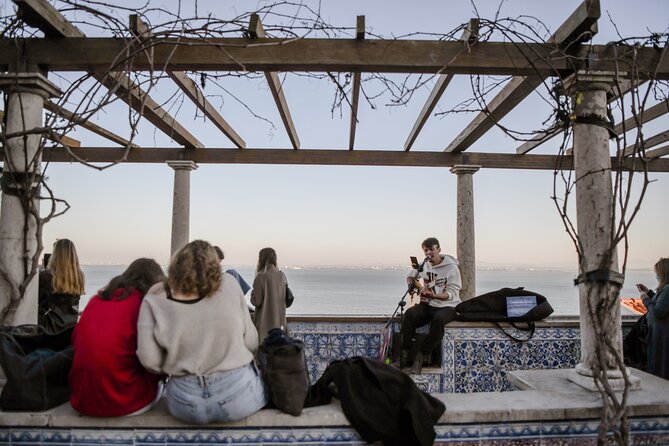
In the Cais do Sodré area, you get a riverside neighborhood feel. It’s known for nightlife and restaurants, and the 19th-century Ribeira Market is often the hub, with food stalls mixing international dishes and local specialties.
You’ll also pass Pink Street, where fado bars cluster. The vibe is different from Belém, and that’s the point. Your guide can stitch the story together: Lisbon is not one mood. It changes street by street.
Then you reach Chiado, the classic center area between Baixa and Bairro Alto. Here you find cultural institutions and famous landmarks like Café A Brasileira and Livraria Bertrand. The tour keeps the stop format practical: quick highlights and photo windows, not long lecture marathons.
If you’re the kind of traveler who likes a neighborhood overview before choosing where to return for dinner, this part is a strong use of your time.
Bairro Alto and Baixa: get your bearings fast
Bairro Alto is known for steep, narrow streets and late-night energy, but the day-to-evening contrast is part of its charm. Even with limited time, you can see why it became a hub for bars, fado venues, and late cafes.
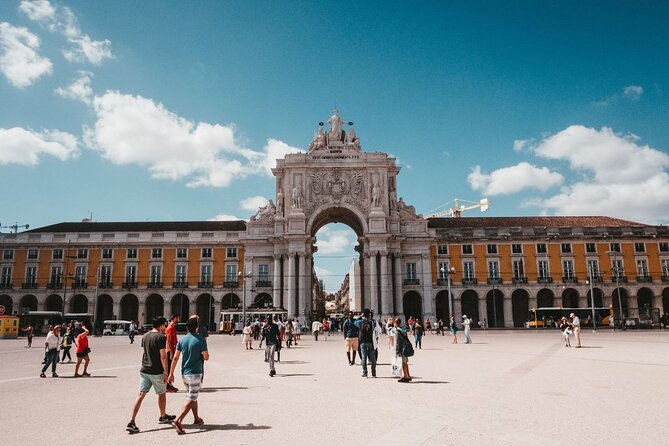
Then the route moves into Baixa, Lisbon’s downtown grid area, rebuilt after the 1755 earthquake under the Marquis of Pombal. This is where you see the planning and the major squares, including Praça do Comércio by the river. Baixa also features the famous Arco da Rua Augusta and the Santa Justa Lift.
Why this matters: Baixa gives you a map in your head. Once you understand how the center is laid out, future walks become easier, and you feel less like you’re bumping around in Lisbon’s hills by chance.
Sé de Lisboa and the Alfama viewpoints that make you stop and stare
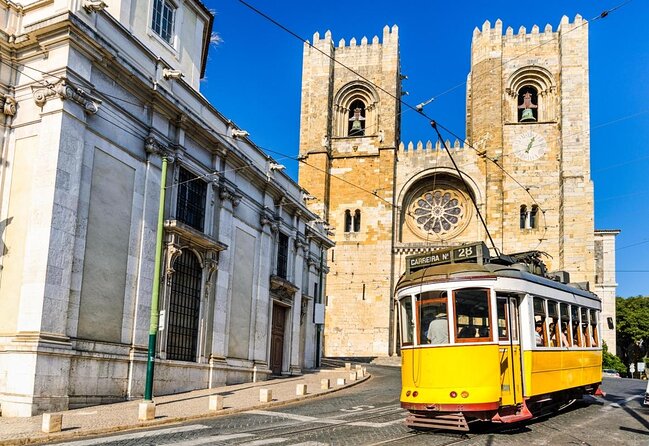
Next, you move toward the older layers of Lisbon. The tour includes Sé de Lisboa (Basilica of Saint Mary Major). Construction began in 1148, and it is considered the oldest church in Lisbon. Even if you only get a glimpse, it’s a nice anchor for how far Lisbon’s roots run.
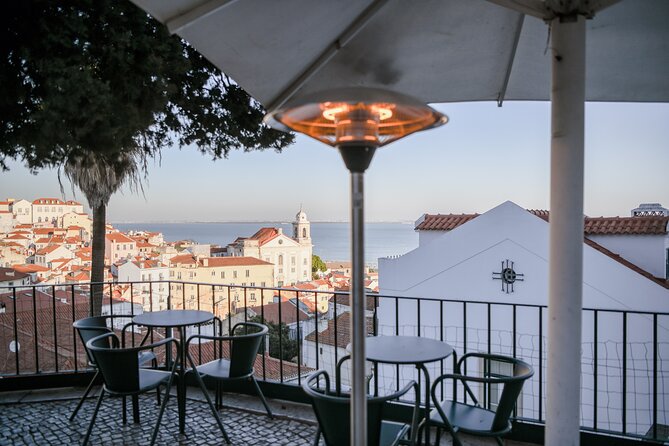
Then the tour heads to Largo das Portas do Sol in Alfama, famous for one of the most iconic viewpoints. From there, you can take in the Tagus River, the Baixa Pombalina area, and Castelo de São Jorge.
After that, you may also reach Miradouro da Senhora do Monte in Graça. This viewpoint is one of Lisbon’s well-known lookouts and gives panoramic views over the city and the Tagus.
These stops are where the tuk tuk route earns its keep. You’re not just driving from one place to another. You’re hitting viewpoints that explain the city’s layout. Lisbon is a city of angles, and this tour helps you collect them without exhausting yourself.
Graça and São Vicente de Fora: local Lisbon in less tourist mode
In the Graça neighborhood, the tour experience shifts into something more residential and lived-in. You get narrow streets, local community feel, and access to several landmarks and viewpoints. It’s often considered less tour-saturated than some other zones, and that difference is noticeable in the way the route feels as you move.
The tour can also include the Monastery of São Vicente de Fora, which sits on higher ground near Graça and Alfama. Then you may see the National Pantheon of Portugal (Panteão Nacional) connected to Church of Santa Engrácia. The tour also references the Chafariz de El-Rei, the first public ornamental fountain in the city, built in the 13th century.
If you’re trying to understand Lisbon beyond postcards, these are the kind of stops that make the tour feel like more than checkboxes.
Praça do Comércio: the river square that ties everything together
The route finishes near Praça do Comércio, a massive riverside square in downtown Lisbon. You’re in the area that once held the palace of Portuguese kings for about two centuries, and the square now sits bordered by arches.
This is a fitting end because it “returns you to the river.” After hills, churches, and viewpoints, you come back to flat open space and you can finally breathe. It also helps you connect your memories, because you see where so many routes start.
Price and value: when this private tour makes sense
At $17.24 per person, you’re paying for a few things at once: a private vehicle for your group, a local guide, electric transport, and a route that packs a lot of Lisbon into one half-day style plan (even when you choose the shorter options).
Where the value can rise is when you subtract the hidden costs of doing this on your own. Lisbon can drain energy fast with hills. Time spent moving between scattered areas is real time you might otherwise use to see more sights. The tuk tuk route reduces that travel tax while still giving you meaningful stops.
Where value depends on you: some of the major sights have admission not included (like Jerónimos Monastery and Belém Tower). If you know you want deep time inside multiple monuments, you’ll probably add extra tickets or plan a separate day. If you’re happy with guided context plus exterior photo time, you’ll likely feel like you maximized your money.
Who should book this, and who might prefer another plan
This tour fits best if:
- you want major Lisbon highlights without walking steep hills for hours
- you like a guided overview so you can decide what to return to later
- you’re short on time, especially if you’re in Lisbon from a cruise port
It might be less ideal if:
- you want to customize the route day-of and linger without a set stop plan
- you want long interior visits at Jerónimos and Belém Tower in one go
One more smart tip: if you’re coming on a cruise, the longer options can include pickup at the Lisbon Cruise Port (Jardim do Tabaco Quay) for 3-hour and 4-hour tours. That can turn a tight port day into something calmer.
Final verdict: should you book this eco tuk tuk?
Yes, if your goal is to get oriented and see the big Lisbon chapters in one ride. The standout is the combination of electric transport plus well-timed stops, including the skip-the-line pastry moment at Pastéis de Belém and the photo-friendly viewpoint run that makes Lisbon feel easy to understand.
I’d book it when you want momentum with comfort. Then use the rest of your time in Lisbon for slower neighborhood walks, museums, and the specific church or viewpoint you liked best.
If you want a highly flexible, wander-anywhere plan, then you may prefer renting transit and building your own route. But for a clean, guided, limited-walking day, this is a strong pick.
FAQ
How long is the tour?
The experience runs for about 1 to 4 hours, depending on the option you choose.
Is this tour private?
Yes. It’s a private tour, and the vehicle is only for your group. Tuk tuks are booked privately with a legal maximum of 4 passengers per tuk tuk.
Is the tuk tuk electric?
Yes. The tour uses a 100% electric and sustainable vehicle.
Are tickets included for Jerónimos Monastery and Belém Tower?
No. Jerónimos Monastery and Belém Tower stops list admission tickets as not included. Other stops show admission as free or not included depending on the specific location.
Do I get pickup if I’m arriving by cruise ship?
For the 3-hour and 4-hour options, pickup is available at the Lisbon Cruise Port (Jardim do Tabaco Quay). You’ll be asked to choose your pickup point, such as Time Out Market or the cruise port.
What are the age and weight rules?
Minimum age is 2 years, and no babies are allowed. There is also a minimum mandatory weight of 9 kg.
More Tuk-Tuks in Lisbon
- Explore Lisbon by Tuk Tuk: History and Viewpoints
★ 5.0 · 840 reviews - Private Tuk Tuk Tour Through Lisbon’s Historical Streets
★ 5.0 · 734 reviews - Lisbon Food & Tuk Tuk Tour with Eating Europe
★ 5.0 · 625 reviews
What Lisbon sent us most recently
- Lisbon: Private Boat Trip, Guided Walking Tour, Bike & Tram
★ 4.8 · 116 reviews - 3 Hour Lisbon Private Guided Tour via Tuk Tuk
★ 5.0 · 116 reviews - Lisbon Market and Food Tour with Cooking Class and Lunch
★ 5.0 · 117 reviews - From Lisbon: Sintra and Cascais Private Day Tour
★ 4.8 · 117 reviews - Lisbon: Tagus Estuary Nature Reserve Birdwatching Boat Tour
★ 4.9 · 117 reviews - Lisbon: Private Half-Day Tour with Hotel Pickup
★ 4.8 · 117 reviews - Pastel de Nata Cooking Class in Lisbon
★ 5.0 · 118 reviews - Sintra Private Tour from Lisbon
★ 5.0 · 118 reviews
Tuk-Tuks, compared.

True 4Hour Private Tuk Tuk Tour: Discover Lisbon with a Local!
Read our review →
Guided Tour by Tuk-Tuk & Optional Douro River Cruise
Read our review →
Private Guided Tuk-Tuk Tour with Hotel Pickup
Read our review →
Private Lisbon Sightseeing Tuk-Tuk Tour: Alfama, Belém & More
Read our review →
Lisbon Highlights: Private Tuk Tuk Tour Adventure Sightseeing
Read our review →
Discover Porto’s Highlights on a 2-Hour Private Electric Tuk Tuk
Read our review →
Welcome Lisbon Tour with Local Guide in Private Eco Tuk Tuk
Read our review →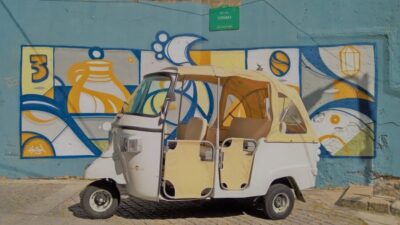
Browse the lists this tour appears in