

Reviewed · TUK-TUKS
Heart of Lisbon Private Tuk Tuk Tour
One ride. Big Lisbon wow. This private electric tuk tuk tour stitches together classic Baixa streets, top viewpoints, and major churches in about 2 hours. You get live commentary in English, plus plenty of time to stop, look, and take photos without burning your legs on hills.
Two things I’d prioritize: the route is smart for first-time Lisbon, and the guide work is a highlight, with Joao Tuk repeatedly credited for clear, friendly explanations. One note to keep in mind, this is a short tour packed with stops, so if you hate quick transitions or tight timing, you may want a longer day exploring on foot.
In This Review
- The Real Strength of a Private Tuk Tuk Plan
- Key Points You’ll Actually Feel During the Tour
- Why This Lisbon Tuk Tuk Route Works for Your First Day
- Meet Point to End Point, How the Day Flows
- Downtown Lisbon (Baixa Pombalina) and the Monument Road Trip Feeling
- Lisbon Cathedral (Santa Maria Maior), Where Layers of Time Still Show
- Largo Portas do Sol, One of Lisbon’s Most Photographed Angles
- Miradouro Senhora do Monte, High Views with Fewer People
- São Vicente de Fora, Marble Azulejos and a Big-Name Monastery
- Feira da Ladra, Flea Market Energy on Tuesdays and Saturdays
- National Pantheon (Santa Engrácia) and Alfama’s Real-Time Views
- Price, Value, and What You’re Really Paying For
- Who This Tour Fits Best, and Who Might Want a Different Plan
- Should You Book Heart of Lisbon Private Tuk Tuk Tour?
- FAQ
- How long is the Heart of Lisbon Private Tuk Tuk Tour?
- Is this a private tour?
- What language is the tour commentary offered in?
- Are children under 7 allowed?
- Where does the tour start and end?
- Can I cancel for a full refund?
The Real Strength of a Private Tuk Tuk Plan

Lisbon has a talent for wearing you out fast. This tour helps you see a lot while staying comfortable in an electric vehicle. It also ends in a great spot for continuing the day on your own, Restauradores Square, right in central Lisbon.
The main trade-off is the same for many top sights done in one run: your time at each place is limited. If you want long museum-style visits, plan to come back later. Also, children under 7 are not allowed, so this one is best for adult travelers and older kids.
Key Points You’ll Actually Feel During the Tour
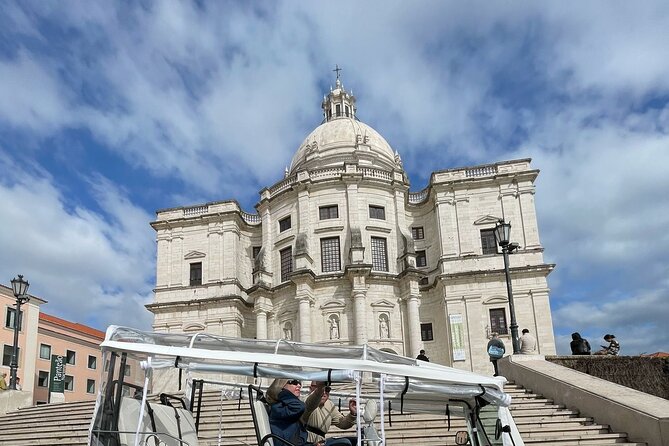
- Private, electric vehicle comfort, so you can focus on sights instead of steep stairs.
- Live English commentary from an experienced local guide, with Joao Tuk called out for wise, pleasant explanations.
- Portas do Sol and Senhora do Monte get their own short photo and viewpoint windows (10 minutes each, both free).
- Major monuments in one flow: Lisbon Cathedral, São Vicente de Fora, and the National Pantheon.
- Feira da Ladra timing matters, since it runs Tuesdays and Saturdays.
- Ends at Restauradores Square, making it easy to keep exploring afterward.
More Private Tours in Lisbon
- True 4Hour Private Tuk Tuk Tour: Discover Lisbon with a Local!★ 5.0 · 8,008 reviews
- Lisbon: Private Guided Tuk-Tuk Tour with Hotel Pickup★ 4.9 · 4,552 reviews
- Private Lisbon Sightseeing Tuk-Tuk Tour: Alfama, Belém & More★ 5.0 · 4,277 reviews
- Lisbon Highlights: Private Tuk Tuk Tour Adventure Sightseeing★ 5.0 · 3,284 reviews
Why This Lisbon Tuk Tuk Route Works for Your First Day
This tour is built for orientation. You start where Lisbon feels planned and direct, in Baixa Pombalina, then gradually climb toward Alfama and its viewpoints. That shift matters, because the city changes fast. Flat, grid-like streets in Baixa feel one way, then you hit Alfama’s tight lanes, tiled walls, and hilltop views.
I like that the tour isn’t just a bus ride with drive-bys. You stop at landmarks that anchor the story of the city. The 1755 earthquake rebuilding plan is easiest to understand when you’re literally standing in the reconstructed grid of Baixa. Then, you bounce into older layers of Lisbon, with the cathedral and the historic churches.
And yes, it is a “tuk tuk tour,” but it still functions like a real guided sight route. Expect live spoken context while you move between neighborhoods, so you’re not just collecting postcard angles.
Meet Point to End Point, How the Day Flows
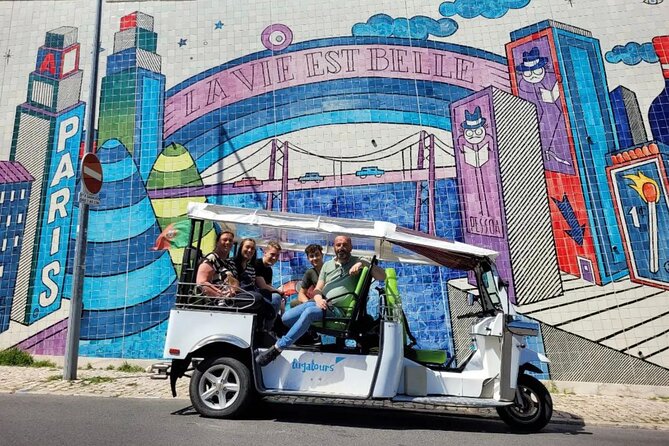
The tour starts at Rua de Arroios 120A, 1150-260 Lisboa and ends at Restauradores Square (Restauradores, 1250-147 Lisbon). That end point is useful. You’re placed near the center, so you can pivot to shopping streets, transit, or an easy next walk without committing to another long climb.
It’s a private tour, meaning only your group participates. Duration is about 1 hour 30 minutes to 2 hours, depending on timing and how long you want at each stop. There’s a mobile ticket, and confirmation happens at booking.
One small practical tip: Lisbon runs on cobblestones and steep grades. Even if you’re on an electric vehicle, you’ll still hop out for short looks. Comfortable shoes are a good idea, and a light layer helps if your viewpoint stop lines up with breeze from the Tagus River.
Downtown Lisbon (Baixa Pombalina) and the Monument Road Trip Feeling
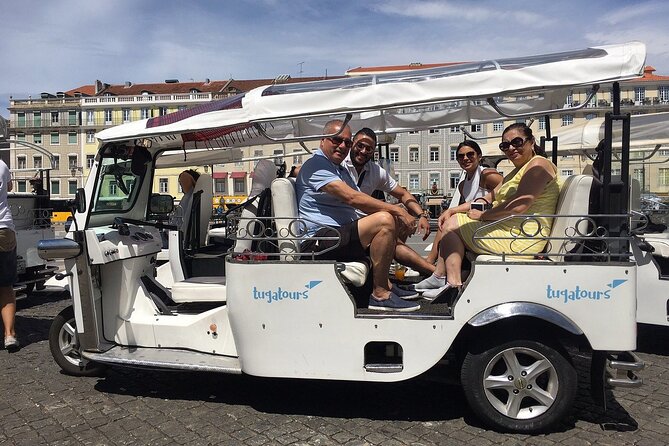
Your tour’s “heart” portion begins in Baixa Pombalina, Lisbon’s downtown core and one of the most recognizable areas in the city. The big idea here is the post-earthquake rebuild. After the devastating 1755 earthquake, Lisbon was reconstructed with an innovative urban plan tied to the Marquis of Pombal. What you see on the ground today is a grid of wider, straighter streets surrounded by neoclassical architecture.
This is where you’ll encounter three classic downtown stops:
- Rossio, known for its famous cafés and the wavy cobblestone pavement
- Praça da Figueira, a lively square that works as a visual “hinge” between streets
- Praça do Comércio, grand and open, facing the Tagus River
What I like about this segment is that it gives you the city’s logic fast. If you’re the kind of traveler who hates feeling lost, Baixa is your antidote. You get the main streets, you get open plazas, and you start to understand where the river sits relative to everything else.
Possible drawback: downtown Lisbon can feel busy at almost any hour. You’re seeing major squares, so expect foot traffic. The fix is simple, you take your quick photos, then move on while the tuk tuk keeps things efficient.
Lisbon Cathedral (Santa Maria Maior), Where Layers of Time Still Show
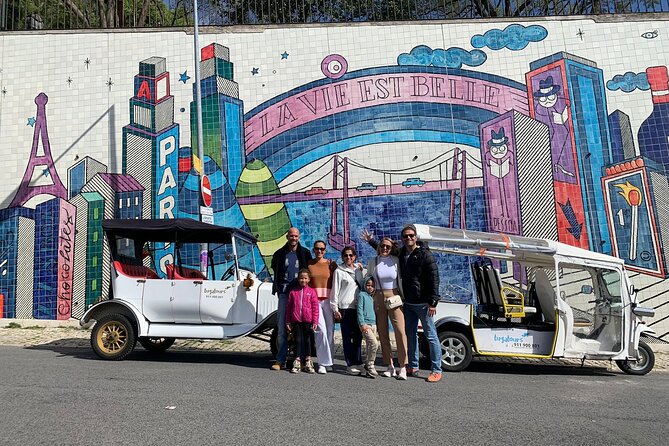
Next up is Lisbon Cathedral, also called Church of Santa Maria Maior. This is the city’s oldest cathedral, with origins in the 12th century after Lisbon was reconquered. The exterior is what grabs people first: an imposing Romanesque façade and two fortified towers.
The cathedral story is also about survival. It went through centuries of changes, with later Gothic, Baroque, and Neoclassical influences. And it stood through major earthquakes, including the 1755 quake, remaining a symbol of faith and resilience.
Inside, you’re looking at key spaces like the central nave and main altar, and you’ll find the cloister area especially interesting if you like archaeological history. The site includes archaeological remains from earlier periods, including Roman and Visigothic discoveries.
What you get from including the cathedral in a short tour is depth without effort. Even if you’re not a “church person,” it helps you connect Lisbon’s mythic past to visible stonework and layout.
Potential consideration: cathedrals are popular, so it can be tight. If you don’t want to stand, keep your first glance short and then focus on one or two details, like the façade towers from outside or a specific interior space.
More Tuk Tuk Tours in Lisbon



Largo Portas do Sol, One of Lisbon’s Most Photographed Angles

Then the tour heads to Largo Portas do Sol, home to the Viewpoint das Portas do Sol. This is one of Lisbon’s most iconic panoramas, with views over Alfama’s rooftops, the Tagus River, and landmarks such as the National Pantheon and the Church of São Vicente de Fora.
This viewpoint is also rooted in history. It gets its name from ancient gates of the Moorish walls that once stood here. You’re not just standing on a platform, you’re standing where an older city wall line used to be.
A detail I appreciate: there’s a popular terrace and statues like that of Saint Vincent, Lisbon’s patron saint. That matters because it turns a viewpoint into a small cultural scene, not just a photo stop.
Timing wise, you get about 10 minutes, and admission is free. That’s enough time for a few photos and a quick look, but not enough to settle in for a long break.
Quick reality check: viewpoints attract crowds. If you show up and it’s packed, do your shots, take a quick breath, then move on. You’ll likely feel the difference in the next viewpoint stop.
Miradouro Senhora do Monte, High Views with Fewer People
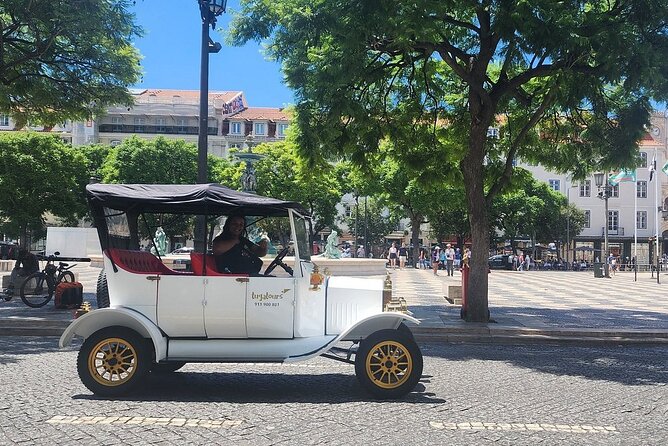
Next is Miradouro Senhora do Monte, in the Graça neighborhood. This is one of Lisbon’s highest viewpoints, beside a chapel dedicated to Our Lady of the Hill, associated with the patronage of pregnant women.
The payoff is a broad sweep. From here you can see from São Jorge Castle across toward the Tagus River. You also get a line of sight that can include Baixa, Avenida da Liberdade, and even the 25th of April Bridge.
What makes this stop feel different from Portas do Sol is crowd level. It tends to be less packed, which gives you a calmer moment. If you want the classic Lisbon photo angle but also want a chance to actually look around, this viewpoint is the one.
Again, you get about 10 minutes, and the viewpoint is free. It’s a good pace match for a short tour. You’ll see a lot quickly, then you’ll reset your attention for the churches and historic core.
São Vicente de Fora, Marble Azulejos and a Big-Name Monastery
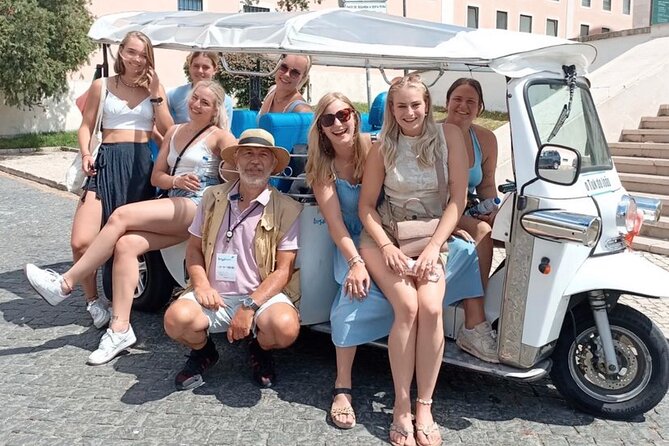
Now the tour brings you to one of the most important monuments in Lisbon: the Church of São Vicente de Fora. The words “de Fora” refer to its location outside the old city walls. The area started with a simpler church dedicated to Saint Vincent. Later, under King Philip I, the current church and monastery were built as a grand project combining Mannerist and Baroque styles.
The façade gives you a hint of what’s inside. People often remember the interiors for the combination of marble and Portuguese azulejos from the 17th and 18th centuries.
A standout feature is the monastery’s connection to the Braganza dynasty. The site includes the tombs of several kings and queens. If you enjoy royal history, this is your stop.
Then there’s the cloister. It’s highlighted by azulejo panels illustrating La Fontaine’s fables. That’s a fun mix of high art and storytelling. Finally, the terrace views over Alfama and the Tagus make this feel like both culture and scenery.
Practical consideration: this is one more place where the timing is limited. If you’re the type who wants to read every inscription, you might feel rushed. If you prefer highlights, you’ll do fine.
Feira da Ladra, Flea Market Energy on Tuesdays and Saturdays
After the churches, the tour enters Alfama’s world of everyday Lisbon, including Feira da Ladra. This is the city’s oldest and most popular flea market, and it runs on Tuesdays and Saturdays, in the historic Alfama area near the National Pantheon.
This is one of those stops you either love or you skip depending on your travel style. The market is known for variety. You might find antiques, books, furniture, vintage clothes, handicrafts, souvenirs, and curious objects.
The market’s name, “Ladra,” comes from a word meaning thief, tied to stories of petty thefts. Today, it’s more about trade and local atmosphere, with vendors and visitors mixing together.
Value for you: it’s Lisbon as lived, not Lisbon as a brochure. If you’re into browsing, it’s worth it. If you’re not in a shopping mood, use it as a cultural break. Look at the textures, snap a couple of scene photos, then keep moving.
Timing note: if your tour day isn’t Tuesday or Saturday, don’t expect the market to run in the full, traditional way. The tour data ties the market to those specific days.
National Pantheon (Santa Engrácia) and Alfama’s Real-Time Views
The route then highlights Alfama’s cultural anchor: the National Pantheon, also known as Church of Santa Engrácia. This building is impossible to miss because of the iconic white dome visible from many parts of Lisbon.
The construction started in the 17th century, but it was completed in the 20th century. That long timeline is why people use the phrase works of Santa Engrácia for something that seems endless.
Inside, you’ll find memorials and resting places for major Portuguese figures, including Amália Rodrigues, Humberto Delgado, and Eusébio. The nave is spacious and decorated with colorful marble. There’s also the payoff of views from the top of the dome, where you can look toward the Tagus River and over Alfama rooftops.
Then there’s Alfama itself. This is Lisbon’s oldest neighborhood, known for narrow streets, steep hills, colorful houses, typical azulejos, and flowered balconies. It’s also a key area for fado. Even if fado’s deeper roots are elsewhere, Alfama is today one of the places where you’ll find it strongly represented in the neighborhood’s taverns and daily rhythm.
Why this matters for a short tour: you get a sense of Lisbon’s identity in a compressed time window. You’re not just seeing monuments, you’re seeing the stage where the city’s music, life, and views all connect.
Possible drawback: Alfama’s streets can be steep and tight. The tuk tuk helps you avoid the worst walking, but you may still deal with uneven pavement and steps when you move between viewpoints and entrances.
Price, Value, and What You’re Really Paying For
At $58.65 per person, you’re buying two things at once: transportation and guided context, wrapped in a short schedule.
Here’s the practical value math:
- You’re not paying for a long, slow city bus day. You’re paying for a concentrated route.
- The tour includes live commentary from a local guide, plus private electric vehicle comfort.
- It’s also set up like a “real” tour, with civil liability and personal injury insurance listed as part of the package.
Is it expensive compared to solo exploring? Sure, because you’re paying for guidance and vehicle time. But for many first-timers, the cost is worth it because it saves energy, reduces confusion, and helps you avoid wasting hours trying to stitch together the best sights on your own.
Also, the tour mentions group discounts. If you’re traveling with friends or family, it can make even more sense.
Who This Tour Fits Best, and Who Might Want a Different Plan
This tour makes sense for:
- First-time Lisbon visitors who want a strong sampler platter in a short amount of time
- People who want guided context without long waits or over-planning
- Travelers who prefer comfort on hills, even if they enjoy walking a bit between stops
It may not be ideal if:
- You want museum-level time or long internal visits at each monument
- You hate crowding around major viewpoints and squares
- You’re traveling with young children under 7, since children under 7 are not allowed
One more fit detail I like: it’s offered in English, and the tour is set up as private. That’s a good match if your group wants flexible attention span pacing, even within the overall route.
Should You Book Heart of Lisbon Private Tuk Tuk Tour?
I’d book it if you want a guided shortcut through Lisbon’s big identity zones: Baixa, key churches, and the Alfama viewpoints that make the city feel like itself. The private electric tuk tuk format is built for short days when you still want meaning, not just movement.
I’d think twice if you’re the type who loves lingering. This tour is time-efficient. You’ll see a lot, but you won’t live inside every stop. If you plan to return to Lisbon’s neighborhoods later, this becomes the perfect “setup tour” that makes your follow-up walks much easier.
If your visit lines up with Tuesdays or Saturdays, you’ll also get the market angle of Feira da Ladra, which can add a genuinely local texture to the day.
FAQ
How long is the Heart of Lisbon Private Tuk Tuk Tour?
It runs for about 1 hour 30 minutes to 2 hours.
Is this a private tour?
Yes. It is a private tour/activity, so only your group participates.
What language is the tour commentary offered in?
The tour offers live commentary in English.
Are children under 7 allowed?
No, children under 7 years old are not allowed.
Where does the tour start and end?
It starts at Rua de Arroios 120A, 1150-260 Lisboa, Portugal and ends at Restauradores Square, in central Lisbon.
Can I cancel for a full refund?
Yes. Free cancellation is available if you cancel at least 24 hours in advance of the experience start time for a full refund.
More Tuk-Tuks in Lisbon
- Explore Lisbon by Tuk Tuk: History and Viewpoints
★ 5.0 · 840 reviews - Private Tuk Tuk Tour Through Lisbon’s Historical Streets
★ 5.0 · 734 reviews - Lisbon Food & Tuk Tuk Tour with Eating Europe
★ 5.0 · 625 reviews
What Lisbon sent us most recently
- From Lisboa: Sintra, Cabo da Roca & Cascais Private Full Day Tour
★ 5.0 · 39 reviews - Best of Sintra and Cascais Private Full Day Tour
★ 5.0 · 39 reviews - Private Sailing tour in Lisbon – Day Time, Sunset and Night
★ 4.5 · 39 reviews - Tuk Tuk Lisboa – Sightseeing Tours
★ 4.5 · 39 reviews - Private Experience Óbidos Nazaré and Fátima or Aveiro and Óbidos
★ 5.0 · 39 reviews - Belém and Jerónimos Monastery Private Walking Tour & Ticket
★ 4.5 · 39 reviews - Lisbon Private Luxury Tour
★ 4.5 · 39 reviews - Exclusive Lisbon Progressive Dinner & Wine Tour
★ 5.0 · 40 reviews
Tuk-Tuks, compared.

True 4Hour Private Tuk Tuk Tour: Discover Lisbon with a Local!
Read our review →
Guided Tour by Tuk-Tuk & Optional Douro River Cruise
Read our review →
Private Guided Tuk-Tuk Tour with Hotel Pickup
Read our review →
Private Lisbon Sightseeing Tuk-Tuk Tour: Alfama, Belém & More
Read our review →
Lisbon Highlights: Private Tuk Tuk Tour Adventure Sightseeing
Read our review →
Discover Porto’s Highlights on a 2-Hour Private Electric Tuk Tuk
Read our review →
Welcome Lisbon Tour with Local Guide in Private Eco Tuk Tuk
Read our review →
Browse the lists this tour appears in