
Reviewed · CITY TOURS
Lisbon Private Tour – The best introduction to the city
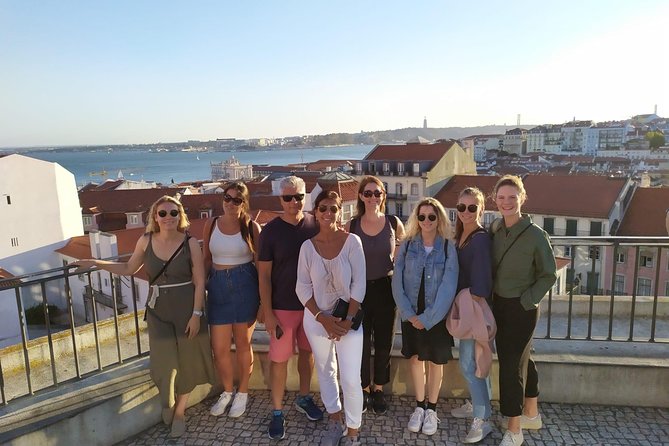
Lisbon feels like it has layers, and this private walk is a shortcut to understanding them. You get a smooth first half-day that connects Alfama streets, famous viewpoints, and the Mouraria vibe, all with a guide who knows where to point and what to notice. I especially liked how tour guides such as Sarah, Clayver, and Keiber come across as genuinely engaged and adaptable, so the walk feels personal, not scripted.
Two other things I liked a lot: the route hits major anchors like Praça do Comércio and Lisbon Cathedral without turning into a checklist, and the sights are mostly marked as admission ticket free, which helps this tour feel like real value. One possible drawback to keep in mind is that you are walking for about three hours on hilly streets, so comfy shoes matter if you want to enjoy the miradouros without rushing.
If you want your Lisbon trip to start with clear bearings and a sense of place, this is a smart orientation play. You’ll end near Praça da Figueira, which is a handy launchpad for whatever you feel like doing next.
In This Review
- Key Things You’ll Notice on This Lisbon Private Tour
- Entering Lisbon at Praça do Comércio (Where Your Bearings Click)
- Churches, Cathedral, and the Story of Places Changing Hands
- Casa dos Bicos and the Jose Saramago Connection
- Alfama Streets: Old Lisbon, One Tight Block at a Time
- Portas do Sol and Santa Luzia: Viewpoints That Actually Feel Worth the Steps
- Calcada da Amalia: Fado Meets the Sidewalk
- Graça Viewpoints and Moorish Roots in the Mix
- Mouraria’s Fado Identity, Plus a Strong Neighborhood Walk
- Price and Value: What You’re Really Paying For
- Logistics That Matter: Meeting Point, Walking Pace, End Location
- How the Guide Makes or Breaks This Tour
- Who Should Book This Lisbon Introduction Tour
- Should You Book This Lisbon Private Tour to Start Here?
Key Things You’ll Notice on This Lisbon Private Tour
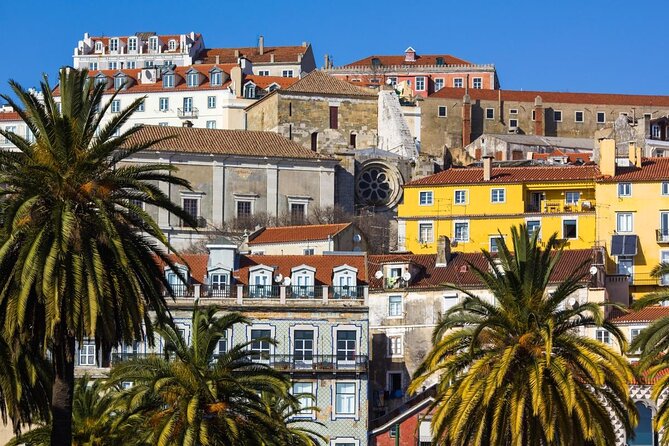
- Praça do Comércio to Alfama: you start in Lisbon’s big public square and work your way into the oldest neighborhoods
- Free-entry stops: the itinerary is built around sights marked as admission ticket free
- Miradouro time: multiple viewpoints, including Portas do Sol, Santa Luzia, and Graça
- Fado in the streets: Calcada da Amalia and Mouraria’s deep musical identity
- A guide who adjusts: reviews highlight flexibility and off-the-beaten-path detours
- Private group up to 6: easier pace control and more chances to ask questions
Entering Lisbon at Praça do Comércio (Where Your Bearings Click)
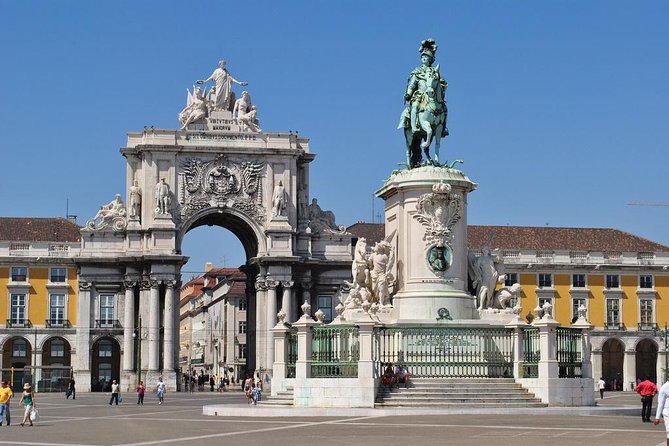
You kick things off at Praça do Comércio, Lisbon’s biggest and most famous square. It is a strong start point for two reasons. First, it helps you orient fast in a city where neighborhoods can feel like different worlds. Second, it sets a clear direction for the rest of the walk, which gradually shifts from open space into tighter, older streets.
Even if you are arriving for the first time, this kind of start helps you read the city instead of just seeing it. After the square, the route immediately pivots into layers of faith and architecture, which is exactly how Lisbon wants to be experienced.
More Private Tours in Lisbon
- True 4Hour Private Tuk Tuk Tour: Discover Lisbon with a Local!★ 5.0 · 8,008 reviews
- Lisbon: Private Guided Tuk-Tuk Tour with Hotel Pickup★ 4.9 · 4,552 reviews
- Private Lisbon Sightseeing Tuk-Tuk Tour: Alfama, Belém & More★ 5.0 · 4,277 reviews
- Lisbon Highlights: Private Tuk Tuk Tour Adventure Sightseeing★ 5.0 · 3,284 reviews
Churches, Cathedral, and the Story of Places Changing Hands
A big payoff of this tour is how it uses religious landmarks to explain Lisbon’s shifts over time. You start with Igreja de Nossa Senhora da Conceicao Velha, built on the place of an old synagogue from the 16th century. That single detail sets the tone: Lisbon isn’t one story. It’s many, stacked.
Next comes Lisbon Cathedral, described as the oldest church in Lisbon, built on the place of an old mosque. Whether you care about religious history deeply or just like understanding why buildings look the way they do, this is useful. It gives you a framework for what you see as you walk: the same spot can carry different meanings across centuries.
There is also a Roman Catholic church marking the birthplace of Saint Anthony of Lisbon. This matters because it turns a famous saint into a real place you can point at while walking through Alfama. In a city built on steep steps and narrow lanes, having a guide connect names to exact locations makes everything easier to remember.
And between stops, you also get smaller landmarks like an old fountain built in the 14th century. These may be quick stops, but they are part of what makes Lisbon feel lived-in rather than staged.
Casa dos Bicos and the Jose Saramago Connection
One of the most interesting stops early on is Casa dos Bicos (Museu de Lisboa), described as an old palace in the famous Manueline style, once built by a former mayor of Lisbon. Today it houses the José Saramago Foundation.
Even if you are not a longtime Saramago fan, this stop is smart for two reasons. It adds variety to the architecture you are seeing, and it shows that Lisbon’s culture isn’t only about monuments. It also includes contemporary literature tied to specific buildings.
Time-wise, it is not a long museum detour. The tour uses it as a meaningful checkpoint, so you can appreciate the setting and move on while the neighborhood mood is still fresh.
Alfama Streets: Old Lisbon, One Tight Block at a Time
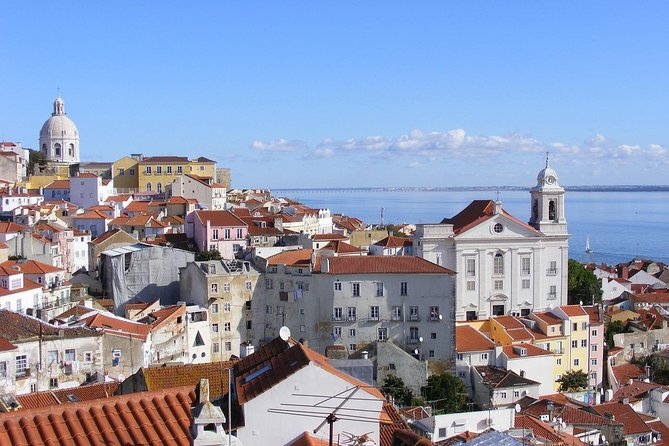
After the cathedral area, the walk leans fully into Alfama, Lisbon’s oldest neighborhood. You spend about 30 minutes wandering its streets, which is perfect for two kinds of travelers. If you love street-level atmosphere, you’ll enjoy the slow, winding feel. If you mostly want context, this portion helps you understand how Alfama’s layout shapes everything from views to walking routes.
Alfama is also where a good guide really shows. Reviews emphasize guides taking people to off-the-beaten-path spots and helping avoid the cruise ship crowds. That means you are more likely to experience the neighborhood as locals use it, not just a camera-friendly strip.
One practical note: Alfama streets can be uneven and steep. You’re not on a flat promenade, so plan to move at a comfortable pace.
Portas do Sol and Santa Luzia: Viewpoints That Actually Feel Worth the Steps
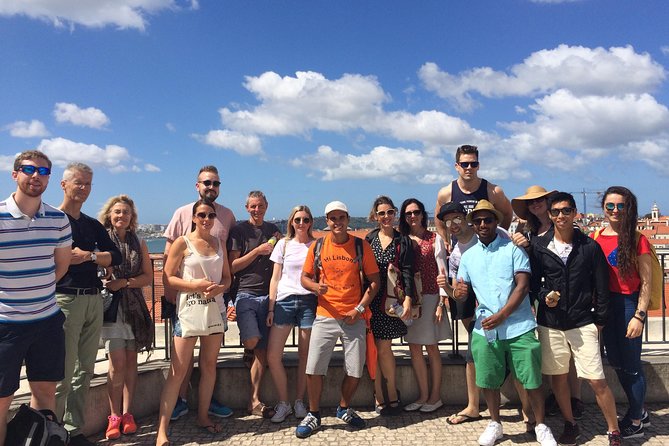
The tour includes multiple miradouros, and they are not just quick photo moments. You get Miradouro das Portas do Sol for about 10 minutes, plus Miradouro de Santa Luzia for another 10 minutes, described as an amazing square with a lovely view behind Santa Luzia’s church.
This is where Lisbon turns cinematic, but you also get something more useful: viewpoint sequencing. Rather than jumping to one panorama and leaving, the tour walks you through several vantage points. That helps you understand the city’s geography, which is the real reason miradouros are valuable.
If you tend to feel overwhelmed in Lisbon, those view breaks help reset you. You get a moment to look outward, then the walk brings you back into the detail work.
More Things to Do in Lisbon


Calcada da Amalia: Fado Meets the Sidewalk
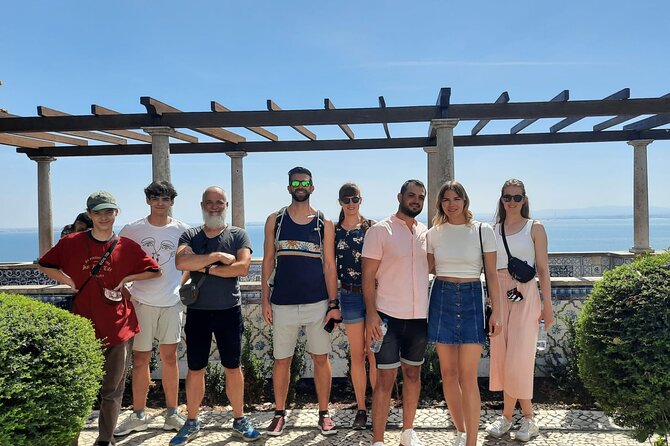
A highlight that feels very Lisbon is Calcada da Amalia, tied to Portuguese fado. The description notes it features the face of Amalia Rodrigues, the Queen of Fado.
This stop is short, about three minutes, but it has strong payoff. It gives you a tangible connection to a music tradition that can otherwise feel abstract. When you later hear fado in Lisbon, you will remember it is not just a performance. It is woven into how the city recognizes its artists.
It is also an easy moment to pause, snap a photo, and let the guide explain what it means in the neighborhood context.
Graça Viewpoints and Moorish Roots in the Mix
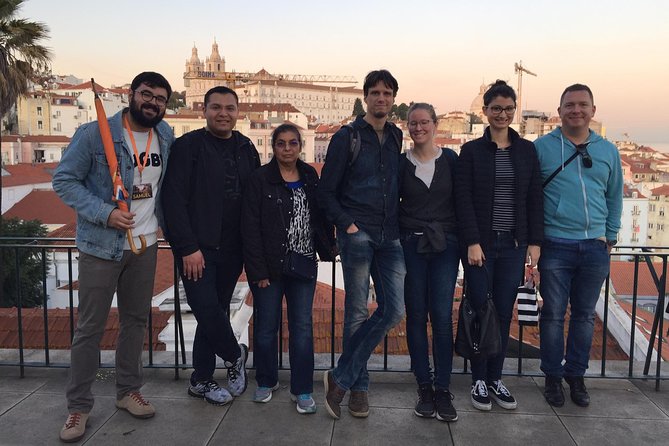
Next up is Miradouro da Graca (Sophia de Mello Breyner Andresen), another viewpoint time slot of about 10 minutes. The tour also references a landmark with Moorish-period origins along this part of the route.
This is a good section for readers who like the “why” behind what they see. Lisbon’s neighborhoods are often discussed as if they are purely Portuguese. Here, you are nudged to notice how older layers still influence names, shapes, and the mood of the streets.
If you want your photos to match the story you’re hearing, this area helps. You can look from above, then understand what you are looking down on.
Mouraria’s Fado Identity, Plus a Strong Neighborhood Walk

The tour finishes the neighborhood deep-dive in Mouraria, walking about 30 minutes. The description emphasizes that Mouraria was built by the Moors after the conquest of the city by Christians, which positions the area as a living reminder of Lisbon’s blended past.
You also visit Monumento Mouraria Berço do Fado, which anchors the area’s musical identity. This is another stop that links culture to location. In a city like Lisbon, that link matters because the neighborhoods are the stage.
If your priority is to start the trip with character and not just big-sight photography, Mouraria is where the walk feels most personal. Tight lanes, a strong identity, and the guide tying it together is what makes this section memorable.
Price and Value: What You’re Really Paying For
At $181.48 per group (up to 6), this is priced for private comfort rather than budget independence. For a solo traveler, that can sound steep. For a small group, it becomes easier to justify because you are effectively buying four benefits:
- a professional guide
- a structured introduction to key neighborhoods (Alfama and Mouraria)
- multiple viewpoint breaks that help you map the city
- mostly admission ticket free stops, which keeps costs predictable
Also, it lasts about three hours, so you are not sacrificing your whole day. For first-time Lisbon trips, three hours is a sweet spot. It gives you context without burning energy before the rest of your plans.
One useful detail: the tour is offered in English, and it uses a mobile ticket. That reduces friction when you are juggling multiple activities.
Logistics That Matter: Meeting Point, Walking Pace, End Location
You meet at Praça do Comércio and end at Praça da Figueira, a square described as built on the site of the biggest hospital in Lisbon. Ending there is practical because it puts you in an easy area to continue exploring.
The tour is near public transportation and described as suitable for most travelers, but it is still a street-walk through older neighborhoods. If you are sensitive to steep hills or lots of steps, consider planning extra time for breaks, and wear shoes with real grip.
This is a private tour, meaning only your group participates. That matters for families, couples, or friends who want a calmer pace and the ability to ask questions without feeling rushed.
How the Guide Makes or Breaks This Tour
The strongest theme across the positive feedback is guide quality. People praised guides as perfect, very knowledgeable, and especially engaging, with one common point: flexibility.
That flexibility is not a small thing. In Lisbon, weather changes fast, streets can be tricky, and interest levels vary. A guide who can adjust helps you get more of what you came for. The names that stood out include Sarah, Clayver, and Keiber, each described as insightful, educational, and willing to tailor the pace or focus to the group.
So if you care about getting more than a route, this is the kind of tour where the guide is the value engine.
Who Should Book This Lisbon Introduction Tour
This tour fits best if you:
- are in Lisbon for the first time and want a fast, guided orientation
- like neighborhoods with character, not just big landmarks
- want viewpoint time without turning the day into a car ride
- travel in a small group, so the per-person cost drops compared to single bookings
- prefer a private format where questions are welcome and pace can be adjusted
It is also a good choice as a first day plan. Starting at Praça do Comércio, then moving into Alfama and Mouraria, gives you a mental map you can use all trip long.
Should You Book This Lisbon Private Tour to Start Here?
Yes, I’d book it if your goal is a smart, first look at Lisbon. The combination of Alfama and Mouraria, repeated viewpoint stops, and a guide who can keep things lively and adaptable makes it a strong introduction. It is also reassuring that the itinerary is built around free-entry sights, which makes it easier to plan.
Skip it or treat it as optional if you hate walking hills or if you already know Lisbon well and only want a very specific niche. This is about getting your bearings, not about checking off one museum for hours.
If you’re trying to decide, here’s the simple test: if you want Lisbon to start making sense quickly, book this. If you’d rather float around on your own schedule, you might be happier with a lighter self-guided day.
What Lisbon sent us most recently
- Lisbon: Private Boat Trip, Guided Walking Tour, Bike & Tram
★ 4.8 · 116 reviews - 3 Hour Lisbon Private Guided Tour via Tuk Tuk
★ 5.0 · 116 reviews - Lisbon Market and Food Tour with Cooking Class and Lunch
★ 5.0 · 117 reviews - From Lisbon: Sintra and Cascais Private Day Tour
★ 4.8 · 117 reviews - Lisbon: Tagus Estuary Nature Reserve Birdwatching Boat Tour
★ 4.9 · 117 reviews - Lisbon: Private Half-Day Tour with Hotel Pickup
★ 4.8 · 117 reviews - Pastel de Nata Cooking Class in Lisbon
★ 5.0 · 118 reviews - Sintra Private Tour from Lisbon
★ 5.0 · 118 reviews
City Tours, compared.
The Unvanquished Tour in Porto City Center
Read our review →
Lisbon City Center Tour – The Unmissable Lisbon
Read our review →
Daytime/Sunset/Night City Sailboat Tour with Drink
Read our review →
City Highlights 3-Hour Guided Electric Bike Tour
Read our review →

Browse the lists this tour appears in