
Reviewed · THINGS TO DO IN THE AZORES
Pico Mountain: Climb the Highest Point of Portugal 2351m
Pico Mountain turns a normal day into cardio. This guided climb takes you from Casa da Montanha at 1200m up to Portugal’s highest point, 2351m, over about 8km of volcanic rock with an average 30% grade. I like the expert, careful guidance I get on a steep route, and I love that the views reward the grind when the weather cooperates. The main drawback is simple: this is not a casual walk, and it is not a good fit if you do not have strong physical fitness (and groups do not include people over 60 or children under 12).
For value, it is hard to beat: at $90.74 per person you get professional guidance, trekking poles, personal insurance, and quality photos and videos. Groups are capped at 10 people, so you are not trapped in a giant slow-moving line.
In This Review
- Key Things I’d Pay Attention To
- Why Pico Mountain Feels So Iconic
- Getting Started at Casa da Montanha (1200m) and Getting Your Bearings
- The Hike Profile: 8km, Volcanic Rock, and an Average 30% Grade
- Group Size and Pacing: Why This Feels Like a Real Hike, Not a Bus Tour
- Mid-Climb Moments: Rhythm, Breaks, and the Mental Game
- The Summit Push to 2351m: Views, Steam, and a Real Sense of Accomplishment
- The Return Descent: Where “Easy” Can Fool You
- What You Actually Get for $90.74: Value Breakdown
- Timing, Weather, and the Reality of Planning on Pico
- Who This Hike Suits Best (And Who Should Skip It)
- A Few Practical Tips That Make This Day Easier
- Should You Book Pico Mountain?
Key Things I’d Pay Attention To
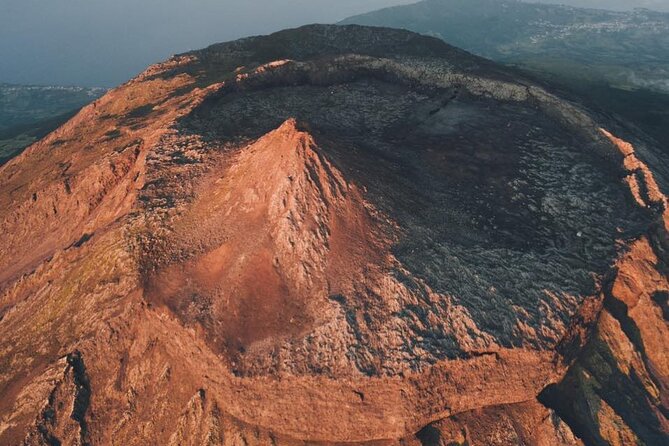
- 2351m summit at Portugal’s top point (Pico Mountain)
- 8km of volcanic-rock hiking, with an average 30% slope
- Small groups (max 10) and close pace management from guides like Raisa, Isabel, Nunu, and Haise
- A suitability check early on, watching for balance and breathing problems
- Trekking poles plus personal insurance, and quality photos/videos
- Weather matters, and the activity can shift dates or refund if conditions fail
Why Pico Mountain Feels So Iconic
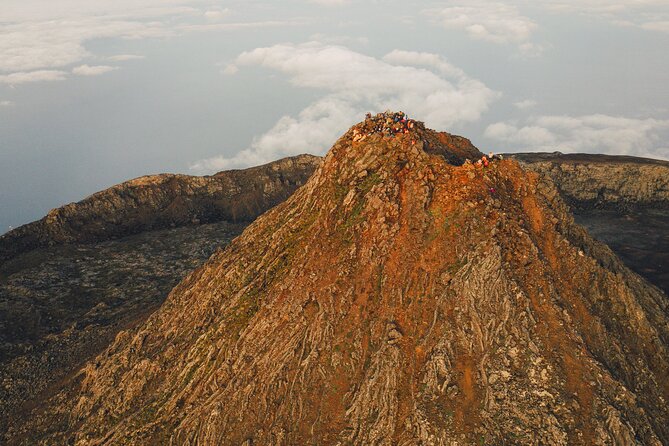
Pico Mountain is the kind of place that makes you earn the view. You do not just stroll to a viewpoint. You climb from the forest edge of Candelária up a volcanic spine, where the ground stays rough and black and very honest about your fitness.
This hike is “summit first,” not sightseeing first. The route is designed to get you to 2351m (the highest point of Portugal), then bring you back safely. Even if you have never used crampons or done mountaineering, this is still a real mountain day, because your legs and lungs will do most of the work.
More Things to Do in the Azores
- From Ponta Delgada: Whale and Dolphin Watching Trip★ 4.7 · 4,109 reviews
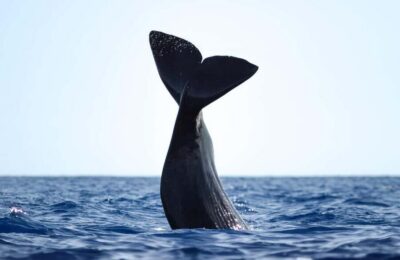
- Azores: Whale Watching & Islet Boat Tour w/ Marine Biologist★ 4.7 · 2,945 reviews
- São Miguel West: Full-Day Van Tour with Lunch★ 4.9 · 1,948 reviews
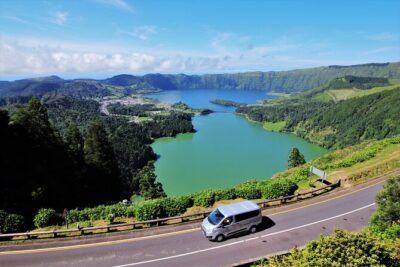
- São Miguel West Full Day Tour with Setes Cidades Including Lunch★ 5.0 · 1,605 reviews
Getting Started at Casa da Montanha (1200m) and Getting Your Bearings
Your day begins at Casa da Montanha, around 1200m, near Candelária (Madalena area). Before you move, the guide gives a briefing for the whole group. This is not fluff. It sets expectations about steep sections, footing on volcanic rock, and what to do if your body starts to protest too loudly.
You also receive equipment for the hike. Trekking poles are included, and that matters because the slope is steep and the trail is uneven. You will also get locators as part of the group system, which helps the guide keep track of everyone.
The best mindset here is practical. Listen, ask questions, and go slower than you think you should at the start. That early pace choice often decides whether the rest of the climb feels steady or like a long fight.
The Hike Profile: 8km, Volcanic Rock, and an Average 30% Grade
The route is about 7 hours total, roughly. The trail distance is around 8km, and the terrain is entirely volcanic rock. The average slope is listed at 30%, which tells you the big picture: expect a lot of uphill, a lot of controlled footing, and very little time to coast.
That “volcanic rock” detail is not just a geography note. It is why you feel it in your feet and why trekking poles help so much. Volcanic trails can be gritty, irregular, and tiring even when the incline is consistent. Your calves and quads will both get involved, especially as you climb higher and your pace naturally slows.
One more thing: the hike includes an early sampling of the difference in level and terrain type. The guide specifically notes that intense change in breathing pattern and/or lack of balance are warning signs, meaning the activity may not be suitable. Translation: if you start wobbling or gasping beyond what you can control, do not try to “push through.” Speak up, because the guide needs to manage safety for the whole group.
Group Size and Pacing: Why This Feels Like a Real Hike, Not a Bus Tour
The group cap is 10 travelers, and that is a big deal for an uphill slog. A smaller group means the guide can actually manage pace, stop when people need it, and keep the route moving without turning it into a timed trial.
The strongest theme in guide feedback is pace and support. Names like Raisa, Isabel, Nunu, and Haise come up often, and the common thread is thoughtful pacing. Breaks tend to be frequent but not excessive, and the guide adjusts support based on individual needs, not a one-size-fits-all rhythm.
Still, be aware of one realistic drawback: when everyone has different fitness levels, the group has to move as one. If your style is fast and you get stuck behind slower footwork, you may feel frustrated. If you move slower, you will need patience and trust that the guide will manage breaks and timing so nobody gets left out.
Mid-Climb Moments: Rhythm, Breaks, and the Mental Game
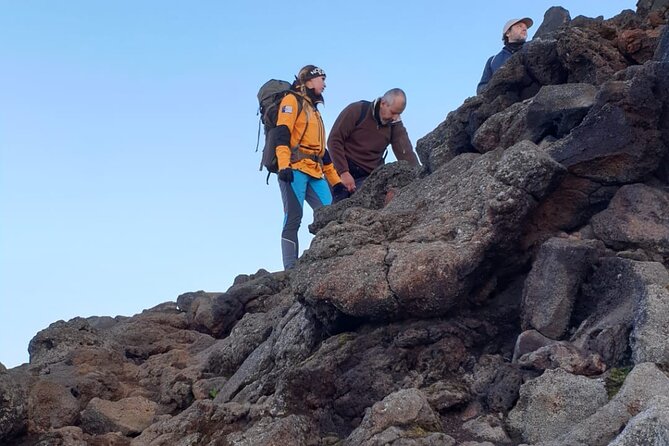
About halfway up, the hike becomes a test of rhythm. This is when good pacing pays off. You will likely notice the shift from “I’m climbing” to “I’m maintaining effort.” That is also when the guide’s job becomes more than directions.
Several guides are praised for thoughtful stops for water and small breaks. The goal is to keep you moving safely, not to stretch you out until you are exhausted. Some groups even mention snacks during the hike, and the general pattern is: short breaks, regroup, keep a steady cadence.
I love this part of the day because it is where you stop thinking about the meter count and start thinking about your breathing. If you find your breathing spiraling out of control, that is your cue to slow down, shorten your stride, and let the poles do more work.
Also, plan for sun. Even when it feels cool at the start, Pico can roast you later in the day. One helpful caution from past hikers: sunscreen can get overlooked, and you may burn faster than you expect, especially on exposed volcanic slopes.
When the light changes over the Azores, try these:

The Summit Push to 2351m: Views, Steam, and a Real Sense of Accomplishment
Reaching the top is the payoff. The summit is 2351m, and on clear weather you can see far. Past hikers mention views reaching toward Terceira and Graciosa, which makes the climb feel bigger than just one island’s ridge.
At the very top, the experience turns emotional in a good way. People describe it as a proud moment, because the hike is steep and long enough that you feel the achievement in your body. And because this is the highest point of Portugal, it is not just pretty, it is meaningful.
One unique detail you might notice at or near the summit areas: warm volcanic vapor in rock crevices. It is the mountain reminding you that you are walking on something alive underneath the surface. It can also add a slightly dramatic feel to the final stretch, especially if the air is calm and you can hear the wind shift.
Some guides add small summit celebrations, like a toast with a round of schnapps after reaching the peak, depending on the guide and group. Even if your guide does not do that, you can still expect the summit to feel like a moment you will remember long after the sore knees fade.
The Return Descent: Where “Easy” Can Fool You
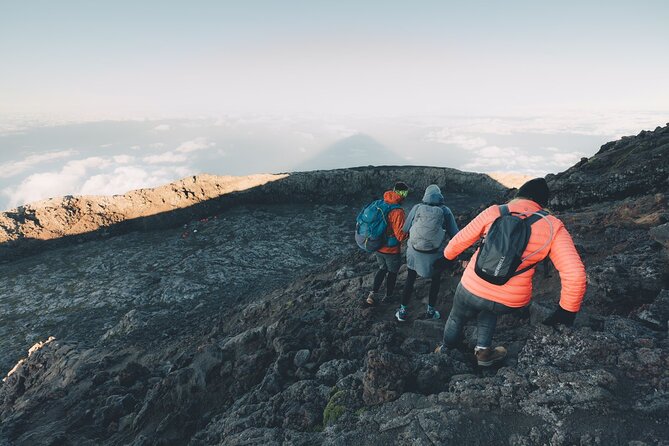
Coming down is not automatically easier. The descent is still steep, and it asks for concentration. That is the part people underestimate, because your legs are tired, and tired legs make slips more likely.
The trail back follows the same volcanic-rock reality, so your feet need to stay sure. Trekking poles help on the way down as well. Use them, and keep your speed controlled, especially in rough, uneven patches.
There is also at least one cave-like area mentioned on the way back. If conditions and time allow, it can be worth a slow look. Just do not let sightseeing turn into rushing on the descent. The safest plan is the boring one: steady steps, short pauses if needed, and let the guide handle the timing.
If you start to lose focus, that is your cue to slow down immediately. You do not need to prove anything. This is a long day, and the “finish” matters as much as the climb.
What You Actually Get for $90.74: Value Breakdown
At about $90.74 per person for a roughly 7-hour guided summit hike, you are paying for four big things.
First, you are paying for a guide. This route is steep, and the company includes professional, experienced guidance. In a small group, that translates into real coaching on pacing and safety, not just “follow me” leadership.
Second, you get trekking poles. Poles sound like a small add-on, but they can make a major difference on a volcanic, steep trail.
Third, personal insurance is included. That matters on an active mountain day where things can go wrong.
Fourth, you get quality photos and videos. That is not typical on hikes, and it is useful if you want summit shots without juggling a camera while trying not to eat the ground on the downhill.
Not included: meals. So you will want to plan your food around the hike. If your start time is early, eat something before you arrive and bring water as needed, since the hike is long and exposed.
Timing, Weather, and the Reality of Planning on Pico
This activity requires good weather. If the weather fails, you will be offered a different date or a full refund. That is the responsible approach, because a wet, windy Pico climb can go from “tough” to “unsafe” fast.
You should also assume a start that gives you enough light for the climb and descent. Past hikers describe early departures, sometimes as early as 6:30, so treat this like a morning event even if your exact slot varies.
The practical tip is this: pack for changing conditions. Even when it is not freezing, your body works hard on the incline, then cools off on breaks and downhill.
Who This Hike Suits Best (And Who Should Skip It)
This is best for you if you:
- are in good physical condition and can hike uphill for hours
- want an authentic summit experience, not a casual viewpoint stop
- like guided days where pacing and safety are actively managed
- enjoy learning stories about Pico and the Azores while you hike
It may not be right for you if:
- you struggle with steep, continuous uphill walking
- balance and breathing become unstable quickly when effort increases
- you are outside the age limits (groups do not include people over 60 or children under 12)
- you are expecting an easy hike or lots of flat walking
A small but important note: the guide explicitly checks for warning signs early on. If you are unsure about your fitness, trust that part of the process. It is there for a reason.
A Few Practical Tips That Make This Day Easier
You’ll have the best day if you treat this like a serious hike, not a long stroll.
Wear shoes with solid traction. Volcanic rock demands a grip you can trust. Bring a hat and sunscreen, because the exposed trail can burn you even when the morning feels mild.
Hydrate and pace. The guide will handle breaks, but you should still drink regularly and avoid sprinting early. If you plan a snack strategy, keep it simple and easy to eat during short stops.
Finally, keep your expectations honest. This is a challenging cardio workout for hours. The reward is big, but you have to do the work to get it.
Should You Book Pico Mountain?
I think you should book this tour if you want Portugal’s highest point and you are ready for a real mountain hike. The combination of a high summit (2351m), steep volcanic terrain (8km, about 30% average grade), small groups, and close guide support makes it feel like a focused experience with real value for the money.
Skip it if you want a relaxed day outdoors, or if you are uncertain about managing steep climbing for hours. Also, take the age limits seriously.
If you are a strong hiker and you love the feeling of earning a view, Pico Mountain is the kind of day that sticks with you. Just show up ready for the climb.
What the Azores sent us most recently
- Canyoning Experience at Ribeira Grande
★ 4.8 · 117 reviews - Vila Franca Do Campo: Introduction to Scuba Diving Tour
★ 5.0 · 117 reviews - Azores Canyoning Adventure in São Miguel – Half-day
★ 4.5 · 122 reviews - E-bike Sete Cidades- “All Mountain” bike program
★ 5.0 · 126 reviews - Ponta Delgada: Pineapple wine tasting and pineapple tour
★ 4.8 · 127 reviews - São Miguel 2-Day Tour: East & West Highlights Adventure
★ 5.0 · 130 reviews - From Angra: Terceira Island Full-Day Tour
★ 4.9 · 133 reviews - Rabo de Peixe: Sperm Whale Sanctuary Expedition
★ 4.8 · 135 reviews
Things to Do in the Azores, compared.

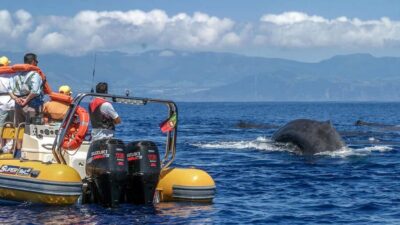
Whale Watching & Islet Boat Tour w/ Marine Biologist
Read our review →
São Miguel West Full Day Tour with Setes Cidades Including Lunch
Read our review →
São Miguel East Van Tour with Lunch: Furnas & Nordeste
Read our review →
Browse the lists this tour appears in