
Reviewed · WHALE WATCHING
Terceira: Whale & Dolphin Watching | Best Wildlife Tour
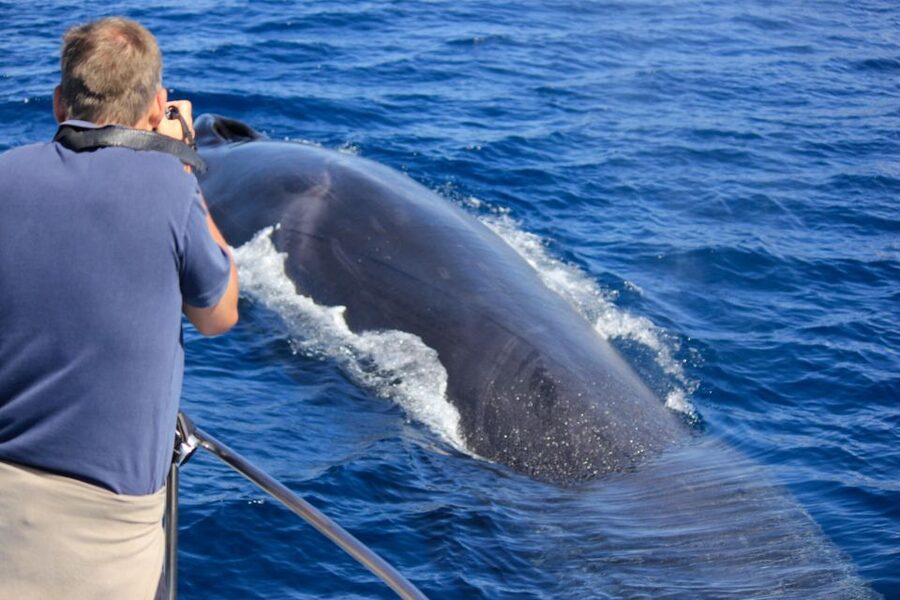
The Atlantic turns wildlife spotting into theatre, and this Terceira whale and dolphin watch pairs high lookout eyes with an on-water team that follows a careful code. I especially like the mix of long-range binoculars from above and the practical, safety-minded way the guides close distance only when it makes sense. One thing to keep in mind, though: you cannot guarantee whales only, dolphins only, or both every trip.
You’ll meet at the OceanEmotion office, red cover, and for about 2.5 hours you’ll be in the middle of the Azores’ marine action, not just looking at it from a dock. I also like that the tour leans into learning, including a hidrophone, so you’re not only seeing, you’re hearing the ocean’s soundtrack. If conditions are rough, you’re protected by either a free redo or a full refund, so you are not stuck with a wasted plan.
In This Review
- Key things to know before you go
- Terceira’s Atlantic advantage for whales and dolphins
- How the spotting works, from lookout towers to the search team
- The OceanEmotion meeting point, then what the first minutes feel like
- What makes the hidrophone moment so special
- Dolphins versus whales, and setting expectations without killing the mood
- Duration, group vibe, and comfort tips that actually matter
- Weather changes, and why the guarantee is more than fine print
- Price and value: is $82 worth it?
- Who this tour suits best
- A simple decision guide: book or hold off?
- FAQ
- How long is the whale and dolphin watching tour on Terceira?
- Where do I meet the tour?
- What is included in the price?
- Do I get a refund if I do not see whales or dolphins?
- What should I bring?
- Is this tour suitable for everyone?
Key things to know before you go
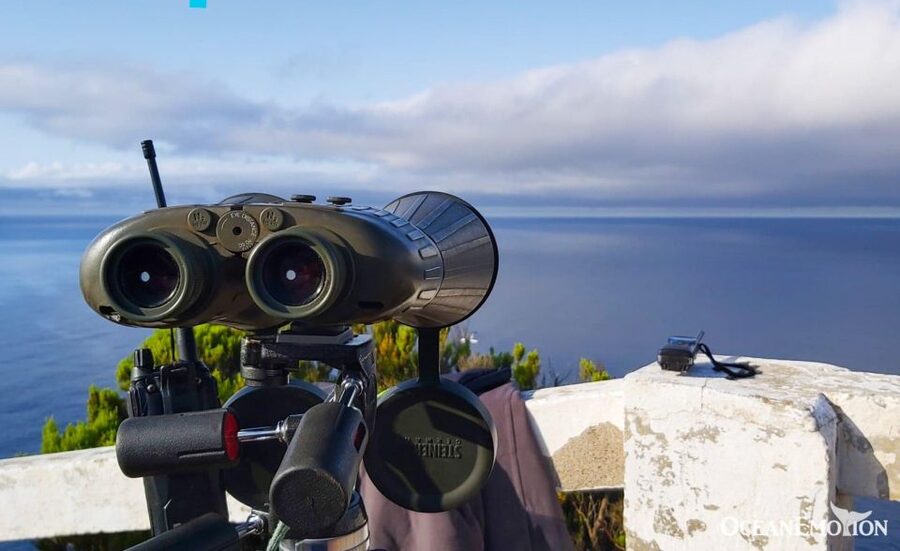
- Lookouts scan from high points with long-range binoculars, then the team steers you toward activity
- A respectful, code-based approach helps keep distance and behavior in check
- Hidrophone included so you can catch whale and dolphin vocalizations
- Strong year-round odds thanks to the lookout-and-team method, with about a 98% success rate for sightings
- Sighting guarantee, at least one of the cetaceans present in Azorean waters
- Warmth matters because a wind jacket is provided, and Azorean weather can change fast
Terceira’s Atlantic advantage for whales and dolphins
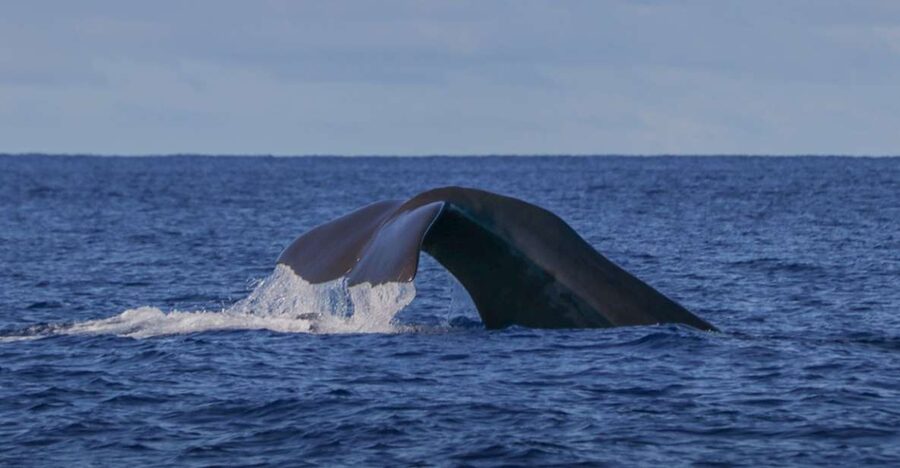
The Azores sit out in the Atlantic where deep water meets nutrient-rich currents, and that is why cetaceans show up here. Terceira, in particular, is a standout for wildlife watching because it is not just chance. The local system of observation is part of the experience, meaning the day runs on real-time monitoring rather than a guess-and-go strategy.
Here’s the big fact to hold onto: 29 species of cetaceans have been recorded around the islands, and the Azores are home to about 33% of the world’s known species. That does not mean you will see all of them on your trip. But it does mean your odds are strong compared to places with fewer sightings, and you are watching in a region that takes marine life seriously.
Also, I love that this is not framed as a theme park. It is a nature activity with real wildlife rules. You will feel the difference immediately in the way the guide talks about distance, patience, and respectful behavior.
More dolphin pods off the headlands:
- Watching whales and dolphins on Terceira Island★ 5.0 · 150 reviews
- Terceira: Swimming with Wild Dolphins | Natural Habitat★ 4.8 · 51 reviews
- Albufeira: 2.5-Hour Benagil Caves & Dolphin Watching★ 4.6 · 10,710 reviews
- From Funchal: Ecological Catamaran Dolphin Whale Watching★ 4.5 · 8,204 reviews
How the spotting works, from lookout towers to the search team
This tour has two brains, working together.
First, there are the lookouts. They scan the sea from higher points using long-range binoculars, which helps them spot surfacing blows and movement patterns early. From there, the team uses that information to plan where to focus your time. The goal is simple: spend the 2.5 hours where life is actually moving, not where you hope it might be.
Second, there’s the on-the-ground team approach. This matters because whales and dolphins are not props. The tour is designed around the Azores conduct code for cetacean observation, which means the behavior and safety of the animals come first. In practice, you feel this in a calmer pace. The guide is not whipping you around for quick photo ops. You wait, watch, and adjust as the animals decide what they want to do.
One more reason this system works is that sightings are counted by the animals’ behavior, not a schedule. A school can travel, a pod can split, and a whale can change direction. The tour does not pretend it can control that. Instead, it builds in a method that stays flexible.
The OceanEmotion meeting point, then what the first minutes feel like
Plan to go straight to the OceanEmotion office, the one with the red cover. That matters because the tour starts with an organized handoff, not a wandering search for your group.
Once you arrive, you’ll get set up with what you need for the conditions. The tour includes a wind jacket, which is a big practical win. Even on bright days, the Atlantic can cut through. Comfortable shoes matter too, since you want stable footing when you are moving around before and after the water portion.
You’ll also have a live guide on the day, available in English, Portuguese, and Spanish. That is more than comfort. When the guide can explain what you are seeing, the whole trip clicks into place. You stop watching random splashes and start tracking behavior: feeding, traveling, social swimming, surface breathing patterns.
If you are traveling in a private group, you can often expect the guide to tune the experience to your pace. The core method stays the same, but the vibe feels less rushed.
What makes the hidrophone moment so special
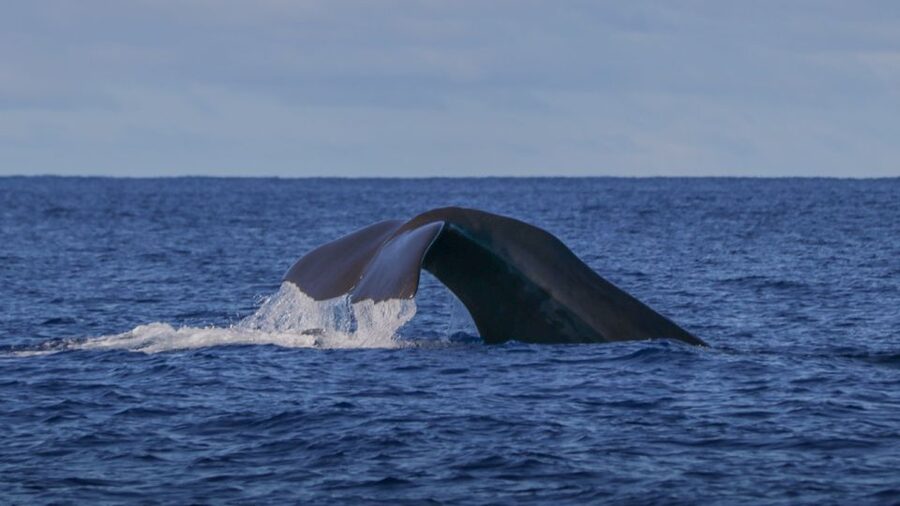
A camera records what it can see. A hidrophone records what you cannot.
Including it changes the whole feel of the tour. When the guide uses the device, you get a new layer of understanding: vocalizations in the water, the kind of sounds whales and dolphins make as they communicate and navigate. Even without naming every call perfectly, you start to sense that you are not just observing surface life. You are experiencing a living ocean system.
It also helps you connect dots when the animals are farther away. You might not catch every fin line or every blow, but you can still hear activity. That keeps the excitement steady instead of fading between sightings.
Dolphins versus whales, and setting expectations without killing the mood
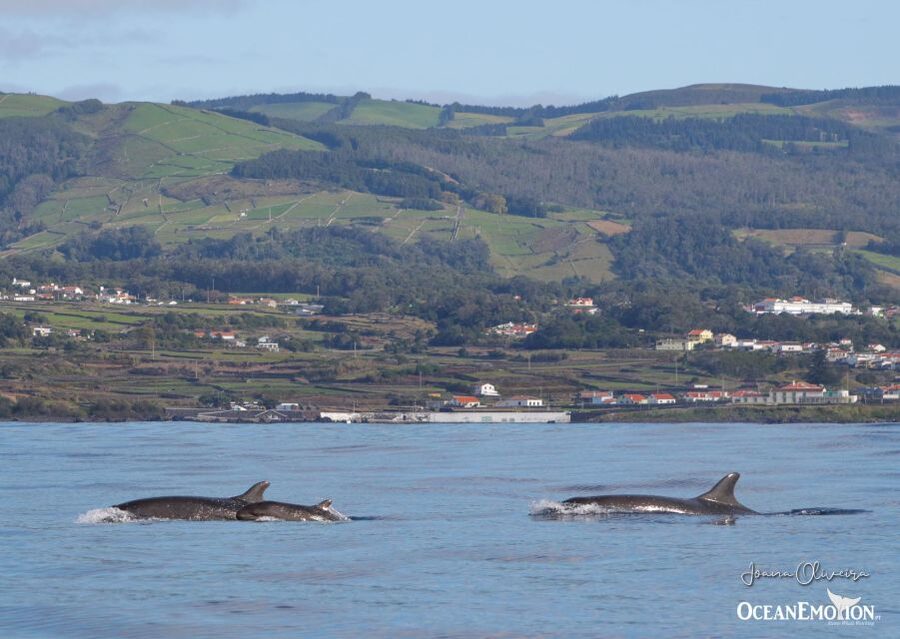
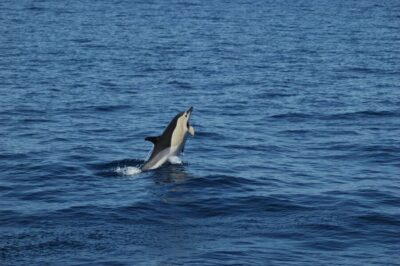
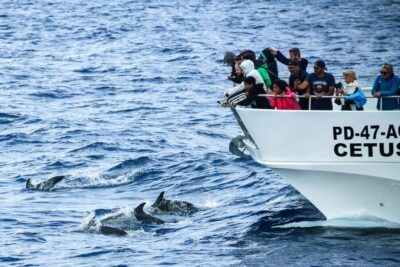
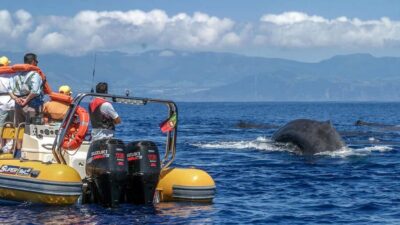
Let’s be honest: whales are harder than dolphins to spot on demand. Dolphins often travel in groups and can be easier to track once you find the right area. Whales can surface in less predictable patterns, and some species may show more briefly.
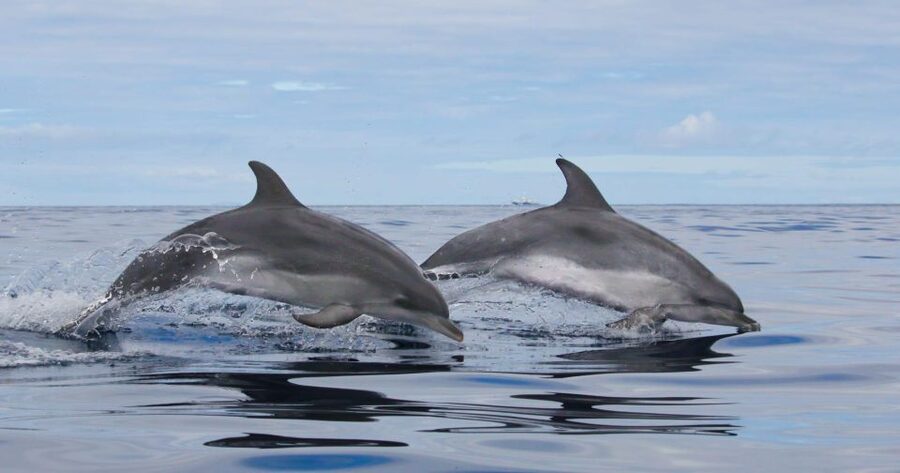
The tour’s own approach supports this reality. It includes a sighting guarantee, but the guarantee is not for a specific animal. You are committed to a viewing of at least one of the whales or dolphins present in Azorean waters during the tour. That means you can have a dolphin-forward experience, or a whale-forward one, or a mix.
This matches the reality people celebrate after the trip. In one reported outing, a guide named Iara brought so much energy that the whole group leaned in, and the day ended up with six species. Another example included two dolphin species traveling in a large pack, plus a Bryde’s whale circling in a calm, patterned way. Those outcomes show why you should stay open. The best day is the day the ocean gives you, not the day you forced it to give.
So here’s my advice: if you have one “must see” species, do not build your entire trip plan around it. Instead, treat the goal as cetaceans in general, plus your chance to learn from the guide along the way. You will likely enjoy it more, and your disappointment risk drops.
More Things to Do in the Azores



Duration, group vibe, and comfort tips that actually matter
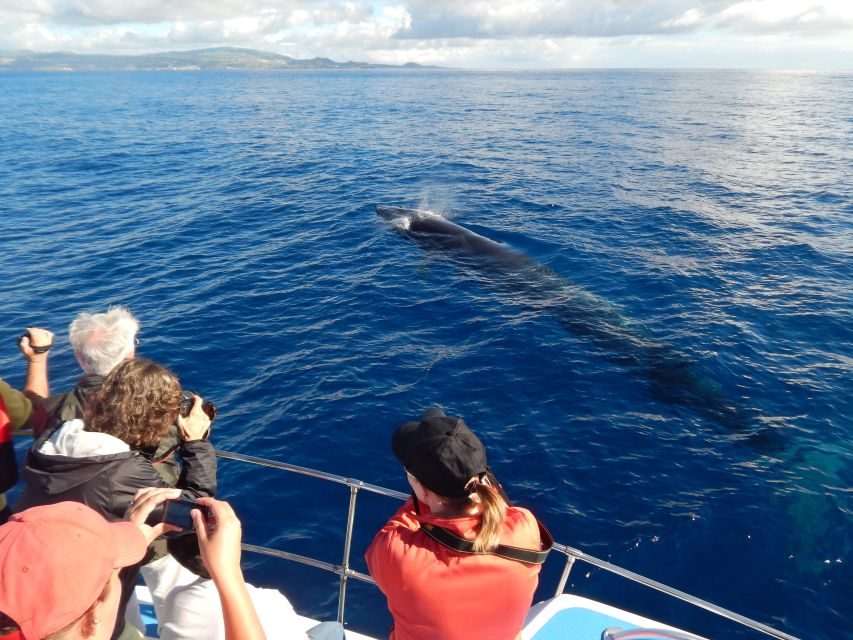
Your time on the water is about 2.5 hours. That is a sweet spot. Long enough to have a real shot at sightings, short enough that you are not exhausted by the end, even if the action takes a little time to start.
Group type can vary, with private groups available. That matters because wildlife watching has a timing problem. If you are in a larger group, you may spend more time coordinating. In a private group, you might have an easier time staying focused on the guide’s explanations and whatever species are active.
For comfort, focus on the basics the tour asks for:
- Bring warm clothing, since the jacket is helpful but not magic
- Carry water
- Wear comfortable shoes
Also pay attention to what’s not allowed: smoking and glass objects are not permitted, and alcoholic drinks in the vehicle are not part of the plan. That helps keep the trip safe and lets the group stay comfortable and focused.
Weather changes, and why the guarantee is more than fine print
Wildlife watching lives and dies by conditions. Wind, visibility, and sea state can affect where you can safely look and how long you can stay out.
This is where you get value from the tour’s policies. If you do not get sightings, you are offered a new free tour. If adverse weather makes the activity impossible, you get a full refund.
I like these protections because they align with what you are paying for: a structured attempt to see cetaceans, guided by real observation. When nature gets in the way, the tour is not pretending you are at fault for it.
Still, you should match your expectations to the real-world variable. Even with strong odds, the ocean’s schedule is not yours. The best mindset is: show up ready to learn, take notes on what you see, and trust the guide’s decisions.
Price and value: is $82 worth it?
At $82 per person, this sits in the mid-range for whale and dolphin experiences in the region. Is it a bargain? It is not “cheap.” But it also does not feel like you are paying for a generic boat ride.
Here’s what you are actually buying:
- A guided search with trained lookouts and a coordinated method
- A hidrophone experience that adds learning, not just sightseeing
- A wind jacket and insurance coverage
- The commitment to at least one sighting of whales or dolphins present
- A safety-forward approach guided by the Azores conduct code
And those reported outcomes you’ll hear about after the trip are exactly what you hope for: multiple species in good conditions, or exciting dolphin schools plus a whale encounter. The price makes more sense when you consider the added value of the system behind it, not just the boat-time.
One caution from a practical point of view: some people feel any tour can be expensive when whales are the hard part. That’s a fair complaint, but it is also why the sighting guarantee is important. You are not paying for a promise of whales only. You are paying for the best chance to see cetaceans, plus protection if the day does not deliver.
Who this tour suits best
I think this is a strong choice if:
- You love nature and want to watch wildlife rather than just snap quick photos
- You enjoy guided explanations and want to identify behavior
- You are comfortable with cool, potentially windy weather
- You want a short, focused outing that fits into an Azores itinerary
It may not suit you if you are pregnant or have back or heart problems, based on the tour’s stated limitations. If you fall into those categories, it’s worth choosing another way to enjoy the coast, perhaps from shore viewpoints, where your body is under less physical stress.
If you’re traveling as a family or group, private availability can also help keep the experience comfortable and less chaotic.
A simple decision guide: book or hold off?
Book this tour if you want the highest-value way to see whales and dolphins in the Azores in a compact time window. The lookout method, the respected approach, and the inclusion of a hidrophone make it feel like more than a standard wildlife outing.
Hold off or reconsider if you are chasing one specific species so hard that you would feel crushed by a dolphin-only day. In this activity, you can be flexible. Then you get to enjoy the real bonus of wildlife watching, the surprises you did not plan for.
If you do book, go in dressed for wind, arrive at the OceanEmotion office on time, and listen to the guide. The best days are not just luck. They are attention, patience, and a good match between how the animals behave and how you watch.
FAQ
How long is the whale and dolphin watching tour on Terceira?
The tour lasts about 2.5 hours.
Where do I meet the tour?
Meet at the OceanEmotion office (look for the red cover).
What is included in the price?
The tour includes a whale and dolphin spotter, a hidrophone, a tour guide, a wind jacket, and public liability insurance.
Do I get a refund if I do not see whales or dolphins?
If no sightings occur during the tour, you are offered a new free tour. If adverse weather conditions make it impossible to carry out the activity or if it is unavailable, the tour offers a full refund.
What should I bring?
Bring comfortable shoes, warm clothing, water, and comfortable clothes.
Is this tour suitable for everyone?
It is not suitable for pregnant women or people with back problems or heart problems.
What Terceira sent us most recently
- Private Caves tour with a Geologist
★ 5.0 · 43 reviews - Full Day – The Best of Terceira Island
★ 4.9 · 44 reviews - West Coast Van Tour (Half Day) | Terceira Island
★ 5.0 · 44 reviews - Terceira: Swimming with Wild Dolphins | Natural Habitat
★ 4.8 · 51 reviews - E-Bike Tour Monte Brasil | Terceira Island
★ 5.0 · 60 reviews - In and Around Terceira Island in a 4X4
★ 5.0 · 64 reviews - Terceira Island: Full Day Tour
★ 5.0 · 67 reviews - E-Bike Tour Monte Brasil | Terceira Island
★ 5.0 · 77 reviews
Whale Watching, compared.
Whale Watching & Islet Boat Tour w/ Marine Biologist
Read our review →
Funchal Bay: Dolphin & Whale Watch Luxury Catamaran Cruise
Read our review →
All Inclusive Whale and Dolphin Watching Luxury Tour
Read our review →
Madeira Dolphin and Whale Watching on a Ecological Catamaran
Read our review →
Dolphin and Whale Watching by Luxury Catamaran
Read our review →Browse the lists this tour appears in