
Reviewed · WHALE WATCHING
Whale and Dolphin Watching in Calheta, Madeira Island
Wildlife hunts faster than you expect. This whale and dolphin watching trip from Calheta uses a fast RIB boat plus a land spotter to chase moving cetaceans along Madeira’s coast. I love the close-up deck views and the small group feel, and you’ll get live guidance in English from the crew as you scan the water.
One possible drawback is that this is a bumpy, speedy ride. Whales are never guaranteed, and if you’re prone to motion sickness or you dislike choppy conditions, you’ll want to plan smart.
In This Review
- Key things I’d circle before you book
- Calheta and the smart strategy for finding cetaceans
- The boat ride reality: what the RIB trip feels like
- What you’re actually doing during the 2 hours
- The crew’s live commentary: turning sightings into real understanding
- Species chances in Madeira: dolphins are common, whales are the bonus
- Views from the deck: Madeira’s coastline in motion
- Price and value: what $72.56 buys you
- Practical planning tips that actually help
- What to bring
- How to reduce motion sickness
- Weather and rebooking
- Physical fitness and pets
- Who should book this trip, and who should think twice
- Should you book whale and dolphin watching with H2O Madeira?
- FAQ
- How long is the whale and dolphin watching tour in Calheta?
- Where do I meet for the tour?
- Is the tour offered in English?
- How many people are on the boat?
- Are food and drinks included?
- What happens if the weather is poor?
Key things I’d circle before you book
- Spotter on land, coordinated approach: A spotter watches with binoculars and relays coordinates so the crew can move gently and efficiently.
- RIB speed helps when animals are on the move: The boat can act quickly, which matters because cetaceans are migratory and locations change.
- Small group max 12 travelers: Expect a more personal experience than the big, cattle-car type boat tours.
- Live commentary that turns sightings into understanding: You’re not just looking, you’re learning while you look.
- Respect for wildlife is part of the operation: The crew aims to limit how long they stay with a pod and avoid disturbing animals.
Calheta and the smart strategy for finding cetaceans
Calheta is a great base if your priority is real-time wildlife watching. The big reason this works is the setup: Madeira’s cetaceans are migratory, so their coordinates are never constant. That means the trip is less like following a fixed route and more like tracking what’s happening out there right now.
Here’s the practical value for you: you’re not spending the whole time hoping. A spotter on land uses binoculars to find the animals first, then feeds that intel to the crew. When the crew gets the update, the boat can respond quickly and aim for a gentle approach. You’ll feel the difference because the experience is built around searching, not wandering.
Also, you’ll be on the Atlantic side of Madeira, which gives you wide coastal visibility from the deck. When conditions cooperate, it’s one of the fastest ways to turn a scenic island morning or afternoon into a full wildlife session.
The boat ride reality: what the RIB trip feels like
Let’s talk about the part that can make or break it for you: the RIB speed. This is not a slow sightseeing cruise. It’s a RIB (rigid inflatable boat) style outing built to move fast, sometimes up to 37 knots, and to shift positions quickly when the spotter updates.
That speed is why you have better chances. It also means:
- Expect a ride that can be bumpy, especially with wind or choppy water.
- You may want to avoid this if you have injuries, are older, or are pregnant, since the ride can be rough in spots.
- If you’ve had motion sickness before, treat that as a serious hint.
From the feedback people share, many visitors manage just fine with basic tactics. One of the most useful tips is to sit where the crew suggests if you get nauseous. People who tend to feel ill often do better toward the back and with a steady focus on the horizon rather than your shoes. If you know your body, pack your sea sickness plan, even if you feel confident.
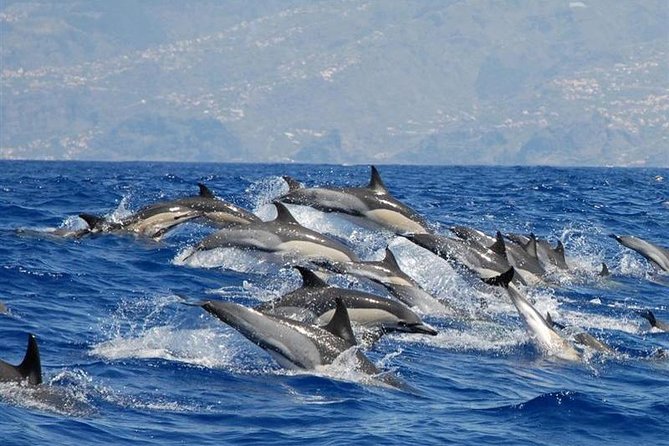
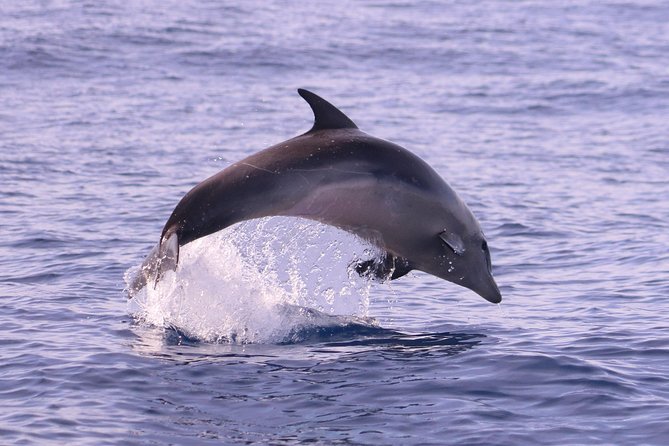
On the plus side, the RIB format keeps viewing intimate. You’re close enough to watch behavior, like dolphins leaping and milling around the boat, without staring through a wall of distance.
What you’re actually doing during the 2 hours
The schedule is simple, and that simplicity is good. The experience is about cruising out from Calheta, searching with help from the land spotter, and scanning for cetaceans. The exact timing can flex based on what the crew finds, and that flexibility is part of what keeps the hunt efficient.
Here’s the flow you should expect:
- You meet at H2O Madeira at Avenida D. Manuel I in the Porto de Recreio da Calheta area.
- You board the RIB and get live commentary from the crew as you head out.
- The spotter coordinates the search. When animals are spotted, the crew makes a gentle approach for the best viewing.
- You keep moving enough to maximize the chance of more than one species, since time on a pod is time you cannot always get back.
- When the trip ends, it returns to the original meeting point.
Why this matters: the hunt is built around the fact that cetaceans can change location quickly. You’re not locked into one spot for the entire session. If you’re lucky, you’ll get multiple sightings in one outing. If you’re not, at least you’ll know you were actively searching, not just circling.
The crew’s live commentary: turning sightings into real understanding
The best wildlife trips don’t just show animals. They help you interpret what you’re seeing. This one leans hard into that.
What you can expect from the crew:
- Live narration in English
- Quick ID help so you can separate species in the moment
- Explanations tied to how cetaceans behave in Madeira waters
You’ll also see that the crew takes approach and timing seriously. Many people highlight that they don’t linger in a way that would disturb the animals. That matters to you even if you only care about photos, because responsible viewing often means a calmer pod, clearer behavior, and better chances to see what’s going on naturally.
One extra perk that comes up in guest stories is the crew’s conservation mindset. On some trips, they even collect plastic floating in the ocean. That’s not the main reason to book, but it’s a nice signal that this company thinks beyond just spotting.
Species chances in Madeira: dolphins are common, whales are the bonus
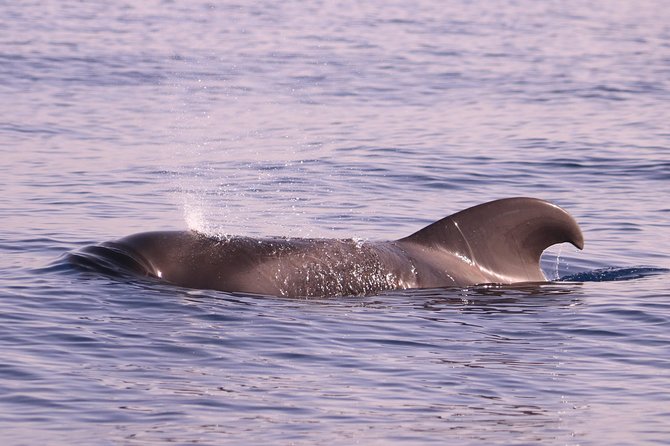
Let’s be honest about the whale part. Whale and dolphin watching always comes with uncertainty. Still, the setup here improves the odds, and you’re likely to see dolphins.
Based on the sightings people report, you may encounter:
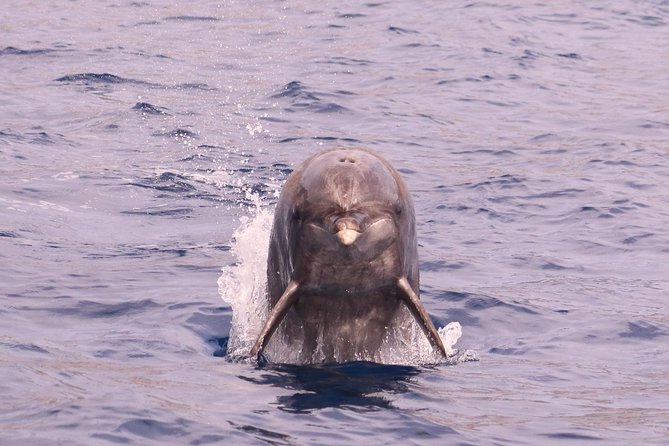
- Bottlenose dolphins
- Common dolphins
- Spotted dolphins
- Pilot whales
- Risso’s dolphins
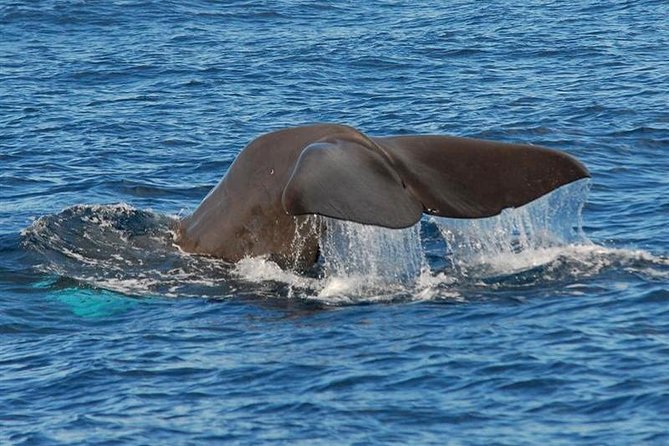
- Sperm whales
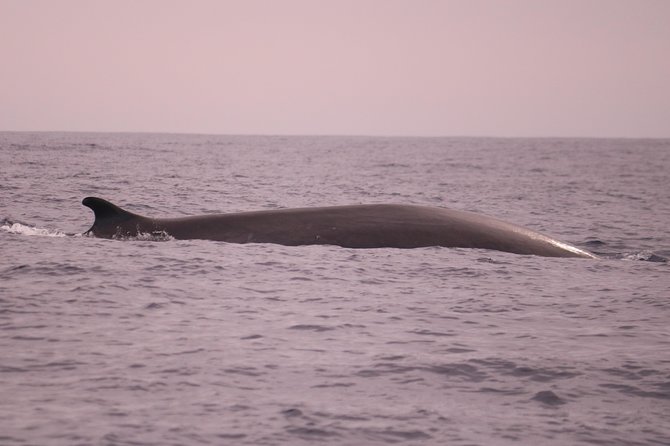
- Fin whales
- Humpback whales
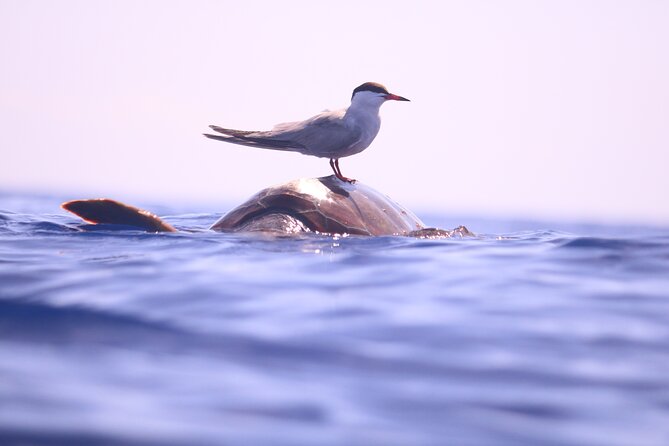
You might also spot other marine life like manta rays, seals, turtles, and even flying fish during exciting moments at the surface.
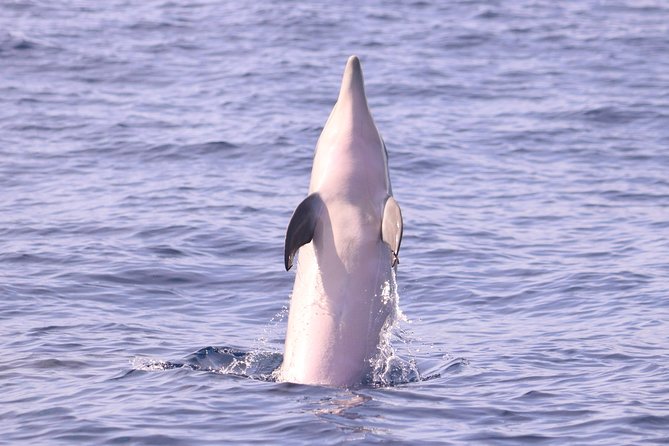
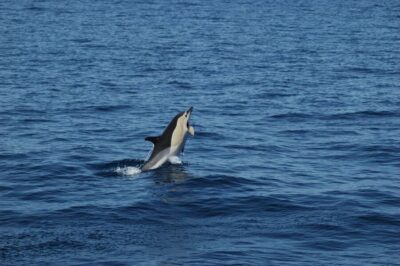
Here’s the value of the land spotter plus quick boat response: it helps you catch pods while they’re nearby. Because the animals are migratory and move, seeing dolphins quickly often comes down to timing. When conditions are right, dolphins can swim close to the boat, jump, and surround it in a way that turns a normal cruise into a real show.
Then whales can be the extra surprise. Some trips include whales like sperm whales, and other outings go all the way to larger baleen whales like fin or humpbacks. But in the real world, weather and animal movement decide what happens.
Also note the conservation approach again. If the crew decides conditions are not good enough, they may choose to stop the hunt rather than push too hard. That can feel frustrating, but it usually reflects good judgment.
Views from the deck: Madeira’s coastline in motion
You’re not just looking at animals. You’re watching Madeira from the Atlantic, which changes how the island feels.
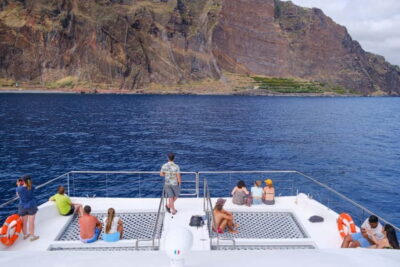
From the deck, you get coastal views that feel more alive than from shore. The coastline stretches out while the boat moves, so the scenery keeps updating. That motion helps keep the experience engaging even before the first sighting.
If you’re doing this as part of a Madeira trip, it’s one of the best “perspective flips.” Instead of views from roads or viewpoints, you get the island from water level, with the pace of the hunt driving what you see next.
Weather affects the vibe. Sunny conditions make everything feel easier and brighter. On cold, grey days, you’ll want to bundle up because water and wind can cut fast. The actual wildlife watching can still happen on overcast days, but comfort matters for staying alert and enjoying the experience.
Price and value: what $72.56 buys you
At $72.56 per person for about 2 hours, you’re paying for three things that matter:
- A fast boat built to follow animals
- Active coordination from a land spotter
- Live onboard commentary and a small group size (max 12)
You’re not paying for hotel pickup or for a long meal-driven excursion. Food and drinks are not included, so plan for that. Also, because the experience depends on weather and animals, you’re not buying a guarantee that whales will appear. You are buying access to a system designed to find them.
The small group number is part of the value. With fewer people, it’s easier to get good sightlines, and the crew can manage approach and behavior more carefully. That tends to improve both the viewing and the overall feel of the ride.
If you’re budget checking, think about what else you could do in Calheta or Madeira. Whale and dolphin watching is one of the few island activities where the “wow” factor can be spontaneous, and where the boat and spotter coordination directly impact your odds. For many visitors, that’s worth the price.
Practical planning tips that actually help
What to bring
Since you’ll be on a fast RIB in open water, dress for wind and splash. Even if the day looks mild on land, the sea-level chill can surprise you. Pack layers you can peel on calm stretches, and bring something that helps you stay warm if you get wet.
Also bring:
- Your medication plan if you take anything for motion sickness.
- Sunglasses and water-resistant sunscreen if the sun shows up.
- A light layer or jacket you can keep on your body, not just in a bag.
How to reduce motion sickness
If you know you’re sensitive, don’t rely on luck. People who fare best tend to:
- sit where the crew advises for stability
- look toward the horizon instead of down
- avoid sudden head movements when the boat hits chop
If you’re the type who needs it, take sea sickness supplements before you board.
Weather and rebooking
This trip requires decent conditions. If it’s canceled due to poor weather, you’ll be offered a different date or a full refund. That flexibility can be a lifesaver, especially if you’re squeezing Madeira into a busy itinerary.
Physical fitness and pets
You’ll want moderate physical fitness. The ride is active and can be rough. No pets are allowed on board.
Who should book this trip, and who should think twice
This is a strong fit if:
- you want dolphins for sure and whales as a bonus
- you like hands-on nature experiences where the crew actively searches
- you want a small group setup instead of a crowded boat
- you can handle wind and a fast boat ride
It may not be your best choice if:
- you get motion sickness easily and can’t control it
- you have limitations that make bumpy rides tough
- you expect a calm, luxury-style cruise
For families, it can work well. Several families mention kids enjoying the experience and the crew keeping things fun without losing control.
For couples and solo travelers, it’s also a great value because the boat is small and the experience is shared, not scattered.
Should you book whale and dolphin watching with H2O Madeira?
If your goal is maximum time searching and a crew that tries to find cetaceans quickly, I think this is a book-worthy option. The combination of land spotting, rapid boat movement, and live English commentary makes the trip feel purposeful, not random.
Just keep your expectations real:
- Dolphins are the most reliable highlight.
- Whales are possible, sometimes spectacular, but still wildlife.
- The ride can be bumpy, so plan for comfort.
If you’re the type who can handle sea spray and you’re excited by the idea of chasing moving animals, this is one of the more worthwhile ways to spend a chunk of your Madeira time from Calheta.
FAQ
How long is the whale and dolphin watching tour in Calheta?
It runs for about 2 hours.
Where do I meet for the tour?
You meet at H2O Madeira, Avenida D. Manuel I, Porto de Recreio da Calheta, 9370-133 Vila da Calheta, Portugal. The tour ends back at the meeting point.
Is the tour offered in English?
Yes. The tour is offered in English.
How many people are on the boat?
This activity has a maximum of 12 travelers.
Are food and drinks included?
No. Food and drinks are not included.
What happens if the weather is poor?
The experience requires good weather. If it is canceled due to poor weather, you will be offered a different date or a full refund.
Pods Off the Headlands
- Albufeira: 2.5-Hour Benagil Caves & Dolphin Watching
★ 4.6 · 10,710 reviews - From Funchal: Ecological Catamaran Dolphin Whale Watching
★ 4.5 · 8,204 reviews - Albufeira: Benagil Caves & Dolphin Watching Speed Boat Tour
★ 4.6 · 6,316 reviews
Whale Watching, compared.
Whale Watching & Islet Boat Tour w/ Marine Biologist
Read our review →
Funchal Bay: Dolphin & Whale Watch Luxury Catamaran Cruise
Read our review →
All Inclusive Whale and Dolphin Watching Luxury Tour
Read our review →
Madeira Dolphin and Whale Watching on a Ecological Catamaran
Read our review →
Browse the lists this tour appears in