
Reviewed · SKIP THE LINE
Coimbra: A Local’s Tour of the University + Skip-the-Line
Coimbra’s library feels like a cathedral. This 1.5-hour tour strings together the University of Coimbra’s most important spaces, with skip-the-line access that helps you beat the bottlenecks. You also get an expert guide, and past groups have praised guides like José, a Coimbra history graduate, for making the campus story click fast.
I love the way the route moves from the Paço das Escolas courtyard into the Biblioteca Joanina, because it shows you how learning, power, and design all sit in the same place. I also like the details you only get with a guide, like the Porta Férrea arch symbolism and the conservation oddity of bats in the library.
One thing to consider: the tour includes climbing stairs, and it is not a good fit for wheelchair users or mobility impairments. Also, the university caps library access (50 people per slot), so timing can affect how smoothly the Joanina visit lands within your schedule.
In This Review
- Key highlights you will actually care about
- Starting at Dom Dinis, then into Paço das Escolas
- Porta Férrea, and why students still link themselves to the gate
- Biblioteca Joanina: Baroque grandeur, 60,000 volumes, and the bat story
- Prisão Acadêmica beneath the library: the education side no one expects
- Real Capela de São Miguel: azulejos, gilding, and a living schedule
- Sala dos Capelos and Via Latina: where rituals explain the university
- Price and value: $76 for a packed 90 minutes
- How to plan your timing for the smoothest visit
- Who this Coimbra tour suits best
- Accessibility and physical comfort note
- Should you book this Coimbra University skip-the-line tour?
- FAQ
- Where is the meeting point for the tour?
- How long is the University of Coimbra + Biblioteca Joanina tour?
- What is included in the price?
- Is flash photography allowed inside the library?
- Is this tour suitable for wheelchair users or limited mobility?
- What languages are the guides available in?
Key highlights you will actually care about

- Skip-the-line entry to the Biblioteca Joanina (limited to 50 people per time slot)
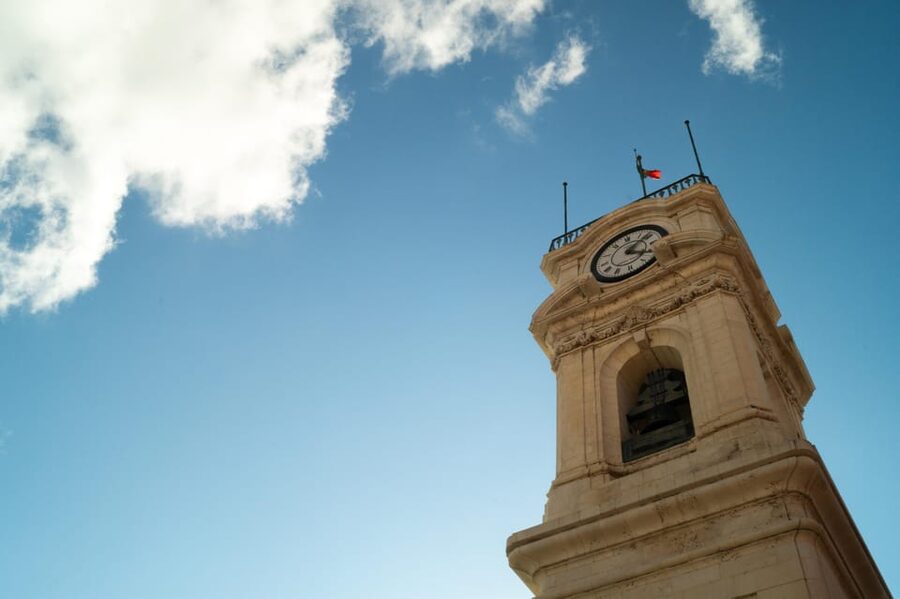
- Paço das Escolas as the university’s historic core and UNESCO-listed center of gravity
- Porta Férrea (1634), with statues of founders and symbols of the faculties
- Biblioteca Joanina (1717 to 1728) with 60,000 volumes and a bat-supported insect control system
- Real Capela de São Miguel with gilding, azulejos, and an organ with over 2,000 pipes
- Sala dos Capelos and Via Latina that connect monarchy, academia, and the language shift
Starting at Dom Dinis, then into Paço das Escolas
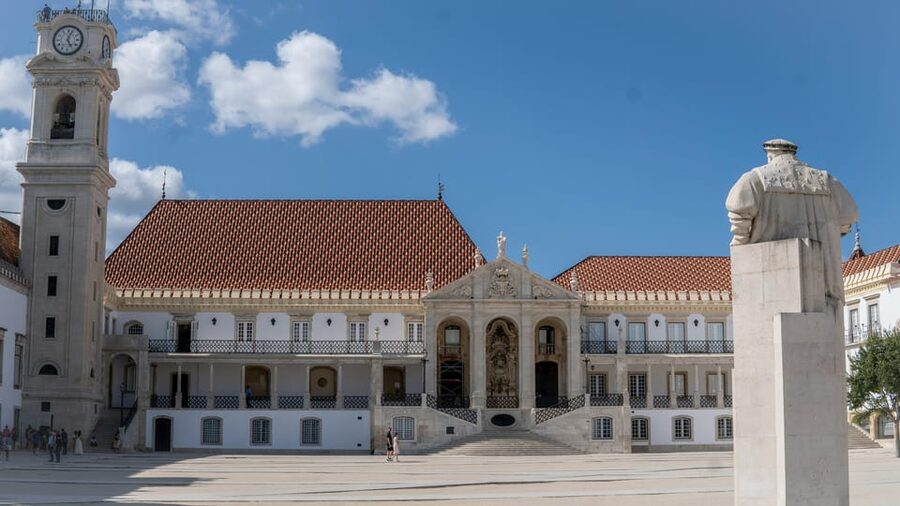
Your tour begins at Dom Dinis, meeting the guide outside in front of the iron door. If you want this experience to feel relaxed, arrive a few minutes early so you do not have to hunt down the group at the last second.
Once you start moving, you quickly step into the Paço das Escolas, the living heart of the University of Coimbra. The space used to function like a royal palace courtyard, and after the university shifted from Lisbon, it became where academic life turned into a daily routine. That past-as-present feeling matters, because it explains why the buildings are so formal and why the rituals feel taken seriously.
You’ll circle the key architectural elements and hear how the university became a cultural engine, not just a school. This is where many first-time Coimbra visits feel confusing if you go on your own, because you are seeing beauty without the why.
A few more Coimbra days, taken slowly
- Coimbra: Live Fado Show with Glass of Port Wine★ 4.7 · 998 reviews
- University of Coimbra guided tours without queue★ 5.0 · 518 reviews
- Guided tour of the University and city of Coimbra.★ 5.0 · 377 reviews
- Coimbra: Mondego River Kayaking Tour★ 4.7 · 324 reviews
Porta Férrea, and why students still link themselves to the gate
Next comes the Porta Férrea, a triumphal arch built in 1634. It is not just decoration. The arch is designed as a symbolic summary of the university’s legacy, and the guide helps you read it like a text.
The Porta Férrea was designed by António Tavares, and it features statues of D. Dinis and D. João III. If you look closely, you also get faculty-related references, plus the story behind how the university shaped student identity over time.
There is also a tradition linked to the gate, where students tie their academic attire to the arch once they finish their studies. Even if you have never seen anything like this elsewhere in Portugal, it makes the place feel personal. It turns stone into a timeline, with students acting like the newest pages.
Practical note: this is the kind of stop where good shoes help, since you’ll keep repositioning for angles and details. If you like architectural symbolism, you will enjoy this part more than you expect.
Biblioteca Joanina: Baroque grandeur, 60,000 volumes, and the bat story
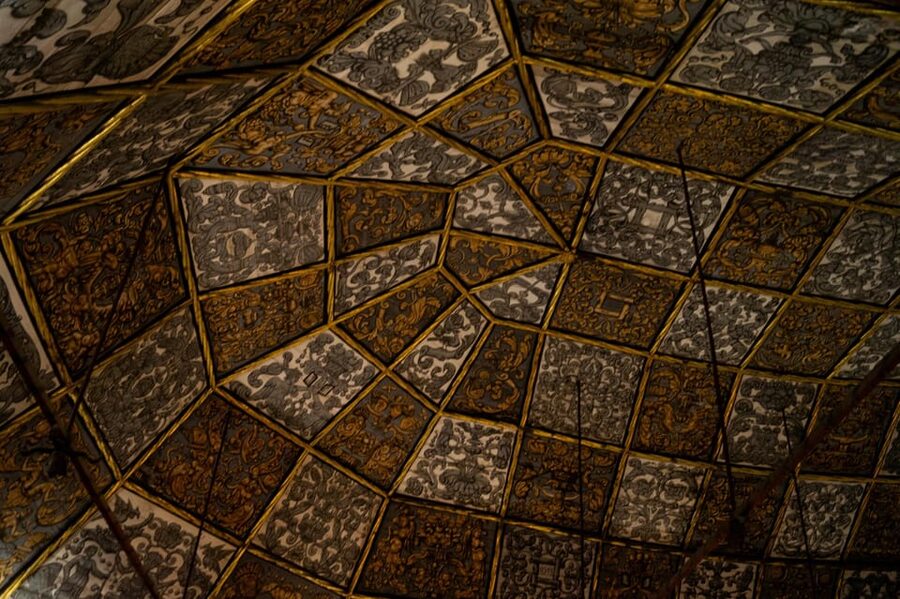
The main event is the Biblioteca Joanina, and the “skip-the-line” piece is genuinely worth it here. The library is limited to 50 people per time slot, which means the wrong time of day can turn your visit into a long wait. Having the right entry window protects your time and keeps the pace of the tour from collapsing.
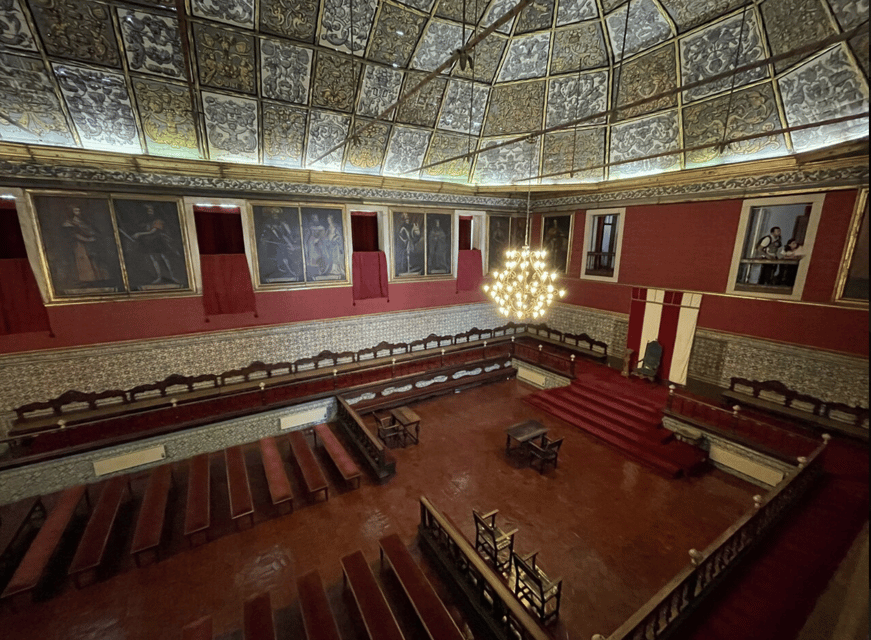
The Joanina was built between 1717 and 1728 under D. João V, and it is one of those rooms where you feel like you are walking inside a crafted dream. It holds over 60,000 volumes, but the guide will keep the focus on what you can see and what it means.
Look for the gilded woodwork, frescoed ceilings, and the careful use of exotic hardwoods. The effect is dramatic, but it is also functional, because the library was designed with conservation in mind.
One of the most memorable details is the role of bats. The guide explains how bats help control insects, which supports preservation. It is an unusual fact that makes perfect sense once you hear the logic, and it is the kind of story guides like José have been praised for telling well.
Inside the library, flash photography is prohibited. Regular photos are allowed, so if you bring a camera, just keep your flash off and focus on steady shots of the shelves, carvings, and ceiling work.
Prisão Acadêmica beneath the library: the education side no one expects
After the Joanina, you descend to the Prisão Acadêmica, a medieval prison located beneath the library. This stop changes the tone. You go from gilded beauty to a reminder that universities once enforced rules through very physical consequences.
The guide shares stories about students who were disciplined in narrow cells. It is not there to shock you for shock’s sake. It helps you understand university autonomy and how academic institutions guarded their own authority.
For me, this is one of the best “value” parts of the tour because it makes the university feel real. If you only see the ornate rooms, Coimbra can start to look like a museum set. This prison stop anchors the story back in everyday student life and its risks.
This section also helps explain why the university’s public image and private enforcement could live under the same roof. You will leave the library with a more complete picture of how Coimbra worked.
Real Capela de São Miguel: azulejos, gilding, and a living schedule
Then you head to the Real Capela de São Miguel, where 12th-century origins meet later Baroque embellishments. The chapel is visually rich, with gilded altars and azulejos that catch the light and guide your eye across surfaces.
What makes this stop especially good for visitors is that the chapel is not frozen in time. It remains an active part of university life, hosting religious ceremonies, concerts, and weddings. That matters because you are not only admiring art. You are seeing it used.
There is also a grand organ with over 2,000 pipes. If you have any interest in music or Portuguese cultural life, this detail makes the chapel feel bigger than a pretty interior. It becomes a performance space, not just a viewing space.
Tour tip: take a moment before you rush for photos. The chapel benefits from a slower look, since the azulejos and gilding can be easier to spot once you give your eyes a minute.
When the light changes over Coimbra, try these:


Sala dos Capelos and Via Latina: where rituals explain the university
Next is the Sala dos Capelos, the university’s ceremonial hall. This is the place where academic life turns into performance, and it is also where you learn what Coimbra does with tradition.
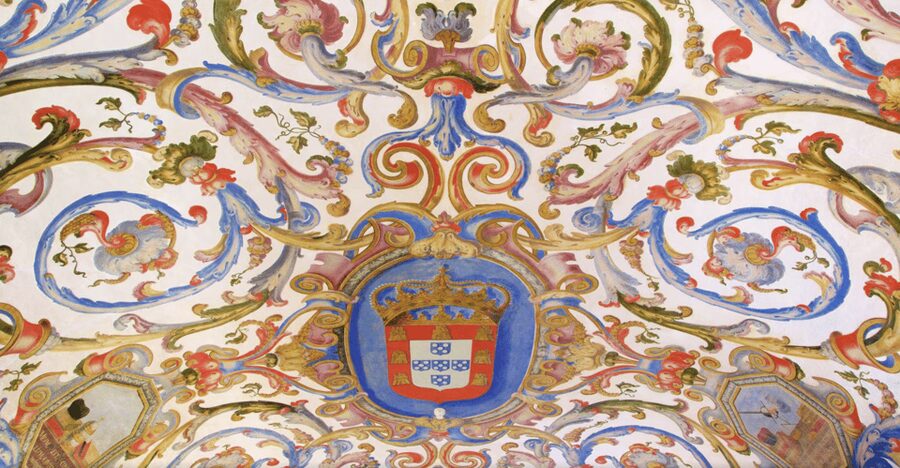
The room was once a royal throne room, and it still carries that sense of ceremony. You will notice blue azulejos, grotesque ceiling motifs, and portraits of Portuguese monarchs, all arranged to communicate authority.
The guide connects those royal visuals to what happens today, including doctoral defenses. That is a powerful contrast, from monarchy to modern academic ritual, all within one architecture-driven setting.
Finally, you finish at Via Latina, a neoclassical colonnade overlooking the Paço das Escolas. Built in the 18th century, it symbolizes the university’s transition from Latin to Portuguese as the official teaching language. It is a small detail that turns into a big idea: language shapes who gets to join the conversation.
From here, you also get views of Coimbra, which helps the tour land with a sense of place rather than just a list of rooms. It is a nice way to close, because your brain gets to stitch everything together from one broader perspective.
Price and value: $76 for a packed 90 minutes
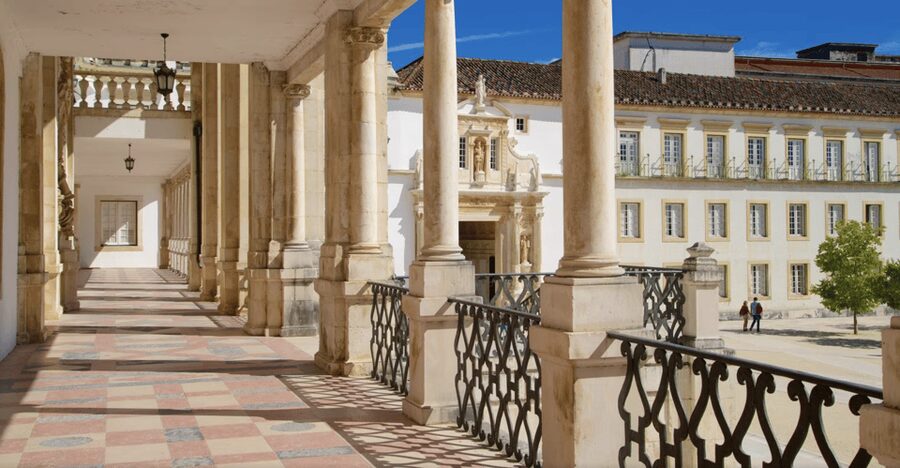
At $76 per person for about 1.5 hours, the key value is not just the price tag. It is what you get for that time window: a guided story that connects multiple major sites, plus entrance covered, plus skip-the-line access for the Biblioteca Joanina.
Coimbra’s University buildings can be overwhelming if you wander. You can end up spending time figuring out what you are looking at, and the Joanina in particular can be frustrating if the entry timing does not line up with your day. This tour’s structure solves that, and it keeps you moving through the campus in an order that builds meaning.
You also get live guidance in English or Portuguese, depending on the option you choose. Past participants have highlighted guides who bring both city history and university lore, including José, Rogério, and David, with stories that make rituals and architecture feel understandable instead of academic.
So the real question is: do you want an efficient, narrated “big picture” tour that includes the Joanina? If yes, the price is fair. If you mainly want photos and you enjoy researching on your own, you might not need a guided format.
How to plan your timing for the smoothest visit
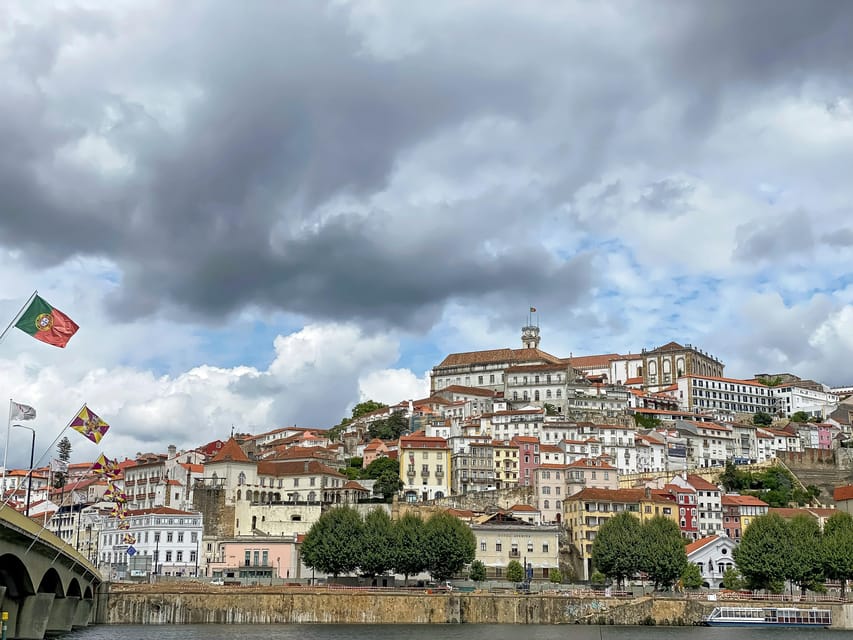
This tour is short, so timing matters more than you might expect. If you can choose an earlier start time, I’d do it. You will have less pressure from crowds, and the library time-slot limit is easier to manage when the day is running cleanly.
Wear comfortable shoes. You are dealing with stairs as part of the experience, and if you slow down, you may feel rushed near the end. Flash photography is a no inside the Biblioteca Joanina, so plan your camera settings beforehand.
If you are traveling with a small group, private group options are available. That can help if you like asking questions and you do not want to lose your place in a larger flow.
Who this Coimbra tour suits best
This is a strong fit for you if you:
- want the highlights of the University of Coimbra without spending your morning sorting out what to see
- care about architecture plus the stories behind it
- enjoy hands-on historical detail, like traditions at Porta Férrea or the bat conservation fact in the library
- appreciate a tight, 90-minute format with a clear finish at a viewpoint
It is also a great choice if you are history-minded and want a guide who can connect Portuguese kings, institutions, and student life into one coherent picture. People who were impressed by guides in the past have specifically praised the way university legends and rituals were explained.
Accessibility and physical comfort note
This tour is not a fit for wheelchair users and is not recommended for people with mobility impairments, mainly because it involves stairs. If mobility is a concern, you may want to look for an alternative route or a tour with a flatter plan, since “short” does not always mean “easy” in an old campus.
Should you book this Coimbra University skip-the-line tour?
If your goal is to see the Biblioteca Joanina and the University of Coimbra’s key ceremonial spaces without wasting time on logistics, I’d book it. The combination of skip-the-line entry, a guided narrative that connects sites, and standout details like bats and the students’ gate tradition make it feel like more than a sightseeing loop.
I would skip it only if you cannot manage stairs or if you want a purely self-paced visit where you can linger in one room for a long time. Otherwise, for most visitors, this is a smart way to get the Coimbra “why” in just 1.5 hours.
FAQ
Where is the meeting point for the tour?
You meet the guide outside by the iron door at Dom Dinis.
How long is the University of Coimbra + Biblioteca Joanina tour?
The tour lasts about 1.5 hours.
What is included in the price?
The price includes a guided tour and an entrance ticket, with skip-the-line access for the Biblioteca Joanina.
Is flash photography allowed inside the library?
No. Flash photography is prohibited inside the Biblioteca Joanina.
Is this tour suitable for wheelchair users or limited mobility?
No. The tour involves climbing stairs and is not suitable for wheelchair users or people with mobility impairments.
What languages are the guides available in?
The tour is available in English and Portuguese.
What Coimbra sent us most recently
- All of Tomar’s history and loads of fun.
★ 5.0 · 39 reviews - Fatima Private Tour: Shrine, Sacred Way & Shepherds’ Hometown
★ 5.0 · 41 reviews - Schist Villages of Lousã Mountain, half-day from Coimbra
★ 5.0 · 42 reviews - An adventure through the Forest and Palace of Bussaco – Coimbra
★ 5.0 · 44 reviews - A tour between Cascades and Schist Villages, Piodão
★ 5.0 · 46 reviews - Soft Canyoning, river Ceira, Góis, Serra da Lousa, Coimbra
★ 5.0 · 48 reviews - University of Coimbra – more complete and private visit, ticket included
★ 5.0 · 53 reviews - Time travel at the Convent of Christ Tomar
★ 5.0 · 56 reviews
Skip the Line, compared.
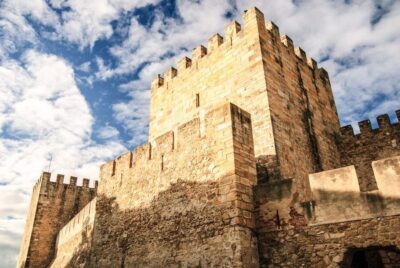
Sao Jorge Castle Skip-the-Line Ticket with Guide
Read our review →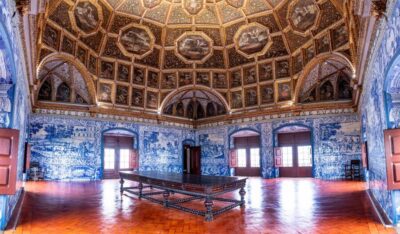
National Palace and Gardens Skip-the-Line Ticket
Read our review →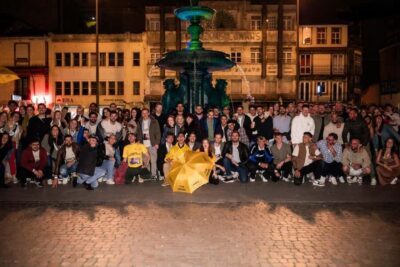
4 Bar Pub Crawl, 7 Drinks, & Skip-the-Line Club Entry
Read our review →
Porto Pubcrawl: 5h,7 Drinks,4 bars &Skip the line Club Entry
Read our review →Browse the lists this tour appears in