
Reviewed · WHALE WATCHING
Horta: University Startup Whale and Dolphin RIB Boat Trip
Big animals, right off the Azores coast. This Horta trip pairs a fast RIB boat ride with real university marine research, so you are not just chasing views, you are learning what is happening under the surface around Faial and Pico.
I love that you get a marine biologist on board to explain what you are seeing, and I love the focus on species and behavior, not just a generic whale show. One caution, the boat is semi-rigid and the sea can feel choppy, so it is not a good match for severe back problems or pregnancy.
In This Review
- The payoff is a guided wildlife search, not a long day
- Key things to know before you go
- Horta’s whale world runs on local spotters
- The 10-minute safety briefing that sets expectations
- Starting at Naturalist, then out of the marina fast
- How the boat route works during the 30-minute whale-watching window
- Why a marine biologist on board changes the experience
- Species you can realistically aim for in these waters
- Whales: resident and migratory patterns
- Dolphins: resident species with a lot of movement
- Turtles, sharks, and other sea life
- Birds: corys and shearwaters add a second layer
- What you get for the money: $101 for 3 hours with real value
- Group size and how that affects your sighting time
- Comfort tips that make choppy water feel manageable
- The reality of whale watching here: success is about patience and movement
- Language and communication, because this is a learning trip
- Morning or afternoon, how to choose your best window
- Should you book this Horta whale and dolphin RIB trip?
The payoff is a guided wildlife search, not a long day
You get about 3 hours on the water, and the trip is built around spotting from land first, then going out with up-to-date info. That means you can realistically aim for 2 to 3 different cetacean species per outing, plus the seabirds and sea life that show up when feeding happens nearby.
If the weather turns, the company can reschedule, so have a flexible day in mind.
Key things to know before you go
- University marine researcher on board: you are hearing current facts while you watch, not just after the trip.
- 2 to 3 cetacean species per tour is the norm: sperm whales can be year-round, while blue and fin are more common in spring.
- Birdwatching is part of the outing: look for Corys, great and manx shearwaters, plus common and roseate terns.
- Other wildlife can stack up fast: turtles, squid, octopus, sharks, and even flying fish can appear.
- Waterproof gear is included: it makes a big difference when you get splashed on a RIB.
- Weather drives everything: if conditions are rough, you may shift dates with full refund if cancelled.
More Portuguese water, engine low:
- Azores: Whale Watching & Islet Boat Tour w/ Marine Biologist★ 4.7 · 2,945 reviews
- São Miguel: Whale-Watching Cruise with Marine Biologist★ 4.6 · 1,311 reviews
- São Miguel: Glass Bottom Boat Tour with Snorkeling★ 4.7 · 633 reviews
- Vila Franca Islet: Bioligist Guided 0% Carbon e-Boat Tour★ 4.6 · 420 reviews
Horta’s whale world runs on local spotters
The Azores are one of the few places in Europe where the ocean stays busy year-round, and that matters for whale watching. Here, the process starts before you even step into the boat, with whale spotters watching from land around Faial and Pico.
That land-based spotting is why the trip has a strong rhythm: you go out with a plan, then you adjust quickly when animals move. You are also getting a briefing that sets the stage, including what cetaceans typically occur in the region and when different species are more likely.
The 10-minute safety briefing that sets expectations
Before you go anywhere, there is a short safety briefing, about 10 minutes. For me, that is one of the best parts of these high-speed outings, because you learn how to ride comfortably and what to do when the boat changes direction.
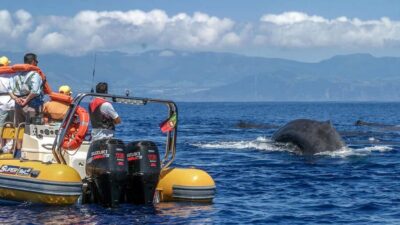
The ride is on a semi-rigid RIB, built for speed and maneuvering. That is great for getting to animal sightings efficiently, but it also means you may feel more motion than on a larger slow boat.
Starting at Naturalist, then out of the marina fast
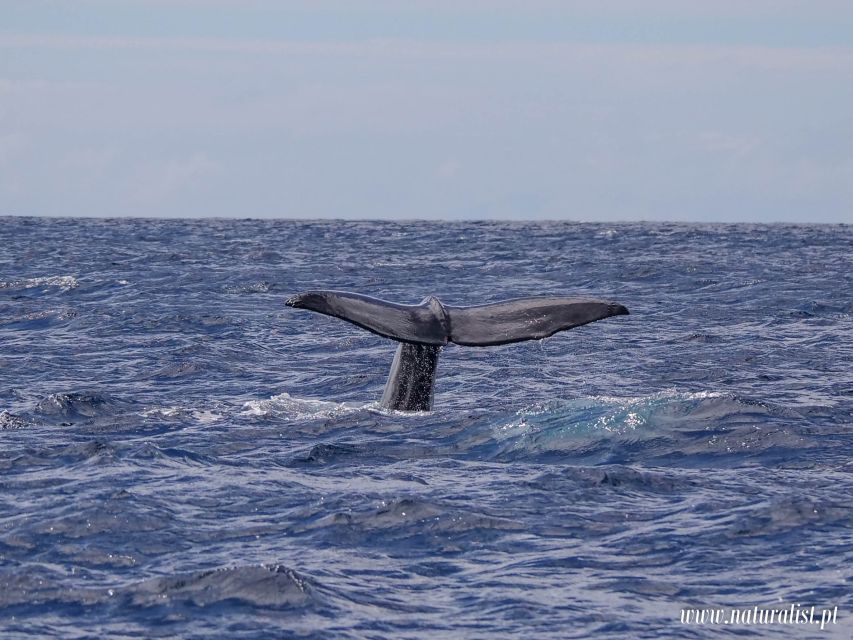
Your meeting point is Naturalist – Science & Tourism Whale Watching in the marina in Horta. Plan to arrive about 15 minutes early, because you want time to get waterproof gear sorted and get oriented.
Once you depart, the tour immediately turns into a guided wildlife search. You start with a quick photo stop and orientation, then you shift into dolphin watching and marine life viewing while scanning for whales.
How the boat route works during the 30-minute whale-watching window
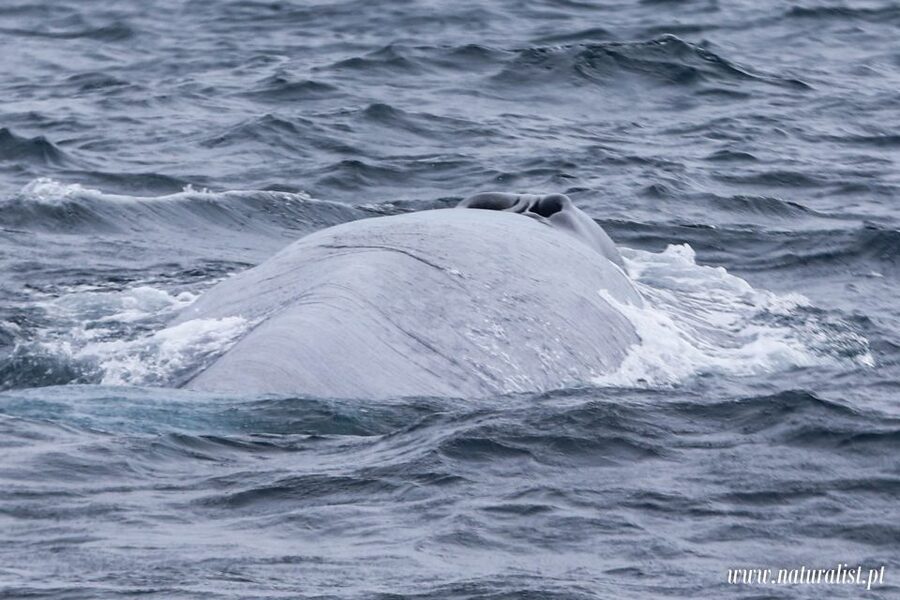
The main whale watching time is built around continuous scanning and repositioning. You can expect scenic views as you go, and the guide keeps the focus on what you should be watching for, from surfacing patterns to bird behavior that often signals feeding activity.
A practical detail: if you are seated toward the front, you should expect to get wet. The company provides waterproof clothes, and that helps a lot, but bring waterproof shoes or shoes that dry quickly if you hate soggy feet.
More dolphin pods off the headlands:



Why a marine biologist on board changes the experience
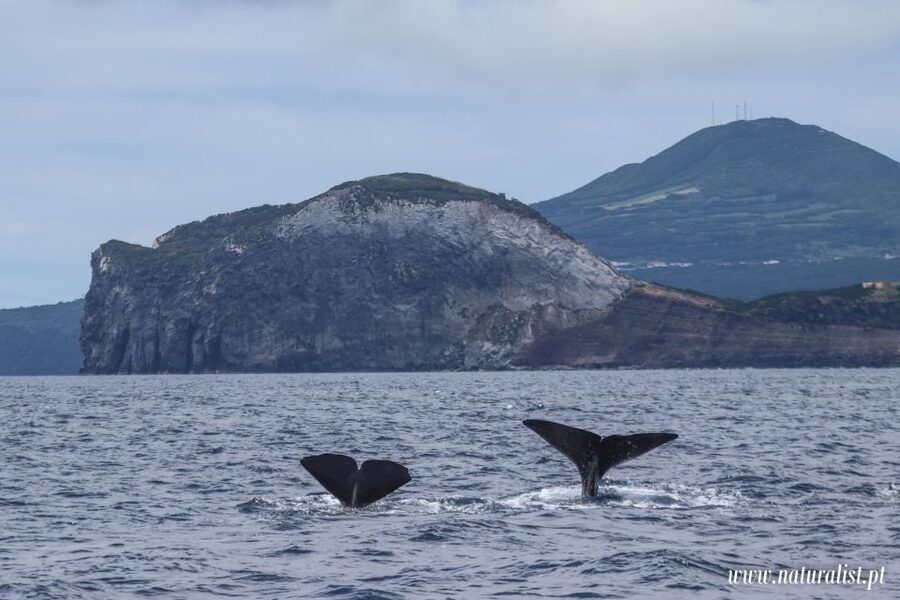
This is not just a tour with a wildlife lecture. The trip includes a marine researcher or biologist from the University of Lisbon and Azores who collects data and shares up-to-date information while you are out on the water.
That makes the whole outing feel more real. Instead of hearing only general facts, you learn why certain whales show up where they do, and how researchers think about what they see. When you can connect your sighting to actual study, the moments last longer in your memory.
If you want to make the most of the trip, ask questions in English or Portuguese during the ride. The tone you get from the staff is practical and friendly, and the best moments often come when a guide ties an animal sighting to something you can spot with your own eyes.
Species you can realistically aim for in these waters
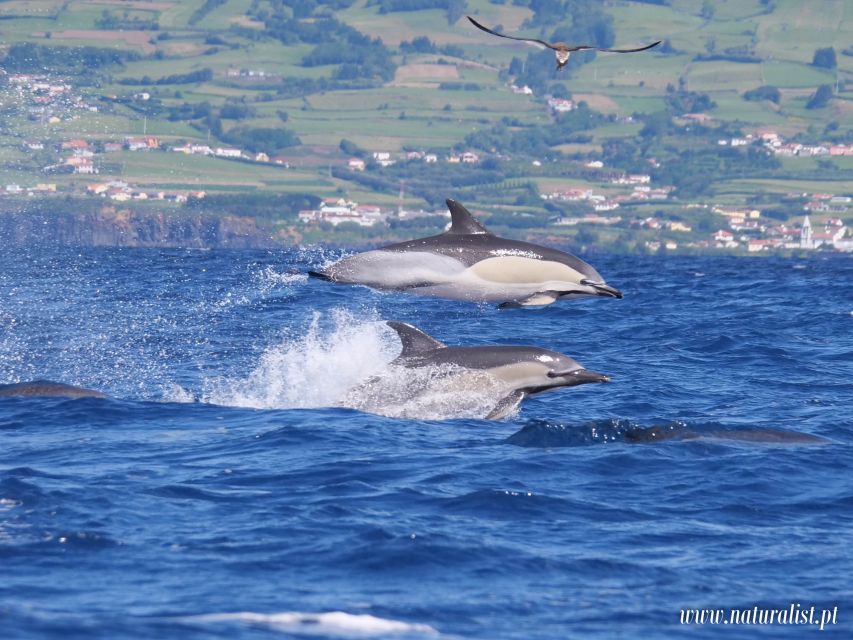
The region is known for a lot of cetacean variety, and the goal for each tour is usually 2 to 3 different cetacean species. Over 25 cetacean species occur in the broader area, so even when you do not get everything on your wish list, you are likely to get a meaningful mix.
Whales: resident and migratory patterns
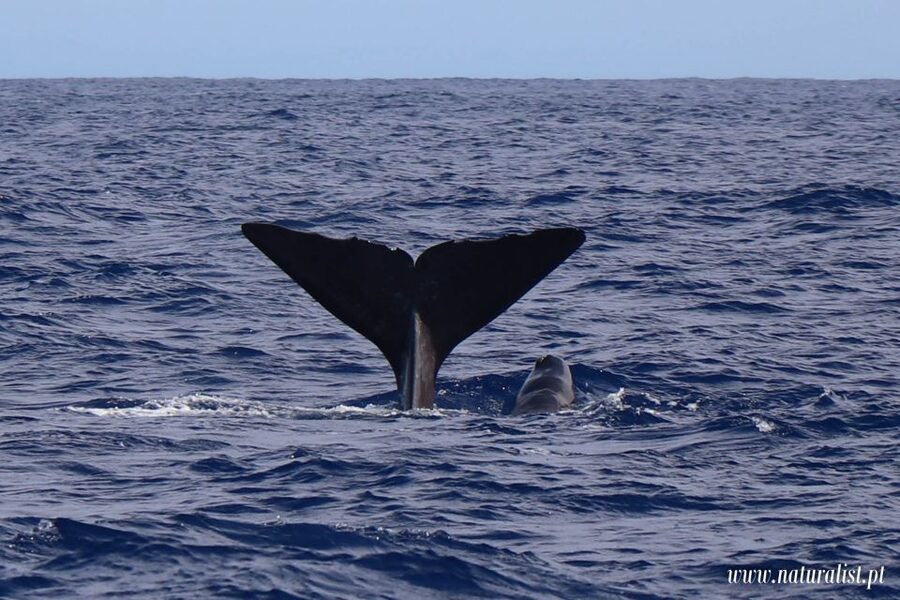
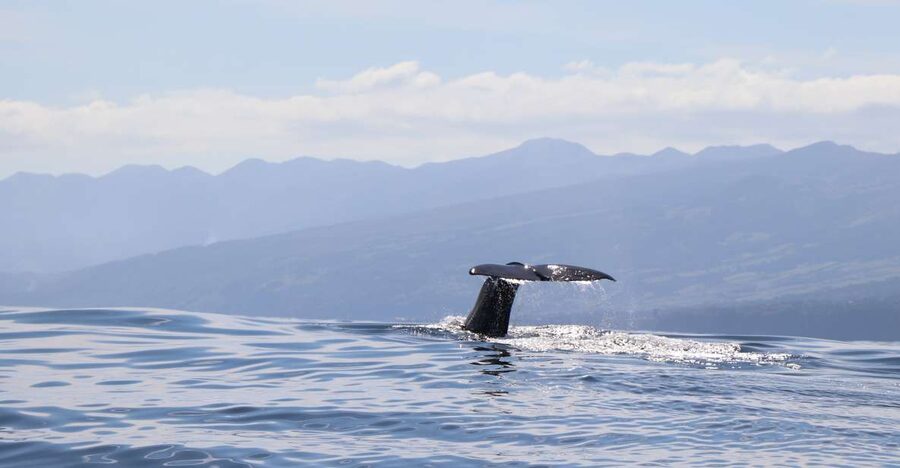
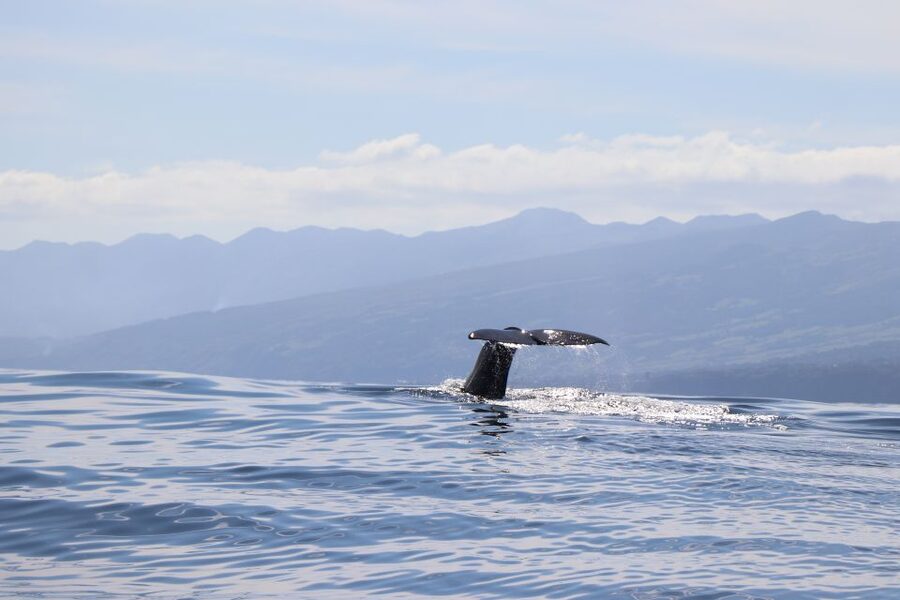
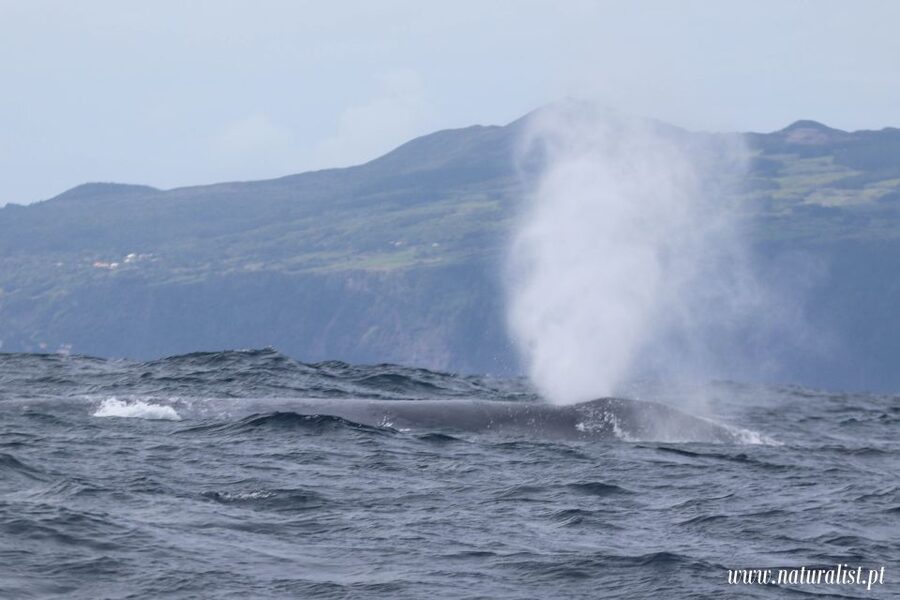
Sperm whales are resident, which means you have a solid chance across the year. Blue and fin whales are more tied to spring conditions, while Bryde and sei whales can occur in summer.
So what does that mean for you? If you go in spring, you can reasonably hope for blue or fin sightings. If you go in summer, you may still see sperm whales and could get lucky with sei or Bryde whales, plus the dolphin action that often arrives with the same food sources.
Dolphins: resident species with a lot of movement
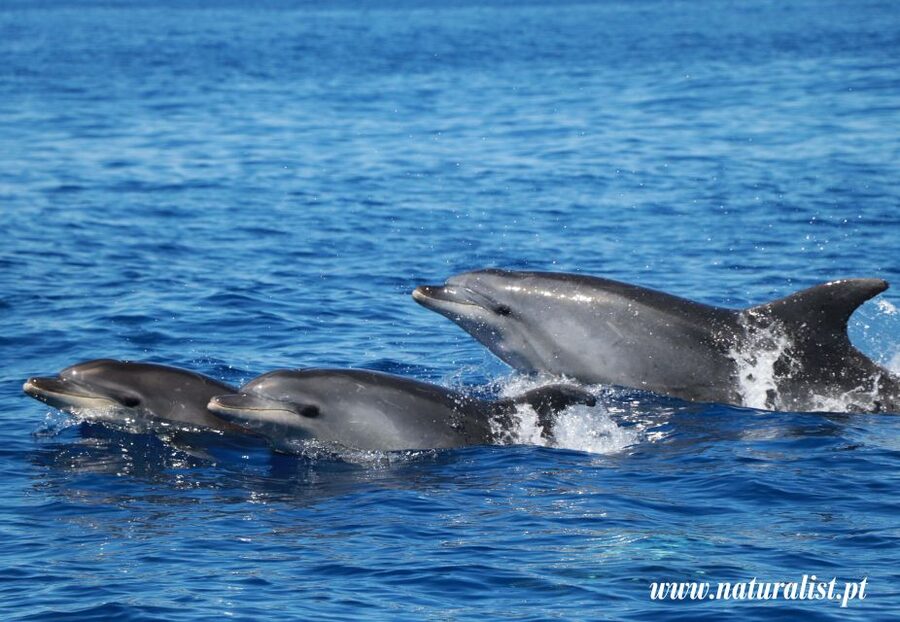
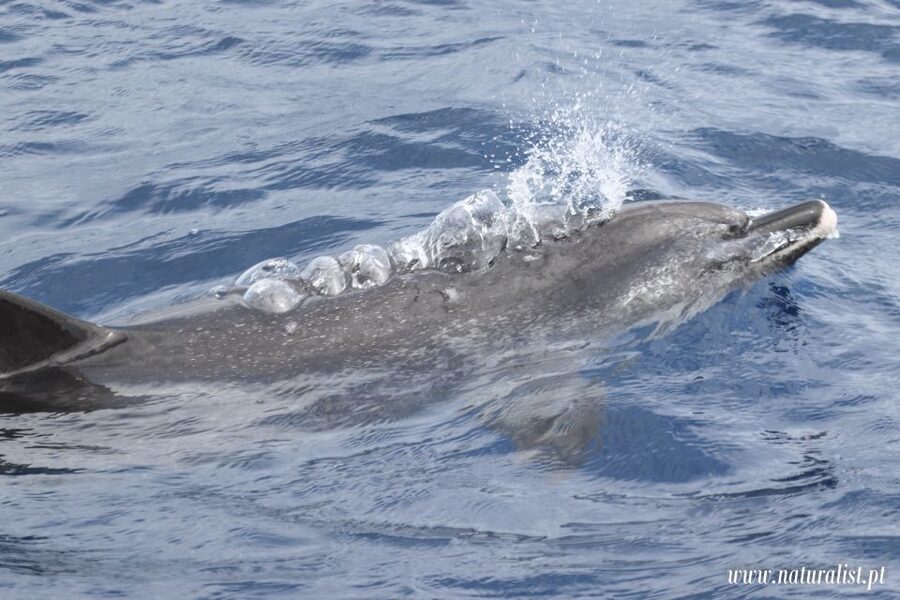
Bottlenose dolphins, risso dolphins, and common dolphins are resident in these waters. The Azores also attract many migratory dolphin species, so dolphin watching can feel like a constant bonus rather than a single highlight.
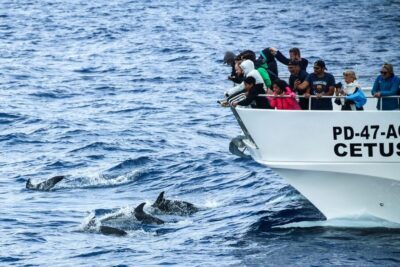
For a lot of people, the most memorable part is watching dolphins feed and interact with the boat safely from the water’s edge. When dolphins are active, birds often follow, which stacks the wildlife experience.
Turtles, sharks, and other sea life
You are not limited to whales and dolphins. Loggerhead and green turtles live in the Azores, and leatherback and kemp’s ridley can also show up.
If you are watching the surface carefully, you might spot flying fish or see flashes from squid and octopus nearby. Sharks can also appear, including hammerhead and blue sharks, plus sunfish. You will not see every species on every trip, but the range is wide, and the boat’s scanning time helps increase the odds.
Birds: corys and shearwaters add a second layer
Birdwatching is part of the experience, and it is more useful than it sounds. When seabirds gather, it often lines up with feeding opportunities for bigger predators.
Look for Cory’s shearwaters and great and manx shearwaters, plus common and roseate terns. When you start reading the birds as indicators, your wildlife spotting gets sharper.
What you get for the money: $101 for 3 hours with real value
At $101 per person for about 3 hours, this falls into the mid-range for whale watching in Europe, but the value comes from what is included. You get waterproof clothes, safety insurance, and the briefing about marine biodiversity and cetaceans before you go out.
The biggest value add is the marine biologist on board. That is not just storytelling, it is part of the expedition purpose, including data collection. If you care about understanding animal behavior while you are seeing it, this makes the ticket feel more like a field trip than a ride.
Food and drinks are not included, so plan on bringing a snack plan or grabbing something before or after your tour. You will be out long enough to feel the cold on the water, even in decent weather, so bring your layers accordingly.
Group size and how that affects your sighting time
This trip runs on a RIB that carries up to 16 people. Smaller boat time often means a better view around the rail, and it can help the guide manage scanning without everyone being packed shoulder to shoulder.
On some departures, the group can be even smaller, which usually makes it easier to hear the biologist and keep track of where the next animal should surface. If you prefer quieter boat dynamics, this format tends to feel more personal than large-boat tours.
Comfort tips that make choppy water feel manageable
The company does not recommend this activity if you have severe back problems or if you are pregnant. That is not a small note, the motion on a fast RIB can be more intense than you expect.
If you are generally okay with boats, come prepared for wet conditions. Waterproof clothes are provided, but you still want quick-drying shoes and warm layers under the gear. Bring sunglasses if you like, and keep your phone protected since splashes can happen.
One more small trick: settle into your spot and focus on the guide’s cues. When you know what the crew is watching for, you spend less time staring into open water and more time ready for the next surfacing.
The reality of whale watching here: success is about patience and movement
Whale watching is always a mix of luck and effort, but this trip tries hard to stack the odds. The captain can reposition if animals move or if the first area is quiet.
Some recent trips also show how responsive the crew can be if weather disrupts the original day. If conditions are too rough, you may be rescheduled, and that flexibility reduces the chance you lose your whole plan.
If you want to maximize your chances, pick the departure time you can commit to and dress for the conditions you actually get. Calm mornings and cooler afternoons often feel different on the water, so go with what fits your comfort.
Language and communication, because this is a learning trip
The expedition runs in English or Portuguese. French can be requested in advance depending on availability.
This matters because a lot of the best information comes during the ride. When you understand the explanations, you do not just see whales, you learn what you are seeing in real time. Even if you only catch key phrases, the guide’s focus on behavior and biodiversity makes the science feel approachable.
Morning or afternoon, how to choose your best window
Tours run at 09:00 and 14:00, both with about three hours on the water. If you tend to feel less motion earlier in the day, morning can be the better pick. If you prefer a later start and want more time in Horta before you go, the afternoon slot works well.
Because weather can shift, your best choice is the one you can stay flexible for. Either departure has the same core structure: safety briefing, guided spotting and photo moments, and a main whale-watching period focused on scanning and repositioning.
Should you book this Horta whale and dolphin RIB trip?
Book it if you want more than a sightseeing checklist. You are getting university-led marine research, a guided wildlife approach, and waterproof gear included, all for a straightforward 3-hour outing. This is a strong match for people who love marine life, birdwatching, and learning while the animals are still in front of you.
Skip it or choose another option if you cannot handle boat motion. Severe back problems, pregnancy, children under 5, or recent surgery are clear reasons to avoid this specific RIB format.
If you are in Horta and Faial/Pico is on your route, this is one of the best ways to understand the Azores ocean in action, with a crew that clearly wants you to see wildlife while also doing real work to understand it.
What the Azores sent us most recently
- Canyoning Experience at Ribeira Grande
★ 4.8 · 117 reviews - Vila Franca Do Campo: Introduction to Scuba Diving Tour
★ 5.0 · 117 reviews - Azores Canyoning Adventure in São Miguel – Half-day
★ 4.5 · 122 reviews - E-bike Sete Cidades- “All Mountain” bike program
★ 5.0 · 126 reviews - Ponta Delgada: Pineapple wine tasting and pineapple tour
★ 4.8 · 127 reviews - São Miguel 2-Day Tour: East & West Highlights Adventure
★ 5.0 · 130 reviews - From Angra: Terceira Island Full-Day Tour
★ 4.9 · 133 reviews - Rabo de Peixe: Sperm Whale Sanctuary Expedition
★ 4.8 · 135 reviews
Whale Watching, compared.
Whale Watching & Islet Boat Tour w/ Marine Biologist
Read our review →
Funchal Bay: Dolphin & Whale Watch Luxury Catamaran Cruise
Read our review →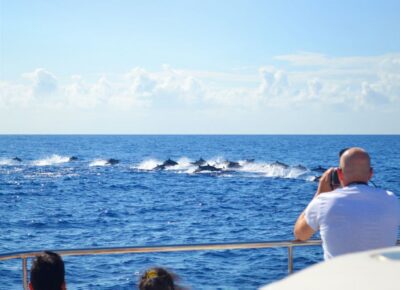
All Inclusive Whale and Dolphin Watching Luxury Tour
Read our review →
Madeira Dolphin and Whale Watching on a Ecological Catamaran
Read our review →
Browse the lists this tour appears in