
Reviewed · HISTORICAL TOURS
Lisbon: Jewish History Tour of Lisbon
Lisbon’s Jewish story is in the street names. This 3-hour private guided walk connects the medieval Jewish presence in Lisbon to later turning points, all while you move through the neighborhoods where those events played out. You start near Praça do Comércio and end in the Rossio area, with stops that connect legend, segregation, persecution, and even 1940s refugee routes.
I especially like two things here. First, the tour uses place-based storytelling at Alfama and the Baixa, so you are not just hearing dates, you are seeing how geography shaped lives. Second, the guides, whether it is Jose, Filipa, Rita, or Sofia, keep the pace tight and the questions welcome, so the time feels worth every minute.
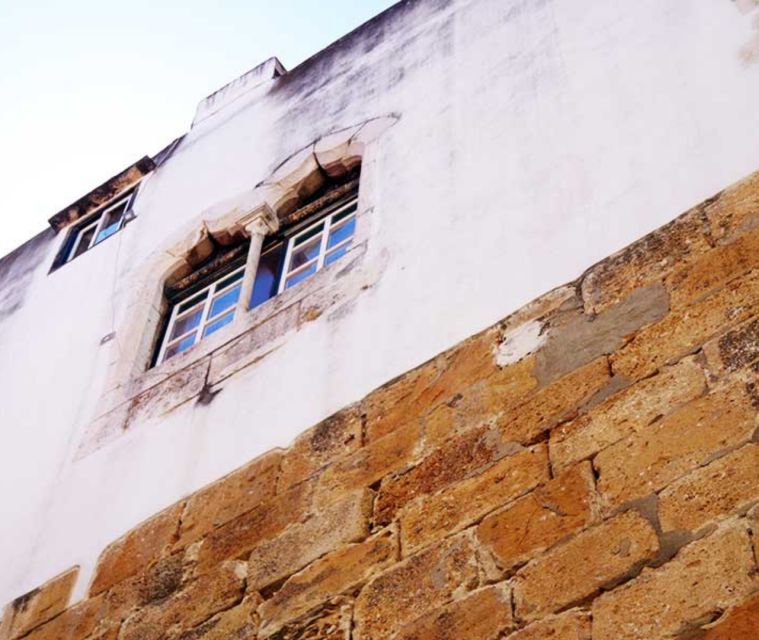
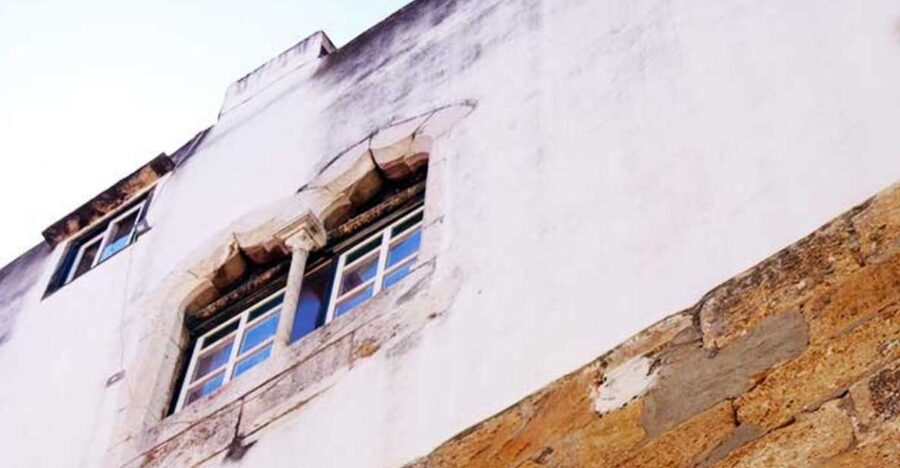
One drawback to plan for: there are few physical remains of Lisbon’s medieval Jewish community to look at. A lot of what you gain is oral history, context, and interpretation, which is great if you like stories, but less satisfying if you are hoping for lots of intact artifacts.
In This Review
- Key highlights you will feel on the walk
- Lisbon’s Jewish story lives in the urban fabric
- Meeting at Praça do Comércio, where the walk gets its power
- Rua do Comércio to Casa dos Bicos, reading Lisbon through architecture
- Alfama and the Jewish quarter, segregation made visible
- Baixa District and forced conversions, when power changes the neighborhood
- Rossio and the 1506 Pessah massacre, public memory in a busy area
- Ribeira, the Resistance Museum, and Lisbon’s 1940s refugee chapter
- What to expect about artifacts, and why that still works
- Meeting point, timing, and the walking style
- Price and value: what $106 buys you here
- Who this tour suits best
- Should you book this Lisbon Jewish History Tour?
- FAQ
- Where do I meet the guide?
- How long is the tour?
- How much does it cost?
- Is the tour private?
- Is hotel pickup or drop-off included?
- What languages are available?
- Will I see physical Jewish sites and artifacts?
Key highlights you will feel on the walk
- Praça do Comércio framing the Exodus thread, tying Lisbon’s symbolic origins to Jewish memory
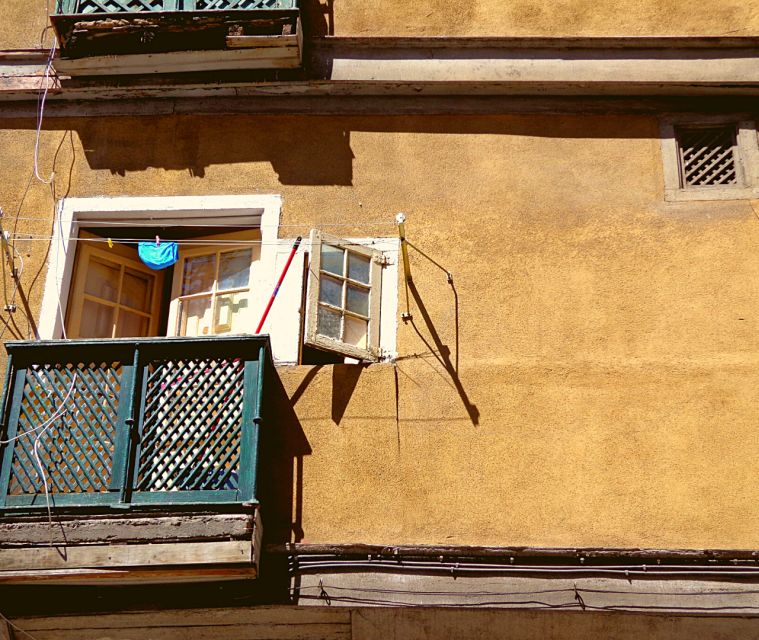
- Alfama’s medieval segregation story, explained through how the streets and walls shaped daily life
- Baixa and forced conversions, with the guide connecting politics, faith, and neighborhood change
- Rossio and the 1506 Pessah massacre, placed in the public heart of the city
- WWII-era refugee passage in the 1940s, linked to Lisbon’s modern chapter beyond the Middle Ages
- A private-group format, so you can ask questions instead of shouting them over a crowd
Lisbon’s Jewish story lives in the urban fabric
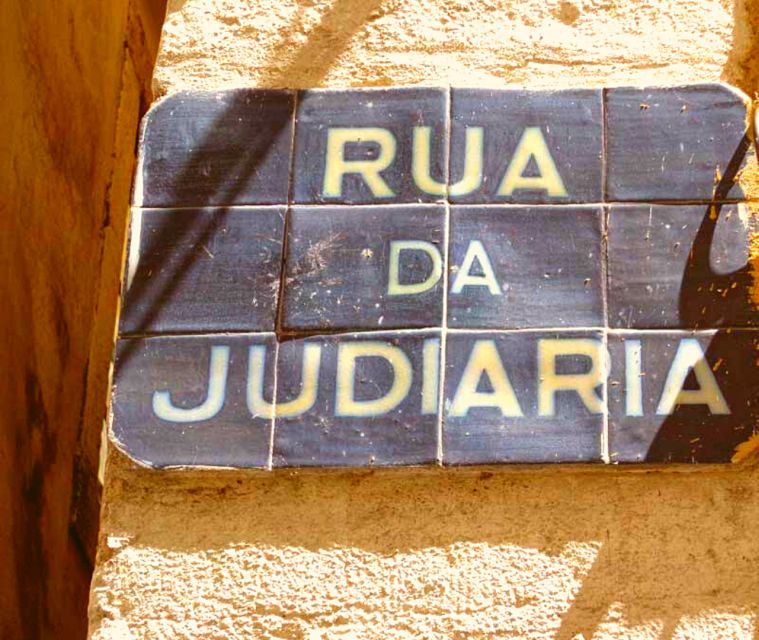
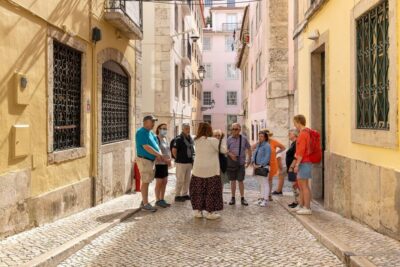
This is a street-level history tour. You are not doing a museum day where the story is sealed behind glass. Instead, you walk through Lisbon districts and let the city itself do the explaining, from the big squares to the tighter lanes around Mouraria and Alfama.
What I like most is the way the guide treats Lisbon like a document. The tour points to how trade routes, power centers, and shifting rules of faith left fingerprints in neighborhoods like Alfama and the Baixa. That matters because Portugal’s Jewish and Jewish-adjacent story is not one single event, it is centuries of pressure, adaptation, and memory.
You will also get the bigger map idea. The tour explicitly connects Lisbon to the broader diaspora, including spread across the Atlantic, the Mediterranean, Asia, and northern Europe. If you like seeing how one city connects to a worldwide story, you will like that framing.
A few more Lisbon days, taken slowly
- Lisbon: History, Stories and Lifestyle Walking Tour★ 4.8 · 10,902 reviews
- Lisbon: Daytime or Sunset Boat Cruise with History and Wine★ 5.0 · 1,053 reviews
- Explore Lisbon by Tuk Tuk: History and Viewpoints★ 5.0 · 840 reviews
- Private Tuk Tuk Tour Through Lisbon’s Historical Streets★ 5.0 · 734 reviews
Meeting at Praça do Comércio, where the walk gets its power
The tour begins at Praça do Comércio, and you meet the guide under the big triumph arch. Your guide will wear an orange backpack or carry a Totebag with the Lisbon Walker big logo, so you can spot them quickly and start on time.
This starting point works because it is Lisbon’s grand entry zone. The guide uses Praça do Comércio as an anchor for the Exodus origin theme, and it gives you a symbolic landing before you move into the medieval quarters. It also helps you get your bearings fast, because the square is wide open and easy to orient from.
From there, you keep moving past key central landmarks like Praça do Município and along Rua do Comércio. This is where you start to feel the tour’s rhythm: quick orientation, then a story pause, then another turn into a different layer of city life.
Rua do Comércio to Casa dos Bicos, reading Lisbon through architecture
On the way, you pass landmarks that look decorative on first glance but become useful when the guide puts them in context. Casa dos Bicos is one of those stops. Even if you have seen photos of it before, you will likely understand it differently once it is used as a clue for how Lisbon’s elite, commerce, and culture evolved over time.
You also move toward Ribeira, another area that makes sense for this kind of history. Port cities compress stories. People arrive, people depart, and rules change. So when you are walking near the river zone, the guide can connect Lisbon’s role as a crossroads with what the Jewish community experienced across periods of opportunity and restriction.
If you are the type who likes small pauses to take photos, do it here. The central streets give you good views and easier walking than the more medieval lanes, and you will appreciate that when the route tightens later.
Alfama and the Jewish quarter, segregation made visible
Alfama is the emotional center of the tour. The route explicitly targets the Alfama Jewish quarter, plus the reality of medieval segregation. Even without intact synagogue buildings to point at, the guide uses the neighborhood layout to explain how separation worked and how it affected daily life.
This is one of the most praised parts of the experience for a reason. The tour does not pretend the past left many obvious, physical breadcrumbs. Instead, it teaches you how to look at the city like a map of boundaries and control.
You will likely spend time around the Castle Hill area as well, since the tour covers the city’s elevated viewpoints. That also helps the story. High ground changes how you understand defense, authority, and visibility, all of which matter when you talk about communities under pressure.
Practical note: Alfama has lots of texture, stairs, and uneven ground. You should wear comfortable shoes, because this part is about walking through layers, not lingering with long rests.
Baixa District and forced conversions, when power changes the neighborhood
Next comes the Baixa District, where the tour focuses on forced conversions. This is where the story becomes less about geography and more about what people were compelled to do.
The Baixa area helps because it is one of the places where Lisbon’s “official” face shows up. When the guide connects that public power to private life, the story lands harder. Forced conversions were not only religious changes, they were social and economic consequences too, and the tour frames that through what happened around major civic spaces.
You will also encounter other stops that fit this theme as you cross between districts. The guide’s job here is to connect what you see, like streets and buildings, with what you cannot see anymore, like the earlier patterns of Jewish communal life.
If you like to understand history through cause and effect, you will appreciate the way the tour treats these events as part of a system, not random tragedy.
More Things to Do in Lisbon
Rossio and the 1506 Pessah massacre, public memory in a busy area
The tour ends its historical arc at Rossio and ties in the 1506 Pessah massacre. Rossio is a major public space, which makes the contrast striking. The event the guide explains is intimate and brutal, but the location sits in the center of everyday Lisbon life.
This is one of the best places for reflection. You are not hearing about distant danger in a textbook tone. You are standing where history became part of public space, which is a strong way to understand how violence and fear can shape a city’s long-term identity.
The walk also includes Praça da Figueira on the way, which helps you transition from one city mood to another. The tour keeps you moving, but it also gives you enough pauses to connect the dots.
Ribeira, the Resistance Museum, and Lisbon’s 1940s refugee chapter
A nice surprise in the overall flow is the tour’s modern layer. It covers Lisbon’s contemporary presence, including the WWII-era refugees passage in the 1940s. You see this linked through stops like the Resistance museum.
This section matters because it prevents the story from becoming a closed medieval chapter. Lisbon kept shaping lives long after the Inquisition era. The guide frames the later period as a continuation of how Lisbon functioned as a gateway, sometimes for welcome and sometimes for complicated survival routes.
From a value perspective, this mix is smart. For $106, you are not only buying medieval facts. You are buying continuity, a sense that Jewish history in Lisbon is not a single page, it is an ongoing storyline that reaches into the 20th century.
What to expect about artifacts, and why that still works
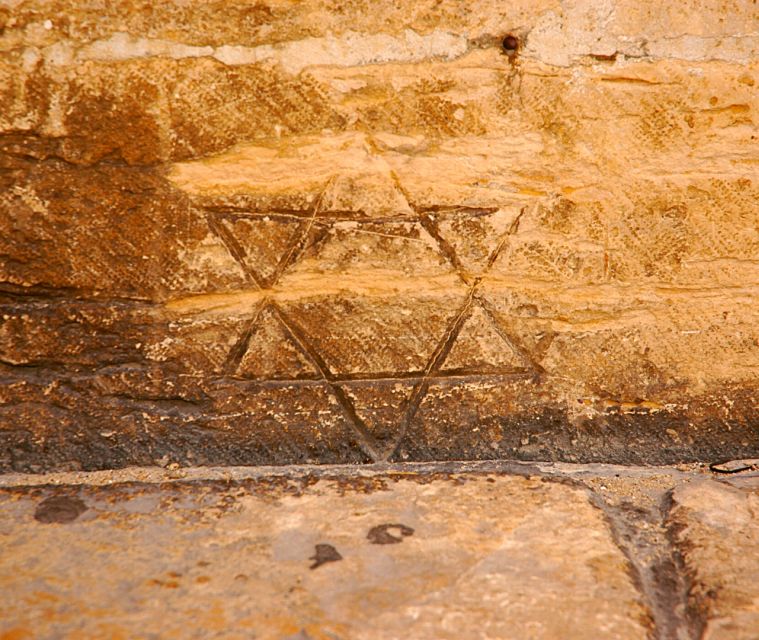
Here is the honest truth that shows up again and again in the experience: there are few if any physical landmarks left for early Jewish life in Lisbon. Many of the tour’s insights come through storytelling, interpretation, and the guide pointing to places where community life used to be.
That can sound like a downside, but it is only a problem if you need visible artifacts to stay interested. If you enjoy understanding how historians reconstruct the past from streets, documents, and memory, you will likely find the approach satisfying.
It also means your guide matters a lot. Many of the guides are praised for keeping the tour engaging even with the lack of surviving sites. Jose, in particular, is repeatedly mentioned for deep historical framing and the ability to answer questions.
There is also an added bonus mentioned by some participants: the guide may point out hidden Roman remains and churches along the way. That does not replace the Jewish sites you wish were still there, but it gives you extra context for Lisbon’s long timeline, which can make the walk feel richer.
Meeting point, timing, and the walking style
This is a 1 day experience in the sense that it takes place in one sitting. It is a 3-hour guided tour, and it is set up as a private group, which tends to make the pace more flexible and question-driven.
You should plan on walking between central squares and older neighborhoods. The route includes castle hill areas, Alfama, and the Baixa, so bring energy for uneven streets. One useful signal from the experience is that the tour can be kept to minimal hill climbing by some guides, but you should still treat it as a walking day.
If you are a slow walker, say so. A private format usually helps because the guide can adjust pace and rest stops.
Language options are English and Portuguese, and the tour includes live guide service. There is also mention of skipping the ticket line, so you should not waste time standing around for entry at key moments.
Price and value: what $106 buys you here
At $106 per person for a 3-hour private guided walk, you are paying for narrative plus navigation. You are not buying a transport-heavy day, because pickup and drop-off are not included. You also are not buying meals, since food and drinks are not included.
So the value comes from three things:
- A trained guide who connects multiple centuries into one walking route
- A private group format, so you can ask more than one question per minute
- A route that covers a wide range of districts without making you plan everything yourself
If you want a Jewish history overview that does not require museum tickets, long lectures, or complicated logistics, this is a solid fit. If you specifically want lots of intact artifacts, you may find the lack of physical remains frustrating, but you will still gain a stronger sense of where the story happened.
Who this tour suits best
This tour is best for you if:
- You like history that you can see on the ground, not only read in books
- You enjoy guides who connect political and religious change to neighborhood life
- You want a Jewish Lisbon story that includes both medieval events and the 1940s refugee layer
It is less ideal if your main goal is to photograph surviving Jewish sites or you dislike walking through older, uneven streets.
Also, if you are traveling with mixed interests, this can work. The tour mentions Jewish legacy in Portuguese culture, science, and even gastronomy. That helps broaden the story beyond one theme.
Should you book this Lisbon Jewish History Tour?
Yes, if you want a focused 3-hour walk that connects Alfama and the Baixa to major turning points like the 1506 Pessah massacre, while also covering the later 1940s refugee passage. You are paying for interpretation and guidance, not for a checklist of surviving artifacts.
I would book it especially if you value a private-group feel and a guide you can talk to. Just go in with the right expectations: the physical evidence is limited, so your experience will depend on the quality of the storytelling.
If that tradeoff sounds exciting, you will likely love how Lisbon’s streets turn into a history lesson you can actually walk through.
FAQ
Where do I meet the guide?
Meet at Praça do Comércio, under the big triumph arch. The guide will be wearing an orange backpack or carrying a Totebag with the Lisbon Walker big logo.
How long is the tour?
It is a 3-hour guided tour.
How much does it cost?
The price is $106 per person.
Is the tour private?
Yes. It is a private group.
Is hotel pickup or drop-off included?
No, hotel pickup and drop-off are not included.
What languages are available?
The tour is offered with live guides in English and Portuguese.
Will I see physical Jewish sites and artifacts?
You should expect few if any physical remains of Lisbon’s Jewish community. The tour focuses on neighborhoods and historical context through guided storytelling.
What Lisbon sent us most recently
- From Lisboa: Sintra, Cabo da Roca & Cascais Private Full Day Tour
★ 5.0 · 39 reviews - Best of Sintra and Cascais Private Full Day Tour
★ 5.0 · 39 reviews - Private Sailing tour in Lisbon – Day Time, Sunset and Night
★ 4.5 · 39 reviews - Tuk Tuk Lisboa – Sightseeing Tours
★ 4.5 · 39 reviews - Private Experience Óbidos Nazaré and Fátima or Aveiro and Óbidos
★ 5.0 · 39 reviews - Belém and Jerónimos Monastery Private Walking Tour & Ticket
★ 4.5 · 39 reviews - Lisbon Private Luxury Tour
★ 4.5 · 39 reviews - Exclusive Lisbon Progressive Dinner & Wine Tour
★ 5.0 · 40 reviews
Historical Tours, compared.
Historical Sites, Wine Experience, Lunch & Cruise
Read our review →
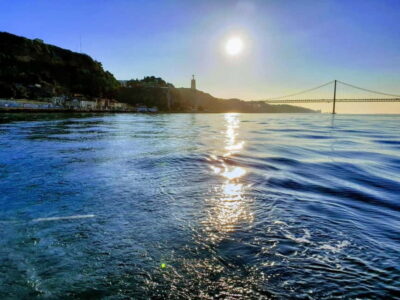
Daytime or Sunset Boat Cruise with History and Wine
Read our review →
Private Tour of the Historic City in a Ford T Car
Read our review →
Browse the lists this tour appears in