
Reviewed · WORKSHOPS
Pastel de Nata Workshop in Lisbon
Custard magic starts in a tiny Lisbon shop. You learn Pastel de Nata from scratch dough at Casa dos Ovos Moles, a spot linked to Portuguese convent pastry traditions. The format keeps things moving for a short visit, and a small group helps you stay part of the action.
I especially love that you get a written recipe you can follow at home, not just vague tips. You also taste your dessert with a pour of port wine or ginja liquor, which makes the ending feel properly Portuguese.
One drawback to plan for is that the session is listed as 2 hours approx, and a few people felt it runs closer to 2.5. If you want a super relaxed, zero-feedback cooking experience, keep in mind the instructor may be direct about technique as you work.
In This Review
- Key highlights you will actually care about
- A 2-hour pastel de nata class that stays practical
- Casa dos Ovos Moles, and why convent pastry still matters
- What you make: dough, custard, and the hands-on process
- The tasting finale: port wine or ginja liquor with your tart
- Your take-home written recipe (and how to use it)
- Small group size means you learn faster
- Where you meet in Lisbon and how to plan around it
- Price and value: what $72.41 gets you
- Who should book this pastel de nata workshop
- Should you book it
- FAQ
- What is included in the Pastel de Nata Workshop in Lisbon?
- Do you learn to make the dough from scratch?
- What drink do you have with the dessert?
- How long is the workshop?
- How many people are in the group?
- Where is the meeting point?
- Is the workshop offered in English?
- Is there more than one class time?
- What if I need to cancel, or the workshop is cancelled due to weather?
Key highlights you will actually care about
- Max 6 people so you get hands-on help instead of standing on the sidelines
- Dough taught from scratch and made by hand, not assembled shortcuts
- Written recipe included so you can try again back home
- Dessert pairing included with port wine or ginja liquor
- Two class times so you can fit it around your Lisbon day
A 2-hour pastel de nata class that stays practical
If you like food experiences that teach you something usable, this workshop hits the sweet spot. You are not just tasting a famous pastry, you are learning how to make it, including the dough and the steps that affect the final texture. It is a short window of time, but it is still focused on technique, not just watching.
The pace works well for travelers who are juggling neighborhoods, viewpoints, and dinner reservations. You start, you work, you taste, and then you are back at your meeting point. That loop matters in Lisbon, where walking hills and tram timing can eat up your day if you are not careful.
Also, I like that the experience is set up for real participation. With a group size capped at 6, the instructor can correct your flour handling, shaping, and baking flow without turning it into a lecture. In a city full of food tours that feel like roll call, this is more like a mini bakery class with dessert at the end.
More custard tarts from your own oven:
- Lisbon: Pastel de Nata Baking Class★ 4.9 · 2,106 reviews
- Pastel de Nata Masterclass at a Real Bakery in Downtown Lisbon★ 5.0 · 491 reviews
- Pastel de Nata Pastry Class: Bake and Enjoy Your Own Treats★ 5.0 · 485 reviews
- Lisbon: 2-Hour Pastel de Nata Cooking Class★ 4.8 · 461 reviews
Casa dos Ovos Moles, and why convent pastry still matters
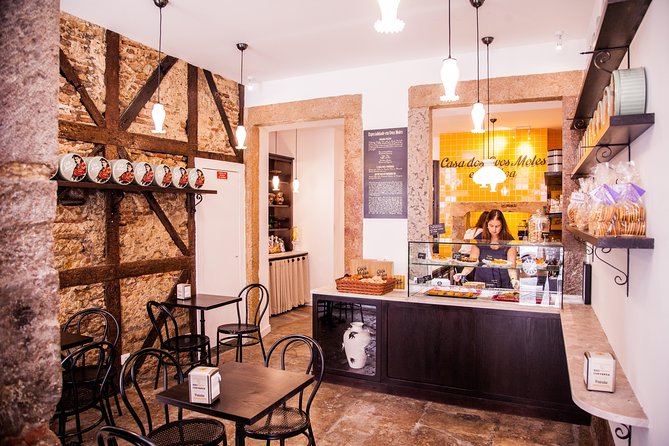
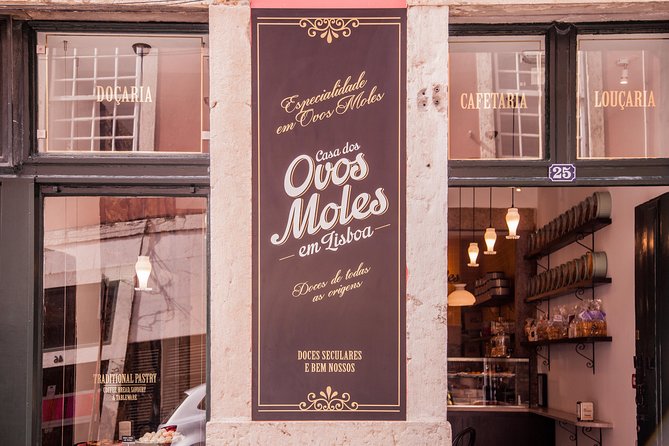
The workshop takes place in Casa dos Ovos Moles, and that location is more than just a cute storefront. It is specialized in conventual pastry, with roots in Portuguese dessert traditions going back to the 16th century. Pastel de nata is one of the best-known results of that style of baking, and the shop is also associated with other favorites from the same family of sweets.
You might see or hear about more than pastel de nata during the session, including variations tied to different regional convent traditions. The shop also highlights desserts like ovos moles (including Aveiro style), pão de ló variants, and even other classics such as pudim abade de priscos. That context helps you understand pastel de nata as part of a broader Portuguese pastry culture, not just a standalone souvenir.
For your planning, this also means you are learning inside a real pastry-focused space. You are not taking a generic cooking class in a random kitchen. The setting connects the technique you practice to the type of sweets the shop is known for, which makes your efforts feel more authentic.
What you make: dough, custard, and the hands-on process
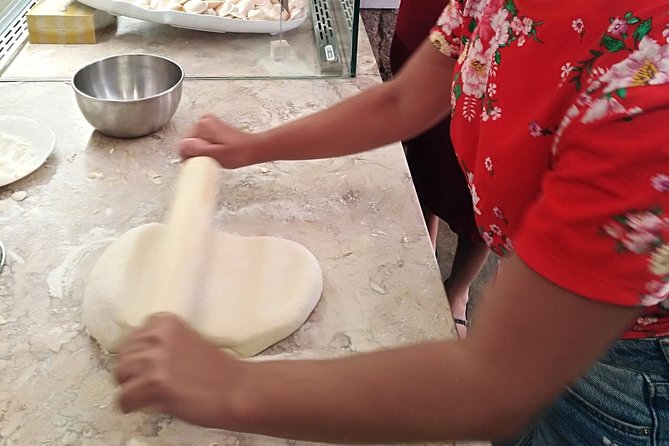
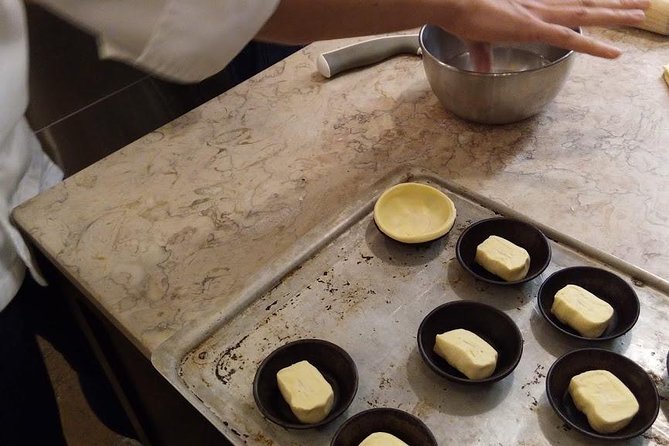
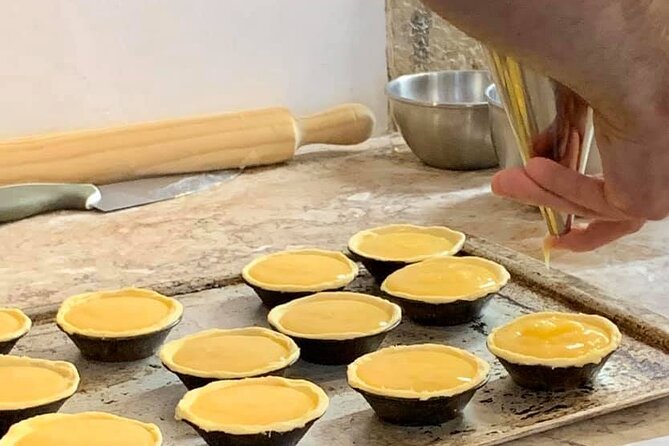
The biggest reason this workshop works is that it is hands-on from scratch. You learn the full process for pastel de nata, including making the dough by hand. That detail matters. Many classes in tourist areas treat the pastry like an assembly project. Here, you are building the foundation, so when it bakes up right at the end, you know what you influenced.
As you work, you follow the process step-by-step, with instruction aimed at getting the technique correct rather than rushing you through. This is where the small group size pays off. When you get stuck, you can ask. When your shaping looks off, you can get correction fast.
Pastel de nata is famous for a reason, but it is not a casual dessert. Even if you are not a confident baker, you learn that small differences in how you handle dough and fill it can change the end result. That is one of the more valuable lessons: the pastry teaches you cause and effect, not just recipe memorization.
And yes, you will taste at the end. But the tasting feels earned, because you participated in the process all the way through, including the dough. That makes it more satisfying than a basic sampling.
The tasting finale: port wine or ginja liquor with your tart
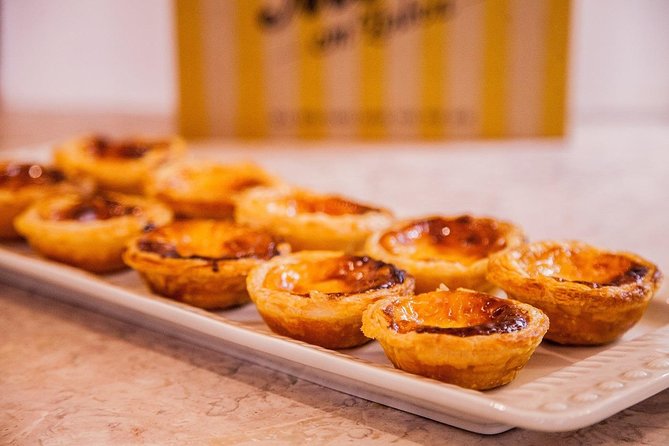
After the baking steps, the workshop wraps up with a tasting of the pastel de nata you made. Included with that dessert is a small pour of port wine or ginja liquor, depending on what you choose.
This pairing is a smart touch for two reasons. First, it turns the class into a full Portuguese dessert moment rather than a quick bite-and-go. Second, the flavors make the texture of the custard stand out. Port brings warmth and sweetness, while ginja adds a more tart, cherry-like edge that cuts through richness.
It also helps that you are eating in the same place where the pastries are being made and sold. That continuity matters. The smell of fresh pastry, the shared focus on the dessert, and the calm end-of-class vibe make it feel like part of the local food routine, not a staged photo-op stop.
If you have never tried ginja liquor, this is an approachable way to do it. You do not need to be a cocktail person. It is simply a traditional pairing served alongside a classic dessert.
Your take-home written recipe (and how to use it)
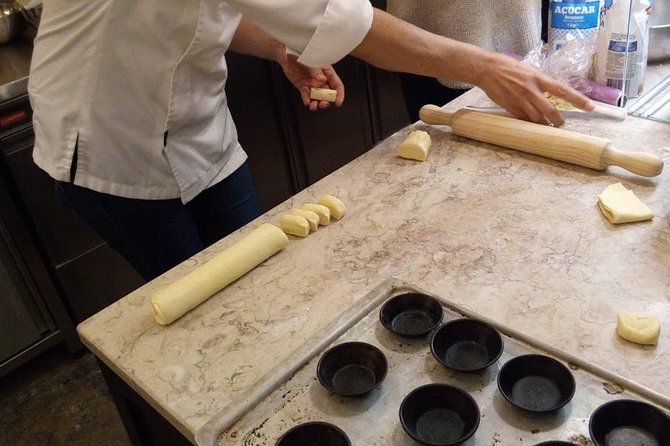
One standout feature here is the written recipe you receive to replicate the pastel de nata at home. In practical terms, this is what turns the experience from a fun afternoon into something you can repeat. Without that, most cooking classes become one-time memories.
When you take the recipe home, you can compare what you did in class to what you attempt later. The real advantage is that you will remember the structure of the process: when the dough comes together, how the custard filling behaves, and how the finishing step changes the final result. Even if you tweak timing or temperature slightly in your kitchen, having a written guide lets you stay anchored.
A smart tip: treat your first attempt at home like a learning run, not a perfection test. Your oven and pan size will be different. Aim for the texture and shape you want, then adjust. The recipe gives you that starting point, and the class gives you the context for why your first try might not match day-one results.
A few more Lisbon days, taken slowly

Small group size means you learn faster
This workshop caps out at 6 travelers, and that difference is huge. With a big group, the instructor is mostly talking and you are mostly waiting. Here, you get participation and attention during the key steps, which is what you need if you are trying to learn dough technique rather than just assembling filling.
The hands-on style shows up in how the instructor guides you through each stage. Several people describe the instructor as funny, engaging, and focused on explaining each step clearly. The recurring theme is that the teaching is interactive, with room for questions and corrections while you are working.
That said, one consideration is the intensity of feedback. Some people like direct coaching because it prevents mistakes. Others prefer a softer tone. If you fall into the second group, you can still enjoy the class, just go in expecting technique-focused instruction and a bit of critique as you bake.
Where you meet in Lisbon and how to plan around it
The workshop meets at Calçada do Sacramento 25, 1200-393 Lisboa, Portugal. It ends back at the meeting point, so you are not scrambling to find your next stop. The location is also described as near public transportation, which helps if you are arriving from other neighborhoods by tram or metro.
In Lisbon, the easiest mistake is underestimating walk time between sights. This experience runs about 2 hours approx, so plan your day with a buffer. If your schedule is tight, treat it as a half-day commitment. One helpful tip from people who took the class is to allow for about 3 hours total when you factor in getting there, settling in, and the full flow of the workshop.
As for timing, the class is offered at two class times, so you can choose morning or afternoon depending on your itinerary. That flexibility is especially useful if you are doing a packed route through Lisbon and need your dessert class to fit around a museum or dinner reservation.
Price and value: what $72.41 gets you
At $72.41 per person, this is not a cheap snack experience. But it also is not just a tasting. You are paying for a short, guided, hands-on baking session that includes ingredients work, instructor time, and the final dessert you helped make.
What makes the price feel more reasonable is the combination of value items:
- You make the pastry from scratch, including dough
- You get a written recipe to take home
- You get the dessert tasting plus port wine or ginja liquor
- You stay in a small group for personalized coaching
So if you usually buy one or two pastries as a treat and move on, this is different. You are buying skill, confidence, and a usable recipe. And in a city where food experiences vary wildly in quality, the small group cap is a big deal for value.
If you are traveling with a friend or partner, it can also feel like a fun shared activity that breaks up museum days. Even if you are not a regular baker, the class is designed so you can participate and leave with something to show for it.
Who should book this pastel de nata workshop
This class is a great fit if you want an authentic food experience in Lisbon that teaches real technique. It is also ideal for travelers who learn best by doing. If you like hands-on classes, you will probably enjoy the step-by-step structure and the chance to work with your hands from the start.
It also works well for couples and small groups because the experience is intimate and the instructor can focus on each person. Solo travelers often like this too, because you get individual guidance without having to find a crew of your own.
If you are the type who loves Portuguese sweets beyond pastel de nata, Casa dos Ovos Moles being specialized in conventual pastry adds extra satisfaction. You get a sense of place and tradition, not just a cookie-cutter class.
The main mismatch is if you want a very relaxed, no-correction cooking activity. Also, if you are extremely time-restricted, remember the class is listed around 2 hours and might feel longer in practice.
Should you book it
Yes, you should book this Pastel de Nata workshop if you want a hands-on Lisbon food experience with a take-home recipe and a real Portuguese tasting pairing. The small group size, the fact that you learn from scratch dough, and the included port or ginja make it feel like more than a gimmick.
Skip it only if you strongly dislike technique-focused coaching or you cannot spare enough time for the full hands-on session. If you can handle a bit of direct feedback while you bake, this is exactly the kind of class that turns into a repeat-at-home memory.
FAQ
What is included in the Pastel de Nata Workshop in Lisbon?
You will make pastel de nata in the workshop and enjoy a dessert tasting at the end. The tasting includes pastel de nata plus a drink option of port wine or ginja liquor. You also receive a written recipe to replicate the pastry at home.
Do you learn to make the dough from scratch?
Yes. The workshop includes teaching you the process from scratch, including the dough, and the pastry is handmade.
What drink do you have with the dessert?
After cooking, you taste the pastel de nata with either port wine or local ginja liquor.
How long is the workshop?
The duration is approximately 2 hours.
How many people are in the group?
The activity has a maximum of 6 travelers, which keeps it small and hands-on.
Where is the meeting point?
The workshop starts at Calçada do Sacramento 25, 1200-393 Lisboa, Portugal, and ends back at the same meeting point.
Is the workshop offered in English?
Yes. It is offered in English.
Is there more than one class time?
Yes. There are two class times available so you can choose what fits your schedule.
What if I need to cancel, or the workshop is cancelled due to weather?
You can cancel for a full refund up to 24 hours before the experience starts. The experience requires good weather, and if it is cancelled due to poor weather, you will be offered a different date or a full refund. If the minimum number of travelers is not met, you will also be offered a different experience or a full refund.
What Lisbon sent us most recently
- From Lisboa: Sintra, Cabo da Roca & Cascais Private Full Day Tour
★ 5.0 · 39 reviews - Best of Sintra and Cascais Private Full Day Tour
★ 5.0 · 39 reviews - Private Sailing tour in Lisbon – Day Time, Sunset and Night
★ 4.5 · 39 reviews - Tuk Tuk Lisboa – Sightseeing Tours
★ 4.5 · 39 reviews - Private Experience Óbidos Nazaré and Fátima or Aveiro and Óbidos
★ 5.0 · 39 reviews - Belém and Jerónimos Monastery Private Walking Tour & Ticket
★ 4.5 · 39 reviews - Lisbon Private Luxury Tour
★ 4.5 · 39 reviews - Exclusive Lisbon Progressive Dinner & Wine Tour
★ 5.0 · 40 reviews
Workshops, compared.
Pastel de Nata Cooking Class with Grandma’s Recipe
Read our review →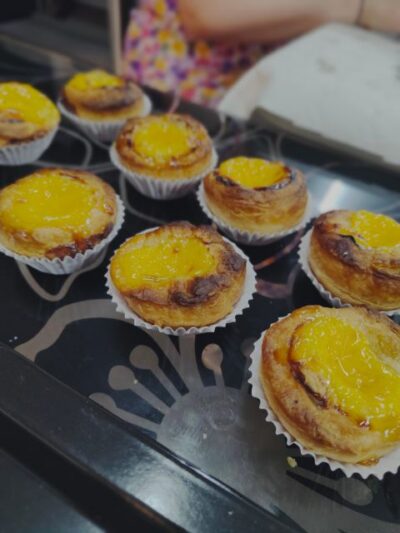

Tile Painting Workshop with Porto Wine – Sé do Porto
Read our review →
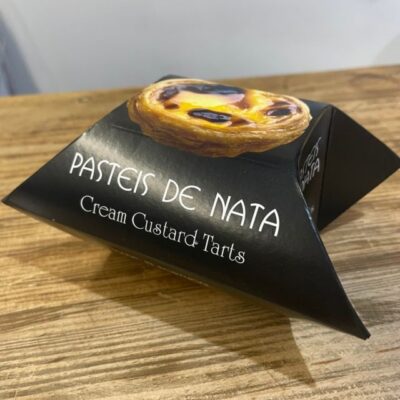
Pastel de Nata Cooking Class with Port Wine – Sé
Read our review →
Browse the lists this tour appears in