
Reviewed · HISTORICAL TOURS
Queer Lisbon – A Treasure Hunt in LGBT History
Lisbon hides queer stories in plain sight. I love the small-group pace and the way the tour turns history into a practical route you can follow later. I also like that you get Alex’s LONG LIST PDF, a ready-to-use guide to LGBTQ Lisbon beyond the walking portion.
One thing to plan for: this is a lot of walking over about 3.5 hours, so wear comfy shoes and dress for shifting weather.
In This Review
- Key things to know before you go
- Why this queer treasure hunt beats generic sightseeing
- Price, pacing, and what $60.34 gets you
- Starting at Príncipe Real: Jardim do Príncipe Real and Lisbon’s Pride roots
- Health, cruising, and the club trail: from GAT Checkpoint LX to Trumps
- Botanical Gardens to Purex: keeping the nightlife and its meaning connected
- Lesbian bar legend and the first drag bar in Lisbon
- Bears in two parts: Shelter Bar Lisboa and Bar TR3S Lisboa
- Drag legacies at Finalmente Club: shows, timing, and local lore
- Legal battles that changed everything: Constitutional Court and LGBTQ rights
- Scandals, saunas, and the Two Fernandes story
- Women, censorship, and Josephine Baker: Teatro da Trindade and more
- Inquisition-era queer survival: Igreja de São Roque
- Reclaiming Portuguese writers at Hospital St. Louis
- Late Birds Hotel finale: drinks, pub-quiz, and prizes
- Who should book this tour
- Should you book Queer Lisbon – A Treasure Hunt in LGBT History?
- FAQ
- How long is the Queer Lisbon tour?
- Where does the tour start and end?
- What time does it start?
- What language is the tour offered in?
- How much does it cost?
- What group size should I expect?
- What ages can book, and what is the drinking age?
- Is the ticket mobile?
- What is included besides the tour itself?
- What is the cancellation policy?
Key things to know before you go
- Small group, big personality: capped at 15 people, which keeps the pace calm and questions easy.
- History plus street-level context: you are not just looking at plaques, you are learning how queer life changed block by block.
- A PDF you can actually use: the included guide is normally 15 euros, and it is meant for planning after the tour.
- Nightlife stops are part of the story: clubs, drag venues, and bars show up as real chapters, not random add-ons.
- The finale is social: you finish at Late Birds Hotel with a drink, pub-quiz, and prizes.
Why this queer treasure hunt beats generic sightseeing
Generic Lisbon sightseeing often treats LGBTQ history as a side note, if it shows up at all. This tour is built like a treasure hunt, with stops picked to explain how queer life has survived, pushed back, and shaped the city.
The route also feels refreshingly modern. You start in Príncipe Real, then you move through places tied to activism, health, and law, and you end somewhere you can keep meeting people. That mix matters, because it shows how the past lives in the present, not just in old photos.
I also like the tone. It is relaxed and story-forward, with a guide who clearly enjoys telling the material, not reciting it.
A few more Lisbon days, taken slowly
- Lisbon: History, Stories and Lifestyle Walking Tour★ 4.8 · 10,902 reviews
- Lisbon: Daytime or Sunset Boat Cruise with History and Wine★ 5.0 · 1,053 reviews
- Explore Lisbon by Tuk Tuk: History and Viewpoints★ 5.0 · 840 reviews
- Private Tuk Tuk Tour Through Lisbon’s Historical Streets★ 5.0 · 734 reviews
Price, pacing, and what $60.34 gets you
At $60.34 per person for about 3 hours 30 minutes, the price is fair when you compare it to what you would spend on a private guide plus your own research. This is not a museum-only experience, so you are paying for direction, context, and a carefully sequenced walk.
Most of the stop points list admission as free, which helps keep the cost from creeping up. You are also getting a concrete extra, the PDF called Alex’s LONG LIST, updated and included in the tour price (normally 15 euros).
The pacing is another value point. The small group size, plus built-in time to rest, makes it feel like a long, focused afternoon, not a sprint. The one catch is that you should be comfortable walking at a moderate level for the full duration.
Starting at Príncipe Real: Jardim do Príncipe Real and Lisbon’s Pride roots
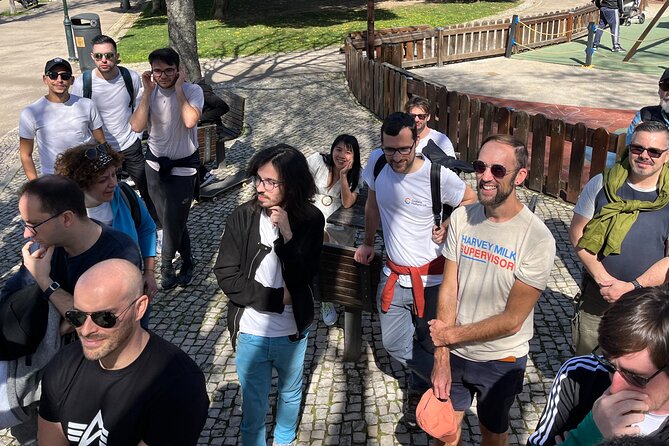
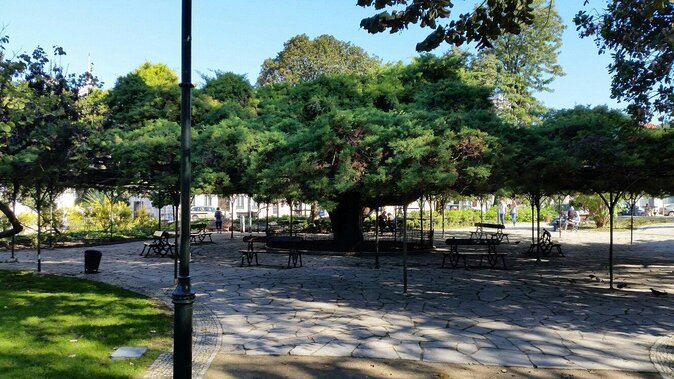
The tour begins at Príncipe Real Playground, at Praça do Príncipe Real 1250-184 Lisboa, and it starts right where local life hums. Your first stop, Jardim do Príncipe Real, sets the stage with introductions in the gardens. It is a smart start because it gets you oriented before you jump into the more intense parts of the story.
Next comes the Monument to the victims of homophobia. This is where the tone turns sober. You learn what is being remembered, and you also hear the counterpoint: how Lisbon has moved toward a visible, thriving queer scene today. For me, this pairing is important. It keeps the tour honest without letting it become only heavy.
Then you move into Praça do Príncipe Real, a square tied to Lisbon Pride and linked to EuroPride planning for 2025. You are not just hearing that Pride happens, you are learning how this place functions as a starting point and why that location matters in the city’s queer identity.
Health, cruising, and the club trail: from GAT Checkpoint LX to Trumps

After Príncipe Real, the tour starts connecting personal risk, public health, and community response. At GAT Checkpoint LX, you get stories about how Lisbon managed the HIV pandemic, plus essential health service info for queer men and women. If you are interested in modern queer life, this is one of the most practical stops, because it frames history through real support systems.
From there you move into nightlife, starting with Construction Lisbon Club. This stop is about dance culture as a form of expression and gathering. You also hear about the neighboring lesbian venues, which helps explain that queer nightlife was never one single story. It was a patchwork of scenes, spaces, and networks.
The walk then takes you to the Botanical Garden of Lisbon, where you hear cruising stories from the 1950s, and how men avoided police attention. This is a stop that can hit different depending on your comfort level. If you prefer light and funny, it still works, but you might want to mentally prepare for material about risk and policing.
Next up is Trumps, Lisbon’s largest queer nightclub. You learn what makes the place feel layered, with two floors and two different vibes, and you hear that the club has been running since 1980. Even if clubbing is not your main goal, this stop helps you understand how long queer nightlife has been part of Lisbon, not a recent invention.
Botanical Gardens to Purex: keeping the nightlife and its meaning connected
You continue through the nightlife map in a way that helps you remember locations later. That matters because Lisbon’s queer venues can be scattered, and the tour gives you a built-in mental grid.
The tour’s cruising and policing context at the Botanical Garden is one thread, but another thread is about what people built for themselves. When you reach stops tied to bars and dance floors, it starts to feel like a timeline of community life, not random nightlife addresses.
One stop that leans into sex-positive club culture is Purex, described as a dance floor run by women, with vagina jewelry part of the fun. It is playful, but it also shows how queer spaces often created their own visuals, rules, and humor.
The tour also includes Maria Caxuxa, a woman you meet through a street address and story. This stop is about someone who challenged conventions and ignored nosey journalists in the 1940s. It is a reminder that queer history in Lisbon is not only about bars and courts, it is also about people who refused to fit the expected script.
More Things to Do in Lisbon

Lesbian bar legend and the first drag bar in Lisbon
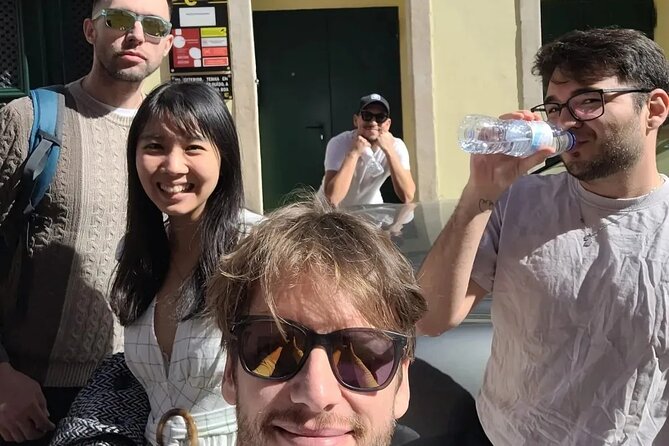
After you’ve absorbed the club and health context, the tour shifts toward early queer nightlife. At R. de Gustavo de Matos Sequeira 42, you hear stories tied to Lisbon’s first lesbian bar, O Gato Verde, which is treated as a long-standing Lisbon institution.
This part of the walk is valuable because lesbian history is often left out of mainstream LGBT narratives. Here, it gets specific. You get names, places, and the sense of how communities created safe social spaces before visibility became easier.
Then you move to Praça das Flores 7, described as the first drag bar in Lisbon. You hear how the 1974 revolution changed enthusiasm for drag, and then how it shifted again. The story also includes the rise and fall of Lisbon’s first drag queen, which adds a human scale to the cultural shifts.
Between these stops you also hit Bar 106, where you literally leave a message for friends. It sounds small, but it is a nice way to end the afternoon portion with something active and personal, before the tour turns even more toward performance spaces.
Bears in two parts: Shelter Bar Lisboa and Bar TR3S Lisboa
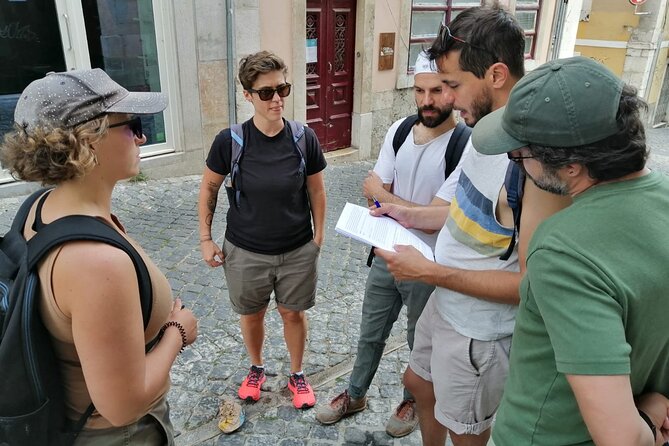
If you are into a specific queer subculture, the tour supports that without turning it into a checklist. At Shelter Bar Lisboa, you learn about the bear scene, described as Where the Bears are, part 1.
Later, you continue to Bar TR3S Lisboa, where the story becomes Where the Bears are, part 2. This stop adds more layers, including bear-focused events like Bear Pride, plus the idea of beach-club style party nights, a sauna, and even sports sponsorship. It gives you a sense of how queer spaces can blend social energy with leisure and community pride.
If you do not identify with bears, you will still get value. The point is how communities organize around comfort, style, and belonging, and how those spaces keep showing up in Lisbon’s social calendar.
Drag legacies at Finalmente Club: shows, timing, and local lore
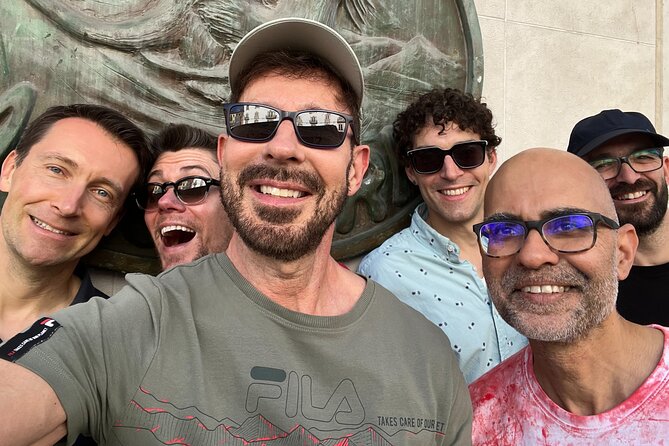
The drag story continues at Finalmente Club, which is positioned as one of the best and oldest in town. You learn to think about shows in terms of timing and different types of performances, because drag venues often function like a schedule-driven world.
The stop is also a chance to talk about endurance. When a place stays relevant across decades, it usually means queer audiences kept showing up and kept asking for more. That thread shows up again and again in the tour.
Legal battles that changed everything: Constitutional Court and LGBTQ rights
A big reason I recommend this tour is that it does not stop at entertainment. You get political and legal context too, with stops tied to real protection and real struggle.
At the Constitutional Court, you learn about legal challenges involving LGBTQ rights and Portugal’s long journey from dictatorship values to constitutional protection. This is a meaningful pivot point because it explains why visibility matters. Laws affect who can gather, who can work, and who can exist without constant fear.
Not far away, at R. Luz Soriano 44, you stop for the “Long Live Homosexuality” story. You hear about early steps toward a manifesto and how they were suppressed, followed by eventual success. You also pick up the broader arc of activism, including how ideas kept moving even when official doors were closed.
This is one of the tour’s strongest sections for allies too. You see the work behind rights, not just the outcome.
Scandals, saunas, and the Two Fernandes story
Next, the tour moves into a different kind of past, the kind told through street addresses and public rumor. At R. do Trombeta 10, you hear about love-nests shifting into luxury apartments and modern saunas.
You also get the steamy story of the Two Fernandes, including a 19th century scandal and how the story connects to saunas. The lesson here is subtle. Lisbon’s queer past was sometimes forced into secrecy, but it still left physical marks in neighborhoods.
If you prefer to keep things purely academic, these stops might feel like a break in tone. But they also help you remember the geography. You leave knowing where the stories live.
Women, censorship, and Josephine Baker: Teatro da Trindade and more
The tour keeps pressing beyond the nightlife angle and into culture, literature, and performance.
At Teatro da Trindade, you hear the Josephine Baker story. The stop connects bisexual jazz legend Josephine Baker to disguise and wartime Lisbon, including dodging secret police and spying activities. Even if you already know Baker’s fame, you get a specifically Lisbon-shaped version of the legend.
Then you visit R. da Misericórdia 125, where the focus is queer fiction, censorship, and the role of compromised censors. This stop is for readers who like the mind games of what got allowed, what got hidden, and how culture responds when power tries to control speech.
And then there is Tv. da Espera 50, a 19th century scandal about the Marquis of Valada, including a dramatic account involving a common soldier, disgraced politicians, political blackmail, and eventual survival. It sounds like gossip, but it is used as a window into how reputation, power, and survival worked for people under scrutiny.
Inquisition-era queer survival: Igreja de São Roque
At Igreja de São Roque, the tour turns intense. You learn how the Portuguese Inquisition can act as a window into queer history, including stories of sex in church settings, references to lesbian nuns, and mentions of a demonic penis, plus a Trans love story across centuries.
This is not a quick stop. It is longer than the rest, and it is meant to show how queer lives were recorded through hostile systems, then partially reclaimed through later understanding.
If you are sensitive to religious persecution material, give yourself permission to pause and process. This stop is one of the most emotionally demanding on the route.
Reclaiming Portuguese writers at Hospital St. Louis
The tour ends the main sightseeing portion at Hospital St. Louis. Here, the focus is on Fernando Pessoa, with the idea of love expressed as love, and on the way his gay writing is recognized and reclaimed.
What I like about ending this segment with Pessoa is that it brings queer history into art and language, not only into courts or clubs. It also gives you a final emotional tone before the social finale.
Late Birds Hotel finale: drinks, pub-quiz, and prizes
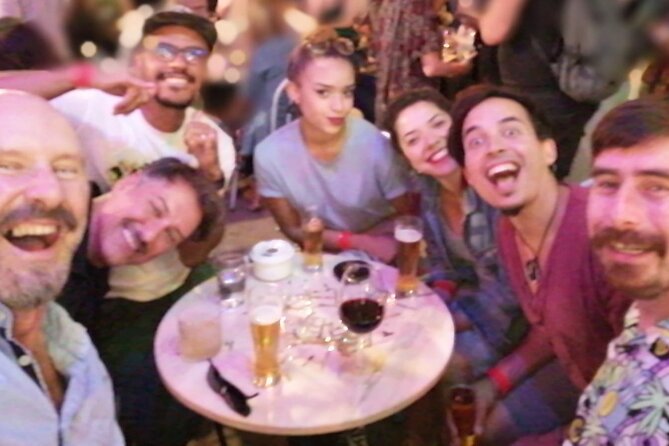
Your last stop is Tv. André Valente 21, at Late Birds Hotel, Lisbon’s largest gay hotel. This is where the tour shifts from history talk to conversation energy. You finish in the lounge, bar, garden, and pool area, and you can have a drink with new friends.
The practical nudge is to bring a swimming costume if the weather is good. At the very least, it tells you Late Birds is not just a lobby stop, it is a place to relax.
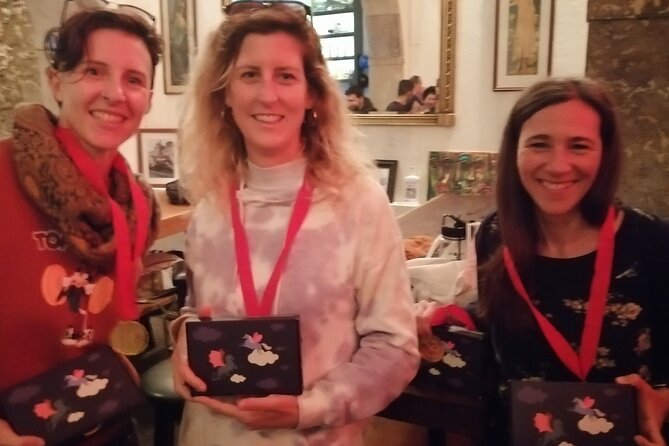
You also get a pub-quiz with prizes. That part is a simple but smart closer. It helps the group bond, and it turns the facts from earlier stops into something social and memorable.
Who should book this tour
Book this if you want a Lisbon plan that feels personal to queer history, not generic landmarks with one detour. You should also book it if you like learning through place names and stories that connect to where you can go next.
It is a strong choice for queer travelers and allies who want context about activism, health, law, and culture, plus real pointers to bars and clubs to check out later. The small group size also makes it easier to ask questions, including the tricky ones.
If you hate walking, or if you need a break every 20 minutes, this may feel like too much. The tour asks for moderate physical fitness, and it is built around a long route.
If you already know Lisbon well and you want a nightlife-only crawl, you might feel the historical stops slow the vibe. If you want both, the balance is the point.
Should you book Queer Lisbon – A Treasure Hunt in LGBT History?
Yes, if your goal is a queer-focused Lisbon that gives you addresses, stories, and a way to understand how the city got to today. The combination of a guided route, a usable PDF guide, and an ending at Late Birds Hotel makes it easy to turn one afternoon into several nights of exploring.
The biggest reason to book is the guide impact. The experience is repeatedly described as friendly, warm, and intensely story-driven, and Alex’s name comes up for a reason. You are getting more than facts, you are getting context, and you get time for questions.
The one reason to pause is physical comfort. This is a walking tour that takes most of an afternoon, so plan shoes, water, and a light layer. If you can handle that, you will get a lot out of it.
If you are in Lisbon for a short stay and want a structured queer introduction without doing the homework yourself, this is a very efficient way to start.
FAQ
How long is the Queer Lisbon tour?
It runs for about 3 hours 30 minutes.
Where does the tour start and end?
It starts at Príncipe Real Playground, Praça do Príncipe Real 1250-184 Lisboa, Portugal. It ends at Tv. André Valente 25, 1200-236 Lisboa, Portugal at Late Birds Hotel.
What time does it start?
The start time listed is 10:00 am.
What language is the tour offered in?
The tour is offered in English.
How much does it cost?
The price is $60.34 per person.
What group size should I expect?
The tour has a maximum of 15 travelers.
What ages can book, and what is the drinking age?
The minimum age to book is 16+. The legal drinking age is 18+.
Is the ticket mobile?
Yes, you receive a mobile ticket.
What is included besides the tour itself?
You get the tour and hear fun stories tied to queer Lisbon. You also receive a PDF copy of Alex’s LONG LIST, an updated LGBTQ Lisbon guide.
What is the cancellation policy?
Free cancellation is available up to 24 hours in advance for a full refund.
What Lisbon sent us most recently
- From Lisboa: Sintra, Cabo da Roca & Cascais Private Full Day Tour
★ 5.0 · 39 reviews - Best of Sintra and Cascais Private Full Day Tour
★ 5.0 · 39 reviews - Private Sailing tour in Lisbon – Day Time, Sunset and Night
★ 4.5 · 39 reviews - Tuk Tuk Lisboa – Sightseeing Tours
★ 4.5 · 39 reviews - Private Experience Óbidos Nazaré and Fátima or Aveiro and Óbidos
★ 5.0 · 39 reviews - Belém and Jerónimos Monastery Private Walking Tour & Ticket
★ 4.5 · 39 reviews - Lisbon Private Luxury Tour
★ 4.5 · 39 reviews - Exclusive Lisbon Progressive Dinner & Wine Tour
★ 5.0 · 40 reviews
Historical Tours, compared.
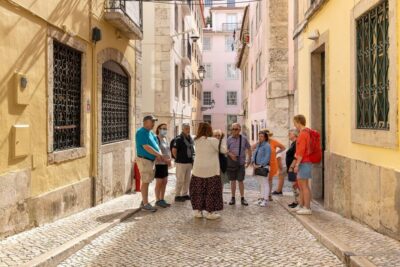
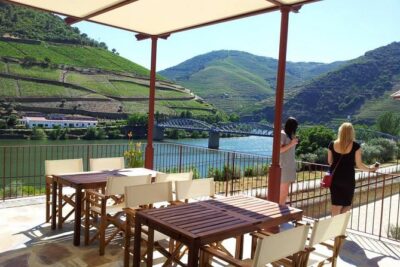
Historical Sites, Wine Experience, Lunch & Cruise
Read our review →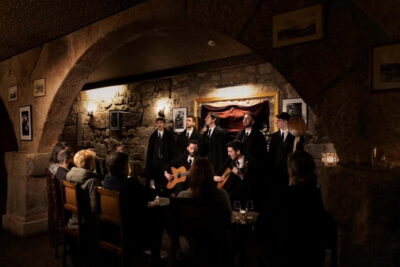

Daytime or Sunset Boat Cruise with History and Wine
Read our review →
Private Tour of the Historic City in a Ford T Car
Read our review →
Browse the lists this tour appears in