
Reviewed · THINGS TO DO IN THE AZORES
São Miguel: Coasteering Experience in Caloura
Salt-air adrenaline on a volcanic coast. I love the mix of volcanic rock scrambling and real ocean play, and I like that you finish with photos and videos from the action. The main drawback to consider is the jump heights go up to 8 metres, so if you’re uneasy with taller drops, you’ll need to choose the lower options the guide offers.
Caloura is a smart setting for this kind of fun. The area has a local microclimate and fertile soil, and then it quickly turns into dramatic black lava rock and Atlantic views, so your walk feels like you’re in a different world once the water calls.
You’re moving the whole time, but this is not some extreme endurance event. It’s built for a small group, and the guides run Portuguese and English instruction, plus they provide the gear you need to stay safe and warm.
In This Review
- Key moments that make Caloura coasteering worth it
- Caloura’s coastline on São Miguel, the main reason to go
- The 3-hour flow, from kit-up to ocean time
- Jumps, caves, and natural pools, plus how the height choices work
- Equipment and safety choices that actually change your experience
- Guides in the mix, and why the vibe matters
- Pickup from Ponta Delgada, and choosing shared vs private
- Price and value: what $88 gets you, and what might feel pricey
- Who this suits best, and who should skip it
- Should you book Caloura coasteering from São Miguel?
- FAQ
- How long is the coasteering experience in Caloura?
- Where does the activity start, and is pickup available?
- What’s included in the price?
- Do I need to know how to swim?
- Are the jumps optional?
- What should I bring?
Key moments that make Caloura coasteering worth it
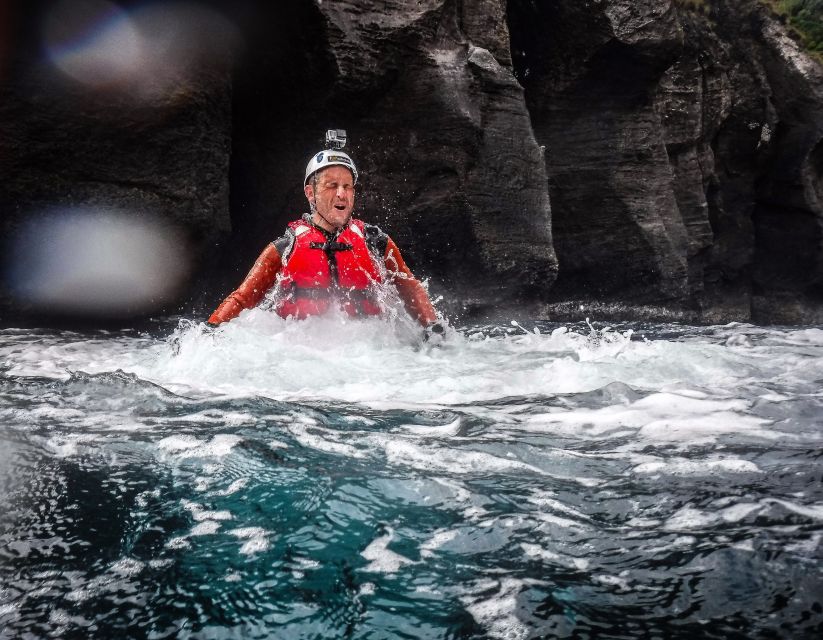
- Volcanic coastal walking that sets you up for jumps, caves, and sheltered water breaks
- Up to 8-metre jumps with alternatives if high heights aren’t your thing
- Full wetsuit setup and safety kit including helmet, life jacket, and water shoes
- Marine biodiversity spotting so you’re not just jumping, you’re learning as you go
- Digital photos and video to relive the messy-wet, grin-filled moments
Caloura’s coastline on São Miguel, the main reason to go
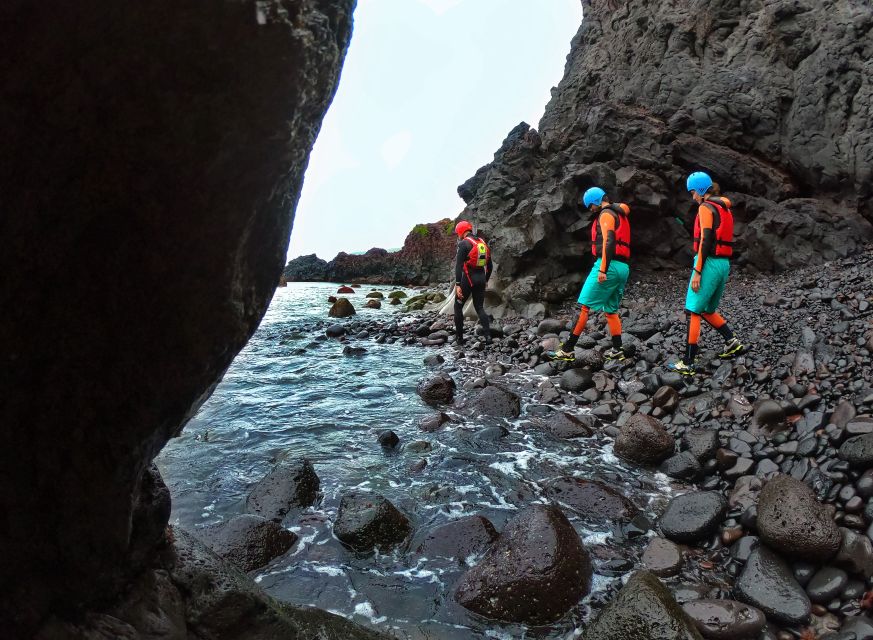
Coasteering works best when the shoreline is dramatic, uneven, and built for improvising. Caloura delivers that in a big way. You start on irregular volcanic stones, the kind you get from old lava flows, and the coast is clearly carved by the Atlantic, with caves, natural pools, and inward bays that feel made for short bursts of adventure.
What I like about this stretch is the way it balances scenery with function. You’re not just looking at ocean views from above. You’re moving along the edge of the island and using natural features as part of the route. That makes the whole 3 hours feel active, not like a long commute between a couple of photo stops.
Caloura is also known for its microclimate. Translation: the coast can feel more comfortable than you’d expect for the Azores, even when the ocean is doing its thing. You’ll feel the contrast quickly, green hillside vibes up top, then black rock and cold water at the edge.
And if you like learning as you play, this activity includes time to discover and admire marine biodiversity in the area. It adds a little meaning to the jumping and helps you pay attention to what’s around you instead of just focusing on your next step.
More Things to Do in the Azores
- From Ponta Delgada: Whale and Dolphin Watching Trip★ 4.7 · 4,109 reviews
- Azores: Whale Watching & Islet Boat Tour w/ Marine Biologist★ 4.7 · 2,945 reviews
- São Miguel West: Full-Day Van Tour with Lunch★ 4.9 · 1,948 reviews
- São Miguel East: Full-Day Van Tour with Lunch★ 4.9 · 1,367 reviews
The 3-hour flow, from kit-up to ocean time
This is a compact half-day experience, planned so you get a lot of actual coast time. Your day begins based on your selected option: either pickup near your accommodation in Ponta Delgada or meeting your guide at the Cerco – Galera parking lot. From there, there’s a short van ride, about 20 minutes, to reach the coasteering area.
Once you arrive, you don’t jump straight in. You’ll get your gear and a safety briefing. This matters, because coasteering is physical, and the shoreline is irregular by design. The briefing is where you learn how to handle the steps, how to move over volcanic rock safely, and what the guide expects from you in terms of water entry and basic behavior around the group.
Then the real action starts with a short walk along the coast. Think of it as the “warm-up with purpose.” You’re getting used to the terrain before you face the water jumps, and you’re also taking in how caves and natural pools sit along the shoreline. It’s one thing to see a coastline on a map. It’s another to feel how uneven the footing is and how the route uses the shape of the rocks.
After that, your guide leads you through a sequence of ocean moments: exploring caves, jumping and getting into the water at natural spots, and moving between inland bays and pools. The pace is meant to keep you challenged without turning it into a slog.
Jumps, caves, and natural pools, plus how the height choices work
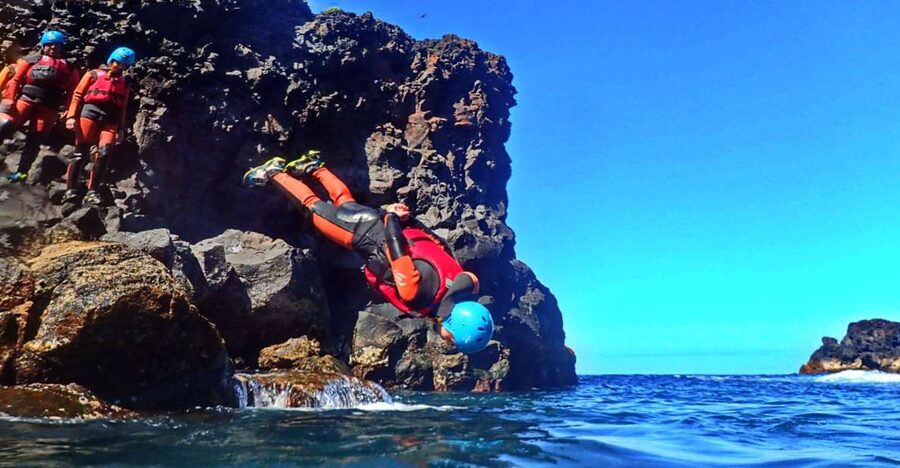
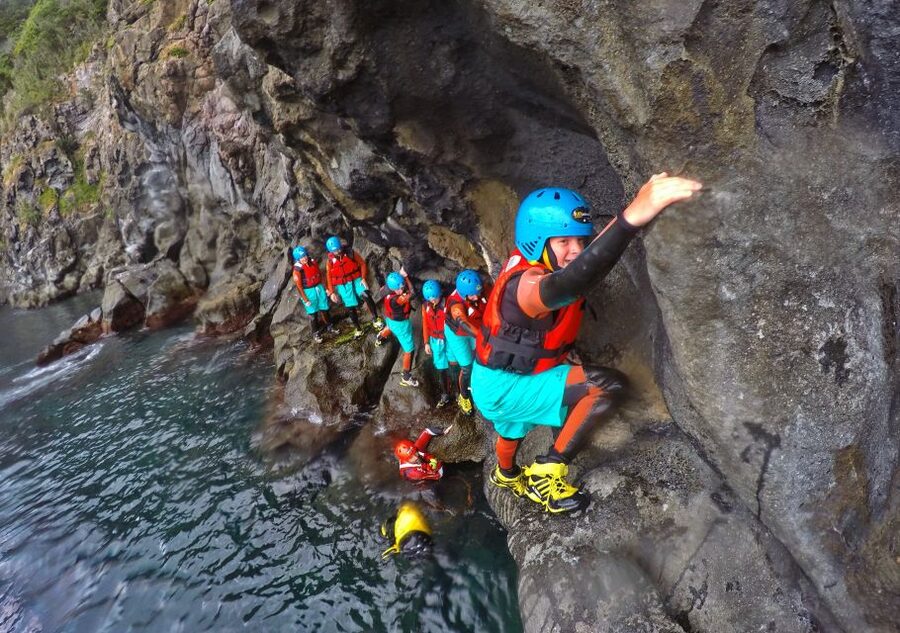
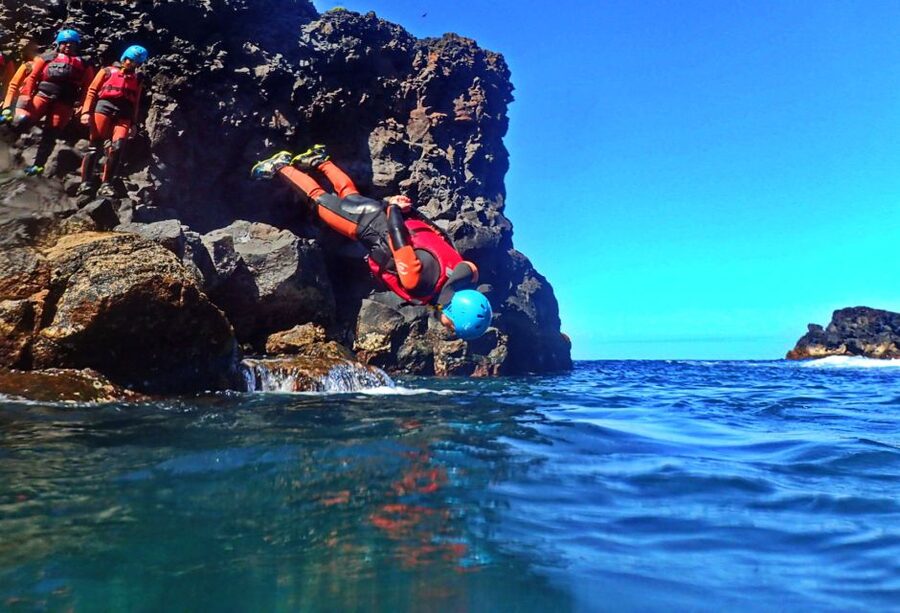
The heart of Caloura coasteering is the jump-and-water rhythm. You can expect several jumps ranging from 1 to 8 metres, with some of them optional depending on how you feel that day and what you’ve told the guide about your comfort level.
Here’s the practical part: the activity is designed with alternatives. If you feel uncomfortable with the higher jumps, you’ll have options so you can still participate and enjoy the ocean time. That’s a big deal, because it keeps the experience from becoming an all-or-nothing test.
Caves add a different kind of thrill. They aren’t just scenery, they’re part of the route and the pacing. You move from exposed rock to sheltered water areas, then back out again, which makes the coastline feel like it has “rooms” rather than one long shoreline.
Natural pools and inland bays are where the experience turns from adrenaline into play. You can reset your breathing, shake out wet hair, and take a moment to enjoy what’s around you. And because you’re staying close to the coast, you’re more likely to notice marine biodiversity than if you were just looking at the sea from land.
One small warning from a value point of view: the whole activity is built around jumping, so if what you want is mostly a relaxed beach swim, this may feel like overkill. But if you enjoy being active and challenged, the mix of heights and terrain is the point.
Equipment and safety choices that actually change your experience
This tour earns its confidence with hands-on gear. You get a full coasteering kit: wetsuits, socks, life jacket, helmet, and shoes. That setup matters in the Azores, where the water can feel colder than you expect, and where volcanic rock is not friendly to bare feet.
The life jacket and helmet are not just “nice to have.” They’re the difference between feeling tense and feeling freer to focus on movement. When you’re hopping across irregular stones and then entering the ocean, you want your confidence to come from equipment and guidance, not from guessing.
Also, the guides are accredited and insured, and they include photos and videos. That combination makes the experience feel both serious and fun. If you’re worried about safety, you’ll likely feel calmer knowing the team is trained and the activity is covered.
Fitness wise, you don’t need to be a mountain athlete. The recommendation is a normal level of physical fitness, and it helps if you’re comfortable doing short bursts of effort and dealing with wet footing.
Swimming is recommended, but not required in the usual way. If you don’t swim, you’ll still need to feel comfortable in the ocean, and the life jacket is part of that plan. The key word here is comfort. If you’re afraid of water, talk to the provider before you book.
One more rule: this activity is not recommended for people with back problems, and pregnancy isn’t accepted. If you have injuries or medical conditions, you should inform them at booking time so they can advise you properly.
Guides in the mix, and why the vibe matters
Coasteering is physical, so good guiding is not optional. The standout theme in guide praise is professionalism and attentiveness. People have specifically mentioned leaders like Bruno, and others credited the guidance team including Rodrigo and Theresa, with notes about how well they handle kids and keep families comfortable.
Even without counting names, you can read the intent from the structure: you get a safety briefing, equipment fitted before you start, and alternatives if you don’t want the tallest jumps. That means the guide is steering the experience, not just escorting you along a coastline.
Language support is another real-world detail. The guide works in Portuguese and English, so you’re not guessing through instructions. When you’re dealing with slippery rock and water entry steps, clear communication is worth more than you think.
For small groups, you also tend to get more individual attention. That matters when someone is deciding between the 1 to 3 metre options and the 5 to 8 metre ones, or when you need help with how to handle a particular entry spot safely.
When the light changes over Sao Miguel Island, try these:
Pickup from Ponta Delgada, and choosing shared vs private
Most people will base themselves in Ponta Delgada, so the logistics can make or break the day. You have two ways to join. You can meet your guide at the Cerco – Galera parking lot, or you can arrange pickup and drop-off near your accommodation in Ponta Delgada.
Pickup is optional and available within the city of Ponta Delgada. If you’re staying outside that area, you’ll need to contact the provider in advance. Pickup timing also depends on season. In low season (October to May), pickup is around 8:30 to 8:50 am. In high season (June to September), pickup is around 13:55 to 14:15 pm. That shift matters because it changes how the day feels, morning energy versus afternoon light.
You can also choose between a private or shared tour. For families or groups who want a calmer pace and more control over jump choices, private tends to feel easier. For couples or friends looking for the best price value while still getting guide attention, shared usually works well.
One detail worth noting: after the experience, you’ll return to Ponta Delgada. The provided information lists two drop-off locations, including an area noted as PF5R+6H. Practically, that means you shouldn’t expect a far-flung return ride.
Price and value: what $88 gets you, and what might feel pricey
At $88 per person for about 3 hours, you’re paying for a structured adventure, not a DIY outing. That cost includes accredited guides, insurances, all coasteering equipment, plus photos and videos. Those add up fast if you were trying to recreate the same experience on your own with rentals, insurance, and a capable local guide who knows the shoreline.
The value gets even better if you want your day documented. Getting digital photos and video means you don’t have to risk your phone on wet rocks just to remember the jumps.
That said, one review sentiment was essentially: the jumps feel like something you could do on your own with water shoes. I get that thought. If you already love self-guided adventure and you’re confident in evaluating coastal conditions, you might question whether the price is worth it.
But coasteering isn’t just about jumping off rocks. It’s about moving across volcanic terrain, choosing safe entry points, and managing group flow around caves and pools. A guide reduces the guesswork. That’s the real value, especially if conditions shift or you want the option to skip the taller jumps without sitting out completely.
If you’re the type who values structure, safety gear, and coaching, $88 for 3 hours in São Miguel is likely fair.
Who this suits best, and who should skip it
This activity is a good match for people who want adventure and adrenaline and don’t mind being active for a few hours. It’s described as suitable for almost all ages, which is why families show up for it, not just thrill-seekers.
You should be comfortable with a normal level of fitness and okay with uneven coastal walking. If you know how to swim, great. If not, the life jacket helps, but you still need to feel comfortable in the ocean environment.
The alternatives for height are helpful for people who might be brave on lower jumps but cautious at the top end. You’re not forced into the maximum jump range if you communicate your comfort level.
On the other hand, it’s not recommended for:
- Pregnant women
- People with back problems
- People with pre-existing medical conditions
If you’re unsure, ask before booking. The provider specifically asks you to inform them of injuries, medical conditions, or health problems so they can guide you toward the right decision.
Should you book Caloura coasteering from São Miguel?
I’d book it if you want a hands-on coastal adventure in São Miguel, where the action is built into the coastline itself. This is not a passive tour. You’ll wear real gear, get coaching, and spend your time on volcanic rock and in the Atlantic’s natural pools and bays.
I’d skip or reconsider if you hate high jumps, have mobility or back issues, or are uncomfortable with ocean time. In those cases, even with alternatives, the experience is still about moving around the edge of the sea.
If you go, choose your comfort level early, pack what they ask for, and plan around the season pickup time. You’ll get a better day when you show up ready for wet rock, cold water, and a guide-led route that keeps everyone safe while still letting you have fun.
FAQ
How long is the coasteering experience in Caloura?
The duration is 3 hours.
Where does the activity start, and is pickup available?
You can meet at Cerco – Galera parking lot, or choose optional pickup and drop-off within Ponta Delgada. If you stay outside Ponta Delgada, you need to contact the provider in advance.
What’s included in the price?
It includes accredited guides, coasteering equipment (wetsuit, socks, life jacket, helmet, shoes), insurance, and photos/videos. Pickup and drop-off are included only if you select that option.
Do I need to know how to swim?
Swimming is recommended, but if you don’t know how to swim, you’ll need a life jacket. It’s important that you feel comfortable in the ocean.
Are the jumps optional?
You can expect multiple jumps from about 1 to 8 metres, and if you feel uncomfortable with higher jumps, there are alternatives.
What should I bring?
Bring comfortable shoes, swimwear, a towel, sunscreen, water, and comfortable clothes.
What Sao Miguel Island sent us most recently
- Ponta Delgada: Historical Walking Tour
★ 4.4 · 41 reviews - Furnas: Hot Springs, Crater Lake & Geothermal Wonders
★ 4.7 · 41 reviews - Inside Vila Franca Islet: Guided Nature Reserve Eco Tour
★ 4.4 · 42 reviews - Terceira Island: Ilhéu das Cabras Boat Tour + Snorkeling
★ 4.3 · 44 reviews - São Miguel Island: Full-Day Sete Cidades Tour
★ 4.9 · 46 reviews - Ponta Delgada: Private Sunset Tour with Snacks and Drinks
★ 5.0 · 46 reviews - Sete Cidades Azores 4×4 Day Tour from Ponta Delgada
★ 4.9 · 46 reviews - West Coast Van Tour (Half Day) | Terceira Island
★ 4.9 · 46 reviews
Things to Do in the Azores, compared.
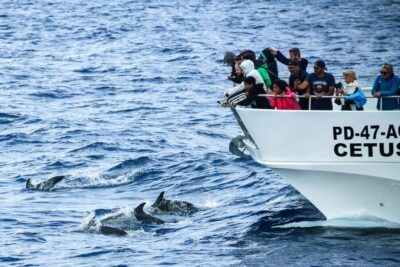
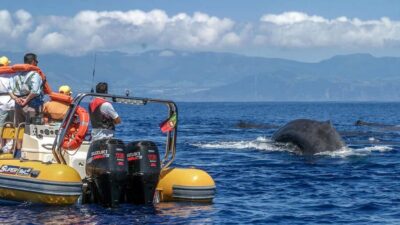
Whale Watching & Islet Boat Tour w/ Marine Biologist
Read our review →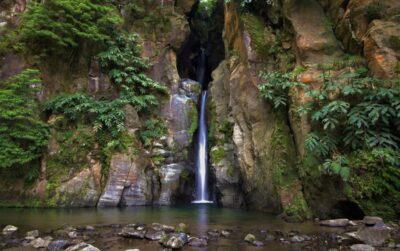
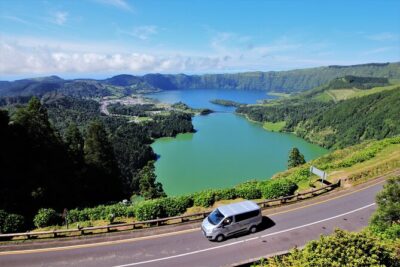
São Miguel West Full Day Tour with Setes Cidades Including Lunch
Read our review →
São Miguel East Van Tour with Lunch: Furnas & Nordeste
Read our review →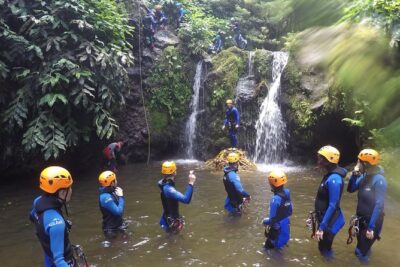
Browse the lists this tour appears in