
Reviewed · WALKING TOURS
Ponta Delgada: Historical Walking Tour
Ponta Delgada tells its story on foot. I loved starting at Ernesto do Canto Public Library and ending near Mercado CORES, because the route connects big landmarks to everyday Azorean life. I also liked the mix of culture and learning, from Teatro Micaelense to the Carlos Machado Museum. One possible drawback to note is that some guides may lean into religious or story-heavy explanations, so if you want straight historical facts, set that expectation upfront.
This is a true live-guided walk, with multiple language options including English, Portuguese, Scots Gaelic, and Spanish. In the best moments, a guide like Manuela can make the details feel friendly and local, not like you’re trapped in a lecture.
Because it is a walking tour for about 3 hours, I recommend planning for real pavement time. Wear comfortable shoes, bring water, and keep your pace steady.
In This Review
- Key Things I’d Focus on Before Booking
- Getting Oriented at Ernesto do Canto Public Library
- Mercado da Graça, Where Daily Life Sets the Mood
- Teatro Micaelense and the Carlos Machado Museum: Culture Meets Science
- Igreja do Colégio, the Antero de Quental Garden, and the Poet Thread
- Padre Sena Freitas Garden and Palácio da Conceição: Politics in Plain Sight
- Coliseu Micaelense and Campo de São Francisco: Feeling the Island’s Cultural Pulse
- Forte de São Brás and Santo Cristo: Why This Landmark Matters
- Portas da Cidade, Câmara Municipal, and the Church at São Sebastião
- Mercado CORES Finish: Crafts, Creative Projects, and a Good Last Impression
- Price, Value, and What You Actually Get for $41
- Guide Quality, Language, and Saturday Stop Closures
- Who This Tour Is Best For
- Should You Book This Ponta Delgada Historical Walking Tour?
- FAQ
- How long is the Ponta Delgada walking tour?
- Where does the tour start and where does it finish?
- What languages are available for the live guide?
- Is the tour wheelchair accessible?
- What should I bring for the walking portion?
- What is included in the price, and what is not included?
Key Things I’d Focus on Before Booking
- A guided loop that stitches together markets, museums, and civic buildings so you see how the city works, not just what it looks like.
- Entry tickets included for the sights listed, which helps this $41 price feel more like a packaged experience than a casual stroll.
- Teatro Micaelense plus Carlos Machado Museum gives you both cultural history and natural history in one morning or afternoon.
- Garden and poet stops (Antero de Quental and local literary names) add a thoughtful, human layer to the sightseeing.
- Santo Cristo context near Campo de São Francisco and Forte de São Brás shows why religion and the sea are tied together here.
- Mercado CORES at the end is a smart way to transition from sites to local crafts and creative projects.
Getting Oriented at Ernesto do Canto Public Library
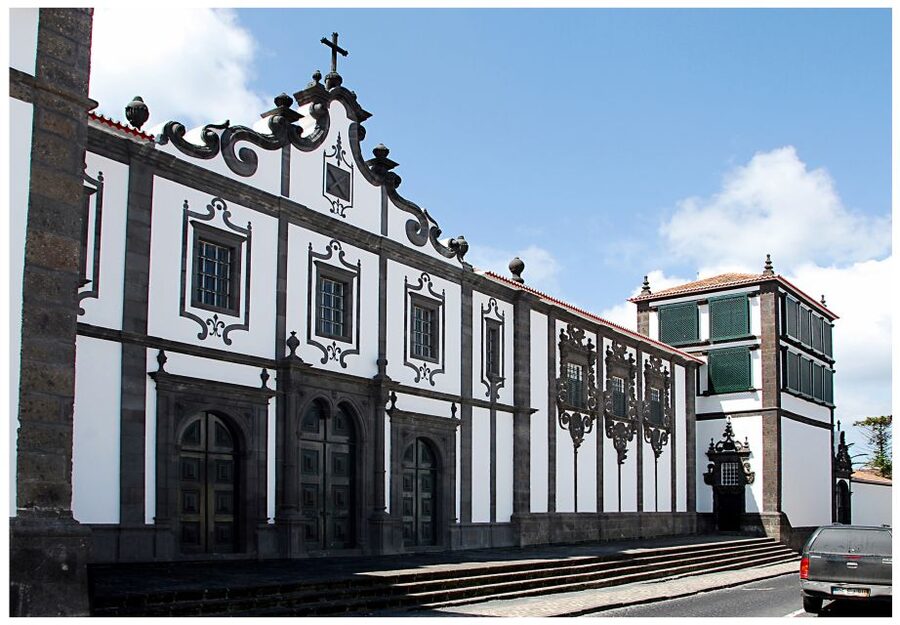
Your tour starts at the Ernesto do Canto Public Library, right by the bust of Luís de Camões. That’s a good first move, because Camões instantly frames the area as Portuguese cultural territory, not just a remote island outpost.
From there, the walk naturally settles into the city fabric: streets, squares, and institutions that locals use. If you like tours that help you understand a place fast, this start helps you get your bearings early.
The first stop also signals the tone you’ll feel throughout: learning tied to places, not a checklist. You’ll be walking at a comfortable city pace for about three hours, so expect to keep moving and take in details as you go.
More Portugal at a stroll:
- Angra do Heroísmo: Walking Tour with Local Pastry and Coffee★ 4.8 · 65 reviews
- Lisbon: History, Stories and Lifestyle Walking Tour★ 4.8 · 10,902 reviews
- Best of Lisbon Small-Group Guided Walking Tour★ 5.0 · 4,869 reviews
- Lisbon: Food and Wine Small Group Walking Tour★ 4.9 · 4,082 reviews
Mercado da Graça, Where Daily Life Sets the Mood
Next comes Mercado da Graça, one of those places where you immediately understand how people live on São Miguel. You’re not just looking at buildings. You’re seeing the sights and smells of a functioning local market, where color and everyday rhythm do the heavy lifting.
Even if you don’t plan to buy anything, markets are a cheat code for travel. They tell you what’s fresh, what’s important, and how visitors should behave: slow down, look around, and treat it like someone’s normal Tuesday.
This is also a moment where your guide can connect objects and food culture to local history and daily life. That connection is the difference between memorizing dates and actually remembering a place.
Teatro Micaelense and the Carlos Machado Museum: Culture Meets Science
Teatro Micaelense is the kind of stop you can’t miss, because it’s a cultural anchor for the islands. If you care about arts, it helps you see how Ponta Delgada supports performance and community life, not just tourism.
Then you shift into Carlos Machado Museum, where natural history and regional culture meet. This is a smart pairing, because it keeps the tour from becoming only human stories. You also get a sense of the archipelago’s biodiversity and traditions, which makes the Azores feel more grounded in place.
A practical thought here: museum time can be the part of the tour that decides whether you feel rushed or relaxed. If you’re the type who loves reading labels and taking notes, give yourself permission to slow down right here.
Igreja do Colégio, the Antero de Quental Garden, and the Poet Thread
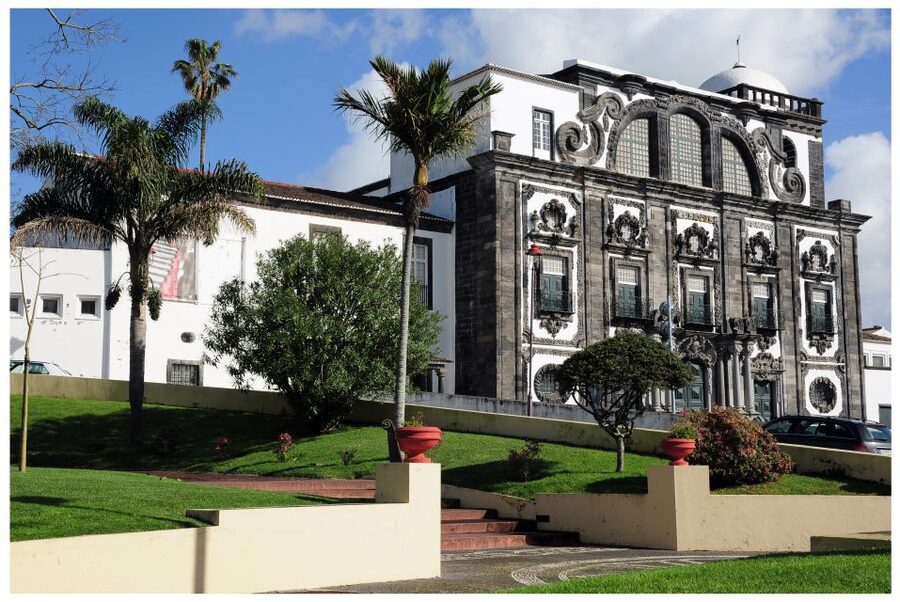
You’ll continue toward Igreja do Colégio and the Antero de Quental Garden, and you’ll also hear stories connected to the poet Antero de Quental and his influence on Portuguese literature. The way these stops are placed matters. The tour uses greenery and architecture as a way to talk about ideas, not just bricks.
This is also where the guide’s style really affects your experience. One review noted that the storytelling focus can sometimes lean toward biblical or story-based explanations rather than strict history. If that matters to you, ask the guide about the balance you prefer, or listen early and adjust your questions as you go.
For most people, though, the poet and garden thread brings a calm, reflective pace to the walk. It’s a nice reset between market energy and the bigger civic and religious landmarks later on.
Padre Sena Freitas Garden and Palácio da Conceição: Politics in Plain Sight
Near the Padre Sena Freitas Garden and the Palácio da Conceição, the tour touches on political autonomy and how power is divided among the islands. This part works well if you’ve ever wondered why the Azores feel distinct from mainland Portugal.
It also makes the architecture feel useful. Instead of learning politics from a textbook, you’re learning it because you’re standing beside symbols of civic structure and governance.
If you’re not a policy person, don’t worry. You can still enjoy this stop as a story of identity, and how local decisions shape daily life across islands.
A few more Sao Miguel Island days, taken slowly
Coliseu Micaelense and Campo de São Francisco: Feeling the Island’s Cultural Pulse
Coliseu Micaelense shows up as one of the largest theaters in the archipelago, and it’s a natural bridge into Campo de São Francisco. This pairing helps you sense the social beat of Ponta Delgada, where art and community gather in physical space.
Campo de São Francisco also connects you to a major local religious event: the Santo Cristo festivities. The tour links these landmarks to the sea and to why this place mattered strategically over the centuries.
That sea connection is not just a background detail. In island towns, the sea shapes movement, defense, trade, and even the timing of community rituals. So when your guide points out why these sites are positioned where they are, you start to understand the logic.
Forte de São Brás and Santo Cristo: Why This Landmark Matters
Forte de São Brás is the point where history becomes tangible. You see it as a defensive and strategic location, not just a pretty old structure. And because it connects to Santo Cristo festivities, it shows how religion and maritime life can share the same stage.
Even if you visit outside festival season, you’ll likely leave with clearer context about why people care. The tour’s explanation helps you see the continuity, where yearly celebrations are rooted in older patterns of community and survival.
If your goal is photos, this is a strong zone for them. If your goal is understanding, it’s even better, because the site ties together sea power, defense, and local devotion.
Portas da Cidade, Câmara Municipal, and the Church at São Sebastião
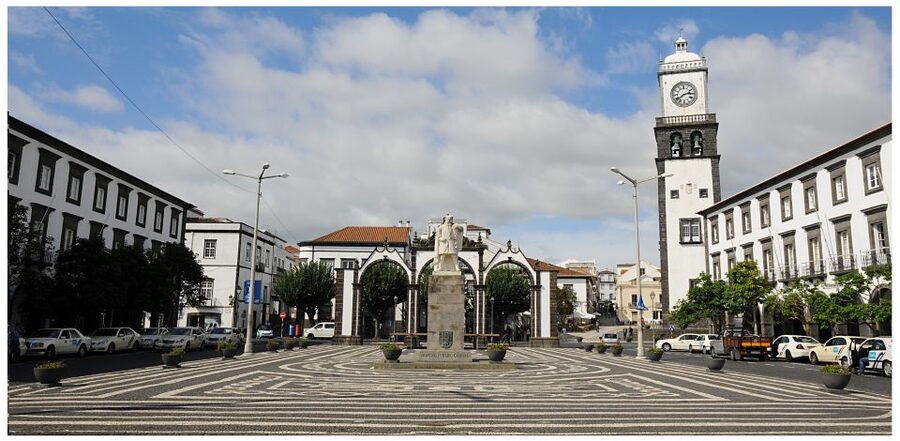
After the fortress zone, the tour heads toward Portas da Cidade, the symbolic gateway to the Azores. This is one of those “you know you’re in the right place” moments, because gateways are emotional for cities. They represent arrival, identity, and the line between outside and inside.
You then reach the Câmara Municipal and Igreja Matriz de São Sebastião, the heart of the city. Here, you’ll understand what Ponta Delgada considers central: not only landmarks, but the civic and religious institutions that shape schedules and community life.
This section also helps you connect earlier stops back to the city’s structure. The market, museums, theaters, and gardens all make sense once you see where civic power and community worship sit.
Mercado CORES Finish: Crafts, Creative Projects, and a Good Last Impression
You end back near Mercado CORES, where you can explore local crafts and creative projects that celebrate Azorean identity. Ending here is smart, because it turns your “tour brain” off and gives you time to browse at your own pace.
This is also a good spot to pick up something small that feels local, without needing a long detour. Even if you just watch and people-spot, you’ll get a final hit of the city’s real tempo.
And if you’re a planner, Mercado CORES as a finish point makes it easier to continue independently afterward, since you’re already in the middle of town.
Price, Value, and What You Actually Get for $41
At about $41 per person for a 3-hour walk, the value here comes from three things: a guide, included entry for the listed attractions, and insurance coverage.
A lot of tours advertise “guided walking” but don’t include anything once you reach the paid sights. Here, you’re told entry to the attractions listed is included. That can make a noticeable difference if you’re planning to visit museums or cultural buildings anyway.
Lunch is not included, and there’s no pickup or drop-off. So you’ll want to handle your own meals and plan to meet the group on time at the library. In return, you get a well-structured route that strings together market life, cultural institutions, and historical context without wasting your time zig-zagging.
Guide Quality, Language, and Saturday Stop Closures
The biggest variable with this type of tour is the guide’s delivery. One English-speaking traveler flagged that English needs improvement, and another praised Manuela as friendly and very well informed. That tells you two things: the tour format works, but the details depend on who’s leading that day.
If language clarity matters to you, I’d treat this like a pro move: arrive ready with questions, and if something sounds unclear, ask for repetition. You can also check the language options, since the tour offers English, Portuguese, Scots Gaelic, and Spanish.
Also, if you’re visiting on a Saturday, be aware that some stops may be closed. When that happens, you may still get a useful route, but your expectations should include minor adjustments.
Who This Tour Is Best For
You’ll probably love this tour if you want a city overview that feels grounded in daily life. It’s ideal for first-timers to Ponta Delgada who want more than a photo walk, and it’s also a good fit if you like mixing culture, museums, and neighborhood context.
It’s also a strong option for travelers who enjoy learning through real places. The route jumps from market to theater, from museum to gardens, from civic buildings to fort and festival context. That variety keeps the experience from becoming one long theme.
If you dislike religious or story-based framing, go in with clear expectations. The tour includes Santo Cristo related sites and may include story explanations that are not purely secular history. You can still enjoy the historical context, just make sure you know what kind of narration you prefer.
Should You Book This Ponta Delgada Historical Walking Tour?
If you want a smart first pass at Ponta Delgada with a mix of markets, culture, and context, this is a solid choice. The price makes sense because the guide and attraction entries are included, and the ending at Mercado CORES gives you a useful next step for shopping or browsing.
I’d book it with one condition: be ready to adapt your expectations about narration style. If strict history is your top priority, ask the guide early what kind of focus you’ll get, and watch for language clarity as the walk begins.
For most visitors to São Miguel, this tour is a practical way to get your bearings fast, learn the city’s main threads, and leave with a stronger sense of how Ponta Delgada connects to the sea, faith, arts, and island identity.
FAQ
How long is the Ponta Delgada walking tour?
The tour lasts 3 hours.
Where does the tour start and where does it finish?
It starts at the Ernesto do Canto Public Library, next to the bust of Luís de Camões, and it finishes at Mercado CORES | Azores for All.
What languages are available for the live guide?
The guide is available in English, Portuguese, Scots Gaelic, and Spanish.
Is the tour wheelchair accessible?
Yes, the tour is wheelchair accessible.
What should I bring for the walking portion?
Bring comfortable shoes and water, and wear comfortable clothes.
What is included in the price, and what is not included?
Included: the guide, entry to the attractions listed, and insurance (personal accident and liability). Not included: lunch, pickup, and drop-off.
What Sao Miguel Island sent us most recently
- Furnas: Hot Springs, Crater Lake & Geothermal Wonders
★ 4.7 · 41 reviews - Inside Vila Franca Islet: Guided Nature Reserve Eco Tour
★ 4.4 · 42 reviews - São Miguel: Coasteering Experience in Caloura
★ 4.8 · 43 reviews - Terceira Island: Ilhéu das Cabras Boat Tour + Snorkeling
★ 4.3 · 44 reviews - São Miguel Island: Full-Day Sete Cidades Tour
★ 4.9 · 46 reviews - Ponta Delgada: Private Sunset Tour with Snacks and Drinks
★ 5.0 · 46 reviews - Sete Cidades Azores 4×4 Day Tour from Ponta Delgada
★ 4.9 · 46 reviews - West Coast Van Tour (Half Day) | Terceira Island
★ 4.9 · 46 reviews
Walking Tours, compared.
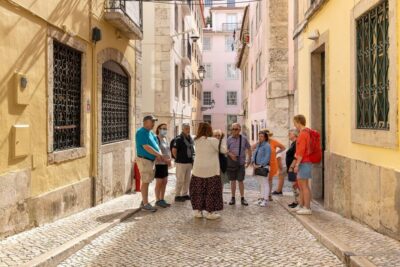

Best of Lisbon Small-Group Guided Walking Tour
Read our review →
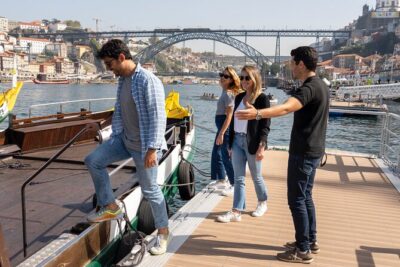
Porto Walking Tour, Lello Bookshop, River Cruise and Cable Car
Read our review →
Best of Lisbon Walking Tour: Rossio, Chiado & Alfama
Read our review →
Experience Porto’s Charm: 3-Hour Guided Walking Tour
Read our review →
Enjoy a Guided Levada Walk in the Rabaçal Valley
Read our review →Browse the lists this tour appears in