
Reviewed · WALKING TOURS
Best of Lisbon Small-Group Guided Walking Tour
Lisbon can feel like a lot at once, so this route keeps it simple. You get a small-group walk that hits the biggest neighborhoods and landmarks in one half-day, plus a couple of tasty stops along the way. It is a great plan if you want structure on your first day and still leave room to wander after.
I like that the tour mixes big-picture moments with street-level details. You walk through squares that explain Portuguese independence, then into areas like Alfama where fado shows up in everyday life. And I especially like that the guide time is not just talking from a distance, the pace is built for questions and photo breaks.
One consideration: it is a walking tour through hilly, historic streets, so you should plan on stairs and uneven ground. If you already know Lisbon’s postcard sites well, you might find some stops feel familiar, even if the explanations make them more meaningful.
In This Review
- Key highlights worth your attention
- Why This 3 to 4 Hour Walking Loop Works for Lisbon
- Praça Dom Pedro IV and Igreja de São Domingos, Lisbon’s “open book” start
- Restauradores Square and Rossio Station, independence and rail engineering in one arc
- Largo do Carmo to Chiado, Carnation Revolution context and a stylish street crawl
- Baixa, Rua Augusta, and the 18th-century earthquake rebuild you can see
- Miradouro Chao do Loureiro and Alfama’s fado lanes
- Praça do Comércio, Terreiro do Paço, and the welcome hall by the river
- What You Actually Get: Pastel de nata, wine, and a snack
- Price and value, plus the real walking picture
- Who should book this tour, and who might want a different fit
- Should you book Best of Lisbon Small-Group Guided Walking Tour?
- FAQ
- How long is the Best of Lisbon walking tour?
- Where do I meet the guide, and where does the tour end?
- Is this a small group tour?
- What food and drinks are included?
- Are museum or monument entry tickets included?
- What language is the tour offered in?
- Do I need a lot of fitness for this walk?
- Does the tour use a mobile ticket?
- Is free cancellation available?
Key highlights worth your attention
- Up to 14 people means you are not lost in a crowd, and the guide can respond to questions
- Pastel de nata + wine tasting + tapa/snacks are built into the tour, not tacked on
- A route that links history to geography (independence, earthquake rebuild, fado neighborhoods)
- Views without extra tickets at viewpoints like Miradouro Chao do Loureiro
- Central start, easy finish at Praça Dom Pedro IV and Praça do Comércio, so you keep momentum
Why This 3 to 4 Hour Walking Loop Works for Lisbon
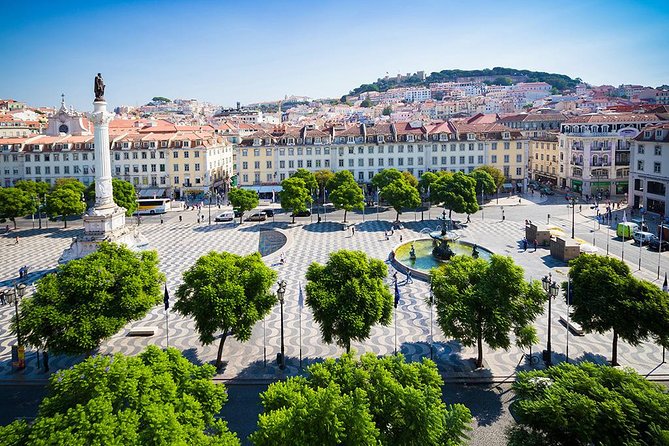
This is a half-day style tour, roughly 3 to 4 hours, designed to get you oriented fast. The meeting point is Praça Dom Pedro IV (Rossio), and the route ends at Praça do Comércio near the Tagus. That layout is useful, because you finish in one of the most walkable, open areas of central Lisbon.
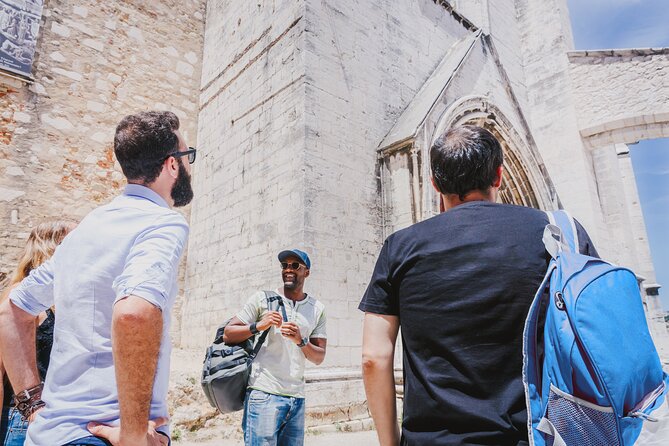
You also get a small group, with a maximum of 14 travelers. That matters in Lisbon because street corners, slopes, and photo stops can turn into delays if the group is large. Here, the tour is meant to flow, and the guide can keep tabs on everyone’s pace.
Comfort-wise, you just need moderate physical fitness. Expect uneven sidewalks and some hill walking, especially when you head toward Alfama. Good shoes help. From guides like Felipe, the strategy is often to use public elevators and escalators when they exist, which can save your legs for the fun parts.
Finally, this is offered in English, with a mobile ticket. And because it’s commonly booked well in advance, you should grab your date early if you have a short Lisbon window.
More Walking Tours in Lisbon
- Lisbon: History, Stories and Lifestyle Walking Tour★ 4.8 · 10,902 reviews
- Lisbon: Food and Wine Small Group Walking Tour★ 4.9 · 4,082 reviews
- Best of Lisbon Walking Tour: Rossio, Chiado & Alfama★ 4.9 · 2,700 reviews
- Age of Discoveries Walking Tour in Belém★ 5.0 · 1,513 reviews
Praça Dom Pedro IV and Igreja de São Domingos, Lisbon’s “open book” start
The tour begins on Praça Dom Pedro IV, also known as Rossio in Baixa. This is Lisbon’s nerve center, and it is a smart start because it anchors everything you will see later. One neat detail to watch for is the paving, Portuguese stone laid in a pattern described as resembling the nearby ocean’s waves. It is a small thing, but it sets the tone: Lisbon’s look is not random, it is built with intent.
Then you head to Igreja de São Domingos on São Domingos square. This stop is brief, but it helps you understand the city as more than viewpoints and tram lines. Churches like this one put Portuguese city life into focus, especially when the guide connects architecture to what was happening in different eras.
If you like your walking tours to feel like a guided “how to read the city,” these early stops do that. If you hate waiting at squares, the good news is that this portion stays quick.
Restauradores Square and Rossio Station, independence and rail engineering in one arc
Next comes Praça dos Restauradores, dedicated to Portugal’s restoration of independence in 1640. The obelisk in the center is your visual anchor, and the guide connects it to the battles and dates tied to the Portuguese Restoration War. This is where the tour stops being only pretty and starts becoming explanatory, with political history you can actually see.
From there you move to Estação do Rossio. The building exterior is inspired by Manueline architecture, a style that helps Lisbon feel unmistakably Portuguese. The guide also brings the railway into the story, including how trains head into the tunnel toward Sintra. Even if you never ride this line during your trip, you get a sense of why Lisbon’s transport mattered and how engineering shaped daily life.
A practical perk here is orientation. Rossio Station is a hub, so once you know where it is, you can plan day trips or just connect to transit on your own afterward without as much guesswork.
Largo do Carmo to Chiado, Carnation Revolution context and a stylish street crawl
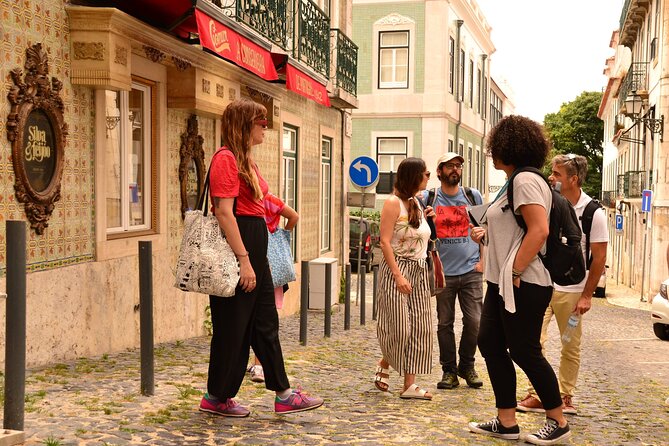
Largo do Carmo is a small square with big meaning. It is tied to the 14th-century convent story and also to the Carnation Revolution in 1974. The guide frames how the country’s dictatorial regime collapsed after decades of rule, which helps explain why Lisbon’s public spaces carry emotional weight.
From there the route takes you toward Elevador de Santa Justa. This is more than a photo moment. You get a change of perspective in a city where the ground level is always doing something tricky. The tour keeps this stop timed so you can enjoy the monument and its setting without it eating your whole morning.
Then you reach Chiado, an elegant neighborhood known for boutiques, theaters, bookstores, and vintage cafés. This portion feels like a shift in tempo. The guide connects how the area developed for wealthy and intellectual elites, then points your attention to facades and street life that have survived over time. It is the kind of neighborhood that rewards slow walking, even if the tour pace is efficient.
If you want a break from history lectures, Chiado is a good moment for that. The streets naturally invite browsing, and you can ask the guide where to duck into a café for later.
Baixa, Rua Augusta, and the 18th-century earthquake rebuild you can see

Now you are in the heart of Lisbon: Baixa de Lisboa. The city center here is not a static time capsule. It was rebuilt after the 18th-century earthquake, using new urban planning ideas and antiseismic approaches for its time.
Rua Augusta is the main street in the center, and it is a good place to walk through because it feels like a spine. The guide uses this zone to explain how Lisbon’s layout and street rules emerged from rebuilding needs. You start to notice how blocks, widths, and angles shape how the city functions today.
I like this section because it answers a question you might not know you have. When you look at a city and think, why does it feel so planned compared to other old towns, Baixa is the clue.
In terms of effort, this stretch is usually manageable compared to the steepest parts. If you are using public elevators and escalators along the way, this is a good zone to maintain momentum.
More Portugal at a stroll:



Miradouro Chao do Loureiro and Alfama’s fado lanes
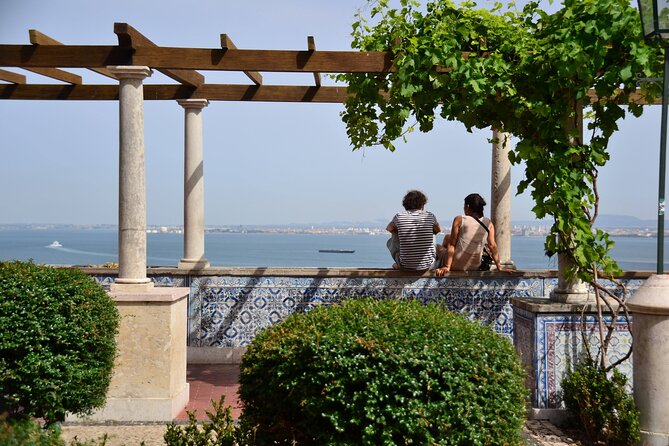
The tour includes a viewpoint at Miradouro Chao do Loureiro. This is one of those stops that makes the whole walk feel worth it. You are not just climbing and walking for the sake of it, you get a panoramic payoff that helps you understand Lisbon’s geography.
Then you transition to Alfama, Lisbon’s oldest quarter. This is where the guide slows down slightly into storytelling mode, focusing on Moorish heritage and the presence of fado. The tour route passes by fado restaurants tucked between narrow alleys and down winding streets, and you start to see why music here is not a separate activity. It is part of the street’s personality.
If you are hoping for great photos, this is the part to keep your camera ready. Narrow streets can be frustrating when you are trying to step aside, but the guide’s timing helps. Also, if you want to learn the rhythms of Alfama, walking it with context beats wandering blind, especially early in your trip.
One small consideration: Alfama streets can be uneven and tight. Wear shoes you can trust on slopes and in corners.
Praça do Comércio, Terreiro do Paço, and the welcome hall by the river

Your walk finishes at Praça do Comércio, also known as Terreiro do Paço. This is right by the Tagus River, so the atmosphere opens up after the tight streets of Alfama. The tour ties the space to Lisbon’s maritime story, explaining that the area was once the location of the Royal Ribeira Palace until the devastating 1755 Lisbon earthquake. After that, the square was remodeled as part of the Pombaline Downtown rebuilding.
The guide also frames Praça do Comércio as a reception hall for travelers arriving from the Atlantic. That detail helps you feel the scale of how Lisbon worked historically, as a gate between ocean routes and inland life.
Ending here is smart for logistics, too. It is easy to continue on your own, grab food, or simply take in the river view without needing to immediately navigate steep back streets again.
What You Actually Get: Pastel de nata, wine, and a snack
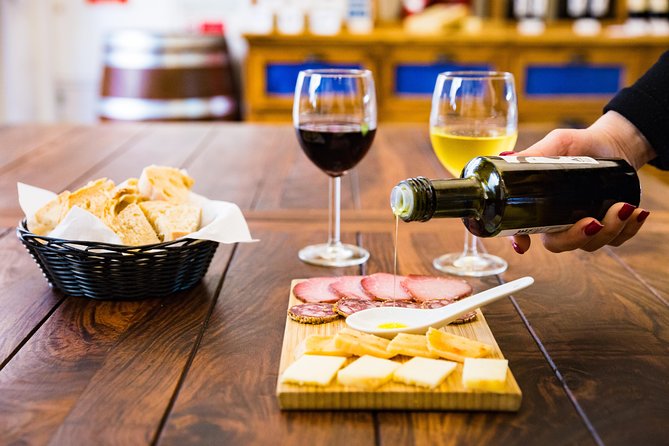
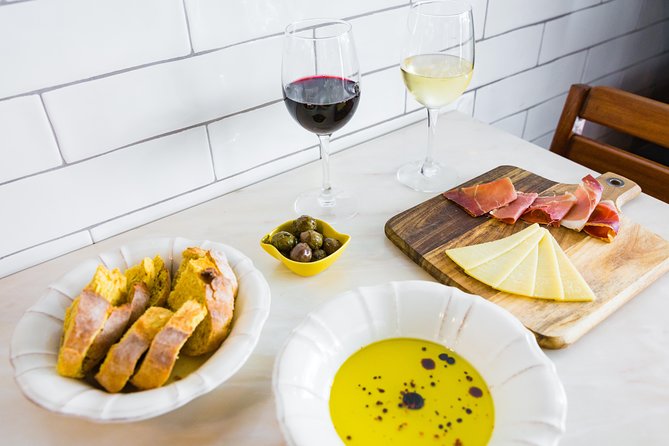
The included tastings are a big part of why this tour is good value. You get a classic pastel de nata pastry, plus a wine tasting and a tapa and snacks. Even if you do not drink much wine, the tasting is usually paired with context, so it feels like a taste of Lisbon, not just a random stop.
One practical way to think about it: at this price point, you are paying mostly for the guide plus the included food. If you were to buy a pastry, a snack, and a guided walk somewhere else, you would likely spend similar money without the same level of neighborhood orientation.
A bonus I like here is that guides have shown flexibility with food needs. For example, one guide made a point of accommodating a vegetarian request. That does not mean it is automatic for every person, so if you have dietary restrictions, you should flag it early.
Also, because the tour is only half a day, these included bites reduce the number of times you must stop to figure out where to eat. You keep moving, and you still end up satisfied.
Price and value, plus the real walking picture
At $23.94 per person, this is priced like a straightforward local experience, not a premium private guide. The value comes from three things that stack together: the small group, the guide-led route through multiple neighborhoods, and the included food and drink sampling.
The duration, 3 to 4 hours, is also a sweet spot. It is long enough to cross from Baixa into Chiado and Alfama, but not so long that you lose your afternoon. If you schedule this early, you can use it to plan the rest of your trip with less trial and error.
About walking: you do need to be comfortable with hills, especially once you reach Alfama. Lisbon’s classic problem is that the hardest walking often comes with the best views. This tour handles that by combining slopes with planned breaks and, when possible, using elevators and escalators to manage the climbs. From my perspective, that is the right approach. You spend energy where it matters and save it when the city provides a shortcut.
Bring water if you tend to get thirsty, and consider a light layer if the morning is cool. Several guide narratives in this kind of route mention that weather can change quickly, and having basic comfort gear helps.
Who should book this tour, and who might want a different fit
This is best for you if:
- You are on a first visit and want a fast orientation across the main Lisbon neighborhoods
- You like learning history in place, not from a screen
- You want included food and drink so your morning does not turn into constant searching
It is also a good option if you value small-group attention. Guides such as Felipe, Maria, Jose, and others have stood out for staying energetic and approachable, and for handling questions patiently. If you are the type who asks why something is the way it is, you’ll get more out of this tour.
You might choose differently if:
- You already know Lisbon well and hate any sense of repeats. This route hits Rossio, Chiado, Baixa, Alfama, and Praça do Comércio, so it overlaps with the essentials.
- You want lots of museum time or cathedral-focused sightseeing. This tour route emphasizes neighborhoods and street-level landmarks rather than long indoor stops.
If you are traveling solo, the format can feel especially friendly because the guide can create inclusion within the group and help you connect the dots for where to go next.
Should you book Best of Lisbon Small-Group Guided Walking Tour?
I think this tour is a strong booking if you want to understand Lisbon by walking it in logical chunks: a planning-focused start in Baixa, independence and engineering stops around Rossio, revolutionary context in Largo do Carmo, a stylish reset in Chiado, then fado-forward Alfama before a big, open finish at Praça do Comércio.
If you have limited time, this is one of the best ways to spend it. You get the guide experience, the key neighborhoods, and the included food sampling without needing extra tickets to museums.
Book it if your goal is to get your bearings and learn what to look for when you wander later. If you prefer slower, deeper visits into one area only, you might be happier with a neighborhood-specific tour. But for most first-time Lisbon plans, this is a smart, efficient way to start.
FAQ
How long is the Best of Lisbon walking tour?
The tour is about 3 to 4 hours.
Where do I meet the guide, and where does the tour end?
You start at Praça Dom Pedro IV, 1100 Lisboa, Portugal. The tour ends at Praça do Comércio, 1100-148 Portugal.
Is this a small group tour?
Yes. The maximum group size is 14 travelers.
What food and drinks are included?
The tour includes a pastel de nata pastry, wine tasting, and a tapa and snacks.
Are museum or monument entry tickets included?
No. Entry to museums and monuments is not included.
What language is the tour offered in?
The tour is offered in English.
Do I need a lot of fitness for this walk?
You should have a moderate physical fitness level. The route involves walking, including uphill areas.
Does the tour use a mobile ticket?
Yes, you get a mobile ticket.
Is free cancellation available?
Yes. You can cancel up to 24 hours in advance for a full refund. If you cancel less than 24 hours before the start time, the amount paid is not refunded.
What Lisbon sent us most recently
- 3 Hour Lisbon Private Guided Tour via Tuk Tuk
★ 5.0 · 116 reviews - Lisbon: Private Boat Trip, Guided Walking Tour, Bike & Tram
★ 4.8 · 116 reviews - Lisbon Market and Food Tour with Cooking Class and Lunch
★ 5.0 · 117 reviews - Lisbon: Tagus Estuary Nature Reserve Birdwatching Boat Tour
★ 4.9 · 117 reviews - From Lisbon: Sintra and Cascais Private Day Tour
★ 4.8 · 117 reviews - Lisbon: Private Half-Day Tour with Hotel Pickup
★ 4.8 · 117 reviews - Sintra Private Tour from Lisbon
★ 5.0 · 118 reviews - Pastel de Nata Cooking Class in Lisbon
★ 5.0 · 118 reviews
Walking Tours, compared.

Porto Walking Tour, Lello Bookshop, River Cruise and Cable Car
Read our review →
Best of Lisbon Walking Tour: Rossio, Chiado & Alfama
Read our review →
Experience Porto’s Charm: 3-Hour Guided Walking Tour
Read our review →
Enjoy a Guided Levada Walk in the Rabaçal Valley
Read our review →
Browse the lists this tour appears in