
Reviewed · COIMBRA TOURS
Schist Villages at Lousa Mountain
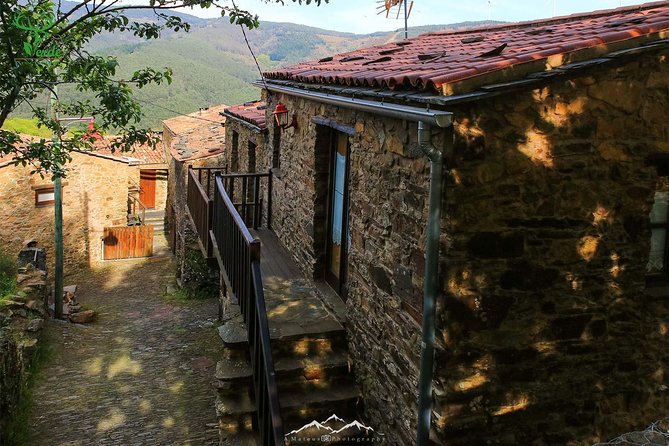
Schist villages on a mountain road is the real twist. This private tour from Coimbra takes you through Lousã Mountain’s Aldeias do Xisto world of slate stone houses, restored lanes, and big mountain views. You’ll also get a choice of half-day or full-day timing, so you can match it to your energy.
I especially like the way the day is paced: short, walkable village stops where you can look around at your own rhythm, not just march in a line. And I like that you go beyond photos with a guide like Alfredo who connects the architecture to how people live with the land today, including nature spotting along the way.
One thing to plan for: the walking is made of steps and uneven ground, and the mountain roads can feel steep and rugged. If you have mobility issues, you’ll want to think carefully before signing up, even though most people can participate.
In This Review
- Key things to know before you go
- Why the Schist Villages above Coimbra feel different
- Half-day vs full-day: choosing your perfect amount of mountains
- Getting there from Coimbra: pickup, private vehicle, and the road vibe
- Cerdeira: the spring, the slate path, and the art-botany feel
- Candal: more developed, with weekend energy
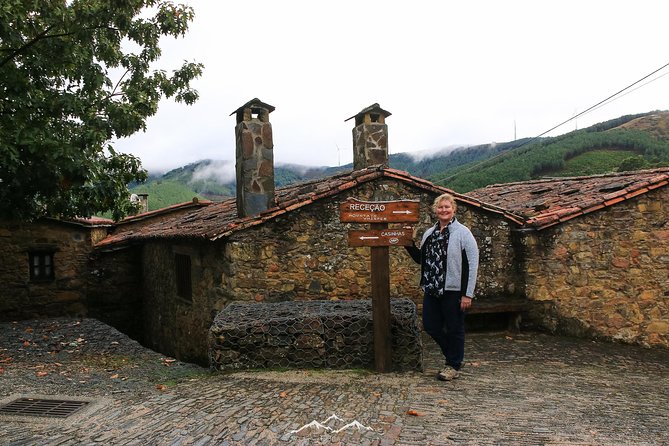
- Aldeia do Talasnal: restored schist details and charming streets
- Casal Novo: the village you almost miss
- Aldeia de Gondramaz: restored shale village, about 50 houses, and coffee time
- Aldeias do Xisto hike: Cadaval Cimeiro and Cadaval Fundeiro
- Aigra Velha (770 m): highest altitude village and wide open views
- Aigra Nova: living village rhythm, agriculture, and donkeys
- Pena: schist and quartzite, chestnut at the entrance, stream energy
- What the guide adds: photo support, binoculars, and wildlife spotting
- Comfort and clothing tips for steep steps and rugged roads
- Price and value: what $102.80 per person buys you
- Should you book the Schist Villages at Lousã Mountain tour?
- FAQ
- What language is the tour offered in?
- How long is the tour, and are there half-day and full-day options?
- Is hotel pickup included?
- Which stops are included only on the full-day tour?
- Are meals included in the price?
- How many people are in each booking?
Key things to know before you go
- Private group up to 10 people, so the guide can slow down, answer questions, and adjust your pace
- English tour with a professional photographer guide and one souvenir photo included
- Off-roading + hiking in the Lousã Mountain area, including a hike between abandoned schist villages
- Full-day adds higher altitude villages like Aigra Velha (770 m), plus Aigra Nova and Pena
- Free admission at the village stops listed on the route
- Binoculars included, handy for scanning forests and wildlife during breaks in the driving
Why the Schist Villages above Coimbra feel different
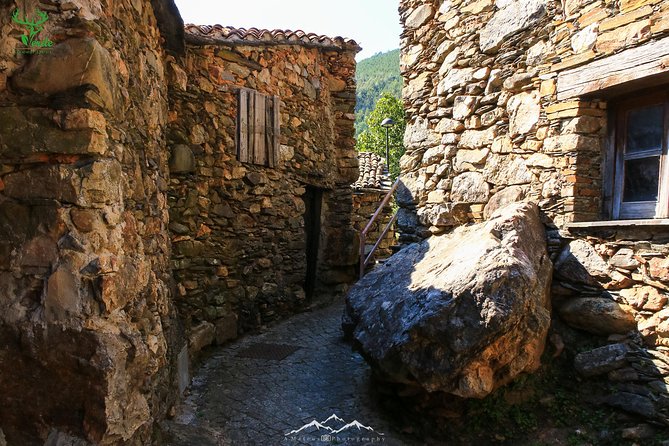
The schist villages of the Lousã Mountain are not just scenic stops. They are a living result of centuries of building with local slate, then restoring what was fading. When you see these villages up close, you start to understand why schist became the building material that shaped whole communities.
The route also mixes two kinds of sightseeing. You get classic village walking, with lanes, doorways, springs, and viewpoints. Then you get mountain driving that takes you into quieter angles of the region, where the views feel wider and the air changes once you gain altitude.
And because this is a private tour with a real guide, you are not stuck reading plaques. You can ask questions and get context about why these places were rebuilt, why certain villages were abandoned, and how locals use the land today.
A few more Coimbra days, taken slowly
- Coimbra: Live Fado Show with Glass of Port Wine★ 4.7 · 998 reviews
- University of Coimbra guided tours without queue★ 5.0 · 518 reviews
- Guided tour of the University and city of Coimbra.★ 5.0 · 377 reviews
- Coimbra: Mondego River Kayaking Tour★ 4.7 · 324 reviews
Half-day vs full-day: choosing your perfect amount of mountains
If your schedule is tight, the half-day option is the easiest win. The tour timing here is about 4 hours, which means you can enjoy several schist villages without burning your whole day in transit.
If you want more elevation and more walking, pick the full-day tour. In the provided route, three stops are marked as full-day only: Aigra Velha, Aigra Nova, and Pena. That matters because these are higher and more dramatic in setting, with big open views and more time for exploring.
A practical tip: think about your comfort with steps and uneven ground. The villages are built on slopes, so even a short visit can mean climbing. If your legs are strong and you enjoy hikes, full-day makes sense. If you want fewer stairs, stick with half-day and spend the rest of your Coimbra time on slower wins, like riverside strolling or local food.
Getting there from Coimbra: pickup, private vehicle, and the road vibe
Most people start near Largo da Portagem, 3000-337 Coimbra. If you select the pickup option, you can also be picked up from many hotels in central Coimbra and nearby towns like Lousã, Miranda do Corvo, Condeixa-a-Nova, and Penela when parking is available.
Pickup can cost extra if you’re outside the standard zones, and the fee is listed as 10€ to 20€, with pickup also offered from other locations for an additional fee. That’s worth knowing because the region around Coimbra is spread out, and this tour is designed around the idea that your transportation is handled for you.
One more reality check. The route involves mountain driving and off-road segments. Some roads can be steep and unpaved, with no rails in places. If you get motion or motion-scare easily, wear a seatbelt and settle in early, and consider bringing a light snack and water.
Good news: the group size is capped at 10 people and it’s private, meaning it’s only your group in the vehicle. That usually makes the day feel calmer and more flexible.
Cerdeira: the spring, the slate path, and the art-botany feel
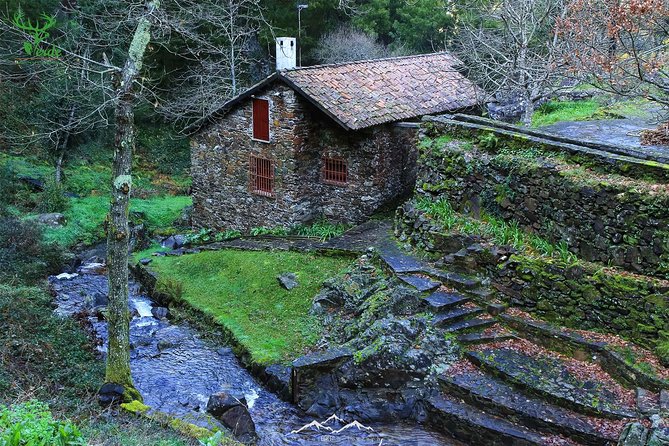
Cerdeira is the stop that makes you stop walking for a second. The village begins with a small bridge and a cluster of houses peeking through the foliage, like you’re crossing from regular roads into a quieter world of stone and shade.
You’ll also notice the village connection to water. The description highlights a slate path leading to a hidden spring tucked into lush vegetation. Even when you do not time a long walk, that spring idea gives the village its mood.
Cerdeira also has a community side. It’s described as a place where art and creativity help refound the village, and during certain times of the year it hosts events that combine art and botany. If your visit lines up with event days, you can feel the village come alive.
Candal: more developed, with weekend energy
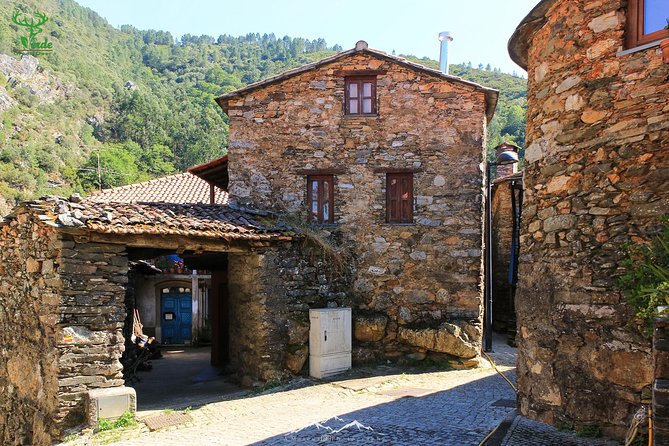
Candal is a different vibe. Because it’s easier to access by national highway, it tends to be the most developed and one of the most visited mountain villages on the route.
That means you’ll likely see more people here, especially on weekends when visitors come for clean air and good company. It can feel less solitary than Cerdeira, which is fine. It also means there’s a better chance of finding a sense of everyday rhythm in the village life instead of only restoration details.
Plan to use your time here as a baseline. After the magic of Cerdeira, Candal helps you orient yourself in how the mountain villages function as real communities, not just photo sets.
When the light changes over Coimbra, try these:


Aldeia do Talasnal: restored schist details and charming streets
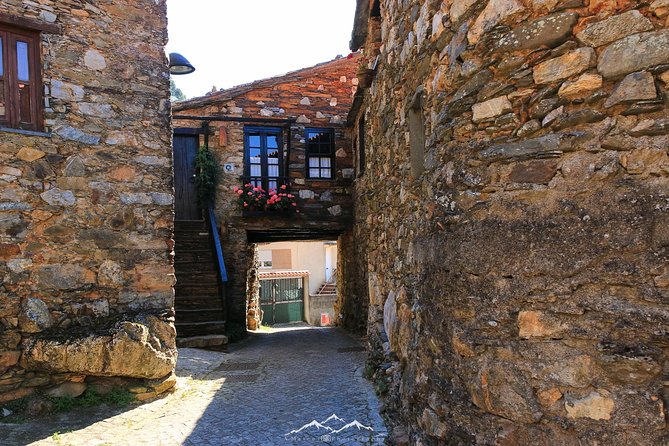
Aldeia do Talasnal is one of the schist villages most tied to restoration work, and you feel that in the look and layout of the houses. The route calls out the many details of restored buildings, and that’s exactly what you should focus on here.
When you walk around, look at how the village keeps its identity while the structures are renewed. The beauty is not only the buildings, but also the way these homes fit steep terrain. That’s a key theme of the whole Lousã Mountain area.
This stop is also described as having a special kind of charm through its village design. It’s a good chance to slow down, watch how water and stone guide the layout, and take photos from small angles where the light hits schist in a flattering way.
Casal Novo: the village you almost miss
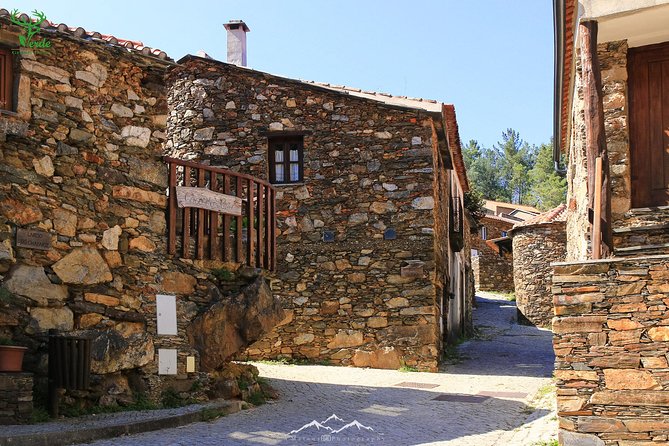
Casal Novo is easy to treat as just another stop, which would be a mistake. You pass along an unpaved road and the village presence seems to barely show itself at first, hidden on a steep north-facing hillside.
Then the woodland around it hides the outline until you’re close. That “wait, there it is” feeling is part of the payoff here. It’s a quiet reminder that the schist villages were built to work with the land, not fight it.
If you like photographing details, Casal Novo is a good one to do slowly. Let your eyes adjust, then capture the moment when the village finally becomes visible.
Aldeia de Gondramaz: restored shale village, about 50 houses, and coffee time
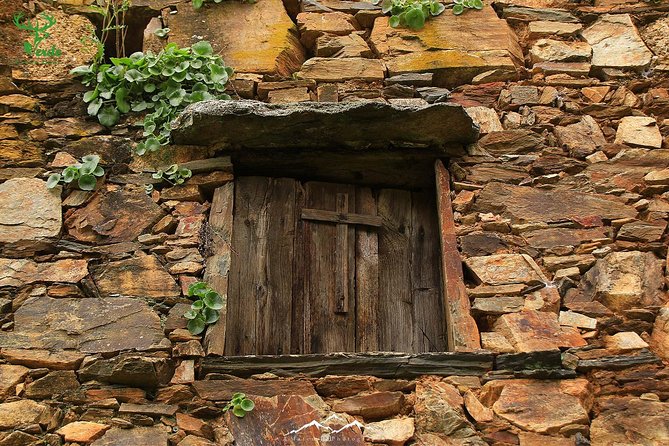
Gondramaz is fully restored and has about 50 houses. It also includes a tourist resort, so it feels like the village has a steady thread of visitors and services.
Expect a coffee break here. That’s not just a pause from walking, it’s also a chance to reset your brain. The schist villages can blur together if you sprint between them. Coffee at Gondramaz helps you keep each one distinct in your memory.
I like this stop because it balances “restored village” with “place people actually come back to.” You can observe restoration without it feeling like a museum.
Aldeias do Xisto hike: Cadaval Cimeiro and Cadaval Fundeiro
This part adds the most physical payoff. You’ll hike between Cadaval Cimeiro and Cadaval Fundeiro, two abandoned shale villages.
The route notes these villages burned twice in the 1980s. That detail matters, because it explains why the villages are described as abandoned in this context, and why restoration and survival are themes in the area.
For your planning: bring shoes with grip, and take your time on any uneven trail. Even if you do not consider yourself a hiker, this is still a walk with real ground underfoot, between village remnants that feel more raw than the restored stops.
Aigra Velha (770 m): highest altitude village and wide open views
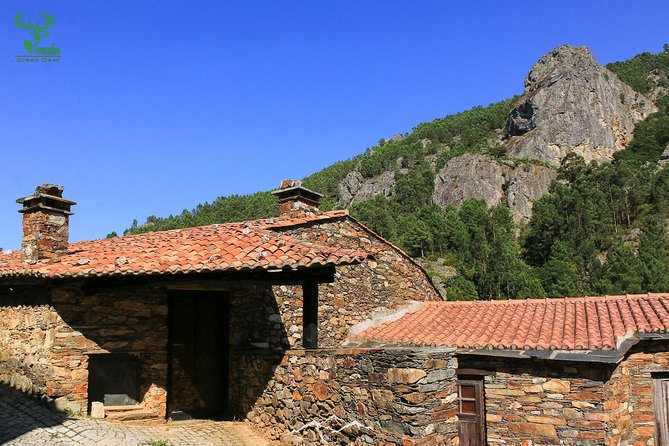
Aigra Velha is listed as the highest altitude schist village at 770 metres, near the summits of the Lousã Mountain. It’s not only higher on a map, it’s higher in mood, with the description emphasizing wide horizons.
In practical terms, that means more open air and more sky between you and the trees. Even when the village is small, the setting does most of the work.
This stop is marked as full-day only, so if you choose half-day you will miss it. If views matter to you, that alone can be enough to justify full-day.
Aigra Nova: living village rhythm, agriculture, and donkeys
Aigra Nova is also full-day only, and it has a simple plan: three small streets crossing the village. The route highlights a spring and mild climate that supports agriculture and broad pastures.
That translates into a “living village” feeling. The description includes market gardens, livestock, and even donkeys, plus activities that surprise visitors. The best way to enjoy this stop is to look beyond the stone. Watch how the village life uses the land.
If you like quiet moments, Aigra Nova tends to reward slower walking. Don’t treat it like a quick photo line.
Pena: schist and quartzite, chestnut at the entrance, stream energy
Pena is a full-day only finale, and it’s described as the perfect result of construction using schist and quartzite. There’s also a centuries-old chestnut guarding the entrance, which gives the village a natural frame before you even reach the houses.
The village developed along a promontory, so the architecture looks like it’s fighting gravity. You’ll likely feel that when you walk the slope and see how the buildings hang on the edge.
The route also points out clear stream waters, with the Penedos de Góis offering adventure for the daring. You might not take on anything extreme, but knowing the area’s adventure angle helps you understand why the scenery feels active, even at rest.
What the guide adds: photo support, binoculars, and wildlife spotting
A big part of why people rate this tour so highly is the guide style. Alfredo is mentioned again and again for explaining both village history and the natural environment. He also connects the past to what you can still see now, including how restoration efforts work in real places.
He’s also described as skilled at spotting wild animals, including a buck deer appearing close in the forest. That’s where the binoculars included become more than an accessory. If you’re alert when the guide signals a sighting, the day feels less like sightseeing and more like watching.
Then there’s the professional photographer guide angle. You get one souvenir photo, which is handy if you do not want to fuss with cameras during steep walks and photo pauses. It also means someone is thinking about angles while you focus on where you are standing.
One more practical bonus: because this is private and small-group, the guide can stop for short moments when you want to look, and keep you moving when you’d rather not linger.
Comfort and clothing tips for steep steps and rugged roads
The villages are built on slopes, so be ready for steps up and steps down. Some stops can feel like a staircase marathon, especially if you rush.
Dress for all weather, because the tour is described as operating in all weather conditions and you should dress appropriately. If it’s rainy, expect slippery stone and mud in the edges of unpaved roads.
Pack light but smart:
- Closed shoes with grip
- A layer for cooler mountain air
- Water for the hike between Cadaval Cimeiro and Cadaval Fundeiro
- Your camera, but plan to let the guide handle some photo timing
If you get tired, you can use the private nature of the tour to slow the pace. The tour description even suggests you can alter the schedule or pace of this private tour as you like.
Price and value: what $102.80 per person buys you
At the listed price of $102.80 per person for roughly 4 hours, this tour can feel like good value if you want a guided day without car stress. You’re paying for private transport, a driver/guide, and a photographer support element, plus items like binoculars and a souvenir photo.
You’re also getting admission-free village visits listed on the route. That’s a small line item that adds up when you’re stacking multiple stops in one day.
Meals are where you should adjust expectations. Food and drinks are not included, and meals as per itinerary (lunch or dinner) are optional and paid separately on site. One review example includes a lunch with local chanfana and wine, but you should treat that as an option, not a guarantee.
So the value equation is simple. If you want the drive done for you and you want someone to explain why each schist village matters, this price is easier to justify. If you plan to rent a car and self-drive slowly, you might spend less cash but you will take on navigation, parking, and the same steep road reality yourself.
Should you book the Schist Villages at Lousã Mountain tour?
Book it if you want a calm, small-group way to see the Aldeias do Xisto near Coimbra, with both village walking and real mountain scenery. I’d especially recommend it if you care about more than photos and want a guide to point out details, including nature and wildlife.
I’d hold off or choose half-day if your mobility is limited or you hate steps and uneven ground. Also, if you strongly dislike steep or unpaved roads, know the route includes off-road driving and mountain roads that can feel rugged.
If you’re deciding between half-day and full-day, pick full-day when you want higher altitude viewpoints and the extra villages like Aigra Velha, Aigra Nova, and Pena. Pick half-day when you want the best “greatest hits” without committing to a longer day.
In short, this is the kind of Portugal experience that feels personal, not rushed, and grounded in a landscape of stone, restoration, and everyday life.
FAQ
What language is the tour offered in?
The tour is offered in English.
How long is the tour, and are there half-day and full-day options?
The tour duration is listed as approximately 4 hours, and there is a choice of half-day and full-day options.
Is hotel pickup included?
Hotel pickup is included if you select the pickup option. Pickup is available from many hotels in central Coimbra and nearby areas when parking is available, and there is an additional fee (10€ to 20€) for pickup from certain locations.
Which stops are included only on the full-day tour?
Aigra Velha, Aigra Nova, and Pena are marked as full-day only.
Are meals included in the price?
Food and drinks are not included unless specified. Meals as per itinerary (lunch or dinner) are optional and paid separately on site.
How many people are in each booking?
The group size is limited to a maximum of 10 people per booking, and it is private (only your group participates).
What Coimbra sent us most recently
- Coimbra: Barca Serrana Traditional Boat Trip
★ 4.6 · 127 reviews - Conimbriga and The Roman Tour
★ 5.0 · 132 reviews - Joanina Library & Coimbra University | Private Former Alumni Tour
★ 5.0 · 135 reviews - Portugal dos Pequenitos entry ticket
★ 4.2 · 167 reviews - Coimbra: Guided tour with a local student
★ 5.0 · 170 reviews - Coimbra’s Timeless Tracks: An Enchanting Train Tour
★ 3.8 · 224 reviews - Coimbra: Mondego River Kayaking Tour
★ 4.7 · 324 reviews - Guided tour of the University and city of Coimbra.
★ 5.0 · 377 reviews
Coimbra Tours, compared.


University of Coimbra guided tours without queue
Read our review →
Guided tour of the University and city of Coimbra.
Read our review →
Coimbra’s Timeless Tracks: An Enchanting Train Tour
Read our review →


Joanina Library & Coimbra University | Private Former Alumni Tour
Read our review →Browse the lists this tour appears in