
Reviewed · BELEM & JERONIMOS TOURS
Tour Tuk Tuk Lisbon-Belem 4 H Free Pick-up
Lisbon’s hills feel easier in a tuk tuk. This 4-hour private ride strings together classic sights, big river views, and Belém landmarks without making you spend the day on foot. I like the tight, efficient route that still gives real moments to look and take photos, and I like how the stops focus on recognizable Lisbon stories and places. One thing to consider: some visits need your own entry ticket, and if it’s rainy the tuk tuk can feel a bit enclosed.
If you want a first taste of Lisbon that goes beyond just photos, this tour is built for that. You get viewpoints over the Tagus, quick cultural stops in older neighborhoods like Alfama and Chiado, then a Belém finish with famous pastries. The tradeoff is time. You will see a lot, but you will not linger long at every site.
In This Review
- Key highlights worth planning around
- Private tuk tuk pickup that makes Lisbon feel smaller
- Lisbon Cathedral: where the city’s long story starts
- Portas do Sol viewpoint: the Tagus in one quick look
- Senhora do Monte: the view that ties multiple neighborhoods together
- Alfama and São Vicente de Fora: the neighborhood with living texture
- Panteão Nacional at Santa Engrácia: names you already recognize
- Praça do Comércio and the Pessoa cafe edge
- Pink Street and Chiado: Lisbon’s arts and nightlife side
- São Roque: the Jesuit church that survived the 1755 quake
- São Pedro de Alcântara and Bairro Alto: Lisbon’s viewpoints meet nightlife
- Belém finish: National Palace views, then pastries and Jerónimos
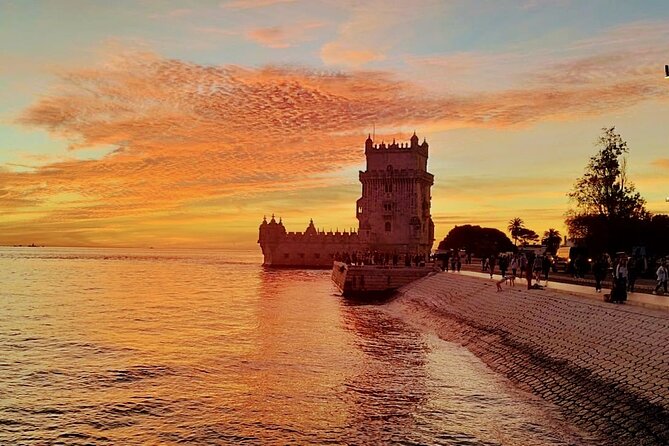
- Torre de Belém and Padrão dos Descobrimentos for a clean history beat
- Basilica da Estrela: Baroque and neoclassical beauty with royal drama
- Price and logistics: does $150.85 for 4 hours make sense?
- Should you book this tuk tuk Lisbon to Belém tour?
- FAQ
- What is the duration of the tour?
- Is this a private tour?
- What language is the tour offered in?
- What is included in the price?
- Are food and drinks included?
- Do all stops have admission included?
- What kind of weather does the tour require?
- How does cancellation work?
Key highlights worth planning around
- Private tuk tuk transport for your group means fewer delays and easier photo stops.
- Miradouros that frame the Tagus so you understand Lisbon’s geography fast.
- Belém pastries with little or no line stress compared with the usual crowd scene.
- Mix of churches, palaces, and monuments that show Lisbon’s shifts from medieval to modern.
- Short stop times keep the pace moving, which is great for getting bearings, but not ideal for long museum time.
Private tuk tuk pickup that makes Lisbon feel smaller
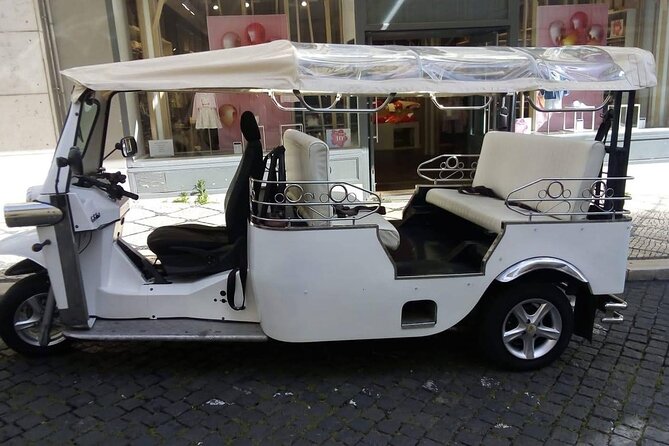
This is a private tuk tuk experience, so it is not you competing with a bus crowd for space. You ride between areas that would be harder to connect smoothly on foot, especially in Lisbon’s steep, cobbled streets. In practice, that matters because you can spend more of your 4 hours looking outward, not just working up a sweat just to get to the next stop.
The tour is offered in English, and you get a mobile ticket. That is helpful because you can keep your phone ready instead of hunting for paper. And since the tour is private, your guide can usually pace the ride around what your group cares about, like photo time versus church time.
One practical note from the real-world experience of this kind of ride: the streets can be bumpy. If you are sensitive to motion or you have back issues, choose a seat position that feels stable and take it slow around cobblestones.
More Tuk Tuk Tours in Lisbon
- True 4Hour Private Tuk Tuk Tour: Discover Lisbon with a Local!★ 5.0 · 8,008 reviews
- Lisbon: Private Guided Tuk-Tuk Tour with Hotel Pickup★ 4.9 · 4,552 reviews
- Private Lisbon Sightseeing Tuk-Tuk Tour: Alfama, Belém & More★ 5.0 · 4,277 reviews
- Lisbon Highlights: Private Tuk Tuk Tour Adventure Sightseeing★ 5.0 · 3,284 reviews
Lisbon Cathedral: where the city’s long story starts
You begin at Lisbon Cathedral, a church with roots reaching back to the 1100s. Construction began in 1147, after Lisbon was captured from the Moors, and the cathedral is considered the oldest church in the Portuguese capital in its current context.
You only get about 15 minutes here, and that is not a lot for a monument this big. So your best move is simple: focus on the exterior details and one or two interior sections your guide points out, then decide fast what you want to see up close. Admission is not included, so you should budget for the ticket if you plan to go inside rather than just view it from the entrance area.
Portas do Sol viewpoint: the Tagus in one quick look
Next is a short stop at Miradouro Das Portas Do Sol, one of the classic places to see the river and rooftops laid out below. The name comes from the old Porta do Sol, part of the Moorish fence in this area, later ruined in the 1755 earthquake.
What makes this stop work in a short tour is that it gives you a mental map. You see where Lisbon’s older neighborhoods sit against the Tagus, and you start to understand why people keep returning to lookouts like this. You get roughly 10 minutes, and the view payoff usually justifies the quick pace.
Admission is free, so you can focus on photos, then move on while the group is still fresh and ready.
Senhora do Monte: the view that ties multiple neighborhoods together
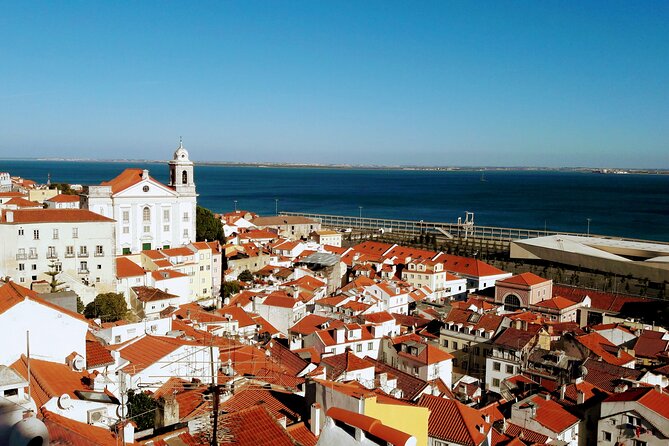
Then comes Miradouro Da Senhora Do Monte, where the scenery gets bigger and the sightlines expand. From here you can look south toward São Jorge Castle and Baixa de Lisboa, and west from Bairro Alto toward the Parque Florestal de Monsanto, plus the Tagus estuary.
You also have one more reason this stop feels special: it connects directly to the small, ancient Hermitage of Nossa Senhora do Monte. The hermitage ties into local tradition going back to the founding in 1147, and it is linked to Saint Gens. There is also a famous legend connected to a stone chair said to make childbirth easier, plus an account involving D. Maria Ana de Austria.
Admission is free, and you get about 10 minutes. That means you cannot do a long religious visit, but you can absorb the setting and understand why this viewpoint has stayed important for centuries.
Alfama and São Vicente de Fora: the neighborhood with living texture
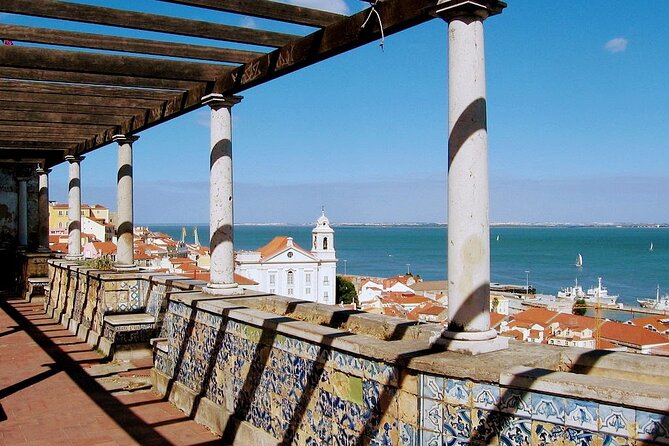
Alfama is a fast stop, but it is still worth paying attention to because it is Lisbon’s oldest, most typical neighborhood. The name comes from Arabic al-hamma, tied to hot water baths. Springs here were said to range from about 20°C to 34°C, which explains the area’s early association with thermal life.
The tour gives you time to ride through and get a sense of the street pattern, then nearby you visit Igreja de São Vicente de Fora. Construction began in 1582, and the church sits on ground linked to an earlier temple ordered under D. Afonso Henriques and later connected to Saint Vincent as patron saint of Lisbon.
Inside, the mix of styles stands out: traces of Mannerism, plus Gothic and Baroque influences. You also get access to the Pantheon of the Dukes of Bragança, where several Portuguese kings from that dynasty are buried.
This stop also runs about 10 minutes. Admission is listed as free, which makes it a smart use of time. You might not get full, slow browsing, but you will come away with a clearer picture of who shaped Portugal’s monarchy and where they rest.
More of Belem between tower and cloister:


Panteão Nacional at Santa Engrácia: names you already recognize
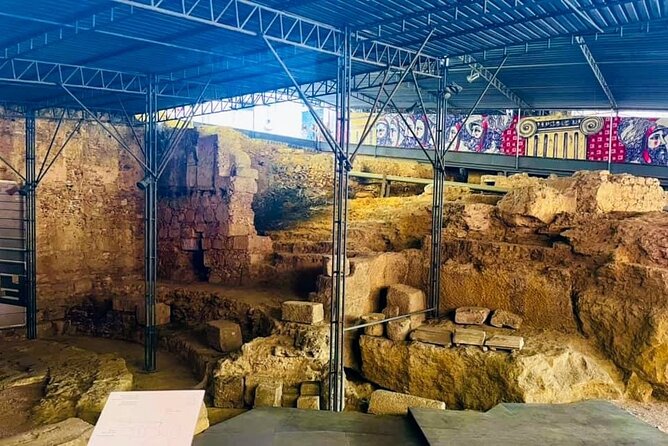
Next is the Panteão Nacional, housed in Igreja de Santa Engrácia. The building project began in 1682 and, unusually, it only ended in 1966, so you can expect a place that carries layers.
This is a national monument meant to honor citizens for services to Portugal. It also contains graves that many visitors already associate with Portugal’s identity, including Amália (the fado diva) and Eusébio.
You get about 20 minutes, and admission is not included. If you want the full effect, plan to pay for entry and spend your time reading the tomb names and listening to whatever context your guide shares. Without admission, you will still see enough to understand the building matters, but you will miss the core payoff of the portraits and memorials.
Praça do Comércio and the Pessoa cafe edge
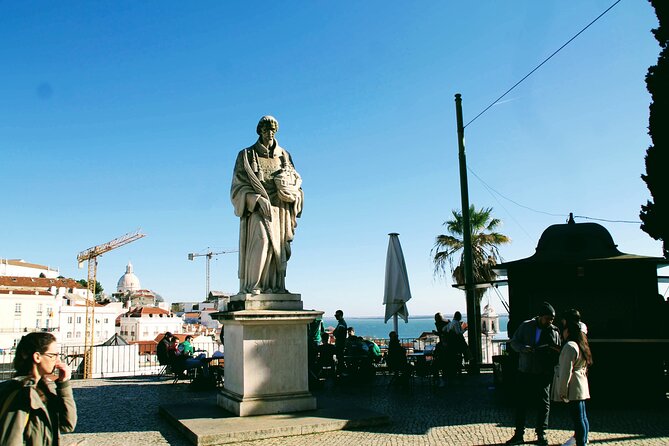
After the church and viewpoint rhythm, the tour shifts into open-space Lisbon. Praça do Comércio is huge, historically tied to the Portuguese kings. It was the palace site for around two centuries, and today it functions like Lisbon’s grand stage for walking in, looking out, and resetting your sense of scale.
You will also hear about Martinho da Arcada, a famous café in the square often noted for being the oldest in Lisbon and a favorite of Fernando Pessoa. And on the north side of the square, you pass the Rua Augusta Triumphal Arch, a major marker for the city’s entry from the river side.
This is where the tuk tuk route helps you. Instead of trudging across the square looking for the right angles, you get moved to useful viewpoints quickly and you can hop out for photos with context.
Pink Street and Chiado: Lisbon’s arts and nightlife side
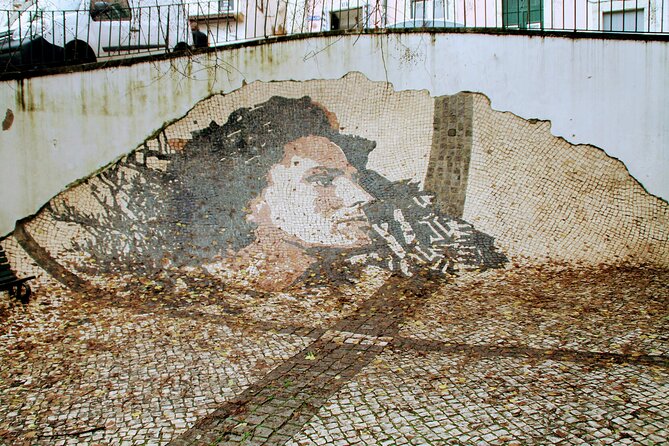
Then it is time for Rua Cor-de Rosa, also known as Pink Street, a nightlife area today. The New York Times has listed it among favorites in Europe, and even if you do not plan to party, the street gives you a feel for Lisbon’s more playful side.
Nearby you get Chiado, one of the city’s most emblematic areas. It has a reputation for arts and intellectual life, with gatherings held in different locations and many writers and artists passing through. You will also hear about chic café culture, including Brasileira, where there is a statue of Fernando Pessoa.
You will pass by churches tied to different eras too, including the Church of Loreto and the Church of Our Lady of the Incarnation, plus Largo Luís de Camões, named for the poet who wrote The Lusiads.
These neighborhood stops are shorter, so I treat them like wayfinding breaks. You learn what to look for on your own later: cafés, church fronts, and street layouts that connect Lisbon’s older story to its modern street life.
São Roque: the Jesuit church that survived the 1755 quake
You then visit Igreja de São Roque, built at the end of the 16th century and tied to the Society of Jesus. It was the first Jesuit church in Portugal and one of the first Jesuit churches in the world, and it also survived the 1755 earthquake unscathed.
Even the setting around it has layers. The tour shares that Largo da Misericórdia was once linked to a cemetery for plague victims outside the city walls. Today, you focus on what is visible: multiple chapels, mostly Baroque, including the notable Chapel of Saint John the Baptist, described as a masterpiece of Italian art that is unique in the world.
This stop is about 10 minutes and admission is free. That makes it one of the best “high impact for the time” moments in the day, as long as you pay attention and do not rush your eyes.
São Pedro de Alcântara and Bairro Alto: Lisbon’s viewpoints meet nightlife
Back outside, the route pauses at Miradouro São Pedro de Alcântara, another major viewpoint. It focuses views over the east of Lisbon and part of Baixa, so you can see how the city spills in directions you do not get from the southern lookouts.
From there, you move into Bairro Alto, famous for narrow cobbled streets and centuries-old houses. Since the 1980s, it became known for nightlife, with lots of bars, restaurants, and fado clubs. This is also where media organizations used to cluster until later in the 20th century.
In a short tour, you are not staying for a full evening. The value is that you see why these streets became what they are. Lisbon nightlife is not random, it fits the steep layout and the street walls that shape sound and movement.
If you have motion sensitivity, this is the point to sit comfortably and let your guide choose the smoothest route between stops. Cobblestones can be rough, and Bairro Alto streets can feel especially uneven.
Belém finish: National Palace views, then pastries and Jerónimos
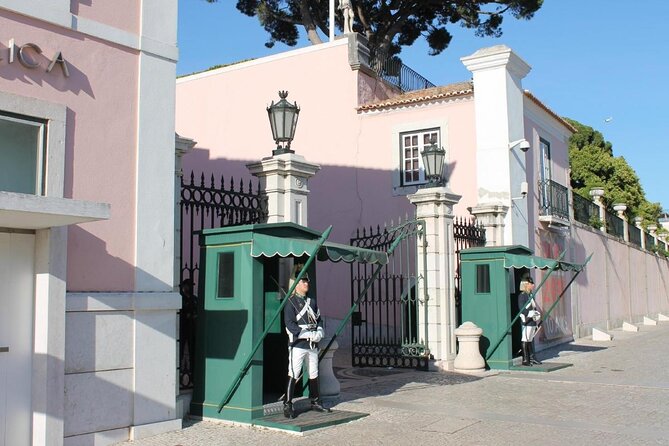
You reach Belém with a shift in mood. The tour includes the Belém National Palace, the official residence of the President of the Republic. You get the story behind it: built in 1559 by D. Manuel de Portugal, later bought in the 18th century by D. João V. After the earthquake of 1755, the royal family lived in tents on the palace grounds out of fear of more shocks, and the palace interior was used as a hospital.
Even if you cannot enter a palace building on every date, the context still helps you understand why Belém is where Portugal shows off power and ceremony. If it is closed for a holiday or special event, you can usually still enjoy the exterior and the surrounding setting.
Then comes the tour’s signature food moment: Pastéis de Belém. The story goes back to 1837, when clerics from the Jerónimos Monastery sold pasteis de nata to survive. The route of Lisbon to Belém was supported by steamboats at the time, and the pastry became famous as visitors came for it.
The pastry chef later sold the recipe to Domingos Rafael Alves from Brazil, and the recipe remains in the possession of descendants. Traditional eating is warm, with powdered sugar and/or cinnamon.
The big practical win: this stop is set up so you typically do not get stuck in the longest queue. If you want a simple strategy, I would go in quickly, buy what you want, and eat it warm on the spot instead of trying to turn it into a long sit-down meal.
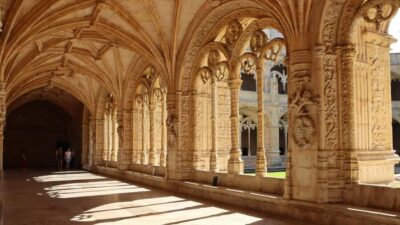
Immediately after pastries, you also visit Mosteiro dos Jerónimos (Monastery of Santa Maria de Belém). It began in the late 15th century under King D. Manuel I, connected to the order of São Jerónimo, and earlier tied to a hermitage ordered by Infante D. Henrique in 1452. This is where major navigators held vigils before sea voyages.
The monastery later became a major burial site, with tombs including Camões and Vasco da Gama, and it also serves as a pantheon. You get limited time, so treat it like a highlight circuit: main façade impressions, key tomb areas, and any interior points your guide emphasizes.
Torre de Belém and Padrão dos Descobrimentos for a clean history beat
Two shorter Belém stops finish the “Portugal at sea” theme.
First is Torre de Belém, formerly known as Torre de São Vicente a Par de Belém. Its job was defense of the Tagus riverbank, part of a broader defense line with related towers to the south and west. Admission is not included, so again, you focus on exterior form and how the tower fits into a river defense strategy.
Then you see Padrão dos Descobrimentos, or the Monument to the Discoveries. It was built in 1940 for the Portuguese World Exhibition, then the current replica was later completed in 1960. The point here is not just photos. It’s how Portugal chose to memorialize its exploration story in the 20th century.
These are quick stops, roughly 5 minutes each, and they work best if you use them like bookends. You started with Lisbon’s early roots, then climbed viewpoint to viewpoint, and now you close with the era Portugal projected power across oceans.
Basilica da Estrela: Baroque and neoclassical beauty with royal drama
Near the end of the day, you visit Basilica da Estrela. The tour highlights the story: in the late 1700s, D. Pedro III and D. Maria I made a vow to build a church if they had a son to inherit the throne. Construction began in 1799, but the heir died of smallpox just two years before completion.
Architecturally, it mixes late-phase Baroque details with Neoclassical style. The interior is described as having marble in grey, pink, and yellow tones. You also learn why the site matters politically: the queen D. Maria I is noted as the Portuguese monarch who is not in the Bragança pantheon but is found in Basilica da Estrela.
You get about 10 minutes, and admission is free. For a short stop, it is a strong payoff because it gives you a different visual style from the earlier churches and viewpoints.
Price and logistics: does $150.85 for 4 hours make sense?
At $150.85 per person, this is not the cheapest way to tour Lisbon. But you are paying for the main things that are hard to DIY in a tight schedule: private transport, a guided route connecting multiple neighborhoods, and time saved in moving between uphill areas.
Here is how I judge value for this kind of experience:
- You cover Lisbon’s central and historic areas, viewpoints, and then Belém in about 4 hours. That is hard to reproduce quickly without either a car or lots of walking.
- You get several free admission moments, especially viewpoints and multiple church exteriors or entry points where admission is listed as free.
- The stops with admission not included are limited, mainly Lisbon Cathedral, Panteão Nacional, and the Belém monuments. You can budget those on top without it turning into a full museum day.
If you are traveling as a small group, this is where the price can suddenly feel fair, because private tuk tuk transport is what you would otherwise struggle to arrange. If you are traveling solo, it can still be worth it if you want maximum “first-day orientation,” and you care about seeing both Lisbon and Belém without planning multiple separate transit segments.
Should you book this tuk tuk Lisbon to Belém tour?
Book it if you want a first-day bearings builder. This route hits Lisbon’s viewpoints, old neighborhoods like Alfama and Chiado, and then delivers the Belém essentials, including Jerónimos and the Pastéis de Belém stop. You’ll come away with a clearer map in your head, plus photos from lookouts you would be likely to miss if you were only walking.
Skip it or rethink it if you prefer slow, museum-length visits. The stop times are short, so you will not do deep research in chapels or tombs. Also, plan for comfort issues if you dislike bumps, because tuk tuk streets can be rough.
If your main goal is to see the highlights efficiently, this is a strong choice. And if you get a guide who likes to answer questions and manage photo stops, you will likely feel like you got more from the 4 hours than you expected.
FAQ
What is the duration of the tour?
The tour lasts about 4 hours.
Is this a private tour?
Yes. It is a private tour/activity, so only your group participates.
What language is the tour offered in?
The tour is offered in English.
What is included in the price?
Private transportation is included. A mobile ticket is provided.
Are food and drinks included?
No. Food and drink are not included.
Do all stops have admission included?
No. Some stops list admission as not included (such as Lisbon Cathedral, Panteão Nacional, and Torre de Belém). Other stops are listed as free.
What kind of weather does the tour require?
This experience requires good weather. If it is canceled due to poor weather, you will be offered another date or a full refund.
How does cancellation work?
Free cancellation is available if you cancel up to 24 hours in advance for a full refund. If you cancel less than 24 hours before, the amount paid is not refunded.
More Tuk-Tuks in Lisbon
- Welcome Lisbon Tour with Local Guide in Private Eco Tuk Tuk
★ 5.0 · 1,691 reviews - Lisbon: Private City Tour by Eco Tuk Tuk
★ 4.9 · 1,215 reviews - Lisbon: Old Town TukTuk Tour and Scenic Viewpoints in Alfama
★ 5.0 · 974 reviews
What Lisbon sent us most recently
- From Lisboa: Sintra, Cabo da Roca & Cascais Private Full Day Tour
★ 5.0 · 39 reviews - Best of Sintra and Cascais Private Full Day Tour
★ 5.0 · 39 reviews - Private Sailing tour in Lisbon – Day Time, Sunset and Night
★ 4.5 · 39 reviews - Tuk Tuk Lisboa – Sightseeing Tours
★ 4.5 · 39 reviews - Private Experience Óbidos Nazaré and Fátima or Aveiro and Óbidos
★ 5.0 · 39 reviews - Belém and Jerónimos Monastery Private Walking Tour & Ticket
★ 4.5 · 39 reviews - Lisbon Private Luxury Tour
★ 4.5 · 39 reviews - Exclusive Lisbon Progressive Dinner & Wine Tour
★ 5.0 · 40 reviews
Belem & Jeronimos Tours, compared.
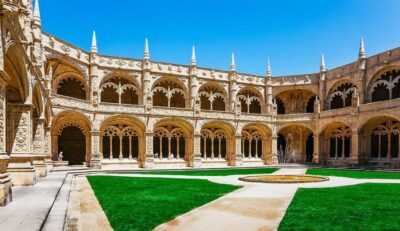

Private Lisbon Sightseeing Tuk-Tuk Tour: Alfama, Belém & More
Read our review →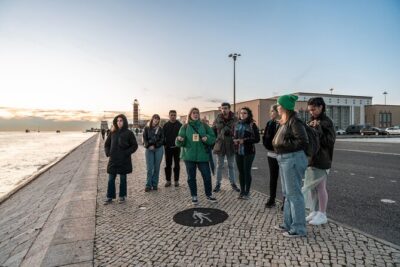
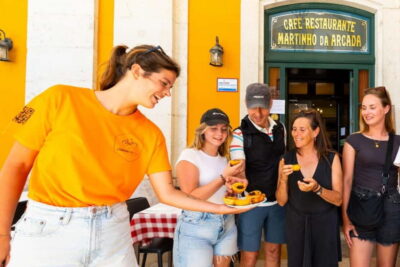
Bike Tour from Lisbon to Belém + Liquor & Pastry
Read our review →
Bike Tours Lisbon – Center of Lisbon to Belém
Read our review →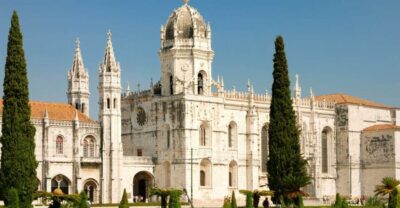
Belém Walking Tour with Jerónimos Monastery Ticket
Read our review →
Browse the lists this tour appears in