Reviewed · THINGS TO DO IN LISBON
Alfama and Mouraria Tour – The oldest neighbourhoods in Lisbon
Lisbon reveals itself on foot. This 2.5-hour walk through Alfama and Mouraria mixes iconic landmarks with hilltop views, so you get the feel of Lisbon’s oldest corners fast, on a small-group loop.
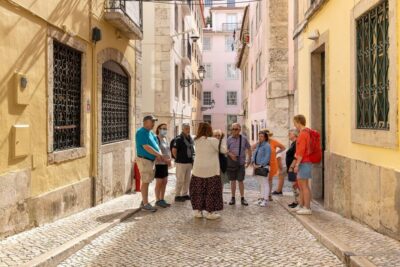
I love how the route builds a clear mental map, from Praça do Comércio to Lisbon Cathedral and on to the miradouros. I also like that the guides stay easy to spot, with an orange umbrella, and that some guides like Walter, Tiago, Hugo, Claudia, and Jose bring the history to life with humor and plenty of questions.
One thing to consider: it’s uphill and stair-heavy in spots, and there are limited places to sit during the talk at certain stops.
In This Review
- Key highlights worth planning for
- Alfama and Mouraria: The Lisbon you actually feel
- Where to meet: Praça do Comércio and your orange umbrella
- The route in real order: from King Jose I to Praça do Comércio
- Casa dos Bicos and the quick hits that build context
- Panteão Nacional and the first viewpoint jolt
- Castelo de São Jorge: short stop, big payoff
- Mouraria’s fado link and the final church stop
- Price and time: why $1.25 can still feel like real value
- Pace, comfort, and how your guide can make or break the tour
- Who this tour fits best
- Should you book this Alfama and Mouraria Tour?
Key highlights worth planning for
- Orange-umbrella meeting point in the Praça do Comércio area so you can get started quickly
- Viewpoints you’ll remember: Portas do Sol and Santa Luzia, plus Castle area stops
- Old Lisbon sites, short and focused: Cathedral, Panteão Nacional, and St. Anthony’s Church
- Castelo de São Jorge in manageable stages when your guide paces the climb well
- Mouraria and Fado connection at the Monumento Mouraria Berço do Fado stop
- Great guide energy (Walter, Tiago, Hugo, Jose, Claudia show up in standout experiences)
Alfama and Mouraria: The Lisbon you actually feel
Alfama and Mouraria are not about big, clean sights. They are about layers. You feel older Lisbon in the street slopes, the architecture style, the viewpoints, and the way life seems to keep moving in tiny alleys.
This tour is designed for orientation. You do not just see a few postcards. You walk the neighborhood edges and key landmarks that explain how the city grew, then you end with views that make the whole area click.
If your goal is to understand Lisbon beyond the main boulevards, this is a smart first or mid-trip choice.
More Things to Do in Lisbon
- Lisbon City Center Tour – The Unmissable Lisbon★ 5.0 · 22,234 reviews
- Lisbon: Sintra, Pena, Regaleira, Cabo da Roca & Cascais★ 4.7 · 19,656 reviews
- Lisbon Card: 24, 48, or 72-Hour Pass★ 4.5 · 17,944 reviews
- Lisbon: Jerónimos Monastery Entrance Ticket★ 4.1 · 14,164 reviews
Where to meet: Praça do Comércio and your orange umbrella
The tour starts at Praça do Comércio, at 1100-148 Lisbon, Portugal. You’ll be looking for your guide with an orange umbrella between the big arch and the statue in the middle.
This matters more than it sounds. Praça do Comércio is busy and wide, and if you drift too far, it gets hard to re-find the group quickly. My practical tip: arrive a few minutes early, stand where the guide instructions point, and keep your phone ready with the map view open.
Your tour ends around Praça do Rossio, at Praça do Rossio, 1100-200 Lisboa. That’s a nice finish because Rossio is a natural hub for continuing on your own.
The route in real order: from King Jose I to Praça do Comércio
Stop 1 is the Statue Of D. Jose I. It honors King Jose I of Portugal. The time here is brief, about 10 minutes, but it sets the tone by placing you in the civic heart of the city.
Stop 2 is Praca do Comercio, described as the most important square in Lisbon. This is one of those stops that feels like a reset button. You get the scale of Lisbon, then you’re ready to walk into the older districts that sit nearby and behind the main sights.
Stop 3 is the Church of St. Anthony. The tour frames it as the place where St. Antony of Padua was born. It’s a quick stop (about 10 minutes), but church locations in Lisbon often matter for understanding how old neighborhoods formed around religious and community life.
Casa dos Bicos and the quick hits that build context
Stop 4 is Casa dos Bicos, also called Museu de Lisboa. This is one of the oldest houses in Lisbon, built in Manueline style. Even if you only spend a short time here, you’ll start noticing the architectural “grammar” that shows up again and again as you move deeper into Alfama.
Stop 5 is Alfama itself, roughly 20 minutes of walking through the streets. This is where the tour shifts from monuments to texture. You’ll see why Alfama feels like Lisbon’s storybook district, with winding lanes that naturally slow you down and force you to pay attention.
Then Stop 6 is Lisbon Cathedral, described as the oldest church in Lisbon. This stop is short (around 10 minutes), but it’s a key landmark because the cathedral sits in a position that makes it part of the neighborhood’s daily geography, not just a standalone attraction.
Panteão Nacional and the first viewpoint jolt
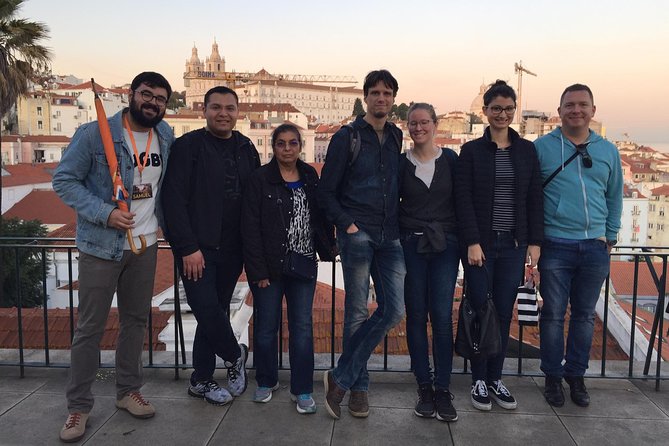
Stop 7 is Panteao Nacional, the National Pantheon of Lisbon. It’s listed as about 1 minute, but quick stops like this are useful when a guide is using them as a landmark anchor, helping you see where you are as the walking loop twists.
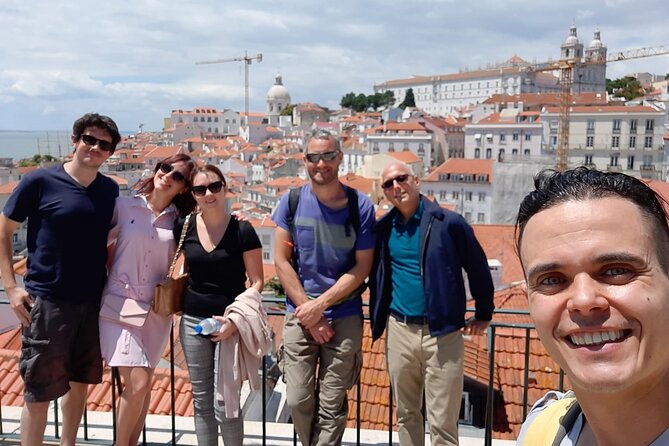
Stop 8 is Miradouro Das Portas Do Sol. This is one of the big “pause and take it in” moments, about 10 minutes. Expect sweeping views over rooftops and the river direction. Viewpoints like this are where you understand why Lisbon is built the way it is, because you can finally see the hilltop layout in one glance.
A practical note: the viewpoint breaks also give you a chance to refuel. If you’re doing this in warmer months, bring water and don’t wait until you feel wiped out.
When the light changes over Lisbon, try these:



Castelo de São Jorge: short stop, big payoff
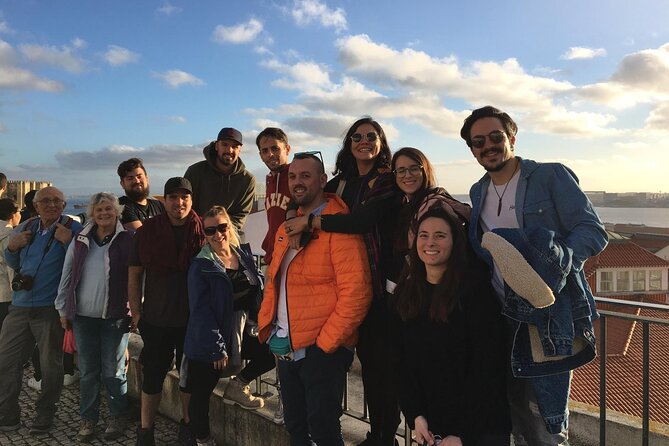
Stop 9 is Castelo De Sao Jorge, tied to the idea of Moorish origins from the 8th century. It’s listed as about 5 minutes, so you’re not doing a full castle tour here. Think of it as a photo and perspective stop that connects the neighborhood walks to Lisbon’s defensive history.
One thing I’d watch for: the castle area is where uphill walking can feel real. In well-paced tours, the climb happens in stages, so you don’t blow your energy early. In other situations, people can feel that pace is brisk. Your best move is simple: if you need a slower rhythm, ask your guide to repeat or slow down at street crossings, not halfway through the climb.
Stop 10 is Miradouro de Santa Luzia, another viewpoint, about 10 minutes. Santa Luzia is one of those places where the view feels designed for lingering. This stop is ideal for photos, but also for simply looking long enough to notice the different roof colors, the angles of the streets, and how neighborhoods tuck into each other.
Mouraria’s fado link and the final church stop
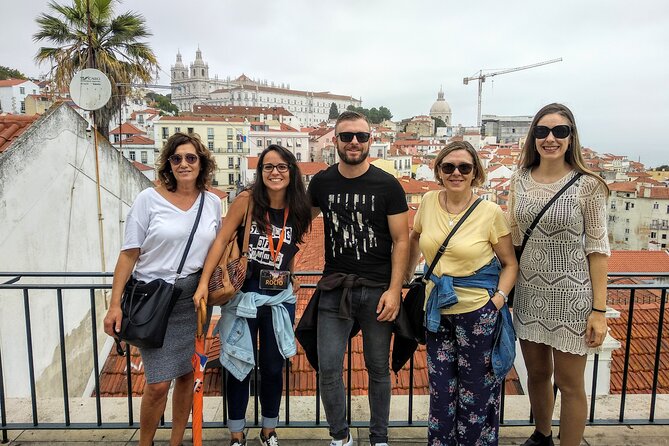
Stop 11 is Monumento Mouraria Berco do Fado. This is the tour’s direct nod to fado culture in Mouraria. It’s listed as about 20 minutes, which signals that your guide likely uses the time for more than a quick photo. It’s also a useful transition: you’re shifting from panoramic sights back to street-level culture.
Stop 12 is Igreja de Sao Vicente de Fora, the church built in honor of St. Vincent. It’s only listed as about 1 minute, but final stops like this act as a closing stamp on the walk. You end with a landmark that feels like it belongs to the district you just explored.
Price and time: why $1.25 can still feel like real value
The tour is priced at $1.25 per person, with an average booking window of about 17 days in advance. That price point makes it feel like a bargain, but here is the practical way to think about it: you’re paying for guide time and neighborhood orientation, not a long sit-down museum experience.
Also, the tour notes list admission ticket free for the stops. Still, plan for the real world. One experience in the provided information mentions that some major places, like the cathedral and the castle, can charge for entry on site even when the tour mentions free admissions. So if you specifically want to go inside, be ready to either pay a small fee or choose to focus on what you can see from outside during the allotted time.
At the same time, the itinerary is packed with high-impact “see it from here” moments. That is where the value is: views, viewpoints, and a connected walk through old neighborhoods.
Pace, comfort, and how your guide can make or break the tour
This is not a stroller-friendly, sit-everywhere type of tour. It’s a hill walk, with stairs in the mix, plus short breaks between talking points. Several guide styles come through in the provided experiences, and the best ones share the same traits: they keep a workable pace, they stop often, and they help you understand what you’re looking at rather than just walking you past things.
Some guides, like Tiago in one standout experience, are praised for managing hot weather with shade breaks and keeping the group moving in stages up the climb areas. Other guides, like Walter, are described as very animated and good at giving perspective, which is exactly what you want on a neighborhood tour where the streets can otherwise feel like a maze.
My practical comfort checklist:
- Wear shoes that grip on slopes.
- Bring water, especially if you’re visiting in warmer months.
- Keep an eye on where the group is at corners, because keeping together in Lisbon streets takes attention.
If you do that, you’ll get the best parts: the history feels connected, and the neighborhoods feel real, not rushed.
Who this tour fits best
This tour is a great match if you want:
- A first-time Lisbon orientation through Alfama and Mouraria
- Short landmark stops plus viewpoints, not a long museum day
- A small-group walking pace with time to ask questions
It may be less ideal if you want minimal walking, lots of sitting breaks, or you plan to do major indoor visits inside every stop. The schedule is built for motion and perspective, not for long stays.
It’s also perfect if you like authentic neighborhood vibes. Mouraria’s street culture and the fado link make the area feel more lived-in, not just scenic.
Should you book this Alfama and Mouraria Tour?
If you’re okay with uphill walking and you want your day to feel like you understand Lisbon, book it. The biggest win is the combination of historic anchors plus viewpoints, all tied together by guides who tend to be engaging, funny, and quick to explain what you’re seeing.
Just go in with the right expectations: it’s a walking tour with short stops, not an all-day indoor ticket haul. And be sure to find your orange umbrella meeting spot early and stick close at turns.
What Lisbon sent us most recently
- Lisbon: Private Boat Trip, Guided Walking Tour, Bike & Tram
★ 4.8 · 116 reviews - 3 Hour Lisbon Private Guided Tour via Tuk Tuk
★ 5.0 · 116 reviews - Lisbon Market and Food Tour with Cooking Class and Lunch
★ 5.0 · 117 reviews - From Lisbon: Sintra and Cascais Private Day Tour
★ 4.8 · 117 reviews - Lisbon: Tagus Estuary Nature Reserve Birdwatching Boat Tour
★ 4.9 · 117 reviews - Lisbon: Private Half-Day Tour with Hotel Pickup
★ 4.8 · 117 reviews - Pastel de Nata Cooking Class in Lisbon
★ 5.0 · 118 reviews - Sintra Private Tour from Lisbon
★ 5.0 · 118 reviews
Things to Do in Lisbon, compared.

Lisbon City Center Tour – The Unmissable Lisbon
Read our review →
Sintra, Pena, Regaleira, Cabo da Roca & Cascais
Read our review →

Sunset Boat Party Cruise with DJ and Open Bar
Read our review →
Sintra, Pena, Regaleira, Cabo da Roca, and Cascais
Read our review →