
Reviewed · HISTORICAL TOURS
Authentic Braga & Guimarães: Small Historical Group Tour
Guimarães and Braga in one day feels like a history cheat code. You get small-group access (up to 8), comfy air-conditioned pickup, and a guide who connects the dots between Portugal’s early kingdoms and modern pilgrimage culture. What I like most is the pace and focus, you stop at major sights without turning it into a sprint, and you get plenty of chances to look around on your own. One possible drawback to note, if your group includes more than one language stream, the guide may repeat parts of the commentary, and that can stretch the day a bit.
Guides I’ve seen mentioned for this tour include Cheila, Nuno, Brahim, and Francisco, and that matters because the best moments here are interpretive, legends, dates, and why specific buildings were placed where they were. You’ll also be doing a decent amount of walking up and down old streets, though it’s not described as strenuous. If you prefer a very relaxed, no-steps day, plan for cobblestones and a few hilly stretches.
In This Review
- Key highlights to watch for on this tour
- From Porto With Pickup: Why This Day Feels Manageable
- Guimarães Castle Start: Going From Fortress Views to Old Streets
- Igreja de São Miguel do Castelo: Romanesque Style and a Royal Baptism Legend
- The Palace Museum Stop: 15th-Century Power Turns Into Art Rooms
- Rua de Santa Maria: A First Street With a Convent Connection
- Praca de S. Tiago and Largo da Oliveira: Squares Where the City Breathes
- Padrão do Salado: A Monument With a Specific Date (1340)
- Igreja de Nossa Senhora da Oliveira: Where the Early Monastery Became Gothic
- Braga Cathedral (Sé de Braga): First Portuguese Cathedral Talk Track
- Bom Jesus do Monte: UNESCO Pilgrimage Stairs and the “Five Senses” Moment
- Sameiro Sanctuary: Marian Devotion With a High-Altitude View
- Timing and Walking: How the Day Actually Flows
- Price Value Check: What You Get for $70.60
- Food, Green Wine, and the Lunch You Plan Yourself
- Should You Book This Braga and Guimarães Small-Group Tour?
- FAQ
- What time does the tour start?
- How long is the experience?
- Does the tour include pickup and drop-off?
- Are monument entrances included?
- Is lunch included in the price?
- Is the tour in English?
- Can I cancel for a full refund?
Key highlights to watch for on this tour
- Up-close medieval Guimarães: starts high at Guimarães Castle, then rolls downhill into the old town.
- São Miguel do Castelo, the Afonso Henriques legend: Romanesque church with a story tied to Portugal’s first king.
- The Paço palace museum stop: 15th-century palace tied to royal marriage, now showing tapestries and more.
- Bom Jesus do Monte is UNESCO 2019: stairways, chapels, and panoramic mountain views over Braga.
- A second Marian site with big views: Sameiro sits high at 566 meters and looks out over Braga.
- Real small-group comfort: maximum 8 people, bottled water, and hotel pickup and drop-off.
From Porto With Pickup: Why This Day Feels Manageable
This is an 8-hour historical day trip that starts at 8:30 am, with pickup and drop-off included. You’ll be met at your address and the exact pickup time is sent by email, so you are not left guessing in the morning fog of Porto.
The vehicle is premium and air-conditioned, which is a real quality-of-life upgrade when you are bouncing between hilltop viewpoints and dense old-town streets. You also get bottled water, and since lunch is not included, having that small supply early helps.
The small-group limit of up to 8 travelers is not just a marketing detail. It usually means you get more breathing room during stops, easier questions for the guide, and less of that herd-mentality feeling you can get on larger buses.
A few more Porto days, taken slowly
- Douro Valley: Historical Sites, Wine Experience, Lunch & Cruise★ 5.0 · 5,133 reviews
- Porto: An Intimate Fado Show in a Historical Tavern★ 4.8 · 2,055 reviews
- Porto: Historic City Center Walking Tour★ 4.7 · 1,172 reviews
- Porto: Private Tour of the Historic City in a Ford T Car★ 4.8 · 932 reviews
Guimarães Castle Start: Going From Fortress Views to Old Streets
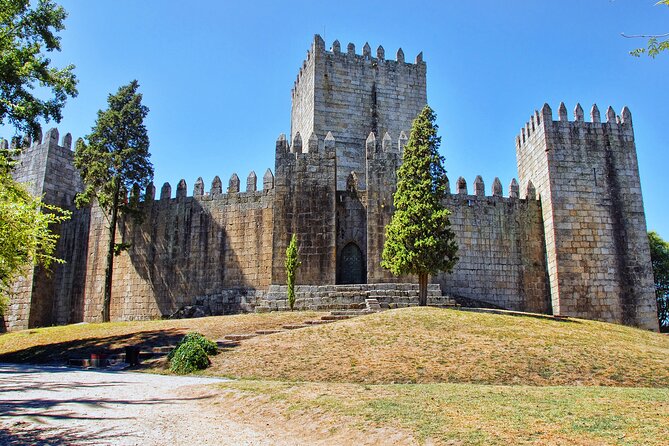
Your day begins in Guimarães at the upper part of town, where the Guimarães Castle sits. From there, the route is built like a descent story, you learn about Portugal’s early formation as you physically move down toward the city center.
This is a smart structure because it matches how you experience the place. The hilltop gives context, then the streets and squares let you absorb the details at human scale.
If you like old stones and good sightlines, this is where the day clicks into place. You are not just reading plaques, you are seeing the geography that shaped how people defended, traveled, and ruled.
Igreja de São Miguel do Castelo: Romanesque Style and a Royal Baptism Legend
Next up is Igreja de São Miguel do Castelo, a church dating back to the 13th century and classified as a national monument. The style is described as Romanesque, and it was rebuilt in the early 1900s to match its original appearance.
The most fun part is the legend tied to Portugal’s first king, D. Afonso Henriques, said to have been baptized here. Whether you treat that story as literal history or cultural heritage, it is the kind of local detail that makes a building feel alive.
Good news for planning: the stop is listed with free admission. That means you can spend time looking, not juggling ticket logistics.
The Palace Museum Stop: 15th-Century Power Turns Into Art Rooms
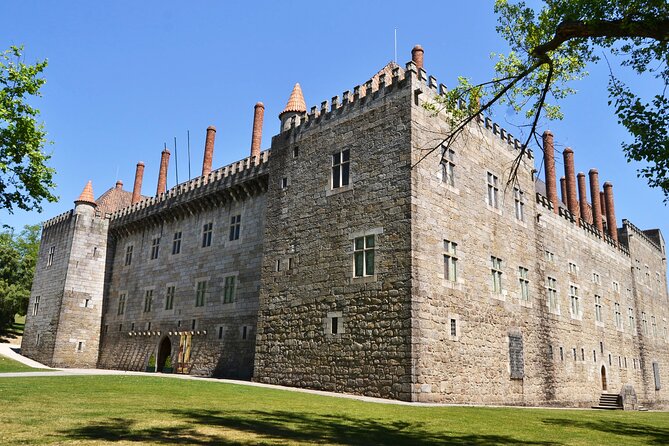
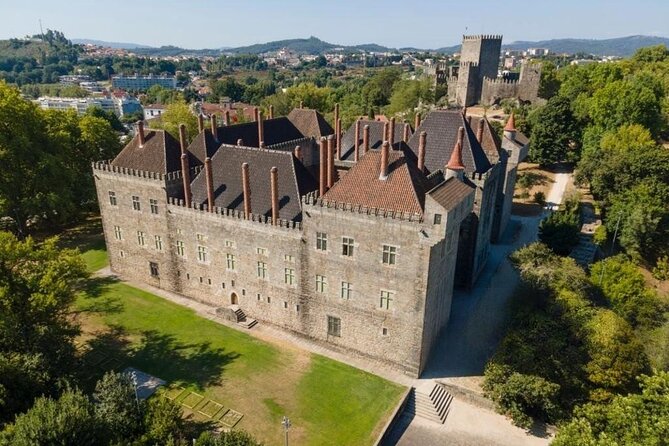
The tour then moves to a palace tied to royal marriage and later restoration, a site that now functions as a museum. It traces back to the early 15th century, with construction ordered by D. Afonso, son of King D. João I, around the time of his marriage to D. Constança de Noronha.
Over time, the palace served multiple purposes, which caused wear and tear. Restoration began in the early 20th century, and today it is classified as a national monument, with museum displays including tapestry, furniture, Chinese porcelain, and paintings.
If you care about how Portugal connected with wider Europe and beyond, the mix of objects is worth a slow look. Even if you mostly want streets and views, this stop gives your brain a break from walking and lets you absorb interior craft and collecting.
Rua de Santa Maria: A First Street With a Convent Connection
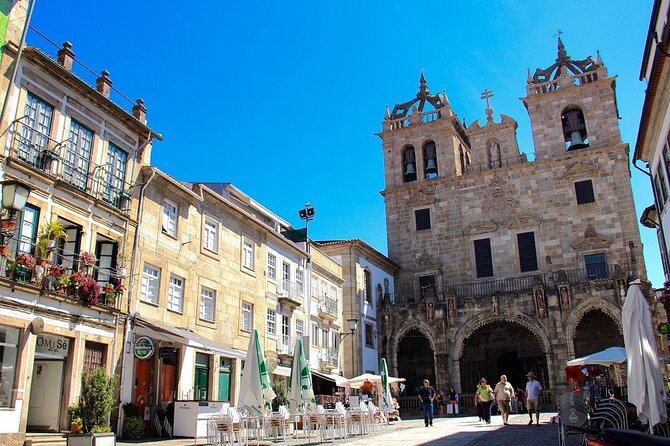
As you descend toward residential areas, you pass Rua de Santa Maria, highlighted as one of the earliest streets in Guimarães. The tour’s emphasis here is the way it connected major parts of the town, specifically between the convent of D. Mumadona Dias, the residential area, and the Castle.
This is not a stop where you need a checklist. It works best as a contextual walk, the guide’s story helps you see why this street mattered, and then you can simply enjoy the texture of an old route.
It’s also free and short, so it fits well even if you are on your feet more than you expected.
More Things to Do in Porto

Praca de S. Tiago and Largo da Oliveira: Squares Where the City Breathes
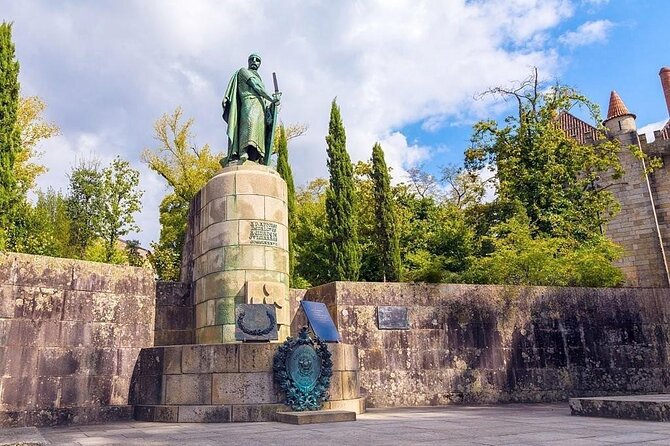
Two squares anchor the middle of the Guimarães section: Praca de S. Tiago and Largo da Oliveira.
Praca de S. Tiago is described as a social square with restaurants, bars, and terraces, all framed by typical Guimarães architecture. The name links to a legend of the apostle James leaving an image of the Virgin Mary on a pilgrimage. A church was built there in the 12th century and later demolished in the 19th century, so the square holds layers, not just scenery.
Then you reach Largo da Oliveira, one of Guimarães’ most emblematic squares. Its name connects to an ancient olive tree symbolizing peace and tradition, and the tour notes it as a stage for major medieval events related to justice and key moments in Portugal’s formation.
If you want a practical moment to reset, this is it. These are good places to look up at facades, check where you’ll eat later, and just let the city rhythm sink in.
Padrão do Salado: A Monument With a Specific Date (1340)
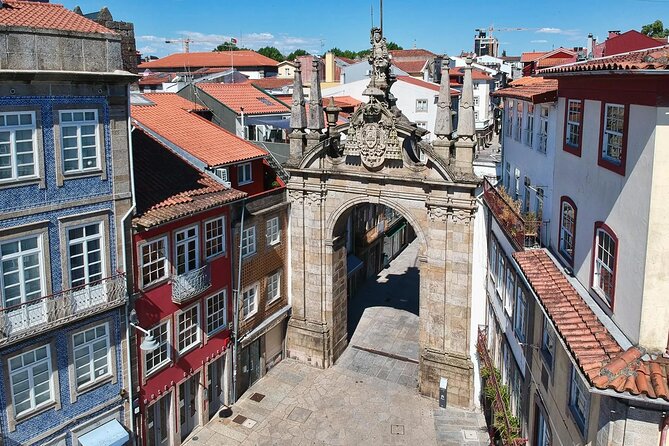
Near Largo da Oliveira, you’ll stop at the Padrão do Salado. This monument celebrates D. Afonso IV’s victory over the Moors in the Battle of Salado in 1340.
This is a quick stop, but it’s a useful one because it grounds the day’s stories in a named event and a concrete date. A lot of medieval sites feel abstract until you connect them to one moment in time.
If you like military history or you simply want more clarity on why rulers mattered, this monument adds that missing frame.
Igreja de Nossa Senhora da Oliveira: Where the Early Monastery Became Gothic
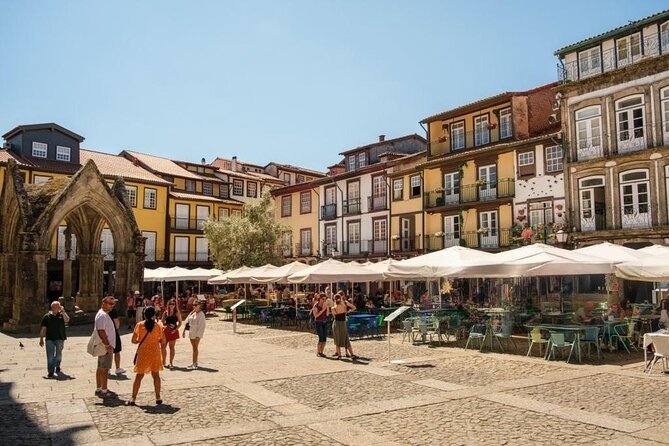
From Largo da Oliveira you can see Igreja de Nossa Senhora da Oliveira, also known as Colegiada de Guimarães. The origins go back to a monastery founded in the first half of the 10th century by Countess Mumadona Dias.
The current church was built in 1387 by order of King D. João I, following Gothic models. That mix of early roots and later architectural update is a pattern you’ll keep noticing as you move from Guimarães to Braga.
This stop is also marked with free admission, so use it as a moment to re-center: look at the structure, then listen for the guide’s link between religious power and political identity.
Braga Cathedral (Sé de Braga): First Portuguese Cathedral Talk Track
After lunch break plans are on your radar (since lunch is not included), the tour heads to Braga for the cathedral visit. You get 30 minutes at Sé de Braga, and the entrance is included.
The cathedral is presented as one of Portugal’s most emblematic monuments, with construction dating to the end of the 11th century. It is dedicated to the Virgin Mary, and it’s linked to Bishop D. Pedro, with the dedication date noted as 1089 in the tour description.
The big takeaway: it is considered the first Portuguese cathedral, built decades before the founding of the nation. Even if that framing is just a guide’s way of saying it was early and influential, it’s a strong way to understand why this building carries weight far beyond Braga itself.
Bom Jesus do Monte: UNESCO Pilgrimage Stairs and the “Five Senses” Moment
Bom Jesus do Monte is the star stop for a lot of people, and the tour gives it about 1 hour with free admission.
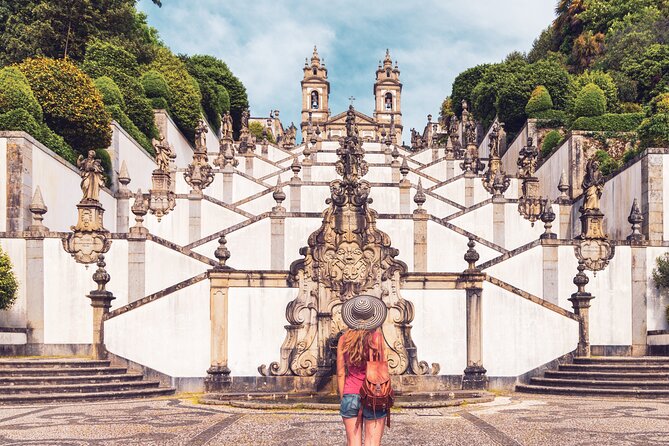
This sanctuary is described as a major example of European Sacri Monti, formed after the Council of Trent in the 16th century. The Via Crucis winds up the hillside with chapels, fountains, and sculptures representing the Passion of Christ, then culminates in a neoclassical church built between 1784 and 1811.
One of the most emblematic elements is the Staircase of the Five Senses, a baroque work using fountains and statues to represent human senses. If you’re the kind of traveler who likes details you can explain later to friends, this is where you’ll gather them.
Finally, Bom Jesus do Monte was recognized as a UNESCO World Heritage Site in 2019, and the tour highlights the way it harmonizes with the natural setting plus the panoramic views over Braga. When you stand there, those views are the payoff for the effort of reaching the sanctuary.
Sameiro Sanctuary: Marian Devotion With a High-Altitude View
After the main pilgrimage site, the tour shifts to Sanctuary of Our Lady of Sameiro, also known as Santuário do Sameiro. This stop includes about 30 minutes, and admission is listed as free.
The sanctuary was founded on June 14, 1863 by Father Martinho António Pereira da Silva. It is described as the second largest Marian pilgrimage center in Portugal after Fátima.
Here, altitude becomes part of the experience. It sits at 566 meters, which means you get wide views over Braga and the surrounding area. If you want a quieter, open-feeling contrast after the busier energy of major pilgrimage complexes, this stop can hit that spot.
Timing and Walking: How the Day Actually Flows
The total time is listed as 8 hours approx., including travel time. That matters because the day involves multiple transfers plus time-on-site for each major stop.
In Guimarães, expect movement from the castle area down toward squares and churches, so you’ll feel changes in elevation. In Braga, you climb again for Bom Jesus do Monte and then enjoy a shorter visit at Sameiro.
The tour format also builds in brief pauses. Some stops are around 5 to 20 minutes, and the squares give you a natural break from standing still. If you hate rushing, you’ll probably appreciate that the route is not just one continuous march.
One caution: in a small-group setup, a few people can change the pace. If your group has mixed language needs, the guide may repeat commentary in more than one language, which can add time in the middle of the day.
Price Value Check: What You Get for $70.60
At $70.60 per person for an approximately 8-hour day, the value comes from the package design: hotel pickup and drop-off, a premium air-conditioned vehicle, bottled water, an expert guide, and entrances included.
You also get the practical benefit of someone handling the sequence. Instead of figuring out how to connect Guimarães and Braga, you follow a guided flow that hits major landmarks and keeps the day coherent.
Lunch is not included, so you should budget for that separately. But the trade-off is clear: your money goes into transport and sights rather than one meal you might not love.
Given how many named monuments appear on the route, this price point often makes sense if you want a guided day rather than a do-it-yourself route with ticket chasing and route planning.
Food, Green Wine, and the Lunch You Plan Yourself
Lunch is not included, but guides typically help with practical food direction. In the feedback I saw, people called out that recommendations were a real help, especially when they wanted local options.
So here’s my advice: treat lunch as a choose-your-own-adventure within the day. Pay attention to where you’ll end up next, and pick something close enough that you can rejoin on time without stress.
One extra detail: the tour notes green wine with a legal drinking age of 18 and above. If you’re under 18, no problem, but if you’re legally able and offered a taste, consider trying it, especially in a region where it’s part of the culture.
Should You Book This Braga and Guimarães Small-Group Tour?
Book it if you want a high-impact historical day with minimal planning, plus the comfort of pickup and a small group of 8. It’s a great fit if you like medieval Portugal and religious art and you want to understand how stories connect to the actual spaces you’re standing in.
Skip it or go in with eyes open if you dislike hills and cobblestones, since the route includes castle-area starts and a pilgrimage complex where walking is part of the deal. Also consider how language needs in your exact group might affect pacing, since repetition can stretch the day.
If you’re in Porto and you have one full day to spare, this is one of the smarter ways to turn that day into real context, not just photos.
FAQ
What time does the tour start?
The tour starts at 8:30 am.
How long is the experience?
The duration is listed as about 8 hours (including travel time).
Does the tour include pickup and drop-off?
Yes. Hotel pickup and drop-off are included, and you’ll be emailed your pickup time before the tour day.
Are monument entrances included?
Yes. Entrances to monuments are included.
Is lunch included in the price?
No. Lunch is not included.
Is the tour in English?
Yes, the tour is offered in English. The tour also provides a mobile ticket.
Can I cancel for a full refund?
Yes. You can cancel up to 24 hours in advance for a full refund. If you cancel less than 24 hours before the start time, the amount paid is not refunded.
What Porto sent us most recently
- Bike or E-Bike Tour of Porto and Atlantic Coast
★ 5.0 · 39 reviews - Porto: Premium Douro Valley Small-Group Tour, Cruise & Lunch
★ 4.9 · 39 reviews - Off the Beaten Track in Porto: Private City Tour
★ 5.0 · 39 reviews - Porto: 50-Minutes Rabelo Boat Cruise on the Douro River
★ 3.8 · 39 reviews - Porto: Graham’s Port Lodge Tour and Port Essentials Tasting
★ 4.9 · 39 reviews - Port : Small-Group 6 Bridges, Douro River Sunset Cruise w/ Drink
★ 5.0 · 39 reviews - Museu das Marionetas do Porto
★ 4.5 · 39 reviews - Douro Valley Premium Private
★ 5.0 · 39 reviews
Historical Tours, compared.
Historical Sites, Wine Experience, Lunch & Cruise
Read our review →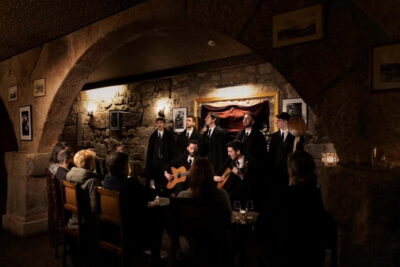
Daytime or Sunset Boat Cruise with History and Wine
Read our review →
Private Tour of the Historic City in a Ford T Car
Read our review →
Browse the lists this tour appears in