
Reviewed · COOKING CLASSES
Hands on Portuguese Cooking Class in Lisbon
Hands-on meals beat museum days in Lisbon. At Compadre Cooking School, you cook and eat a true Portuguese course, guided by chefs like Anna and Marta, step by step. I also love the small-group format (up to 12) with your own station, which makes it easier to learn without feeling rushed.
The second big win is that you leave with the recipes so you can recreate your meal back home. One possible drawback to plan for: the experience focuses on starter plus main dishes, and dessert or heavy wine service may not be part of what you get.
In This Review
- Key highlights you will care about
- Compadre Cooking School: where the class actually starts
- The “full meal” idea, and what it means for your evening
- Starter time: learning Portuguese flavor basics before the mains
- Bacalhau focus: cod, Portugal, and why salted fish is a big deal
- Meat main and Portuguese heat: peppers, peri peri style, and more
- Your station matters: hands-on technique and real attention
- Eating what you made: the shared table part of the experience
- Recipes to take home: the part that turns a class into a habit
- Alcohol, dessert, and expectations: what to know before you go
- Price and value: is $82.24 really fair?
- Best fit: who will enjoy this most (and who might choose differently)
- Logistics that help you avoid stress on the day
- Should you book this Portuguese cooking class?
- FAQ
- How long is the Hands-on Portuguese Cooking Class in Lisbon?
- Where is the meeting point in Lisbon?
- Is the class taught in English?
- How many people are in the group?
- What dishes are included?
- Can I get a full refund if I cancel?
Key highlights you will care about
- Small group (max 12) means more personal help while you cook
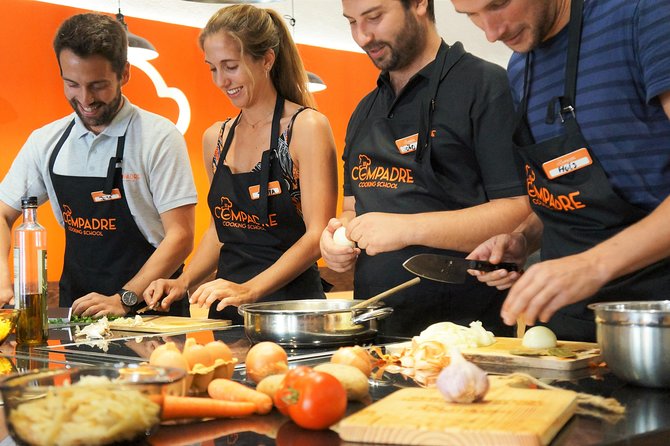
- Your own cooking station keeps things hands-on and organized
- Portuguese full-course structure in about 3 hours, from prep to plate
- Bacalhau (salted cod) lessons and how Portuguese cooks think about fish
- Spice and technique basics you can apply when choosing dishes in Lisbon
- Take-home recipes so the class does not stop when you leave
Compadre Cooking School: where the class actually starts
Your Lisbon cooking class begins at Compadre Cooking School, R. Heliodoro Salgado nº14, 1170-176 Lisboa. It is a straightforward meeting point, and it matters more than you might think. When you start on time and everyone finds the same spot quickly, you lose less of your 3-hour window to logistics and more time to chopping, seasoning, and learning.
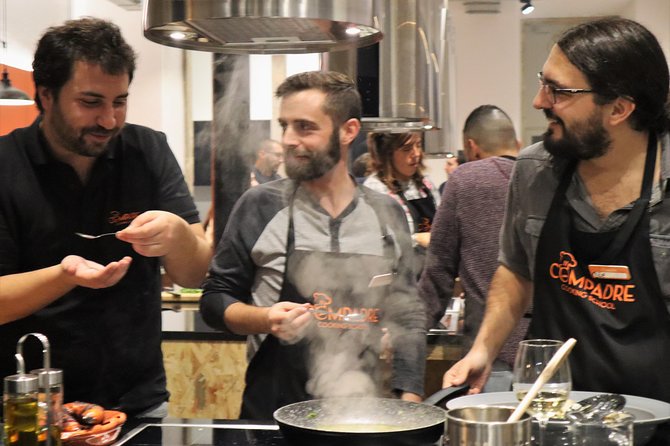
This is also a practical class setup. Reviews consistently point to a clean, well set-up kitchen, with instructors guiding from right beside the stations. You are not just watching, you are cooking at your own place at the table.
Finally, the course is offered in English, so you do not have to fight the language to catch the important technique points.
More Cooking Classes in Lisbon
- Lisbon: Pastel de Nata Baking Class★ 4.9 · 2,106 reviews
- Lisbon: Traditional Portuguese Cooking Class★ 4.9 · 592 reviews
- Lisbon: 2-Hour Pastel de Nata Cooking Class★ 4.8 · 461 reviews
- Lisbon Portuguese Cooking Class with 3-Course Dinner★ 5.0 · 445 reviews
The “full meal” idea, and what it means for your evening
A lot of cooking classes sell food plus a story. This one is structured as a full Portuguese meal, built course by course. You get to experience how Portuguese cooking starts with a first course, then moves into fish, then into a main meat dish.
Why that structure is valuable: it teaches you patterns. Once you understand how Portuguese cooks balance salt, smoke, heat from peppers, and timing for different proteins, you can order with more confidence later. In plain terms, you learn how to read a menu, not just how to make one plate.
The pacing also matters. In about 3 hours, you do prep, cook, and then eat what you made. If you like a class with an actual payoff, this is that kind of experience.
Starter time: learning Portuguese flavor basics before the mains
Your class includes a traditional Portuguese starter. The specific starter can vary by session, but the learning goal stays the same: you get a practical starting point for Portuguese flavors and common ingredient combinations.
What you are really training at the starter stage is sense-making. You learn how instructors expect you to taste and adjust, how they guide you through steps, and how they explain why a starter works in the Portuguese course order. That matters because Portuguese meals tend to feel coherent as a sequence, not just separate dishes on a tray.
If you come with any cooking experience, you will probably appreciate how the class sets foundations without talking down. If you come as a total beginner, it is friendly enough to start building comfort fast.
Bacalhau focus: cod, Portugal, and why salted fish is a big deal
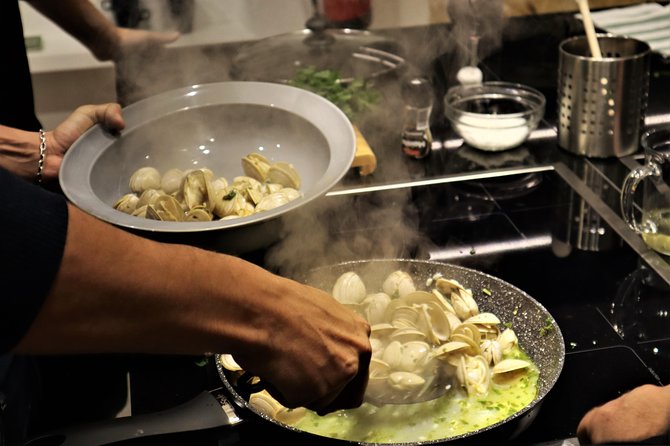
The fish component is built around a traditional codfish recipe, the classic Portuguese topic people travel here for: bacalhau, salted cod. Even if you already know you love cod, you will likely enjoy learning why it matters in Portugal and how Portuguese cooks use it in everyday, traditional ways.
From what instructors emphasize, bacalhau is not just a food choice. It is a cultural anchor. In lessons tied to this dish, you learn the logic behind the flavor, how salted fish fits into Portuguese pantry traditions, and why cod shows up again and again on menus.
You also get hands-on help. Reviews describe sessions where cooking feels step by step, with stations set up so you prep under instructor watch. That is the difference between tasting bacalhau at a restaurant and actually understanding how to handle it.
Meat main and Portuguese heat: peppers, peri peri style, and more
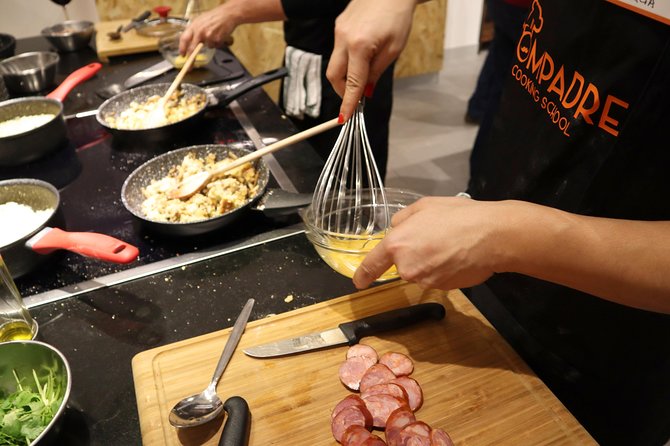
Your course includes a traditional meat dish as the second main. Across sessions, Portuguese cooking in this class often leans into flavors that travelers recognize right away: garlic, oil, and peppers that bring heat without confusing the dish.
You might see spicy, peri piri style elements in meat preparations. Some class accounts mention peri piri chicken as a highlight, and they also connect it to Portugal’s pepper preferences. Even if your exact meat dish differs, you will come away with more clarity on the role of peppers in Portuguese cooking and how they shape the final taste.
There is also hands-on texture work in many sessions. Some accounts mention prepping shrimp or prawns for another dish, including tasks like deveining and removing heads. If you are squeamish around seafood prep, give yourself a quick mental note beforehand. It is part of the real cooking lesson, not just a garnish moment.
More Portuguese kitchens with the door ajar:



Your station matters: hands-on technique and real attention
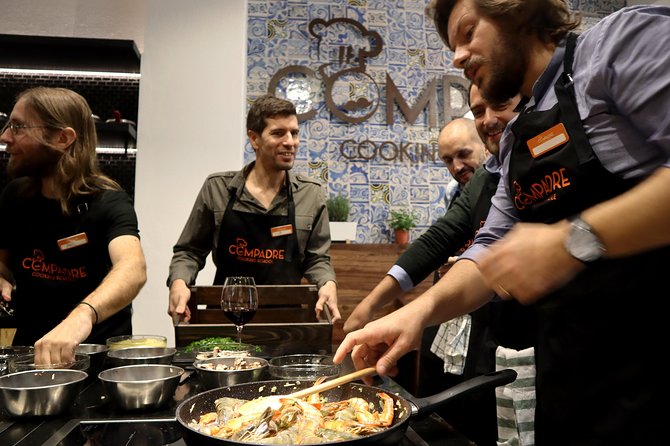
One of the best reasons to book this Lisbon cooking class is simple: you cook at your own station. With a maximum of 12 people, you are not packed into one chaotic kitchen where you only stir while someone else does the real work.
The class is built for step-by-step participation. Instructors walk you through what to do next, then watch your station so you can correct problems early. Reviews also praise the patience of the teaching team, especially when people are new to cooking or just have a strong desire to do it right.
I like this approach because it teaches technique you can reuse. You learn how instructors sequence prep, how they time steps, and what they look for visually and by smell. That is the kind of learning that sticks.
Eating what you made: the shared table part of the experience
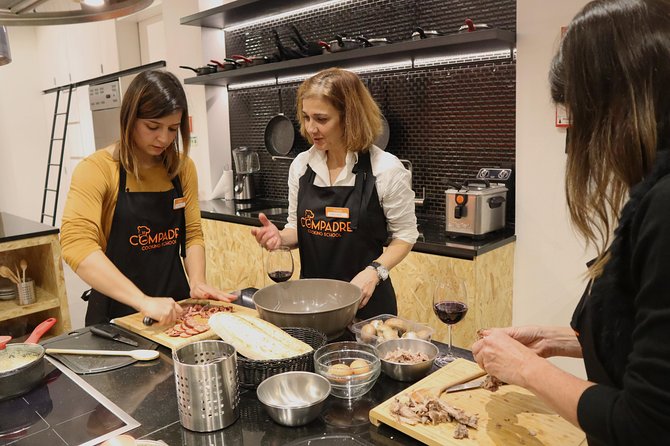
After cooking, you sit down and eat the meal you just made. This shared table moment is not filler. It is where the class becomes social, relaxed, and satisfying all at once.
It also helps you learn faster. When you taste while the dish is still fresh in your memory, you can connect each flavor to the step that created it. You start to recognize what you did well, and what you might tweak next time.
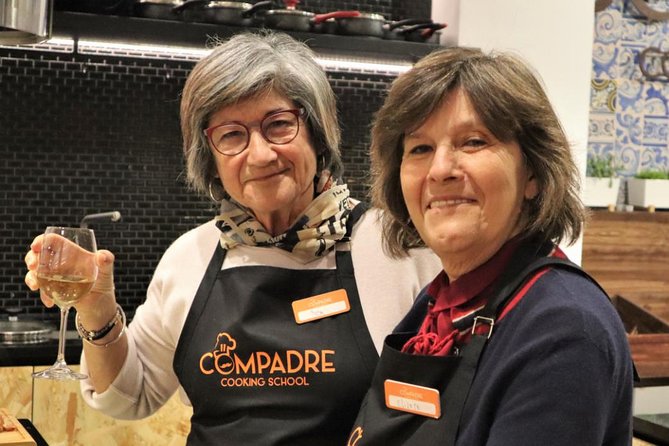
Several accounts highlight the friendly atmosphere with other classmates, including when people are there in couples or solo. If you want a Lisbon activity that is more like a communal evening than a lecture, this portion delivers.
Recipes to take home: the part that turns a class into a habit
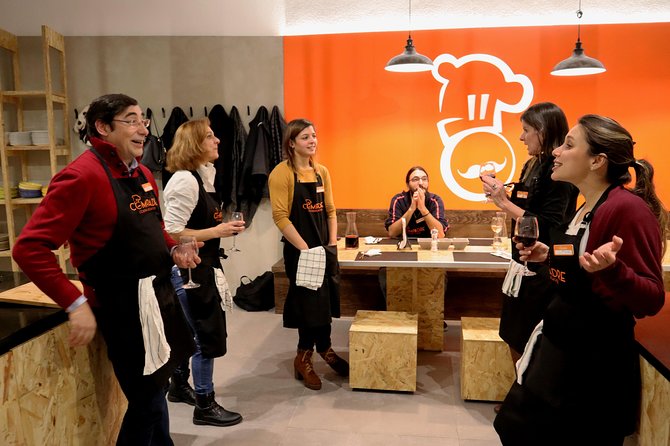
This is a key reason the class stands out: you take home the recipes. Many cooking classes end with a full stomach and a vague memory of flavors. Here, the recipes are part of the value.
You can use them in two ways. First, you can cook the same menu at home and share it with friends. Second, you can use the recipes to build your own Portuguese-inspired menu later. Once you have the framework, you are not starting from zero each time.
If you are cooking for family, this matters even more. Portuguese meals can feel more approachable when you are not guessing. Having the steps, ingredient list, and method helps you recreate the experience without needing a Portuguese cookbook from the airport bookstore.
Alcohol, dessert, and expectations: what to know before you go
The class involves eating what you cooked, and some wine is mentioned in accounts of adults having a limited amount. One review notes a single bottle for five adults, and another highlights that more wine would have been nice. So if you expect wine to flow freely like a long dinner, you should calibrate your expectations.
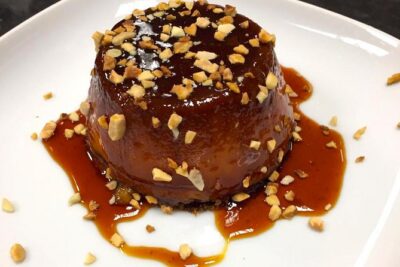
Dessert is another potential mismatch. The menu described for the class focuses on a starter plus two mains, and at least one account explicitly points out that there was no dessert option.
That does not make it bad, it just changes the planning. Treat this as a food-forward cooking class, not a full restaurant-style night with a dessert cart.
Price and value: is $82.24 really fair?
At $82.24 per person for about 3 hours, this class is priced for more than entertainment. You are paying for multiple things that add up fast if you try to recreate it alone: a dedicated cooking space, instructor guidance, ingredients for a full course meal, and the take-home recipe materials.
You are also paying for the group size structure. With a maximum of 12 people and station-based cooking, you are less likely to get stuck waiting for instructions. That extra attention is where many cooking class values live, because technique is hard to learn from a distance.
Compared with booking a simple food tour or paying for one restaurant meal, you likely get more “learn and do” time here. And because the recipes come home with you, you can stretch the value across future dinners, not just one evening in Lisbon.
Best fit: who will enjoy this most (and who might choose differently)
This Lisbon cooking class is a strong match if you want Portuguese cuisine you can actually make at home. It is also ideal if you like food history explained through the dish itself, not just through generic facts.
You will probably enjoy it even if you are not a strong cook, because the class is designed for step-by-step participation and hands-on help. Many accounts also mention learning foundational skills, which is exactly what you want if you cook only occasionally.
You might think twice if your top priority is a long sit-down meal with lots of wine and dessert. This is structured like a cooking workshop that ends in shared eating, and it may not satisfy if you want a full restaurant lineup.
Logistics that help you avoid stress on the day
Because it is a local cooking school with a central meeting point, the biggest practical win is timing. The class starts where you can find it, and the flow is built around the 3-hour duration.
It also helps that the tour uses a mobile ticket, which makes arrival smoother. If you are visiting Lisbon for a short trip, you will appreciate that setup.
One more small planning tip: this class is often booked about 20 days in advance. If you want a specific day or you are traveling in busier weeks, book earlier so you are not stuck with only awkward time slots.
Should you book this Portuguese cooking class?
Book it if you want a Lisbon food experience that is hands-on, structured like a real Portuguese meal, and supported by a small group and clear instruction. The take-home recipes are a major value driver, because they turn the class into something you can repeat.
Skip or rethink if you are looking for an all-inclusive dinner vibe with unlimited wine and a guaranteed dessert course. This is mainly about cooking and eating what you make, not a full-blown restaurant menu with extras.
If your goal is to come away with cooking skills, Portuguese flavor logic, and a night that feels social but still practical, this is an easy yes.
FAQ
How long is the Hands-on Portuguese Cooking Class in Lisbon?
It lasts about 3 hours.
Where is the meeting point in Lisbon?
The class meets at Compadre Cooking School, R. Heliodoro Salgado nº14, 1170-176 Lisboa, Portugal.
Is the class taught in English?
Yes, it is offered in English.
How many people are in the group?
The experience has a maximum of 12 travelers.
What dishes are included?
The sample menu includes a traditional Portuguese starter, a traditional codfish main dish, and a traditional meat main dish.
Can I get a full refund if I cancel?
Yes. You can cancel up to 24 hours before the experience’s start time for a full refund.
More Workshops in Lisbon
- Pastel de Nata Pastry Class: Bake and Enjoy Your Own Treats
★ 5.0 · 485 reviews - Lisbon: Azulejos’ Design Create Your Own Tile Workshop
★ 4.9 · 420 reviews - Lisbon: 1.5-Hour Surf Lesson
★ 4.8 · 275 reviews
What Lisbon sent us most recently
- Lisbon: Private Boat Trip, Guided Walking Tour, Bike & Tram
★ 4.8 · 116 reviews - 3 Hour Lisbon Private Guided Tour via Tuk Tuk
★ 5.0 · 116 reviews - Lisbon Market and Food Tour with Cooking Class and Lunch
★ 5.0 · 117 reviews - From Lisbon: Sintra and Cascais Private Day Tour
★ 4.8 · 117 reviews - Lisbon: Tagus Estuary Nature Reserve Birdwatching Boat Tour
★ 4.9 · 117 reviews - Lisbon: Private Half-Day Tour with Hotel Pickup
★ 4.8 · 117 reviews - Pastel de Nata Cooking Class in Lisbon
★ 5.0 · 118 reviews - Sintra Private Tour from Lisbon
★ 5.0 · 118 reviews
Cooking Classes, compared.

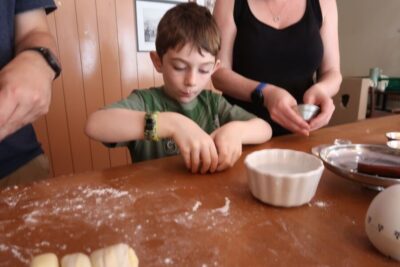
Pastel de Nata Cooking Class with Grandma’s Recipe
Read our review →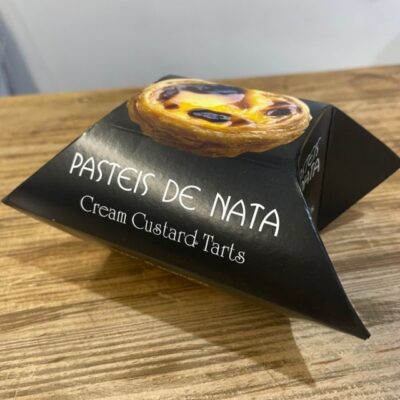
Pastel de Nata Cooking Class with Port Wine – Sé
Read our review →

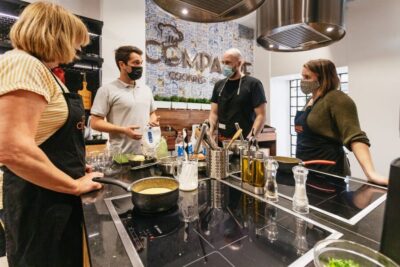
Lisbon Portuguese Cooking Class with 3-Course Dinner
Read our review →
Pastel de Nata Cooking Class with Porto Wine (Sé do Porto)
Read our review →Browse the lists this tour appears in