
Reviewed · CITY TOURS
Pastel de Nata | Workshop from scratch | Porto’s city center
Porto smells like butter and cinnamon. This is a hands-on pastel de nata workshop where you learn the dough from start to finish, and you also sip local wine while you work. I love that the class is interactive and you take turns across steps, and I also love the warm, fresh result you can eat right away. One thing to consider, the door closes at the scheduled start time, so you cannot slide in late even if you’re nearby.
The best part is the small group size, with a cap of 12. In my experience reading about this class, the instructors like Vanessa, Anna, Clara, Mariah, and Ana keep it organized and stress-free, with plenty of humor and clear pacing. If you want to guarantee full, uninterrupted hands-on involvement at every moment, you may want a private lesson instead of the group format.
In This Review
- Key highlights you should know before booking
- What this Pastel de Nata workshop feels like in Porto’s city center
- The dough lesson you actually want to take home
- How the class flows, from first steps to warm pastries
- Wine, coffee, and why that changes the vibe
- Small group teaching with real turn-taking (and what that means for you)
- Where you meet and how to plan timing so you don’t get locked out
- English instruction and how instructors keep it clear
- Price and value: is $48.36 worth it?
- Who this is best for, and who might want to skip it
- Practical reality checks before you go
- Should you book this Pastel de Nata workshop in Porto?
- FAQ
- Where is the workshop meeting point in Porto?
- How long is the Pastel de Nata workshop?
- Is the workshop offered in English?
- What is included in the price?
- Is this class suitable for children?
- Can companions or non-participants enter the workshop?
- Can I join after the workshop starts?
- Is it okay for people with gluten or lactose intolerance?
- Is free cancellation available?
Key highlights you should know before booking
- From-scratch focus: You learn the dough process, not just assembly.
- Small group, up to 12: Turns are easier when the class isn’t huge.
- Local wine included: You can pair sips of regional wine with a fun, working kitchen.
- Hands-on, not passive: You alternate through different phases of making the pastel de nata.
- Warm pastries at the end: You leave with freshly baked results to enjoy immediately.
- English instruction: Offered in English, with a mobile ticket for easy entry.
What this Pastel de Nata workshop feels like in Porto’s city center
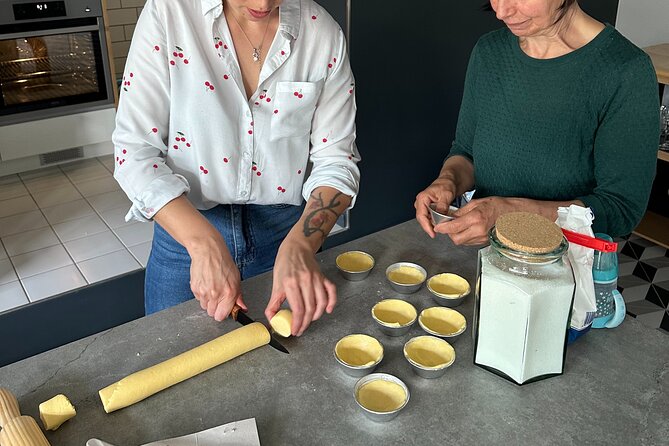
This class is the kind of food experience that fits Porto well. You meet in the city center at R. do Souto 67, and you spend the next 2 hours 30 minutes learning a classic Portuguese pastry in a real working kitchen. It’s not a demo where you watch from the sidelines. You’re in it, helping with components and rotating through steps as the session goes.
I like that it’s designed as an adult-friendly group workshop. The format keeps everyone involved, and it also makes the teaching practical, because the instructor can guide people while they work. You’ll also have coffee and/or tea alongside local wine, which helps the whole thing feel like a social evening that still results in real skills.
The main trade-off is the rules that keep the class running on time. The door is closed once it starts, entry isn’t possible after that point, and only people with a reservation can enter. If you like to wander, late lunches, or slow arrivals, you’ll want to plan your schedule tightly.
More custard tarts from your own oven:
- Porto: Pastel de Nata Pastry-Making Workshop★ 4.9 · 1,542 reviews
- Porto: Pastel de Nata Cooking Class with Port Wine – Sé★ 4.8 · 888 reviews
- Porto: Pastel de Nata Cooking Class from Scratch★ 4.9 · 468 reviews
- Porto: Pastel de Nata Cooking Class with Porto Wine (Sé do Porto)★ 5.0 · 340 reviews
The dough lesson you actually want to take home
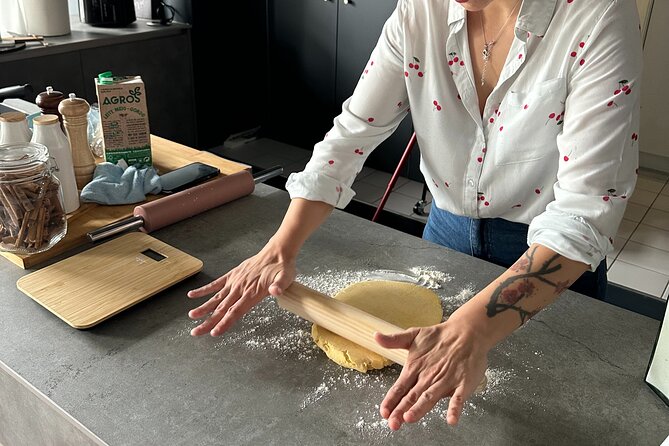
Pastel de nata is famous, but many cooking classes stop short at assembly. This one aims for the full experience, with the goal that you can return home and make traditional pastries using what you learned. The workshop includes making the dough, which matters because the signature texture comes from how the pastry is handled and layered.
Even if you’re not a confident baker, you’re guided step-by-step. In the feedback, people mention learning techniques for rough puff pastry and getting tips that make the dough easier to manage. That’s a big deal at home, because the hardest part for most people is not the filling, it’s getting the pastry layers consistent.
You’ll also get that hands-on turning process, where you alternate between different phases. That means you’re not stuck doing one repetitive task the whole time. It also helps you learn the flow of the recipe, so it makes more sense when you try it later without someone prompting you.
How the class flows, from first steps to warm pastries
The workshop timeline is built around a working rhythm, not a lecture. You’ll start by getting oriented in the kitchen, then you’ll jump into the dough portion, working through the pastry-making steps with the instructor giving instructions and demonstrations. As your group moves forward, you rotate through different parts of the process.
Depending on the timing and group, you can expect to spend meaningful time on pastry work, then shift to preparing the components that go into the finished tart. People specifically highlight learning how the cream works together with the pastry, and they mention technique tips for both the pastry and the cream. You’ll also hear about the syrup process, which is part of what gives pastel de nata its classic finish.
Once everything is ready, you get to enjoy the results warm. This is one of the reasons I think the class is great value, because you’re not just leaving with notes. You’re leaving with something you can eat immediately while it’s at its best, and that makes the learning feel more satisfying.
Wine, coffee, and why that changes the vibe
Yes, you drink local wine during the class. But the bigger point is how it affects your experience in a working kitchen. A small sip while you learn keeps the session relaxed, and it helps you feel comfortable asking questions, especially if you’re new to baking.
Coffee and/or tea are also included, which gives you flexibility. If you prefer something non-alcoholic or you’d like a break between baking steps, you can switch without disrupting the pace. And since the pastry comes out warm at the end, you get a natural moment to slow down and enjoy.
From the class feedback, the instructors often combine clear teaching with a light sense of humor. That matters because pastel de nata has a few technical moments. The more comfortable you are, the better you absorb the practical tips.
Small group teaching with real turn-taking (and what that means for you)
The class caps at 12 travelers and runs as a group activity. That has two important benefits. First, the instructor can guide you while you’re working, so you don’t feel lost. Second, turn-taking is realistic, so people can participate in multiple phases rather than only one.
In the feedback, people highlight that small group size allowed them to each try components of the cooking process. Some even describe sessions with only a few participants, which naturally creates more personal attention. While you can’t count on a tiny class, the structure is clearly built for interaction.
If your main goal is maximum hands-on involvement at every single step, the group format may feel a little limited. The workshop itself notes that for full participation you must book a private lesson. I read this as a simple reality: group time is shared time.
A few more Porto days, taken slowly


Where you meet and how to plan timing so you don’t get locked out
You meet at R. do Souto 67, 4050-595 Porto, Portugal. It’s near public transportation, which is handy in a city where you might walk between neighborhoods. The experience ends back at the same meeting point, so you don’t have to figure out a second location.
The biggest practical point is timing. The session starts at the scheduled time with no exceptions, and it’s not possible to join once it has started. The door will be closed at the scheduled time, and entry will not be permitted. Since entry rules affect everyone, you should arrive early, not right on time.
Plan for the fact that your class is 2 hours 30 minutes long. If you’re juggling a museum visit or a food crawl before or after, give yourself a buffer. Porto moves fast if you’re walking between spots, and you don’t want to sprint with oven-hot expectations.
English instruction and how instructors keep it clear
The workshop is offered in English, and that helps if you want to understand the why behind the pastry, not just the steps. People describe the instructors as engaging, patient, and funny while teaching. Names that show up in the teaching feedback include Vanessa, Anna, Clara, Mariah, and Ana.
More importantly, the instruction quality is about clarity. In a pastry class, small details matter, like dough handling and syrup timing. When you hear that the teacher explains everything well and gives tips you can use later, it suggests this is designed for learners, not for expert bakers.
You can also use the class as a low-stress way to meet people. People mention meeting classmates during the process, and the workshop structure makes it easy to chat between steps.
Price and value: is $48.36 worth it?
At $48.36 per person for about 2.5 hours, you’re paying for more than a pastry snack. You’re paying for a guided from-scratch dough lesson, a small group setting, included coffee and/or tea, included local wine, and time in a proper kitchen with equipment you may not have at home.
It also helps that you leave with warm pastel de nata, not just recipes. Fresh results create immediate satisfaction, and the included drinks make it feel like an activity, not a chore. If you’re the type who likes to learn something practical during a city break, this is usually one of those “do once, repeat later” purchases.
The only real value warning is if you want guaranteed private attention. The group workshop has turn-taking, but private lessons can be better for people who want every second. If that’s you, you may decide the group class is the skill starter and the private class is the refinement.
Who this is best for, and who might want to skip it
I’d steer you toward this class if you want an active, food-first experience in Porto’s center. It’s especially good for couples or small groups of friends who like learning together. If you’re a dessert person who finds pastries more interesting when you understand the process, this fits.
It’s also a good pick for people who want a clear souvenir made by you. You’ll eat the pastries warm during the session, and many people like the idea of re-creating the recipe later for family.
Skip or think carefully if any of these apply:
- You need a gluten-free or lactose-free approach, because it is noted as not suitable for people intolerant to gluten and lactose.
- You’re traveling with children under 15. Children under 15 are not allowed to join or accompany customers with reservations.
- You want to bring extra people just to watch. Companions are not allowed, regardless of age.
- You’re likely to arrive late. Entry is not possible once the workshop starts.
Practical reality checks before you go
Here are the small things that can make or break the experience in real life.
First, bring a plan for hunger and timing. You start with coffee and/or tea and wine, but you’ll still want a normal meal strategy before your class. You don’t want to feel stuffed, because you’ll eat the warm pastries at the end, but you also don’t want to arrive starving and impatient.
Second, respect the no-companion rule. Only participants with a reservation can enter the space, and companions are not allowed. That includes people who might otherwise wait nearby.
Third, check dietary and comfort limits in advance. The class is not suitable for gluten and lactose intolerance. Also, animals are not allowed, including service animals.
Finally, be ready for hands-on work. This is a group workshop for adults, not children, and it’s designed for you to participate in the alternating phases. If you prefer sitting and watching, you might find the format less satisfying.
Should you book this Pastel de Nata workshop in Porto?
If you’re choosing between a quick pastry stop and a real skill session, I’d lean toward booking this workshop. You get what most people really want from cooking classes: a clear recipe pathway you can take home, plus an immediate reward in the form of warm pastel de nata. The included coffee, local wine, and the small group setup make it feel like a proper Porto experience, not just a ticket.
Book it if you’ll arrive early and you want to work with your hands. Also book it if English instruction and a structured, guided dough lesson matter to you.
I’d think twice if you rely on flexible arrival times or you want companions to watch. And if gluten or lactose are issues for you, you’ll want to pick something else.
If your goal is one fun, authentic food activity that results in a practical takeaway, this is one of the best bets in Porto’s city center.
FAQ
Where is the workshop meeting point in Porto?
The meeting point is R. do Souto 67, 4050-595 Porto, Portugal. The activity ends back at the same meeting point.
How long is the Pastel de Nata workshop?
It lasts about 2 hours 30 minutes.
Is the workshop offered in English?
Yes, it is offered in English.
What is included in the price?
Coffee and/or tea are included, along with local alcoholic beverages (local wine). The dessert made during the workshop is included.
Is this class suitable for children?
Children under 15 are not permitted to participate or accompany customers with reservations. Children between 15 and 17 can only participate if accompanied by an adult.
Can companions or non-participants enter the workshop?
No. Only participants with a reservation can enter the space, and companions are not allowed, regardless of age.
Can I join after the workshop starts?
No. It is not possible to enter once the workshop has started. The door will be closed at the scheduled time, and entry will not be permitted.
Is it okay for people with gluten or lactose intolerance?
No. The workshop is not suitable for people intolerant to gluten and lactose.
Is free cancellation available?
Yes. You can cancel up to 24 hours in advance for a full refund. If you cancel less than 24 hours before the start time, the amount paid is not refunded.
What Porto sent us most recently
- Douro Tour with Wine Tasting, River Cruise and Visit to Lamego
★ 5.0 · 118 reviews - From Porto: Full-Day Douro Historical Tour
★ 4.6 · 120 reviews - Porto: Sunset Cruise on the Douro River & Iconic Bridges
★ 4.1 · 122 reviews - 4-hour Guided Porto Pub Crawl with 6 drinks and VIP CLUBentry
★ 4.5 · 124 reviews - From Porto with view to Gaia: Private Bike Tour #DuckSideOfPorto
★ 5.0 · 124 reviews - Douro Valley Half-Day Tour with Winery and Lunch From Porto
★ 5.0 · 125 reviews - Porto Food Half-Day Tour
★ 5.0 · 124 reviews - MagicTrain Tour and Port Wine Cellar Visit & Tasting
★ 3.0 · 125 reviews
City Tours, compared.
The Unvanquished Tour in Porto City Center
Read our review →
Lisbon City Center Tour – The Unmissable Lisbon
Read our review →
Daytime/Sunset/Night City Sailboat Tour with Drink
Read our review →
City Highlights 3-Hour Guided Electric Bike Tour
Read our review →

Browse the lists this tour appears in