
Reviewed · TUK-TUKS
Porto: Fun Private Tuk Tuk Tour
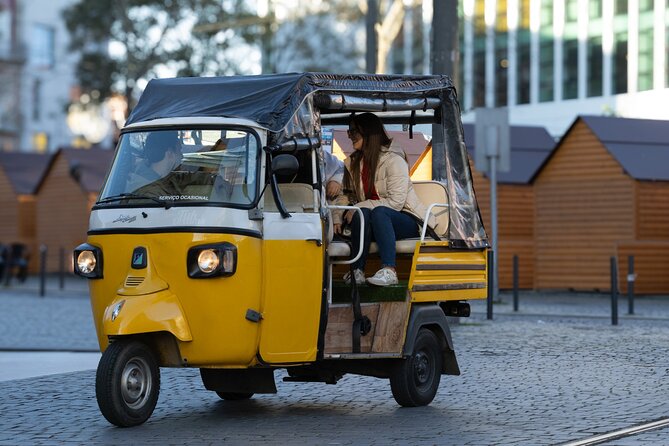
Porto looks different from a tuk tuk. This private 1.5-hour ride strings together major sights fast, with frequent stops for photos and viewpoints, without making you crawl up every hill. You start at the São João National Theatre area and roll through both banks of the Douro.
I love two things most. First, it gives you an instant sense of Porto’s layout, including how the river and bridges shape daily life. Second, the stops feel practical, from the Fernandine Wall and Serra do Pilar viewpoints to quick hits at São Bento Station’s famous tiles and the Sé Cathedral area.
One thing to consider: the itinerary is short at each stop, and it’s weather dependent. In rain, the tuk tuk helps, but you will still want a light layer and comfortable shoes for brief walks.
In This Review
- Key highlights you should care about
- Why a private tuk tuk fits Porto’s hills
- Meet at São João National Theatre, then get your bearings
- Fernandine Wall: Porto’s medieval defense line in fragments
- Serra do Pilar and the bridge chain: Douro views, explained
- Ribeira-side landmarks: Infante Garden, Bolsa, and Ferreira Borges
- Churches and old neighborhoods: São Francisco, Miragaia, and Carmo
- Clérigos Tower and the gardens: viewpoints that feel earned
- São Bento Station tiles and the Porto cathedral finish
- Price and value check for $57.45 per person
- What can go wrong, and how to plan around it
- Who this Porto tuk tuk tour is best for
- Should you book the Porto fun private tuk tuk tour?
- FAQ
- How long is the Porto fun private tuk tuk tour?
- What does the tour cost per person?
- Is this tour private?
- What language is the tour offered in?
- Where does the tour start?
- What is included in the price?
- Are any admission tickets included?
- Does the tour run in poor weather?
- Is free cancellation available?
Key highlights you should care about
- Private ride, flexible pace: your group stays together and your guide can adjust the emphasis to what you care about most.
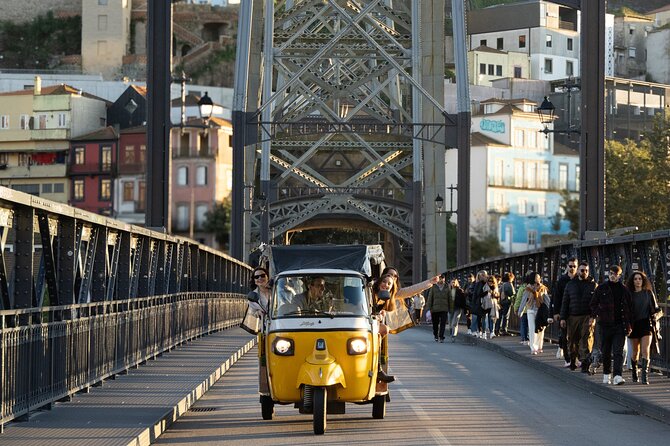
- Porto and Gaia bridges back-to-back: from Dom Luís I to the Don Maria Pia and Arrábida bridges, you get the engineering story in one loop.
- Viewpoints with minimal sweat: Serra do Pilar and the Douro-side gardens are easier to enjoy from the road, not by climbing.
- Azulejo stop that feels like a living museum: São Bento Station is an easy win for art and history in a small amount of time.
- Historic churches plus tile and gilded interiors: you’ll see both Gothic and Baroque-Rococo flourishes, with at least one church ticket included.
Why a private tuk tuk fits Porto’s hills

Porto is famous for its views, and also for its slopes. A tuk tuk is a simple workaround. You get the sights plus the mobility. Instead of timing your day around steep streets and sore calves, you can spend that energy looking up at façades, bridges, and riverfront buildings.
This tour also works well for your first or second day. In about 90 minutes, you’ll see enough landmarks that the city starts to click. You’ll spot where the Ribeira district sits by the water, where the viewpoints rise, and how the bridges act like shortcuts between neighborhoods.
And yes, it can be a smart rainy-day plan. One of the best bits of local feedback I’ve picked up from past experiences is that a tuk tuk keeps you more sheltered when weather turns sideways. The ride still feels fun, even when the forecast is trying to ruin your plans.
More Private Tours in Porto
- Discover Porto’s Highlights on a 2-Hour Private Electric Tuk Tuk★ 4.5 · 1,860 reviews
- Porto PRIVATE TOUR With Locals: Highlights & Hidden Gems★ 5.0 · 984 reviews
- Porto: Private Tour of the Historic City in a Ford T Car★ 4.8 · 932 reviews
- Porto: Private tour in the Douro (1 to 4 people) on a boat just for you★ 5.0 · 744 reviews
Meet at São João National Theatre, then get your bearings
Your starting point is the São João National Theatre area on Praça da Batalha. It’s a good choice because it’s a recognizable landmark and a convenient launching pad for central Porto.
From here, the tour quickly transitions into “Porto context.” You’re not just checking off names. You’re learning how the city developed, how defenses shaped neighborhoods, and why the Douro River is the big character in the story.
At the theatre, you’ll hear about the building’s timeline, including its inauguration in 1798 and a rebuild in 1920 by architect José Marques da Silva. The highlight is how the exterior and setting reflect Porto’s cultural ambitions, long before tourism became the main industry.
For your planning: if you’re the kind of traveler who likes to understand where things are before you wander, this beginning helps a lot. It makes the rest of the stops more meaningful, especially once you start crossing into Gaia and seeing the river from multiple angles.
Fernandine Wall: Porto’s medieval defense line in fragments
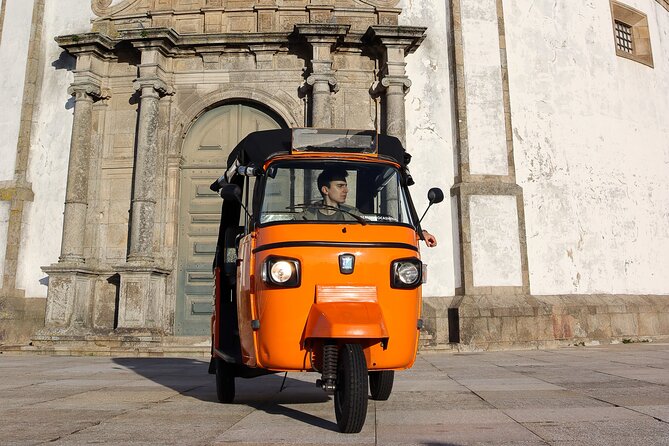
One of the earliest “wow, I didn’t know that” stops is the Muralha Fernandina. This is the Fernandine Wall, built in the 14th century during King Fernando I’s reign, replacing earlier medieval fortifications as the city expanded.
Here’s the value for you: you see how medieval protection was engineered to fit real terrain. Even though parts were demolished in the 19th century, significant sections still remain, especially around Ribeira and Morro da Sé. That means you’re not only hearing history, you’re looking at physical evidence you can still recognize on the street.
The stop itself is brief, so approach it like a photo-and-context moment. You’re looking for wall stretches, how they align with the neighborhood’s natural rise, and how the riverfront’s shape likely influenced defensive decisions.
If you love archaeology or old city planning, this is one of those stops where a short pause pays off. You’ll understand why people still talk about Porto’s old quarters the way they do.
Serra do Pilar and the bridge chain: Douro views, explained
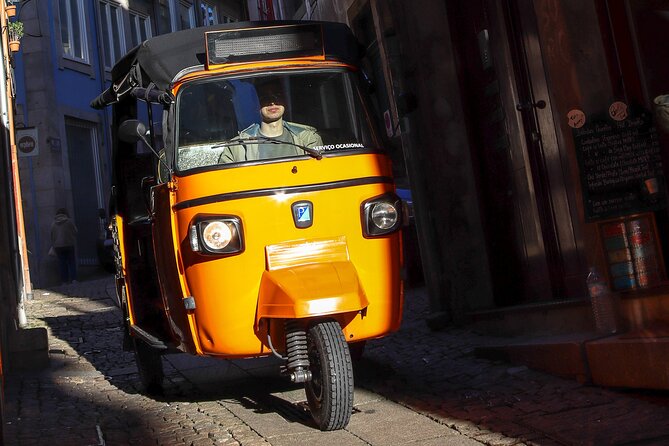
The Mosteiro da Serra do Pilar is where the tour starts flexing its best asset: river views with a dramatic setting. This monastery is a 16th-century UNESCO World Heritage site, known for its circular church and Renaissance architecture. It was built by monks of the Order of Saint Augustine.
This stop is also practical. It’s in Vila Nova de Gaia, directly across the Douro, so you get a “reverse postcard” angle on Porto. You’ll see how the city stacks up along the river and where the big bridge structures frame the skyline.
After that comes the bridge sequence, and it’s one of the tour’s biggest reasons to book:
- São João Bridge (inaugurated 1991), a modern reinforced concrete railway bridge designed by Edgar Cardoso.
- Ponte D. Maria Pia, inaugurated in 1877, designed by Gustave Eiffel. This is the first railway bridge over the Douro and a landmark of iron engineering.
- Dom Luís I Bridge, inaugurated in 1886 by Théophile Seyrig, with two metal decks that connect Porto to Gaia. It’s iconic not only for looks, but for how it carries vehicles, pedestrians, and today the metro too.
- Ponte da Arrábida, inaugurated in 1963, another Edgar Cardoso design, built as a reinforced concrete arch road bridge.
The benefit for you is the pattern recognition. By the time you finish, you’re not just seeing bridges. You’re seeing how engineering evolved across centuries, while the riverfront demands stayed the same.
Ribeira-side landmarks: Infante Garden, Bolsa, and Ferreira Borges
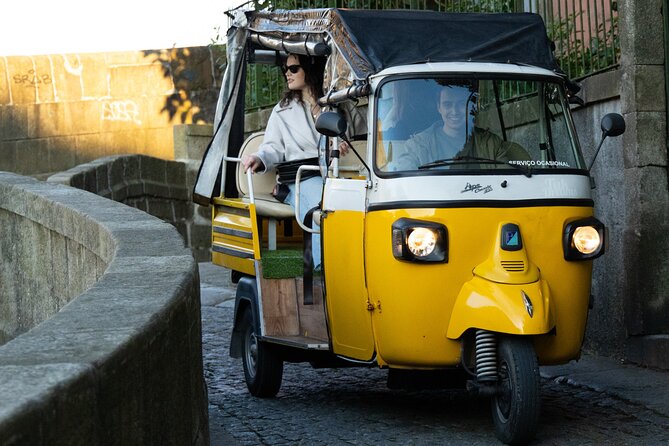
As the tour moves through the Ribeira region, it shifts from “big engineering” to “human-scale” beauty.
The Jardim do Infante Dom Henrique is a public garden from the 19th century with a statue of Prince Henry the Navigator. It’s an easy, calm pause in the middle of a fast loop, and it connects Porto to Portugal’s Age of Discoveries theme without feeling like a museum.
Next, you’ll stop near Ferreira Borges Market. Built and inaugurated in 1885, it’s famous for its imposing iron structure in a neoclassical style. The key detail for your understanding: it no longer functions as a market, but it still serves as a cultural and leisure space for exhibitions and events.
Then comes Palácio da Bolsa, a UNESCO-listed, 19th-century neoclassical building that was once the Porto Commercial Association headquarters. It’s especially known for the Arab Room. Even when you’re only viewing it briefly, it helps you see Porto’s economic ambition in stone and ornament.
One practical note: because each of these stops is short, plan to use them for photos and orientation more than deep interior time. If you fall in love with any of these spaces, you’ll have a much easier time revisiting later on foot.
More Tuk Tuk Tours in Porto

Churches and old neighborhoods: São Francisco, Miragaia, and Carmo
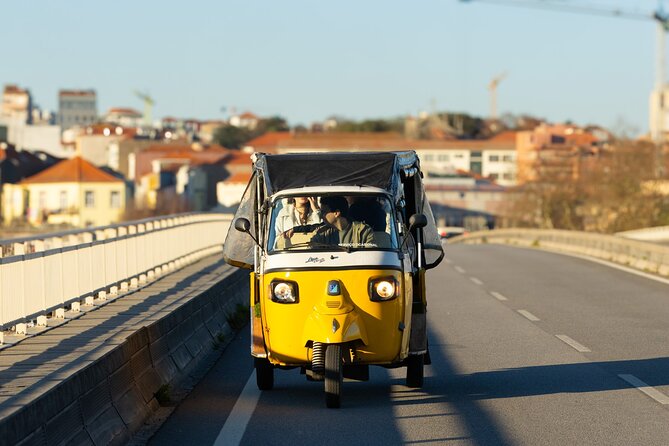
Porto’s church façades and interiors are not subtle. They’re full-on style.
You’ll pause at Igreja de São Francisco, which is Gothic in architecture but famous for its Baroque interior. The interior includes richly decorated gilded woodwork, and the church is also known for the Jesse Tree sculpture. Even for a quick look, it’s one of the most visually intense stops on the route.
Then you’ll roll through Miragaia, one of the oldest neighborhoods along the Douro River. This is where you feel the medieval vibe through narrow streets and colorful houses. It’s a good reminder that Porto is not only monuments. It’s also daily life packed into older streets.
The tour also includes a short walk to two churches side by side:
- Igreja do Carmo, an 18th-century church with Baroque-Rococo style and a large tile panel on the side façade showing religious scenes. Its admission ticket is not included.
- Igreja dos Carmelitas, built in the 17th century in Baroque style, with an interior richly decorated with gilded woodwork. Admission ticket is included.
This pairing is great because the difference in styles feels like a timeline snapshot. You walk a little, compare details, and leave with a better instinct for how Portuguese religious art shifts across decades.
Clérigos Tower and the gardens: viewpoints that feel earned
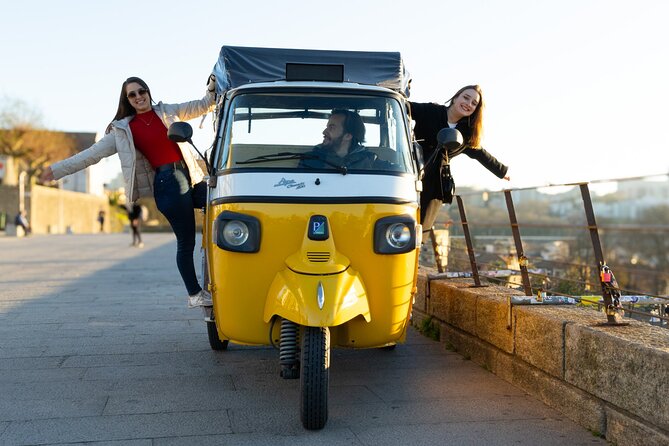
The tour includes stops designed for views, and it’s not just for postcards. Porto’s topography is the whole reason people remember the city.
You’ll see Clérigos Tower, an 18th-century Baroque structure built by Nicolau Nasoni. It’s 75 meters tall and known for panoramic views over Porto. Even if you do not climb on this particular day, your guide’s pointing out what you’re looking at is worth it for later planning.
Nearby, the short walk can include Cordoaria Garden, a historic 19th-century green space with century-old trees and sculptures such as The Boys by Juan Muñoz. It also sits close to the Clérigos Tower area and the Portuguese Photography Center, so it helps you connect Porto’s cultural clusters.
Then you’ll reach Jardins do Palácio de Cristal (often associated with the Crystal Palace legacy). The building that once stood there was replaced by the Rosa Mota Pavilion, and the gardens are famous for Douro River views plus green space and sculptures. After that, the tour heads to Passeio das Virtudes, another classic viewpoint spot with terraced gardens and an easy, relaxed atmosphere.
For you, the value is timing. These are places you’d otherwise try to fit around your walking stamina. Here, they appear right after the city gets steep, so you can enjoy them without burning your legs.
São Bento Station tiles and the Porto cathedral finish
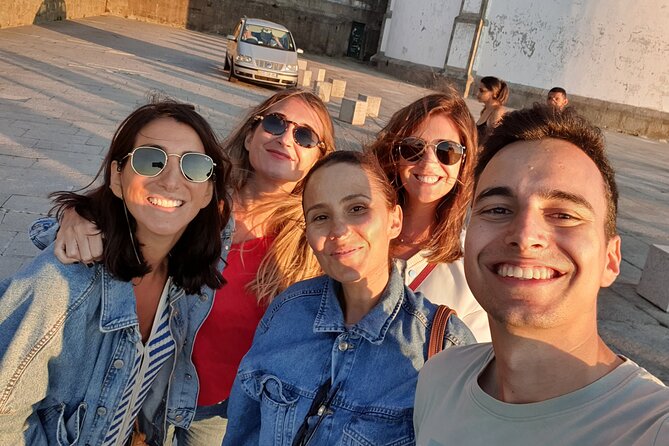
Two of Porto’s best “quick wins” are indoors, and this tour makes sure you don’t miss them.
At São Bento Railway Station, you get a brief stop at what many consider Portugal’s most beautiful station interior. It opened in 1916 and is famous for azulejos (decorative tiles) covering the walls with scenes from Portuguese history and culture. It’s the kind of place where you can stand for a few minutes and still feel like you saw something special.
Then the tour ends in the historic center area with Porto Cathedral (Sé do Porto). Built between the 12th and 13th centuries, it is predominantly Romanesque with Gothic and Baroque influences from later renovations. It’s one of the city’s oldest and most emblematic monuments, and it also offers a privileged look over the city and the Douro River.
The way this ending works for your day is simple. You leave with both a cultural anchor and a final river panorama. That combination makes it easier to plan dinner afterward, because you understand where the “center of gravity” is.
Price and value check for $57.45 per person
At $57.45 per person for about 1 hour 30 minutes, this is not a “budget bus tour” and it’s not trying to be one. You’re paying for private transportation and a local guide, plus the convenience of seeing a high density of landmarks without walking them all.
Here’s why the value makes sense for many visitors:
- Most stops are free to view, including big hitters like the Fernandine Wall, Serra do Pilar, major bridge photo points, and the station and cathedral.
- The route packs both Porto and Gaia, including multiple bridges, which would be time-consuming to assemble on your own in a short window.
- The guided layer matters because these sites are not all self-explanatory. A quick interpretation turns a “cool photo” into understanding what you’re looking at.
My practical take: if your day in Porto is limited, or if hills are the main thing slowing your plans, this price can feel fair. If you already know Porto well and only want to go deep inside one or two attractions, you might prefer a more focused plan. But for an overview plus memorable stops, the cost usually lands in the right zone.
What can go wrong, and how to plan around it
Your biggest risk is not the sights. It’s the tempo. Each stop is relatively short, so you have to enjoy it like a highlights drive with small pauses.
Second, weather matters. The experience is listed as requiring good weather, and rain is part of Porto’s personality. The bright side is that the tuk tuk protects you better than walking in a downpour, and your guide can often keep things moving.
Third, vehicle condition can vary. One review complained about poor-quality seats, and the operator response said they used a backup tuk tuk due to scheduling issues, then updated seating afterward. That’s a reminder to ask about comfort if you’re sensitive to seat quality, especially in longer sits.
Who this Porto tuk tuk tour is best for
This tour fits best if you want:
- An easy way to see a lot without hiking hills.
- A guided overview that gives you orientation for later wandering.
- Photo-friendly stops at viewpoints and architectural landmarks.
- A private format, so you can ask your guide questions and adjust emphasis.
It’s also popular for solo travelers because private transport means you’re not getting mixed into a huge crowd.
If you’re a “museum all day” type and want lots of time inside churches or palaces, you may find this moves too quickly. In that case, use it as your orientation day, then come back on your own for the places you can’t stop thinking about.
Should you book the Porto fun private tuk tuk tour?
I think you should book this if you want a fast, guided, fun overview of Porto and Gaia that keeps you comfortable on the hills and gives you a smart mix of river bridges, viewpoints, and landmark interiors. It’s also a strong choice when your schedule is tight and you’d rather spend time learning the city than planning a route.
Skip it or pair it with other plans if you need long stays inside a few major attractions, or if you know you’re going to dislike short stops. For most visitors, though, the balance is right: you get the big Porto story in 90 minutes, and then you’re free to explore what genuinely pulls you back.
FAQ
How long is the Porto fun private tuk tuk tour?
It lasts about 1 hour 30 minutes.
What does the tour cost per person?
The price is $57.45 per person.
Is this tour private?
Yes. It is a private tour, so only your group participates.
What language is the tour offered in?
It’s offered in English.
Where does the tour start?
You meet at São João National Theatre, Praça da Batalha, 4000-102 Porto, Portugal.
What is included in the price?
The tour includes private transportation and a local guide.
Are any admission tickets included?
Many stops have admission tickets listed as free. Igreja dos Carmelitas has an admission ticket included, while Igreja do Carmo’s admission ticket is not included.
Does the tour run in poor weather?
The experience requires good weather. If it’s canceled due to poor weather, you’ll be offered a different date or a full refund.
Is free cancellation available?
Yes, you can cancel for a full refund up to 24 hours in advance.
More Tuk-Tuks in Porto
- Porto Guided Tour to the Historical Center on a Tuk Tuk
★ 4.5 · 418 reviews - Porto: Private Sightseeing Tour by Electric Tuk Tuk
★ 4.8 · 305 reviews - Oporto Tuk-Tuk Tour: Fast, Fun & Flexible – 1H to Full Day!
★ 4.7 · 280 reviews
What Porto sent us most recently
- Bike or E-Bike Tour of Porto and Atlantic Coast
★ 5.0 · 39 reviews - Porto: Premium Douro Valley Small-Group Tour, Cruise & Lunch
★ 4.9 · 39 reviews - Off the Beaten Track in Porto: Private City Tour
★ 5.0 · 39 reviews - Porto: Graham’s Port Lodge Tour and Port Essentials Tasting
★ 4.9 · 39 reviews - Porto: 50-Minutes Rabelo Boat Cruise on the Douro River
★ 3.8 · 39 reviews - Port : Small-Group 6 Bridges, Douro River Sunset Cruise w/ Drink
★ 5.0 · 39 reviews - Museu das Marionetas do Porto
★ 4.5 · 39 reviews - Porto Sunset Bike Tour
★ 4.5 · 39 reviews
Tuk-Tuks, compared.
True 4Hour Private Tuk Tuk Tour: Discover Lisbon with a Local!
Read our review →
Guided Tour by Tuk-Tuk & Optional Douro River Cruise
Read our review →
Private Guided Tuk-Tuk Tour with Hotel Pickup
Read our review →
Private Lisbon Sightseeing Tuk-Tuk Tour: Alfama, Belém & More
Read our review →
Lisbon Highlights: Private Tuk Tuk Tour Adventure Sightseeing
Read our review →
Discover Porto’s Highlights on a 2-Hour Private Electric Tuk Tuk
Read our review →
Welcome Lisbon Tour with Local Guide in Private Eco Tuk Tuk
Read our review →
Browse the lists this tour appears in