
Reviewed · PORT WINE LODGES & TASTINGS
Porto: Tile Painting Workshop with Tea and Port Wine
If you like hands-on souvenirs, this one fits. You learn why Porto tiles matter, then paint your own traditional motifs to take home.
I especially like the mix of tile history and practical technique, so you understand what you’re making, not just what brush to use. One watch-out: there is a short history intro, and if you want only painting time, you might wish it ran a bit shorter.
In This Review
- Porto tile painting, tea and port wine, with a take-home result
- Why this workshop is more than a craft class
- Where the workshop is, and how to find it fast
- The 2-hour flow: story first, then your two tiles
- Step one: meeting your guide and learning the Portuguese tile story
- Step two: how traditional tiles get made, and how you’ll paint yours
- Step three: paint two tiles with traditional motifs
- The tea and port wine moment that makes it feel local
- Firing and next-day pickup: the part you should not skip
- Price and what you get for $53
- Who this workshop is best for (and who might pass)
- Helpful practical tips before you go
- Should you book this tile painting workshop in Porto?
- FAQ
- Where is the workshop located?
- How long is the tile painting workshop in Porto?
- What is the price per person?
- What language are the instructors available in?
- What should I bring with me?
- When can I pick up the tiles after the workshop?
- Is anything included besides the painting materials?
Porto tile painting, tea and port wine, with a take-home result
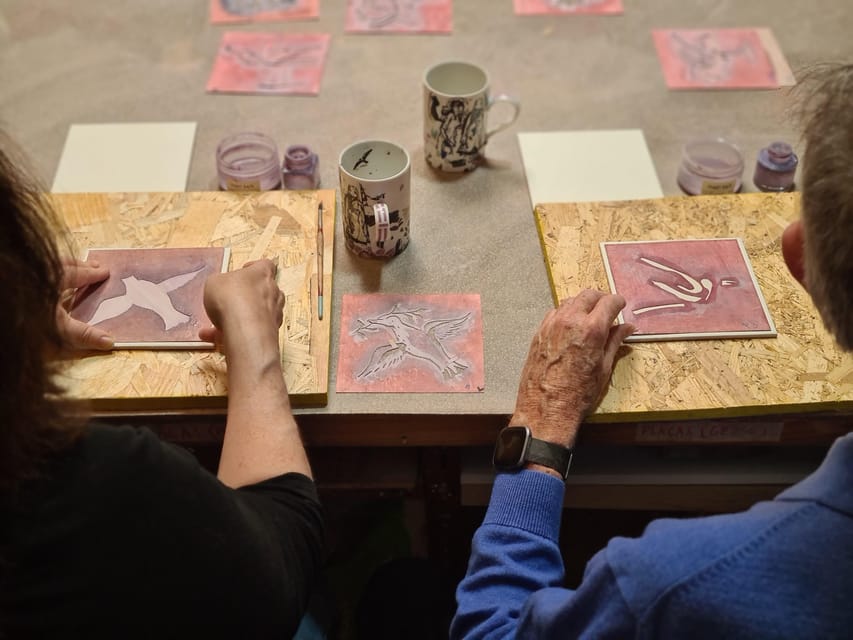
You’ll spend two hours in a workshop near Campanhã, starting with an explanation of Portuguese tile traditions and how tiles spread across the country on monuments and homes. Then it’s straight to the enjoyable part, designing and painting two tiles, with guidance and stencils if you want a hand.
The best part is the payoff: your tiles get fired, and you pick them up about 24 hours later in proper packaging. The only drawback I’d plan around is parking, since the area near the station is not described as parking-friendly, so plan to arrive on foot or by transit if you can.
Why this workshop is more than a craft class
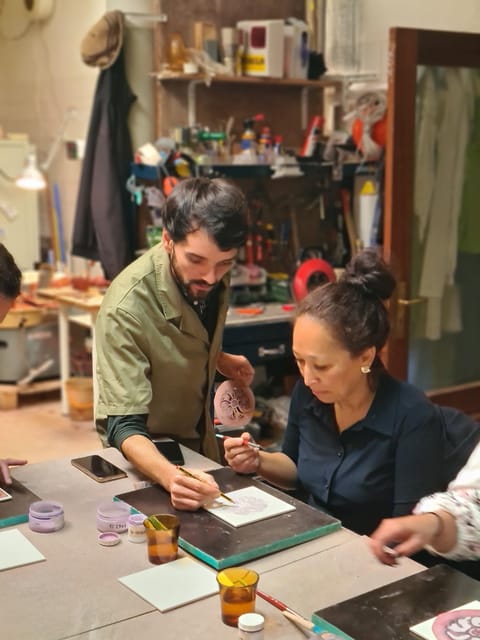
The point of this experience is not just decorating ceramic. You’re learning the logic behind Portuguese azulejo style, including the role tiles play in Portuguese art and everyday architecture. That context makes your painted motifs feel more personal, because you know what tradition they’re borrowing from.
Here’s what tends to earn the highest praise and why it matters to you:
- Real tile context before you start painting. You get the story of Portuguese tiles and why Porto is so linked to them.
- Two tiles you actually paint yourself. You leave with more than a postcard, and it’s a souvenir you made.
- Hands-on technique, not just free drawing. You learn how traditional tile painting works and what to aim for.
- Guidance during the whole session. An instructor and assistant-style support means you can ask questions as you paint.
- A next-day pickup with firing. Your tiles are fired and ready for collection the following morning.
- Small group energy. With smaller groups, it’s easier to get help when you get stuck.
More Wine Tours in Porto
- From Porto: Douro Valley w/ Boat Tour, Wine Tasting & Lunch★ 4.7 · 19,061 reviews
- Complete Douro Valley Wine Tour with Lunch, Wine Tastings and River Cruise★ 5.0 · 12,920 reviews
- Porto: Douro Valley with Winery Lunch, Tastings & Cruise★ 4.7 · 7,002 reviews
- Porto: Live Fado Show with Glass of Port Wine★ 4.8 · 6,498 reviews
Where the workshop is, and how to find it fast
The meeting point is close to the train station and the new Bus station TIC (Terminal Intermodal de Campanhã). You’ll find a school and a taxi square right by the station, which makes it easier to orient yourself.
If you’re coming from Porto’s center, this location is convenient because it’s near major transit hubs. The trade-off is parking. One attendee noted the area is not parking-friendly, so if you’re driving, I’d treat that as a heads-up and plan alternative transport or nearby parking outside the immediate station area.
What to bring is simple and practical: comfortable shoes and comfortable clothes. You’ll be standing and painting for part of the session, and you’ll want to move easily without worrying about getting your outfit ruined.
The 2-hour flow: story first, then your two tiles
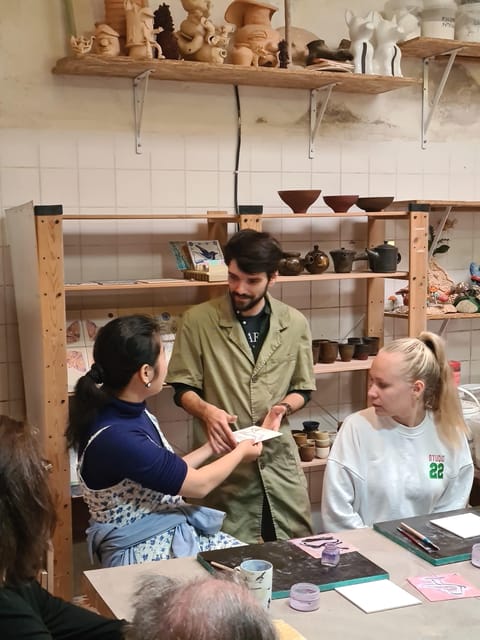
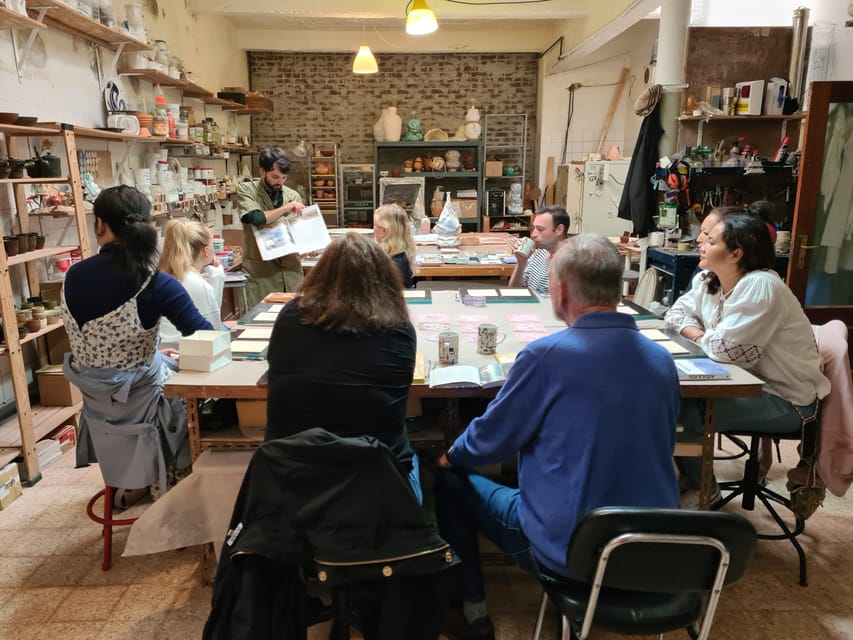
This is a compact two-hour class. Expect a structure that goes from inspiration to instruction to making.
Step one: meeting your guide and learning the Portuguese tile story
You start by meeting your guide and getting an introduction to the history of Portuguese tiles. The key theme is why tiles are so important in Portuguese art and culture, and how they ended up everywhere, including monuments and houses.
This part is worth it if you care about meaning. Tiles in Portugal are not just decoration. They carry patterns, symbolism, and a sense of place that turns buildings into storyboards. Even if your painting is small, that background gives you a reason to choose certain motifs.
Possible consideration: a few people would prefer less history time. If you’re the type who wants to jump into painting instantly, you can still enjoy the story, but it helps to know the session starts with that intro.
Step two: how traditional tiles get made, and how you’ll paint yours
Next comes the practical side. You learn techniques used in producing traditional Portuguese tiles. The goal is to help you paint in a way that matches the look and structure of classic tile work, not just freestyle imagery.
You’ll get instruction on:
- basic approach and workflow for painting
- how to use provided support like stencils
- what to focus on so your tile comes out looking like a real motif
From the guidance style, it’s clear they want you to do the work. One strong theme from the experience is that stencils are offered, but you’re not meant to hand your tile off and have someone else finish it.
More port lodges across the river:



Step three: paint two tiles with traditional motifs
Then you paint. You’ll create two tiles inspired by traditional motifs, and the studio provides the materials and setup so you can focus on the creative part.
What I like about doing two tiles is that it gives you options. You can choose a more detailed design for one, and keep the second a bit simpler, or experiment with a different motif style. It’s also a great format for couples and families, since you end up with a matched set you can actually display.
The small-group size helps here. With fewer people, it’s easier for the instructor to notice when you need help, like adjusting spacing, refining lines, or correcting a color choice before it becomes hard to fix.
The tea and port wine moment that makes it feel local
This workshop isn’t only “sit and paint.” You’re served tea and biscuits, and the experience is titled around tea and port wine, so expect that relaxed, social break built into the class.
I like this because it turns a craft session into something more human. Instead of rushing through materials, you get a pause that feels like the workshop has its own rhythm. And for a souvenir activity, it makes the whole thing feel less like a tourist checkbox.
Firing and next-day pickup: the part you should not skip
Your painted tiles don’t stay raw. They need firing, and the workshop handles that step for you.
After the class, your tiles are fired and ready for pickup the next morning, around 11h to 12.30 am. You also get proper packaging so you can transport your tiles safely.
This is a major value point. If you’ve done pottery or crafts on the spot, you know the pain of trying to take something fragile home before it’s finished. Here, the workshop does the finishing work, so your souvenir is sturdy when you pick it up.
It also changes how you paint during the class. You can take more time with your design, because you know the final look will be the fired result the studio prepares.
Price and what you get for $53
At $53 per person for about two hours, this sits in the “worth it” category if you want a meaningful Porto souvenir.
You’re paying for several things beyond the paint:
- instruction and technique guidance from the workshop team
- all materials for tile painting
- firing your tiles in the kiln
- packaging for safe transport
- a short cultural introduction to Portuguese tiles
- tea, biscuits, and (per the experience framing) port wine
The big value is that you’re not just buying a product, you’re buying a finished souvenir creation process. If you’ve ever paid for museum shop tiles before, this gives you a hands-on version that feels personal, not generic.
What’s not included matters too. Transportation to and from the activity is on you, and food and drinks are not included beyond what the workshop serves. So if you’re planning your day, I’d schedule this with a transit route in mind, then eat elsewhere afterward.
Who this workshop is best for (and who might pass)
This is family-friendly and works well for mixed groups because it’s short, structured, and supported. If you’re traveling with kids or teens, the “paint it, then pick it up next day” format is an easy win because the result is tangible and the task is guided.
It’s also a great match if:
- you like arts and crafts, but want the cultural context too
- you enjoy souvenirs with a story
- you want a smaller activity that fits into a Porto itinerary
You might consider skipping if:
- you dislike any history or prep time and want only making
- you’re worried about fragile items (even with packaging, you still have to carry tiles home)
- you’re driving and rely on nearby parking, since the area is not described as parking-friendly
Helpful practical tips before you go
Here are a few concrete things that will make your session smoother:
- Wear comfortable clothes you can move in. Painting is hands-on, even if the studio gives you guidance and materials.
- Plan to pick up your tiles the next morning around 11h to 12.30 am. Don’t book a tight morning tour right after.
- If you’re choosing between stenciling or freehand, remember this is about you creating the design. Use stencils as a support, not a shortcut.
- Bring your curiosity. The history intro is short, but it’s designed to help you choose motifs with meaning.
And one more small reality check: you’re not taking a finished ceramic tile the moment you finish painting. You’re taking the anticipation of a fired souvenir, then collecting it the next day.
Should you book this tile painting workshop in Porto?
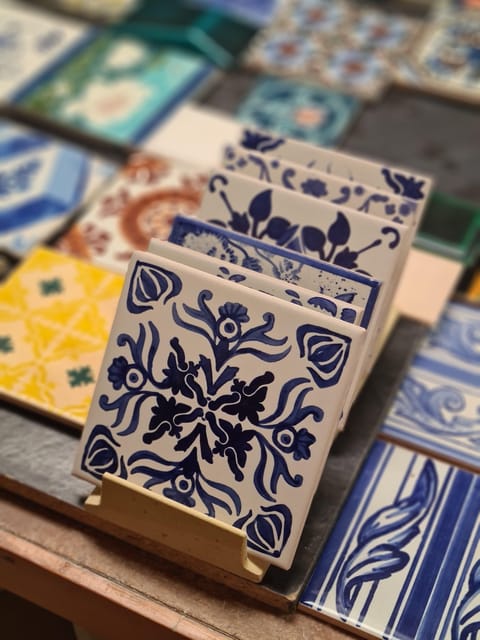
I’d book it if you want a hands-on Porto experience with a real takeaway and a cultural thread that ties into what you’ll see around the city. The combination of instruction, painting two tiles, and next-day firing plus packaging is exactly the kind of activity that feels worth the time.
I’d think twice if your priority is maximizing painting time over learning, or if you need hassle-free parking. But if you can handle a simple transit approach and you’re excited to make something you’ll actually hang or display, this workshop is a satisfying, practical choice.
FAQ
Where is the workshop located?
The store is located near the train station and near the new Bus station TIC (Terminal Intermodal de Campanhã). There is also a school and a taxi square right beside the station area.
How long is the tile painting workshop in Porto?
The workshop lasts about 2 hours. Starting times depend on availability.
What is the price per person?
The price is listed as $53 per person.
What language are the instructors available in?
The instructor is available in English, Japanese, and French. If you want French or Japanese, you must specify this when booking.
What should I bring with me?
Wear comfortable shoes and comfortable clothes. That’s the only guidance on what to bring.
When can I pick up the tiles after the workshop?
Your tiles need to be fired, and they are ready for pickup about 24 hours later. Pickup is around 11h to 12.30 am the next morning.
Is anything included besides the painting materials?
Yes. The workshop includes all tile painting materials, tea and biscuits, firing of the painted tiles, and packaging for the finished tiles. Transportation and food and drinks are not included.
More Workshops in Porto
- Porto: Pastel de Nata Pastry-Making Workshop
★ 4.9 · 1,542 reviews - Porto: Tile Painting Workshop with Porto Wine – Sé do Porto
★ 4.9 · 1,095 reviews - Matosinhos: Surfing Lesson with Equipment
★ 4.8 · 926 reviews
Adegas, Pouring Slowly
- From Porto: 2 Wine Regions, Farm-to-Table Lunch & Boat
★ 4.9 · 5,724 reviews - Douro Valley: Historical Sites, Wine Experience, Lunch & Cruise
★ 5.0 · 5,133 reviews - Authentic Small Group Douro Wine Tour with Lunch & River Cruise
★ 5.0 · 4,775 reviews
What Porto sent us most recently
- Bike or E-Bike Tour of Porto and Atlantic Coast
★ 5.0 · 39 reviews - Porto: Premium Douro Valley Small-Group Tour, Cruise & Lunch
★ 4.9 · 39 reviews - Off the Beaten Track in Porto: Private City Tour
★ 5.0 · 39 reviews - Porto: Graham’s Port Lodge Tour and Port Essentials Tasting
★ 4.9 · 39 reviews - Porto: 50-Minutes Rabelo Boat Cruise on the Douro River
★ 3.8 · 39 reviews - Port : Small-Group 6 Bridges, Douro River Sunset Cruise w/ Drink
★ 5.0 · 39 reviews - Museu das Marionetas do Porto
★ 4.5 · 39 reviews - Porto Sunset Bike Tour
★ 4.5 · 39 reviews
Port Wine Lodges & Tastings, compared.

Live Fado Show with Port Wine at Lisboa em Fado
Read our review →
Bridges Cruise & Sunset & Port Wine Cellar Option
Read our review →
Fado & Port Wine in Traditional Portuguese Music Shop
Read our review →
What is Fado? Commented Live Concert with Port Wine
Read our review →
Port Wine Lodges Tour Including 7 Port Wine Tastings (English)
Read our review →
Charming Sailboat Cruise with Port Wine,Sunset Option
Read our review →
Douro River Boat Cruise with Port Wine Tasting
Read our review →Browse the lists this tour appears in