
Reviewed · PORT WINE LODGES & TASTINGS
City Walking Tour & Port Wine Cellar
Port in Porto, then wine in Gaia. I love the way this tour pairs Porto’s architecture and history with a hands-on three-port tasting. I also like the small-group feel, with guides like Nuno, David, and João leading from start to finish. One thing to consider is that you should expect the tasting mainly at the end, not throughout the walk.
You get about 3 hours to connect the dots across the river, from hand-painted tiles to viewpoints over the Douro. It is a smart first-day plan because it gives you context fast, and then sends you into the streets with better instincts for what to see next.
In This Review
- Key Highlights Worth Your Time
- Porto to Gaia, One Walk That Makes Both Cities Make Sense
- Meeting Point to Directional Win: Where the Tour Starts and Ends
- São Bento Station Tiles and the Shortcut to Understanding Porto
- Cathedral Area Views and a Practical Lesson on Religion in Portugal
- Old Neighborhood Streets: From Moorish Invasions to the Portuguese Discoveries
- Crossing to Vila Nova de Gaia, Where Wine Becomes a Place
- Cais de Gaia Cellar Visit and the Three-Port Tasting Lesson
- What you should pay attention to during the tasting
- Price and Value: Is $42.33 Worth It?
- Who This Tour Fits Best (And Who Might Want Another Plan)
- Practical Tips Before You Go
- Should You Book This Porto Walking Tour and Port Cellar Visit?
Key Highlights Worth Your Time
- A small group capped at 12, so questions actually get answered
- A focused port cellar visit in Vila Nova de Gaia, including a tasting of 3 port wines
- São Bento train station azulejos, with a history-led explanation of the famous tilework
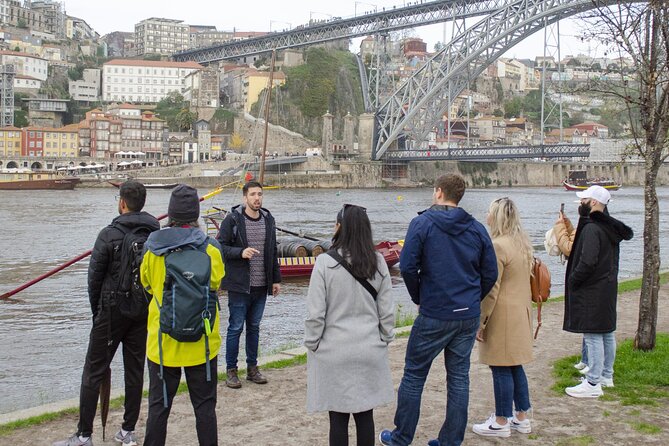
- A true Porto to Gaia walk across the lower river bridge, mixing city sights with wine geography
- Guides with high energy, including Nuno, David, and João, who explain both city life and port production
- A realistic walking commitment, with stairs and a moderate fitness level needed
Porto to Gaia, One Walk That Makes Both Cities Make Sense
Porto is all angles and stories. The river cuts the city in half, the hills demand stairs, and every neighborhood has a reason for existing. This tour is built for that reality. You start in Porto, then work your way down and across to Vila Nova de Gaia, where the wine story becomes physical.
What I like best is the pacing of the experience: you are not just looking at pretty buildings, you are getting the context for why they look the way they do and what people used to fight over, build, pray for, and trade. Then the port tasting snaps it all into place. A small-group guide helps you connect the dots, instead of just handing you a map and wishing you luck.
The walking part is real. You should plan on a moderate effort level and bring comfortable shoes. The upside is that you also get those classic Porto viewpoints, and you feel like you walked through the city’s layers rather than just passing them.
More Walking Tours in Porto
- Porto Walking Tour, Lello Bookshop, River Cruise and Cable Car★ 5.0 · 3,354 reviews
- Experience Porto’s Charm: 3-Hour Guided Walking Tour★ 5.0 · 2,432 reviews
- Porto: 3-Hour Guided City Highlights Walking Tour★ 4.8 · 2,050 reviews
- Porto: Wine Tasting with Tapas Walking Tour★ 4.4 · 1,541 reviews
Meeting Point to Directional Win: Where the Tour Starts and Ends
The tour starts at McDonald’s in Imperial Plaza da Liberdade, Porto, and it finishes at Largo Joaquim Magalhães in Vila Nova de Gaia. That Porto to Gaia endpoint matters because it lines you up for the next step after the tour, when you want to grab dinner on the south bank.
There is no hotel pickup. That is normal for a walking tour, but it does mean you should time your day so you arrive early enough to start on schedule. The start location is also near public transportation, which helps if you are hopping in from another part of Porto.
If you like having a clear “before we begin” moment, this tour gives you one. You meet, you get the guide’s plan, and then you are moving, not waiting around wondering what happens next.
São Bento Station Tiles and the Shortcut to Understanding Porto
One of the tour’s first stops is the stunning train station area, famous for its hand-painted azulejos. You will get a historical explanation tied directly to the tile scenes, including the fact that the station’s artwork is said to run into the tens of thousands of painted tiles.
Why this works on a walking tour: tilework in Portugal is not just decoration. It is storytelling you can read at walking speed if you know what to look for. A guided explanation helps you stop treating azulejos like “pretty background” and start using them as a visual history lesson.
Also, this is a good early moment to get your bearings. Porto can feel like it is all hills and stairs, but after you walk through the tile story, you start to understand the city’s personality: proud, historical, and proud again.
Cathedral Area Views and a Practical Lesson on Religion in Portugal
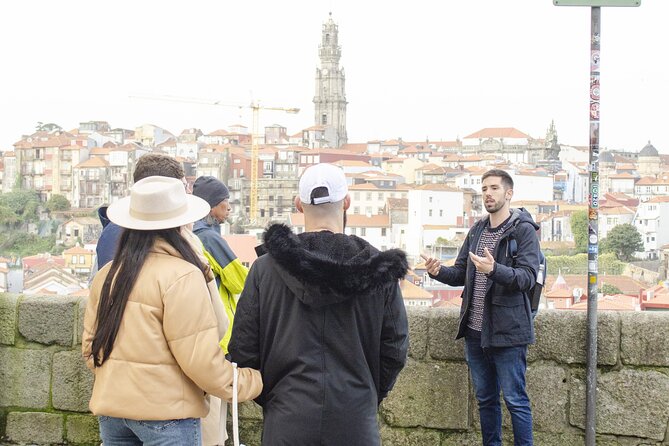
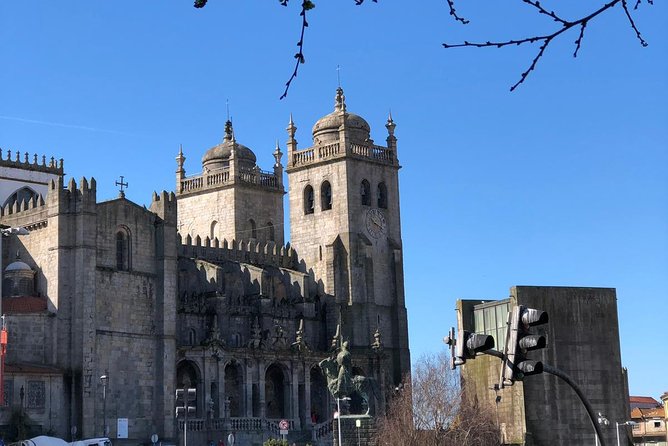
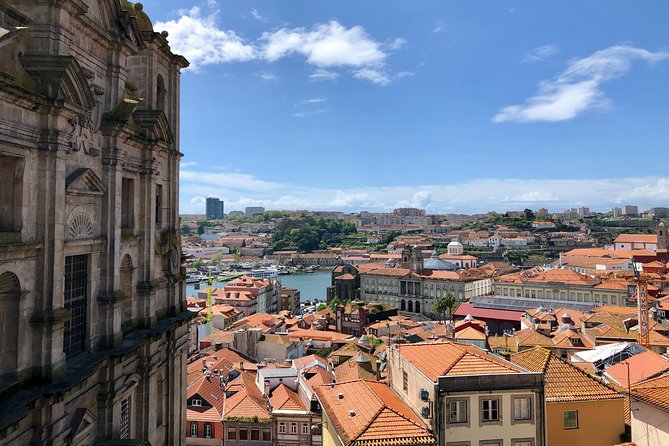
Next you pass by the Porto Cathedral and the bishop’s house. You also get a brief explanation about religion in Portugal, plus a quick stop for viewpoints from the miradouros.
This is one of those “small stop, big payoff” sections. The cathedral area gives you an instant sense of scale and location, and the viewpoint moments help you learn how Porto’s hills and streets connect. Even if you are not a museum person, miradouros are how you quickly learn the city’s geometry, and that makes the rest of your day easier.
If you are traveling with people who want architecture but get bored when talks get too long, this section is a good compromise. It stays short enough to keep moving, while still adding meaning to what you are seeing.
Old Neighborhood Streets: From Moorish Invasions to the Portuguese Discoveries
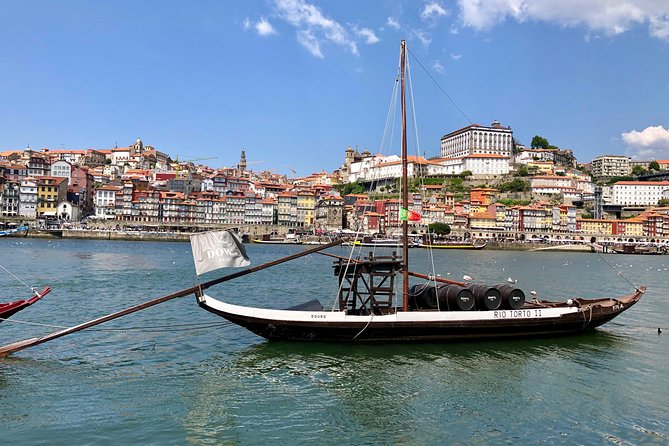
The route then heads through the older part of Porto, where the guide connects two very different eras: stories about invasions and the later Portuguese Age of Discoveries.
This stop is valuable because Porto’s old streets are not random. They are shaped by long stretches of power shifts, trade routes, and cultural pressure. When a guide frames that for you, the city stops feeling like a postcard and starts feeling like a place that learned to survive.
One practical benefit: you will know how to interpret the mix of influences you see in the architecture and street patterns. You do not need to be a history buff. You just need a guide to hand you the right timeline so your eyes have something to compare against.
More Wine Tours in Porto


Crossing to Vila Nova de Gaia, Where Wine Becomes a Place
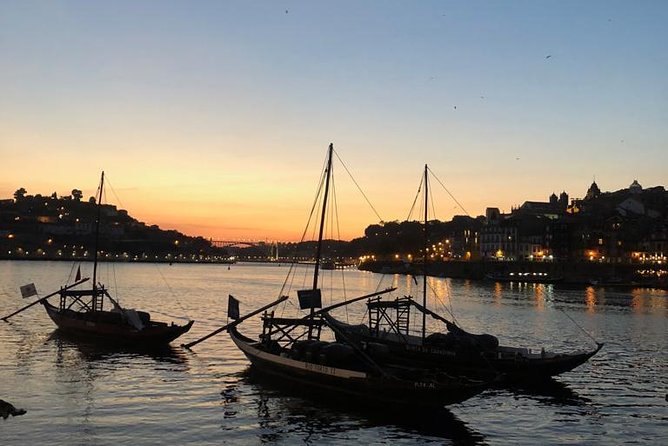
Then you cross the lower part of the bridge over to Vila Nova de Gaia. This is more than a travel segment. It is a shift in perspective, and the guide uses it to explain how and why the wine is aged on the Gaia side.
Why that geography lesson matters: port wine is not just a product, it is an ecosystem that depends on location, storage traditions, and the way business moved along the Douro corridor. When you walk across the river with that in mind, you start looking at the waterfront differently, even after the tour ends.
You also get that classic Porto to Gaia transition feeling. In Porto, you are climbing streets and reading history in stone. In Gaia, the vibe changes to wine production and river trade. It is a neat mental reset.
Cais de Gaia Cellar Visit and the Three-Port Tasting Lesson
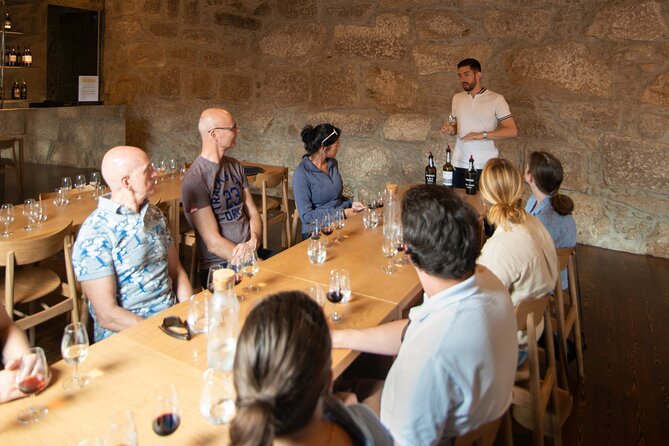
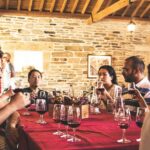
The tour’s tasting stop is at Cais de Gaia, with a visit to a port wine producers’ cellar. The cellar visit runs about 1 hour 30 minutes, and the admission ticket is free for this component.
You are included for a tasting of 3 port wines. That is a great number. It is enough variety to understand how sweetness, style, and aging direction can change the flavor profile, without turning your evening into a tasting marathon.
A helpful note from the experience pattern: the tasting is mainly at the end. So if you are expecting frequent sips during the walking portion, adjust your expectations. You will still get tastings, but they are structured for a cellar setting, where you can hear production details and learn what you are tasting.
What you should pay attention to during the tasting
To get the most out of the cellar time, do a simple three-question check in your head:
- Which one tastes more intense or syrupy?
- Which one feels lighter and more lifted?
- Which one tastes most like it has had time to mellow?
The guide typically helps you interpret these differences. When you know what to look for, your “wow, this is sweet” turns into a real learning moment.
And if you care about food pairing, a port cellar tasting usually gives you instincts for dessert wines, cheese pairings, and richer meals on the south bank.
Price and Value: Is $42.33 Worth It?
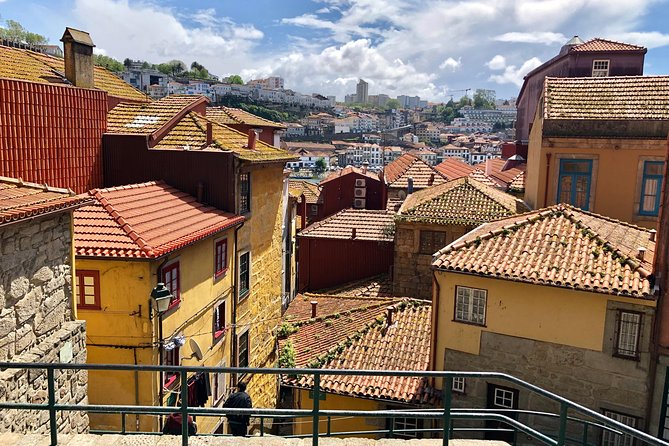
At about $42.33 per person, the value is mostly in three places:
- A guided walking experience that covers Porto’s major context points, not just one neighborhood
- A real port cellar visit tied to producers, not a quick showroom stop
- A tasting of 3 port wines included, with guide-led explanation
You are also getting the small-group advantage. With a maximum of 12 people, you are less likely to feel like a passive passenger. That matters, because the best part is the back-and-forth understanding. You learn more when you can ask questions and get clear answers.
Compared to DIY sightseeing, you are paying for someone else’s organization and storytelling. Compared to bargain tours, you are paying for a tighter group and a focused cellar experience that includes tastings.
If you have limited time in Porto, this price feels easier to justify. It is a condensed way to learn the story of the city and the logic of port production in one morning or early afternoon style outing.
Who This Tour Fits Best (And Who Might Want Another Plan)
This is a strong match for you if:
- You want an intro to Porto that gives meaning to architecture, tiles, religion-related context, and old neighborhoods
- You like port wine or at least want to understand what you are drinking
- You prefer a smaller group and a guide who answers questions
- You are okay with moderate walking and some stairs
You might think twice if:
- You want frequent wine tastings during the walk, because the tasting is mainly at the end
- You dislike stops with more explanation time. One critique pointed out that some pauses can run a little long, so pace expectations matter
Good news: even with longer explanations at certain moments, the overall arc still lands well. The tour’s structure ends with the tastings and view payoff, so you get a satisfying finish.
Practical Tips Before You Go
- Bring comfortable walking shoes. The route includes downhill walking and at least some stairs, based on how the Porto to riverfront movement plays out.
- Expect a bit of hill effort. Porto is not flat, and the walk is part of the experience.
- If it’s rainy, you are still doing the walk. I would dress for wet streets and plan for cooler air.
- If you are a photo person, the viewpoints and the tile station area give you plenty of chances to pause and shoot.
Also, the tour is offered in English with a local guide. That matters for understanding details about religious context and port production, where translation can make or break the experience.
Finally, it is popular. One indicator is that it gets booked well in advance, with an average booking window around 98 days. If you want a specific date, don’t wait for last-minute vibes.
Should You Book This Porto Walking Tour and Port Cellar Visit?
If you want a first-rate way to connect Porto’s story to its port wine identity, I think you should book it. The experience is compact, focused, and led by energetic local guides like Nuno, David, and João. You get a guided walking arc through key sights, then a proper cellar tasting of 3 port wines in Gaia.
The biggest deciding factor is your taste for structure. This is a city walking tour with a port cellar visit, not a drinking-first bar crawl. If you like learning while you walk, and you enjoy ending with a tasting where you can actually taste differences, this is an easy yes.
If you want, tell me your travel month and whether you prefer mornings or afternoons, and I can suggest a smart day flow in Porto around this 3-hour plan.
Portugal at a Stroll
- Porto: Historic City Center Walking Tour
★ 4.7 · 1,172 reviews - Porto’s #1 Walking Tour
★ 5.0 · 1,026 reviews - Porto: Delicious Food and Wine Walking Tour
★ 4.8 · 977 reviews
Adegas, Pouring Slowly
- From Porto: 2 Wine Regions, Farm-to-Table Lunch & Boat
★ 4.9 · 5,724 reviews - Douro Valley: Historical Sites, Wine Experience, Lunch & Cruise
★ 5.0 · 5,133 reviews - Authentic Small Group Douro Wine Tour with Lunch & River Cruise
★ 5.0 · 4,775 reviews
Port Lodges Across the River
- Porto: Live Fado Show with Glass of Port Wine
★ 4.8 · 6,498 reviews - Porto: Bridges Cruise & Sunset & Port Wine Cellar Option
★ 4.2 · 4,180 reviews - Porto: Fado & Port Wine in Traditional Portuguese Music Shop
★ 4.8 · 2,906 reviews
What Porto sent us most recently
- Bike or E-Bike Tour of Porto and Atlantic Coast
★ 5.0 · 39 reviews - Porto: Premium Douro Valley Small-Group Tour, Cruise & Lunch
★ 4.9 · 39 reviews - Off the Beaten Track in Porto: Private City Tour
★ 5.0 · 39 reviews - Porto: Graham’s Port Lodge Tour and Port Essentials Tasting
★ 4.9 · 39 reviews - Porto: 50-Minutes Rabelo Boat Cruise on the Douro River
★ 3.8 · 39 reviews - Port : Small-Group 6 Bridges, Douro River Sunset Cruise w/ Drink
★ 5.0 · 39 reviews - Museu das Marionetas do Porto
★ 4.5 · 39 reviews - Porto Sunset Bike Tour
★ 4.5 · 39 reviews
Port Wine Lodges & Tastings, compared.
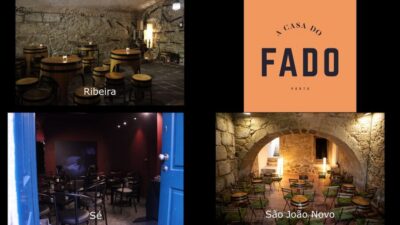

Live Fado Show with Port Wine at Lisboa em Fado
Read our review →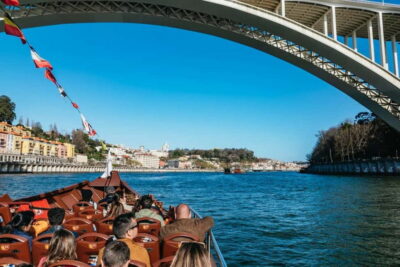
Bridges Cruise & Sunset & Port Wine Cellar Option
Read our review →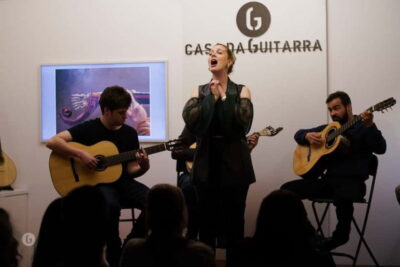
Fado & Port Wine in Traditional Portuguese Music Shop
Read our review →
What is Fado? Commented Live Concert with Port Wine
Read our review →
Port Wine Lodges Tour Including 7 Port Wine Tastings (English)
Read our review →
Charming Sailboat Cruise with Port Wine,Sunset Option
Read our review →
Douro River Boat Cruise with Port Wine Tasting
Read our review →Browse the lists this tour appears in