
Reviewed · WALKING TOURS
Half Day Historical Walking Tour about the Slave Trade in Lisbon
Lisbon’s postcards leave out a lot. This half-day historical walking tour connects major old-town corners with the story of slavery in Portugal, from earlier Mediterranean roots to the Atlantic Slave Trade. You also track how African presence shaped Portuguese culture and later history, ending at a site tied to the fall of the colonial empire.
I especially love how practical the format is: you are walking street level, with short stops and plenty of time to ask questions. I also like the guide’s approach to heavy material, supported by visuals and historical documents that keep the discussion clear and grounded.
One consideration: this is a serious topic, and it is a moderate walk across central neighborhoods, so it is not the best fit if you have limited mobility or want a light, casual afternoon.
In This Review
- Key points before you go
- Why This Lisbon Walk Reframes the Age of Discovery
- Price, timing, and what you actually get for $39.78
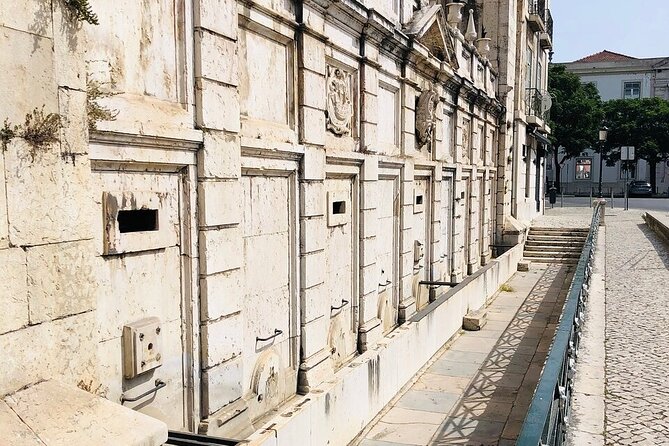
- Where you start: Largo do Chafariz de Dentro sets the tone
- Alfama: from ancient civilizations to Portuguese Atlantic involvement
- Campo das Cebolas: a future monument anchored in the present
- Praca do Comercio (Terreiro do Paco): the commercial heart of Lisbon
- Baixa, Rossio, and Restauradores: seeing everyday life systems in the city
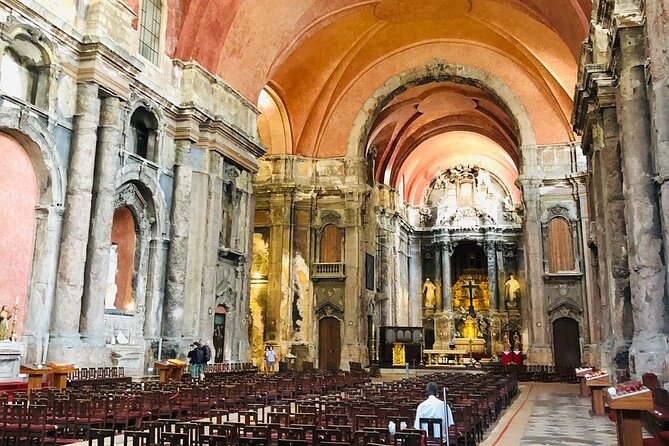
- Igreja de S Domingos: religion, power, and interactions
- Largo do Carmo: tying colonial decline to modern political change
- A guide who answers hard questions: Rui Fernandes and the in-street method
- Who should book, and who should skip
- Should you book this Lisbon slave trade walking tour?
- FAQ
- How long is the Lisbon half-day historical walking tour?
- What is the price per person?
- What language is the tour offered in?
- How many people are in a group?
- Where do I meet the guide, and where does the tour end?
- Is the tour mostly outdoors, and are there entrance fees?
- Is mobile ticketing included?
- Is it near public transportation, and is it suitable for everyone?
- What if I need to cancel?
Key points before you go
- Small group size (max 8) makes it easier to ask questions and get direct answers
- Street-level history at sites tied to commerce, religion, and everyday life, not just broad lectures
- Focused route in about 3 hours, with short timed stops built into the walk
- Portugal-Africa connection comes through in a way most Lisbon sightseeing leaves out
- A sensitive, fact-first tone for discussing slavery and correcting misinformation
Why This Lisbon Walk Reframes the Age of Discovery

If you only see Lisbon through the usual lens, the Age of Discovery can feel like shiny exploration and sea maps. This tour keeps the same backdrop but forces you to look at the human cost that ran alongside those voyages.
What makes it compelling is how the story moves from big historical forces to real places in the city. You connect the Atlantic Slave Trade to Lisbon’s commercial heart, its religious organizations, and the neighborhoods where enslaved people lived and were processed through the city’s systems.
The tour also widens the timeline beyond the simplest textbook version. You hear how many different civilizations that settled in Portugal practiced slavery, from the Romans to the Moors, and then how Portuguese involvement in the Atlantic Slave Trade accelerates in the mid 15th century. That broader frame helps you understand how deeply slavery sat in European economies and social structures long before anyone would call it modern.
Finally, the ending matters. You do not just stop at colonial history. You walk to a place connected to the 25th of April coup and the demise of the Portuguese colonial empire in the mid 1970s, so the past feels less like a closed chapter and more like something that shaped what came after.
More Walking Tours in Lisbon
- Lisbon: History, Stories and Lifestyle Walking Tour★ 4.8 · 10,902 reviews
- Best of Lisbon Small-Group Guided Walking Tour★ 5.0 · 4,869 reviews
- Lisbon: Food and Wine Small Group Walking Tour★ 4.9 · 4,082 reviews
- Best of Lisbon Walking Tour: Rossio, Chiado & Alfama★ 4.9 · 2,700 reviews
Price, timing, and what you actually get for $39.78
At $39.78 per person for about 3 hours, this is one of those tours that feels like value because it does not rely on museum tickets or extra add-ons. You are paying mainly for a professional guide, local taxes included, and the time it takes to connect several meaningful spots into a coherent story.
The tour’s structure is also reader-friendly. Stops range from about 10 to 30 minutes each, so you get breaks from walking while still keeping momentum. Because each stop is street-level (admission at the specific locations is free), you are not losing your afternoon to lines or indoor transfers.
You get a mobile ticket, and the tour is offered in English. Group size is capped at 8 travelers, which I find matters a lot for sensitive topics. A small group means the guide can tailor pacing, and you can ask questions without feeling like you are interrupting a large machine.
Logistics are straightforward. You start at Largo do Chafariz de Dentro 30 (1100-605 Lisboa) and finish at Largo do Carmo (1200-092 Lisboa). The route is near public transportation, and it is designed for people with at least moderate fitness. If you have walking difficulties, this one is not recommended.
Where you start: Largo do Chafariz de Dentro sets the tone
The meeting point, Largo do Chafariz de Dentro 30, is the right kind of Lisbon beginning: central, walkable, and tied to the city’s old layers. This is where the guide frames the theme and gives you the lens for what you are about to see.
I like that this start is not just logistical. It gives you context quickly, so the rest of the route does not feel like disconnected stops. When the guide lays out the theme early, you notice more later, even if you only half-remember Portuguese maritime history.
This first stop also signals the tour’s tone. You are going to talk about slavery openly, including how religion, politics, and commerce interacted with the systems that enabled human commodification. That clarity up front can feel heavy, but it helps you take in the places without guessing what you are supposed to feel.
Alfama: from ancient civilizations to Portuguese Atlantic involvement
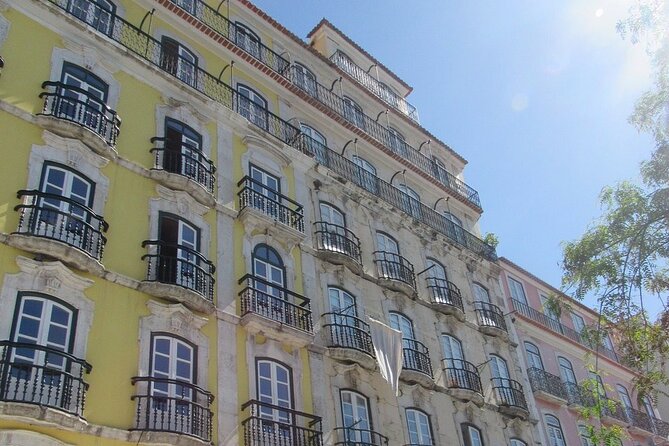
Alfama is Lisbon’s oldest neighborhood, and it is the perfect place to watch history accumulate. During this part of the walk, you move from broad civilizations to the Portuguese role in the Atlantic Slave Trade.
A key takeaway here is the timeline complexity. Instead of treating slavery as a single moment, you learn how different communities that settled in Portugal practiced slavery across time. Then, you zoom in on the mid 15th century, when Portuguese involvement becomes part of the Atlantic system.
What makes Alfama work for this theme is the contrast between beautiful streets and a difficult narrative. You are in a place people associate with music, viewpoints, and old stone charm. At the same time, the guide connects it to how power and social hierarchy operated, and how slavery was woven into everyday realities, not only distant voyages.
I also appreciate the pacing. This segment is about 30 minutes, long enough for the guide to explain context and short enough to keep it from dragging. By the time you leave, you are ready for the next site, which shifts from neighborhood to citywide commerce.
Campo das Cebolas: a future monument anchored in the present
At Campo das Cebolas, you visit the location where a monument to the victims of the Slave Trade will be erected in the future. Even knowing it is not finished yet, the stop works because it reinforces a simple idea: history still has an unfinished relationship with public memory.
This stop is short, about 10 minutes, so treat it like a pause point rather than a destination by itself. Use it to reset your focus. When you keep moving, the story stays active and you do not just “check a box” in your mind.
I also find these kinds of memorial-location stops meaningful in a practical way. They remind you that modern cities are still deciding how to represent their past. If you keep an open eye, you start noticing what is missing elsewhere in Lisbon too.
More Portugal at a stroll:

Praca do Comercio (Terreiro do Paco): the commercial heart of Lisbon
Then you shift to Praca do Comercio, also called Terreiro do Paco, the commercial heart of Lisbon. This is where the tour shows how the slave trade was part of colonial trade, not a side note.
The big value of this stop is the cause-and-effect feel. You are not just learning that slavery existed. You are connecting human trafficking to the city’s economic engine. Standing in a place known for trade and wealth makes the historical argument easier to grasp, because you can picture how systems of exchange required products, ships, and financial backing.
This segment is about 15 minutes. That brevity helps because the argument can be intense. You get enough time to understand the link, then you move on before your attention slips.
If you enjoy history that connects economics to real streets, this is one of the strongest parts of the walk.
Baixa, Rossio, and Restauradores: seeing everyday life systems in the city
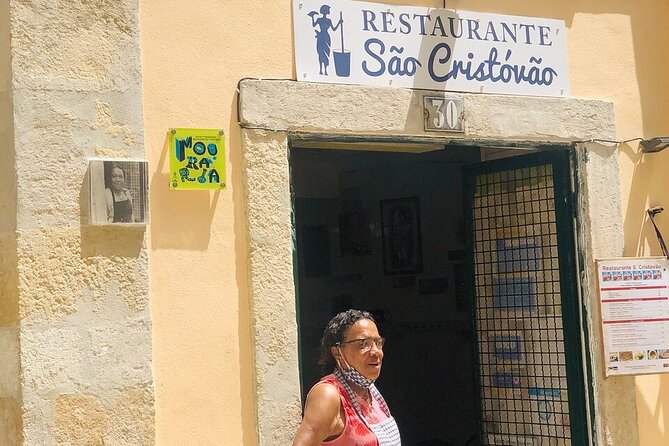
As you move through Baixa, Rossio, and Restauradores, the focus shifts toward day-to-day realities. You learn about the lives of enslaved captives from Africa and around the globe who lived in Lisbon.
This portion, around 30 minutes, is where the tour becomes deeply human. It can feel abstract when you talk about ships and trade routes, so the guide makes sure to return to how people were treated, managed, and lived through the city’s structures.
I like how this segment stays grounded in place. Lisbon’s central districts are easy to navigate, and that is useful here because you can focus on what you are hearing rather than getting lost. You walk, you look around, and you start understanding the city as a system. Enslaved people were not only transported, they were also embedded in a local order.
If you are the kind of traveler who likes context for what you see, this is where it pays off. When you leave, you will probably notice Lisbon’s neighborhoods differently.
Igreja de S Domingos: religion, power, and interactions
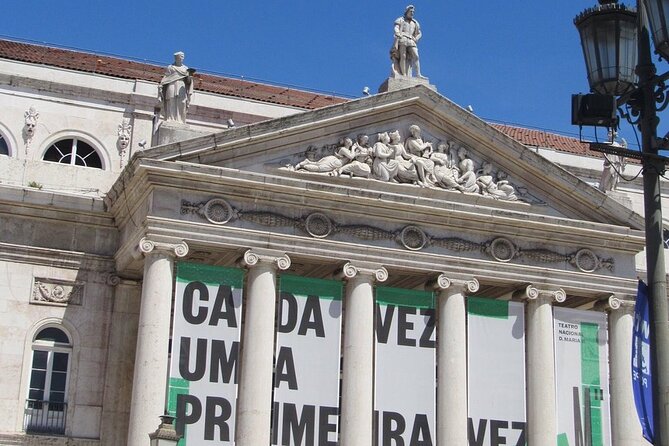
Next comes Igreja de S Domingos, another short stop at about 10 minutes. Here the guide explains how Lisbon’s enslaved captives interacted with religious organizations.
This part matters because religion was not just background culture. The tour’s framing shows how religious institutions could influence justification systems and social behavior, including how communities made meaning of captivity and inequality.
I found this segment particularly effective because it moves beyond stereotypes. It does not reduce the story to villains and victims only. Instead, it explains the mechanisms, including how public institutions shaped private life and moral narratives.
Again, the short timing helps. You get the point clearly, then you move on. No one stop overwhelms the full afternoon.
Largo do Carmo: tying colonial decline to modern political change
The final thematic stop is Largo do Carmo, about 15 minutes. This location is associated with the 25th of April coup and the revolution, and it connects to the demise of the Portuguese colonial empire in the mid 1970s.
This is an important closing move. Many historical tours stop once they reach the height of colonial expansion. Here, you see how political shifts helped reshape Portugal’s global relationship, and you understand that the story did not end when the ships stopped.
If you want your Lisbon trip to feel connected to contemporary life, this ending does it. You leave with a sense of continuity: history is not only in buildings, it is also in political choices and national memory.
A guide who answers hard questions: Rui Fernandes and the in-street method
In the best moments, this tour feels like a guided conversation with a professor who actually knows where to stand. The guide commonly identified as Rui Fernandes shows up prepared, and he stays willing to answer questions without dodging uncomfortable details.
Several practical elements make that difference. He uses images and historical documents during the walk, which helps you track names and dates without getting lost. He also keeps a pace that does not rush people, with breaks that keep attention steady even on a heavy topic.
If the weather turns, you might notice extra care too, such as being mindful about keeping people out of rain when possible. And at the end, you may get helpful local pointers, including restaurant recommendations, which makes the afternoon feel complete instead of abruptly ending.
This is also the part where small group size pays off. In a group of up to 8, your questions matter, and you are not forced to wait until the end to ask something that is still on your mind.
Who should book, and who should skip
This tour is a strong match if you:
- Want Lisbon beyond the postcard version of discovery and maritime glory
- Like history that connects trade, religion, and daily life
- Prefer small-group guiding where you can ask questions
- Are comfortable with a sober, direct approach to slavery and its legacies
Consider skipping if you:
- Need a light, entertaining afternoon rather than a serious, reflective one
- Have limited walking ability, since the tour requires moderate physical fitness
- Prefer tours that avoid emotional or politically sensitive topics
For families, the tour can work if the teens can handle serious history and stay engaged, since the pacing is built to keep focus. For anyone sensitive to difficult content, it is worth preparing yourself for a clear, fact-forward discussion.
Should you book this Lisbon slave trade walking tour?
My take: book it if your Lisbon trip includes time for meaningful learning. The price is reasonable for what you get, mainly because you are not paying for extras, and the small group format makes the tour feel personal without becoming performative.
You will walk through real neighborhoods like Alfama and the central districts of Baixa, Rossio, and Restauradores, while hearing how the slave trade shaped Portugal’s economy, institutions, and social order. The stop at Campo das Cebolas, tied to a future monument, and the ending at Largo do Carmo, tied to the 25th of April revolution, give the story both memory and aftermath.
If you only want relaxed sightseeing, you might find the topic heavy. But if you want to see Lisbon honestly, this is one of the most direct ways to do it in a single half day.
FAQ
How long is the Lisbon half-day historical walking tour?
It runs for about 3 hours.
What is the price per person?
The price is $39.78 per person.
What language is the tour offered in?
The tour is offered in English.
How many people are in a group?
The tour has a maximum of 8 travelers.
Where do I meet the guide, and where does the tour end?
You meet at Largo do Chafariz de Dentro 30, 1100-605 Lisboa, Portugal, and the tour ends at Largo do Carmo, 1200-092 Lisboa, Portugal.
Is the tour mostly outdoors, and are there entrance fees?
It is a walking tour with stops at street-level locations, and the stops listed show admission tickets are free.
Is mobile ticketing included?
Yes, the tour includes a mobile ticket.
Is it near public transportation, and is it suitable for everyone?
It is near public transportation, and it is for travelers with moderate physical fitness. It is not recommended for travelers with walking difficulties.
What if I need to cancel?
Free cancellation is available. You must cancel at least 24 hours in advance for a full refund.
More Historical Tours in Lisbon
- Lisbon: Daytime or Sunset Boat Cruise with History and Wine
★ 5.0 · 1,053 reviews - Explore Lisbon by Tuk Tuk: History and Viewpoints
★ 5.0 · 840 reviews - Private Tuk Tuk Tour Through Lisbon’s Historical Streets
★ 5.0 · 734 reviews
What Lisbon sent us most recently
- 3 Hour Lisbon Private Guided Tour via Tuk Tuk
★ 5.0 · 116 reviews - Lisbon: Private Boat Trip, Guided Walking Tour, Bike & Tram
★ 4.8 · 116 reviews - Lisbon Market and Food Tour with Cooking Class and Lunch
★ 5.0 · 117 reviews - Lisbon: Tagus Estuary Nature Reserve Birdwatching Boat Tour
★ 4.9 · 117 reviews - From Lisbon: Sintra and Cascais Private Day Tour
★ 4.8 · 117 reviews - Lisbon: Private Half-Day Tour with Hotel Pickup
★ 4.8 · 117 reviews - Sintra Private Tour from Lisbon
★ 5.0 · 118 reviews - Pastel de Nata Cooking Class in Lisbon
★ 5.0 · 118 reviews
Walking Tours, compared.

Best of Lisbon Small-Group Guided Walking Tour
Read our review →
Porto Walking Tour, Lello Bookshop, River Cruise and Cable Car
Read our review →
Best of Lisbon Walking Tour: Rossio, Chiado & Alfama
Read our review →
Experience Porto’s Charm: 3-Hour Guided Walking Tour
Read our review →
Enjoy a Guided Levada Walk in the Rabaçal Valley
Read our review →Browse the lists this tour appears in