
Reviewed · WALKING TOURS
Half-Day Walking Tour about the African Presence in Lisbon
Lisbon can feel like a postcard, but this tour treats it like a storybook. You follow a small-group route through neighborhoods and landmarks, with a guide who connects Lisbon to Africa, the Moors, and the transatlantic slave trade. I love that it is not just names on a plaque, it is guided storytelling in real places, tied to everyday city scenes.
The second thing I like is how practical the format feels: you cover a lot on foot in about 3 to 4 hours, and most stops are outside and quick. One consideration, though, is that this is still a walking tour in older streets, so plan for some uphill steps and bring shoes you trust.
In This Review
- Key things you should know before you go
- A tour built on Lisbon, not on a lecture hall
- Price and time: does it feel like value?
- Meeting at Praça dos Restauradores and how the walk flows
- The guide: why people get hooked on the stories
- Alfama: where the tour starts telling the roots
- Chafariz D’El Rei: social classes in stone
- Campo das Cebolas: linking Lisbon’s port to the first arrivals
- Terreiro do Paço (Praca do Comercio): a landmark with slave trade gravity
- The earthquake-touched center: a pause for how Lisbon reshaped
- Calle Rosa de Lisboa: services, women, and hidden labor
- Time Out Market Lisboa: turning a modern food stop into a history clue
- Jardim Dom Luis: abolition, memorials, and a named figure
- Near the Brazilian consulate: transatlantic consequences in a modern frame
- Praca Dom Pedro IV: integration and the idea of colonies
- Igreja de S Domingos: African presence in Catholic life
- Estacao do Rossio: Berlin Conference symbolism made visible
- Pace, comfort, and what to wear
- Who this tour is for
- Is it worth skipping other Lisbon highlights?
- Should you book this African presence in Lisbon walking tour?
- FAQ
- How long is the tour?
- What is the meeting point for this tour?
- What time does the tour start?
- How much does it cost?
- Is the tour offered in English?
- How big is the group?
- What fitness level do I need?
- Are service animals allowed?
- Is there free cancellation?
- What happens if the tour is canceled due to weather?
Key things you should know before you go
- Maximum 15 people, so you get questions answered and the pace stays human.
- Guide-led stories connect sites like Alfama, Campo das Cebolas, and Rossio Station to Africa’s presence in Portuguese society.
- Many stops are ticket-free, which keeps the tour moving and avoids time lost in lines.
- Time Out Market Lisboa and Calle Rosa de Lisboa turn modern spots into clues about past work and women’s lives.
- Abolition is made concrete at Jardim Dom Luis, with the statue of Marquis Sá da Bandeira.
- Discussion keeps going beyond Lisbon, including transatlantic slave traffic conversations near the Brazilian consulate.
A tour built on Lisbon, not on a lecture hall
What makes this experience work is the way it uses Lisbon like a living textbook. Instead of sitting and talking in one place, you walk through layers of the city, from medieval structures and fountains to major squares and churches. The theme stays consistent: Africa is not treated as a side note, it is part of Lisbon’s past and present.
I also appreciate that the route is shaped around meaning, not just convenience. You get time in places tied to arrival, trade, social hierarchy, religion, and even the ways Portugal presented itself during its colonial era. If you care about history but hate the slow, formal museum rhythm, this style makes the subject easier to hold in your head.
More Walking Tours in Lisbon
- Lisbon: History, Stories and Lifestyle Walking Tour★ 4.8 · 10,902 reviews
- Best of Lisbon Small-Group Guided Walking Tour★ 5.0 · 4,869 reviews
- Lisbon: Food and Wine Small Group Walking Tour★ 4.9 · 4,082 reviews
- Best of Lisbon Walking Tour: Rossio, Chiado & Alfama★ 4.9 · 2,700 reviews
Price and time: does it feel like value?
At $179.74 per person for a 3 to 4 hour walking tour, you should think of this as a specialist experience. You are paying for a guided route built around interpretation, plus a small group size (max 15). That matters, because it keeps the conversation from turning into a monologue.
If you want a basic highlights circuit, Lisbon has plenty of those for less. But if you specifically want the African presence in Lisbon addressed through real locations, and you like the idea of a guide who can answer questions, the price starts to make sense. One review also mentions wine tasting at the end, which, if included on your day, can add extra value, but do not assume it will be on every departure.
Meeting at Praça dos Restauradores and how the walk flows
You start at Praça dos Restauradores (Praça dos Restauradores, 1250-001 Lisboa). The tour begins at 9:00 am and ends back at the meeting point. That end back at the start is a big deal on walking tours, because you can line up a second plan nearby without guessing.
Because the tour spans central areas plus older lanes around Alfama, the order helps you shift from hillside textures to busier squares and then back toward Rossio. The time estimates for stops are short at most locations, so the guide has room to tell stories while you are moving between points.
The guide: why people get hooked on the stories
The experience lives or dies by the guide, and this one clearly hits the mark. Several people specifically praised Alcides and Al for being patient, informative, and able to explain difficult topics clearly. One detail that stood out in reviews: the guides studied English abroad, including London, and it shows in how smoothly they tell the story in a way you can follow.
I also like that the stories aim for context, not shock value. The tour connects old realities to present day identity, including the personal lens of a guide with Cape Verdean ancestry in at least one account. That does not mean the tour becomes overly emotional. It tends to stay grounded in place-based evidence.
Alfama: where the tour starts telling the roots
Stop 1 is Alfama, Lisbon’s oldest neighborhood, described here as founded by the Arabs. This is where your guide sets the theme: Africa’s history, roots, and connections to other people. Alfama is also where you get that classic Lisbon feel, narrow streets, churches, and viewpoints, which makes the history feel like it belongs to the city, not to a textbook.
Expect the guide to frame early connections first, before the walk turns to later centuries and the Portuguese empire. A practical note: Alfama streets can feel uneven and sloped. This is a good place to remind yourself you are doing a walking tour, not a sightseeing bus.
More Portugal at a stroll:

Chafariz D’El Rei: social classes in stone
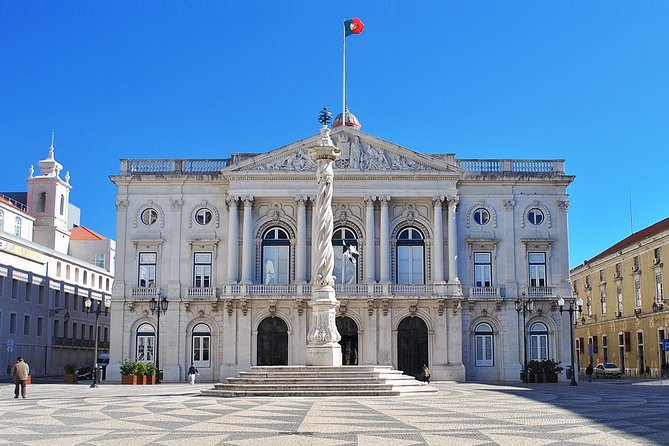
Next you stop at Chafariz D’El Rei, the fountain that is described as showing the division of social classes during the Middle Ages, with Africans represented in that picture. It is a short stop, about 10 minutes, but it is smart history. Water fountains sound boring until someone explains that access to daily resources can be tied to status and power.
Because the stop is brief and ticket-free, it fits the pace. You get a quick story, a location cue, and then you move on.
Campo das Cebolas: linking Lisbon’s port to the first arrivals
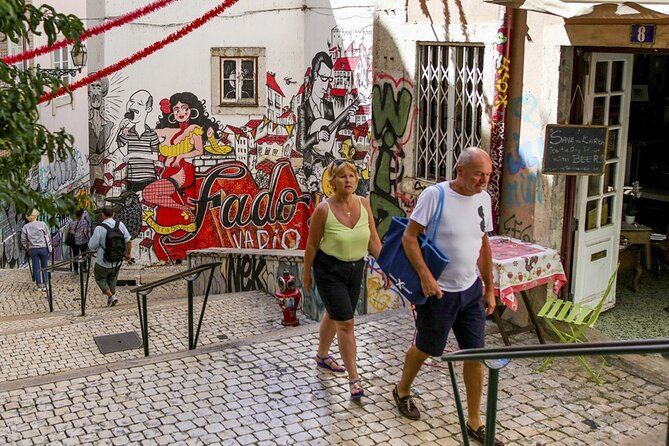
Campo das Cebolas is where the tour brings you to an old port area in Lisbon. Here the tour notes that the first African slaves arrived in Europe. This is one of the stops where the route becomes emotionally heavier.
You do not spend long there, but you do get enough time for your guide to explain why this location matters in the bigger pattern. If you are sensitive to difficult history, bring patience with yourself. This is not a tour that skims past the topic. It uses place names you might otherwise walk right by.
Terreiro do Paço (Praca do Comercio): a landmark with slave trade gravity
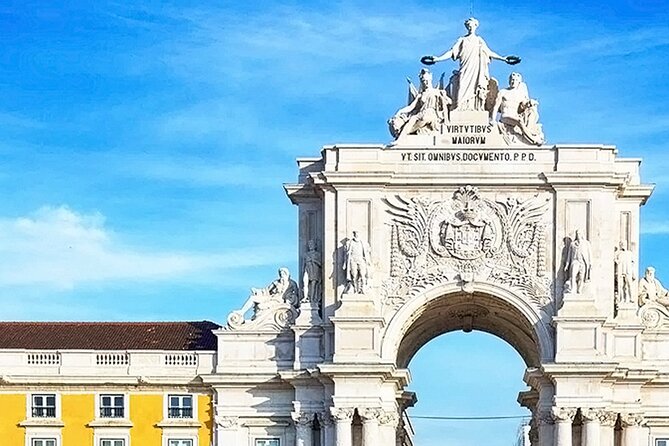
Then you reach Praca do Comercio (Terreiro do Paco), an emblematic central Lisbon square tied to multiple moments in Portuguese history. In this tour, it is flagged as important to the slave trade. This is a shift, because now you are in an open, public space, with strong sightlines.
The value here is contrast. You go from older, narrower spaces to a grand square that feels official and ceremonial. Your guide uses that contrast to help you see how systems of harm lived alongside power, administration, and public life.
The earthquake-touched center: a pause for how Lisbon reshaped
After that, the route includes a stop in a central area of Lisbon that was destroyed in the 1755 earthquake. This is the part of the walk that helps you understand how the city you see today is not just the past arriving intact. Big events changed the physical city, and they also affected how stories get remembered and where they get erased.
You might not catch every detail if you are rushing your photos, so I recommend you keep your camera put away for a minute or two. Let the guide finish the thread on why this location matters.
Calle Rosa de Lisboa: services, women, and hidden labor
Stop 5 is Calle Rosa de Lisboa, described as the place where several African women provided services. It is a short 10-minute stop, but it is significant because it pushes the story beyond ports, politics, and major events. It points to personal, lived experience.
This is also one of the moments where you will likely feel the guide’s tone. In reviews, people praised the tour for being moving and for drawing neglected aspects of Lisbon history into view. This stop is central to that goal, because it gives dignity and visibility to lives often left out of the easy narrative.
Time Out Market Lisboa: turning a modern food stop into a history clue
Next is Time Out Market Lisboa, about 10 minutes on the itinerary. Today it is a well-known market hall with food and energy. In this tour, it is framed as a former workplace for many Africans.
This stop is where I think the tour helps you most as a visitor. You learn to look at a familiar setting differently. Instead of treating the market as just a place to eat, you start noticing that neighborhoods and institutions change roles over time while still carrying footprints of earlier communities.
If you want to snack, you can. But keep your first taste for after the tour, so you do not miss your guide’s point.
Jardim Dom Luis: abolition, memorials, and a named figure
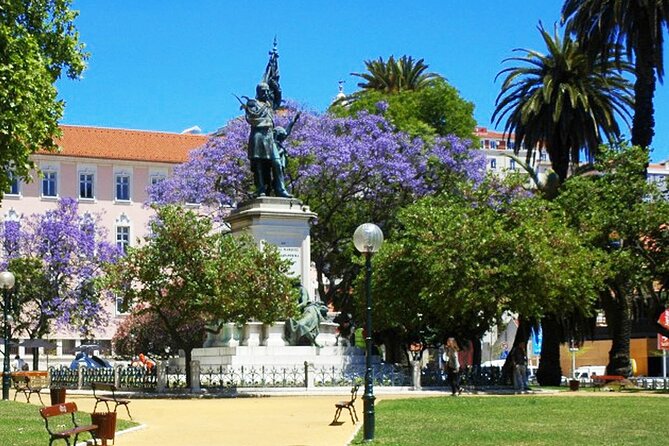
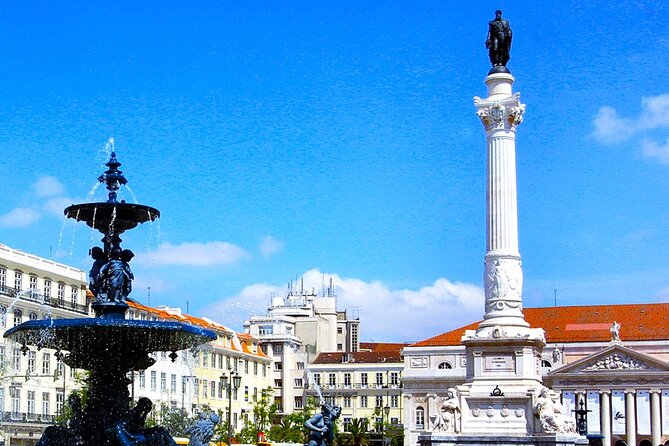
At Jardim Dom Luis, the tour highlights the statue of the Marquis Sá da Bandeira, described here as responsible for the abolition of slavery in Portuguese territory and colonies. This is a 5-minute stop, quick but meaningful.
What I like about including this here is that the tour does not end on trade and tragedy. It points to political actions in Portuguese territory. You still keep the historical thread, but the story gains a different dimension: how abolition was represented and remembered.
Near the Brazilian consulate: transatlantic consequences in a modern frame
The next stop is in front of the Consulate-General of the Federative Republic of Brazil in Lisbon, where your guide discusses transatlantic slave traffic and its consequences. This is a useful pivot because it connects the subject to the broader Lusophone world, not only Lisbon.
You will likely notice how public institutions shape memory and diplomacy. The tour does not treat history as finished. It treats it as something that still echoes across national relationships.
Praca Dom Pedro IV: integration and the idea of colonies
Then you head to Praca Dom Pedro IV, a central and busy Lisbon square. Here, the tour discusses integration of Africans and the creation of colonies. Even though it is only about 10 minutes, the location helps. A busy square forces you to sit inside Lisbon’s present reality while the guide ties it to Portugal’s imperial structure.
If you are the type who likes to see a city’s everyday life, this stop is also a reminder that history is not only behind you in the past. It affects the way people live now.
Igreja de S Domingos: African presence in Catholic life
Stop 10 is Igreja de S Domingos, with a focus on the integration of Africans into Catholic religion and achievements. Another 10-minute stop, but it adds a different lens. Instead of only focusing on trade or politics, you get religion and community life.
I like that this prevents the story from becoming one-dimensional. Portugal’s history included religious institutions that shaped identity, and this stop gives you a chance to ask, through your guide, how that integration played out.
Estacao do Rossio: Berlin Conference symbolism made visible
Finally you reach Estacao do Rossio, built during the 19th century with Manueline architectural style. The tour connects it to Portugal’s golden times and to how European countries divided Africa into colonies during the Berlin Conference of 1884.
This is where the tour becomes more overtly political and visual. The train station is not only a way to get somewhere. It is a symbol of a country projecting power and status. Your guide uses the station’s grandeur to connect aesthetics to empire-era identity.
One practical tip: stations can be busy and noisy. If your guide is speaking, step slightly away from crowds when possible so you can catch every detail.
Pace, comfort, and what to wear
This is a walking tour, and people said it directly. Wear a good pair of walking shoes. One review even suggested taking ibuprofen ahead of time if you know you get foot pain, which is not a bad idea if you are prone to it.
Also, plan your water. Even though the stops are short, the walk is long enough to make you feel it by the end, especially if you hit Alfama streets at a fast pace.
Restroom breaks are not clearly described in the tour info you have here, and one review flagged a lack of organized breaks for a 3-hour run. My advice is simple: use facilities before you start, and do not assume you will have an easy window halfway through.
Who this tour is for
This tour fits best if you want history that shows up in street corners, doorways, churches, and squares. It also fits you if you like story-driven guides who can answer questions and keep the pace moving.
It is also a strong match if you are interested in Portugal’s connection to Africa beyond the usual shorthand. Some guides connect Portugal’s African influence to broader Iberian history and even Moorish ties, which can help you see the region as one intertwined space rather than separate countries with separate timelines.
Is it worth skipping other Lisbon highlights?
If you only have a day or two and you want a classic “must-sees” list, you might choose monuments first. But if you already plan to visit Alfama, downtown squares, and Rossio anyway, this tour turns those places into meaning.
Think of it like buying a guided key for doors you would otherwise walk past. It is not just about seeing Lisbon, it is about knowing what you are looking at.
Should you book this African presence in Lisbon walking tour?
I would book it if:
- You care about how Lisbon’s story includes Africa, not just Europe.
- You enjoy walking with a guide, asking questions, and learning through place-based storytelling.
- You want a small group experience where the guide can keep up with your questions.
I might skip it if:
- You want a light, purely scenic stroll with minimal context.
- You are worried about comfort and restroom timing, because this is a real half-day walk with older streets.
- You feel the price is high for a guided walk. At $179.74, you are paying for interpretation, and you should be sure that is what you want.
If your goal is to understand Lisbon at a deeper level, with a guide who can connect locations to African presence in Portuguese life and empire, this is a smart use of a half day.
FAQ
How long is the tour?
It runs about 3 to 4 hours.
What is the meeting point for this tour?
The tour starts at Praça dos Restauradores (Praça dos Restauradores, 1250-001 Lisboa, Portugal) and returns to the same meeting point.
What time does the tour start?
Start time is 9:00 am.
How much does it cost?
The price is $179.74 per person.
Is the tour offered in English?
Yes, it is offered in English.
How big is the group?
The tour has a maximum of 15 travelers.
What fitness level do I need?
You should have a moderate physical fitness level.
Are service animals allowed?
Yes, service animals are allowed.
Is there free cancellation?
Yes. You can cancel up to 24 hours in advance for a full refund.
What happens if the tour is canceled due to weather?
If it is canceled due to poor weather, you will be offered a different date or a full refund.
What Lisbon sent us most recently
- From Lisboa: Sintra, Cabo da Roca & Cascais Private Full Day Tour
★ 5.0 · 39 reviews - Best of Sintra and Cascais Private Full Day Tour
★ 5.0 · 39 reviews - Private Sailing tour in Lisbon – Day Time, Sunset and Night
★ 4.5 · 39 reviews - Tuk Tuk Lisboa – Sightseeing Tours
★ 4.5 · 39 reviews - Private Experience Óbidos Nazaré and Fátima or Aveiro and Óbidos
★ 5.0 · 39 reviews - Belém and Jerónimos Monastery Private Walking Tour & Ticket
★ 4.5 · 39 reviews - Lisbon Private Luxury Tour
★ 4.5 · 39 reviews - Exclusive Lisbon Progressive Dinner & Wine Tour
★ 5.0 · 40 reviews
Walking Tours, compared.

Best of Lisbon Small-Group Guided Walking Tour
Read our review →
Porto Walking Tour, Lello Bookshop, River Cruise and Cable Car
Read our review →
Best of Lisbon Walking Tour: Rossio, Chiado & Alfama
Read our review →
Experience Porto’s Charm: 3-Hour Guided Walking Tour
Read our review →
Enjoy a Guided Levada Walk in the Rabaçal Valley
Read our review →Browse the lists this tour appears in