
Reviewed · WALKING TOURS
LGBTour Porto: Walk through Porto, discover the LGBTQIA+ History
Porto looks different when you get a local queer lens. This 3-hour walk by LGBTour Porto uses real places, real dates, and real conversations to show how LGBTQIA+ life shaped the city, long before Pride made it to the postcards. I love the small group size (max 15) and the way the guide keeps it relaxed, with time to ask questions and connect as you go.
What I especially like is how the tour leans into stories and community spaces, not just monuments. You’ll visit LGBTQIA+ themed bookstores, reflect in parks and squares tied to Pride energy, and hear a guided thread through Portuguese queer history, including Portugal’s broader rights timeline. One thing to consider: expect moments of turbulent, politically heavy history, not a purely feel-good sightseeing loop.
In This Review
- Key points to know before you go
- A Porto walk with Ricardo Barros and a queer lens, not a script
- Price and timing: why $38.45 feels fair
- Where you start (and how the walk flows)
- Stop 1: Campo 24 de Agosto Garden and the start of Pride memory
- Stop 2: Rua de Santa Catarina and how tourism changes the meaning
- Stop 3: Praca da Republica, Pride energy, and Teófilo Braga Garden
- Stop 4: Livraria aberta and why queer bookstores matter
- The busy student streets stop: teaching and social change
- Stop 5: Tribunal da Relação do Porto, justice, and dates you can picture
- Stop 6: Miradouro das Virtudes finish, Douro views, and a closing story
- Who should book LGBTour Porto, and who might want another style
- The practical decision: should you book this tour?
- FAQ
- How long is the LGBTour Porto walking tour?
- What is the price per person?
- What language is the tour offered in?
- How many people are in the group?
- Where do I meet the guide, and where does the tour end?
- Are any of the stops paid attractions?
- What is the cancellation policy?
Key points to know before you go
- A local storyteller, Ricardo Barros: lived perspective is part of the format, not an add-on.
- Off the main tourist circuit: the route favors neighborhoods, gardens, courts, and bookshops over big-photo stops.
- Queer business support is built in: time inside an LGBTQIA+ focused bookstore makes the learning practical.
- Pride-connected places: Campo 24 de Agosto and Praca da Republica tie the past to the present.
- English tour with a simple setup: mobile ticket and a 3-hour walking plan that still leaves room to breathe.
- End with a Douro viewpoint: the finish at Miradouro das Virtudes wraps everything with a view and a calm debrief.
A Porto walk with Ricardo Barros and a queer lens, not a script
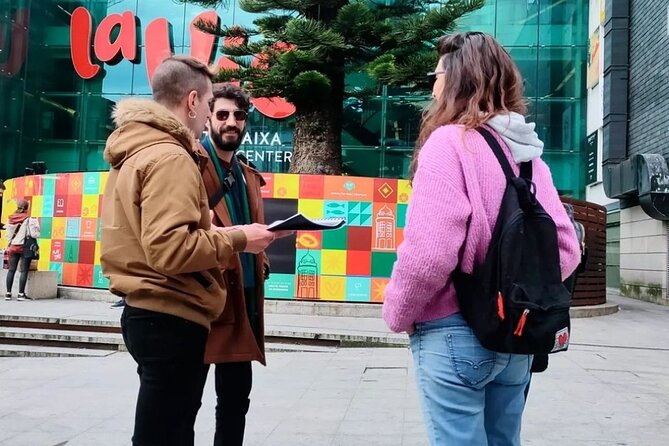
This tour works because it is about people and choices, not just dates. I like the way the guide frames what you see with a human story, including personal anecdotes about what life and the movement looked like as it grew in Porto. You are not handed a strict lecture either. You get a guided narrative with space for questions, so the walk feels like a conversation you can follow.
Another plus is the pacing. The route is designed as a steady stroll through meaningful places, with built-in reflection time in squares and gardens. It’s also a good “first or second day” activity because it gives you an orientation to the city from a perspective you will not get from standard walking routes.
You can pick a morning or afternoon start time, which helps if you are juggling church bells, river cruises, or dinner reservations. The tour runs in English, and it is capped at 15 people, so you should have no trouble hearing the guide without craning your neck.
More Walking Tours in Porto
- Porto Walking Tour, Lello Bookshop, River Cruise and Cable Car★ 5.0 · 3,354 reviews
- Experience Porto’s Charm: 3-Hour Guided Walking Tour★ 5.0 · 2,432 reviews
- Porto: 3-Hour Guided City Highlights Walking Tour★ 4.8 · 2,050 reviews
- Porto: Wine Tasting with Tapas Walking Tour★ 4.4 · 1,541 reviews
Price and timing: why $38.45 feels fair
At $38.45 per person for about 3 hours, the value comes from the specialist focus. Most sightseeing is free in Porto, but what you pay for here is interpretation, context, and a guide who connects LGBTQIA+ history to the exact streets and public spaces you walk past.
Also, the stops listed on the route are marked as free admission. That matters because it keeps your money focused on the experience itself, not ticket math. You’re paying for narrative craft, local context, and the chance to sit with a thoughtful local perspective at each site.
In practical terms, this is a compact half-day. Three hours is long enough to make the theme feel coherent, but short enough that you will not spend your whole day in one mode. And because it is a walking tour, you get that “I see where I am” effect, especially when the final viewpoint gives you a wide view over the Douro.
Where you start (and how the walk flows)
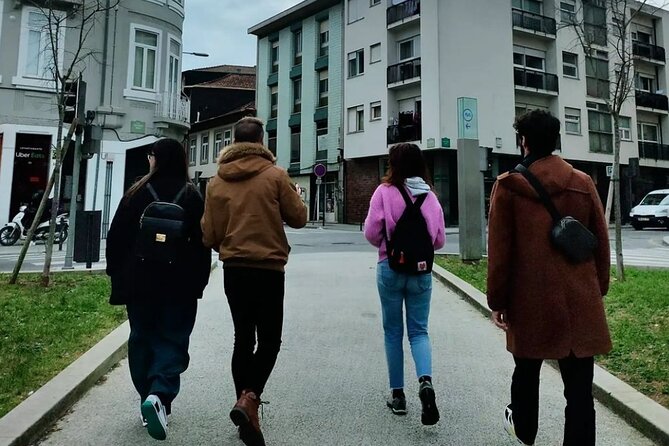
The meeting point is Av. de Fernão de Magalhães 43, 4300-169 Porto, Portugal. The tour ends at Calçada das Virtudes 5, 4050-629 Porto, Portugal, at the Miradouro das Virtudes viewpoint.
Expect the route to move from gardens and street-level neighborhoods toward a higher viewpoint finish. Along the way, the guide uses the city’s busy rhythm as part of the story. You pass through areas with tourist references and student life, and those moments matter because they show how public space changes when it becomes more visible or more commercial.
It also helps that the tour is near public transportation and uses a mobile ticket. That means you spend less time hunting for details and more time focusing on the street scene.
One gentle note: the itinerary includes several different stops and reflections. Wear comfortable shoes, and if you want a slower pace, it is worth mentioning that up front so the guide can adjust.
Stop 1: Campo 24 de Agosto Garden and the start of Pride memory
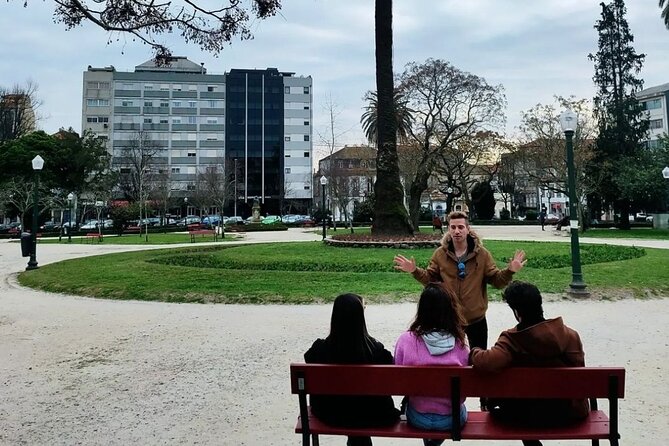
The walk begins at Campo 24 de Agosto Garden, where you pass by a location tied to the first LGBTQIA+ pride march. This is the kind of start that sets your brain to “historical viewing mode.” Instead of treating the garden as just another pretty patch of green, you look for how a public place becomes symbolic.
The route here is short, about 20 minutes, and that makes sense. You get a quick anchor point and then the tour keeps moving, building momentum street by street. The guide’s framing helps you notice how movements start small, then grow until the city itself has to respond.
If you like understanding where an event begins, this stop delivers. If you prefer only cozy storytelling, this one may be a wake-up call, because it immediately links public space to LGBTQIA+ visibility and the tension that often comes with it.
Stop 2: Rua de Santa Catarina and how tourism changes the meaning
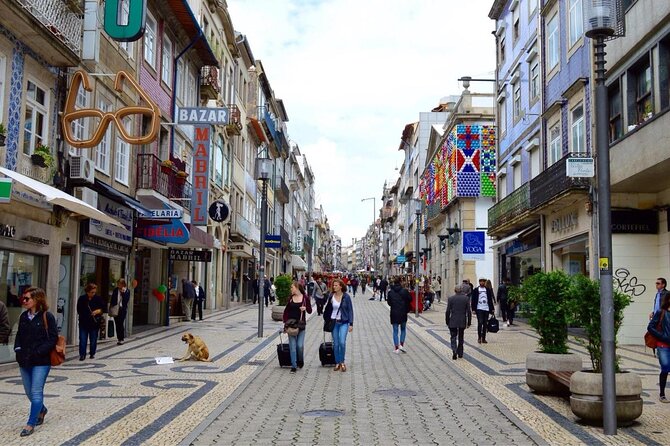
Next up is Rua de Santa Catarina, where you observe and analyze how time and tourism have changed a neighborhood that impacted the LGBTQIA+ community. This is a subtle stop, but it is one of the most important ideas on the entire walk.
I like that the guide does not treat tourism as neutral background. You look at what remains, what has shifted, and how the “same street” can tell a different story depending on who is walking it and why. Tourism can bring attention and income, but it can also smooth over hard realities that once shaped community life.
This stop is about 10 minutes, so think of it as a quick field test. You are meant to take away a lens for the rest of the walk: things can change visually, while the social meaning keeps evolving.
More Portugal at a stroll:


Stop 3: Praca da Republica, Pride energy, and Teófilo Braga Garden

Praca da Republica is one of Porto’s busier nodes, and the tour uses that fact on purpose. After passing through a high-energy street, you pause in the square to reflect on Pride march timing, including the idea of where Pride is currently starting.
You’ll also see Teófilo Braga Garden and spend about 40 minutes total at this section. Part of the time includes a visit to a bookshop with LGBTQIA+ themes. That blend of public space plus community culture is a big deal here. You are not only learning about identity and rights. You are also seeing how culture gets shared in real institutions.
One practical tip: since this is a busier area, you may want to stay alert for audio clarity. The guide keeps the focus, but your best bet is to stand close during the more reflective moments.
Stop 4: Livraria aberta and why queer bookstores matter
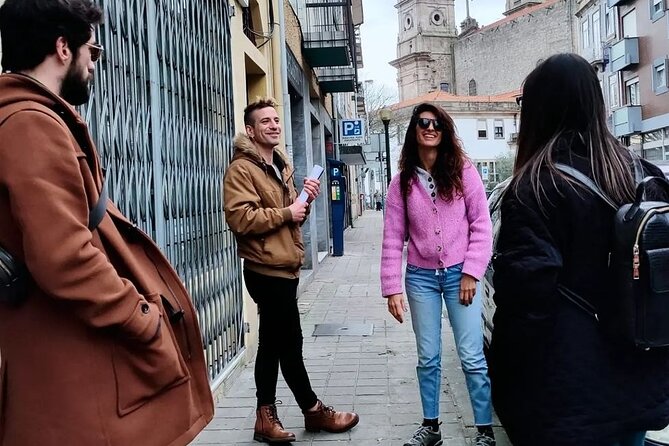
Then you move to Livraria aberta for about 30 minutes. This stop builds on the bookshop connection, with more talk about LGBTQIA+ writers and their impact on society and representation in culture.
I really like this part because it turns learning into support. The guide talks about the importance of attending queer businesses, and the stop makes that message tangible. A bookstore is not just retail. It is a place where visibility is practiced, language is preserved, and community memory stays in circulation.
In addition to the authors and cultural impact, you also get discussion around Diversity and Inclusion Books and the importance of queer business. That framing helps you connect the dots between street-level history and everyday economic choices.
If you read casually or you do not read much at all, you can still enjoy this stop. Representation is not only an abstract issue, it shows up in what people publish, promote, and keep accessible.
The busy student streets stop: teaching and social change
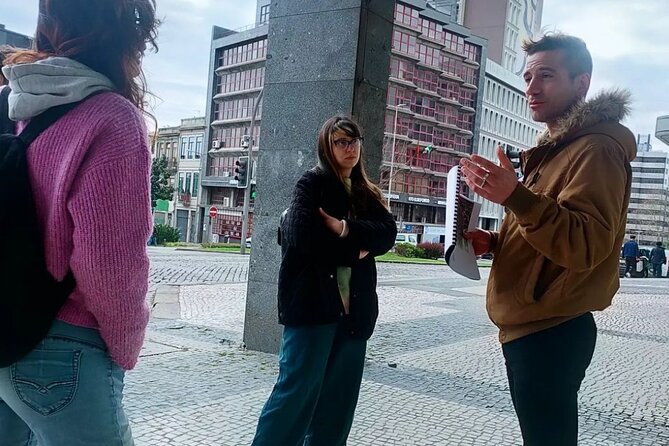
There’s also an in-between segment where you pass through a very busy part of Porto with tourist references and a large concentration of students. The tour uses this area to talk about teaching and social changes linked to diversity and inclusion.
No single landmark gets the spotlight here. Instead, the message is about how ideas spread. When young people gather, education systems and social norms get questioned and reshaped. That connects nicely back to the earlier Pride-connected sites. You start to see the movement as both past and present, both public and educational.
This portion also acts like a breather. You’re walking through motion, not locked into one quiet corner. That makes the tour feel more like living city experience and less like a museum route.
Stop 5: Tribunal da Relação do Porto, justice, and dates you can picture
Almost at the final stretch, you pass in front of Tribunal da Relação do Porto. This is one of the more dramatic “frame the theme with architecture” moments. The guide points out important dates in the queer history of Porto and Portugal in front of the statue of justice.
This stop is about 25 minutes and it matters because legal rights are not just paperwork. They shape safety, access, and what people can live openly. Seeing a courthouse and the statue beside a story about queer dates gives you a concrete way to imagine how changes happened.
I also like that the guide anchors the discussion in the city’s specific timeline. Porto is the stage, but Portugal’s broader developments are part of the explanation, so you leave with a clearer sense of how local life connects to national shifts.
Stop 6: Miradouro das Virtudes finish, Douro views, and a closing story
The tour finishes at Miradouro das Virtudes, tied to Chafariz das Virtudes in the itinerary. You get about 30 minutes here to relax, summarize, and take in the view over the Douro.
This is a smart ending. It lets your brain shift from street-level details to big-picture scenery. And the guide uses this calm moment to talk about his youth in Porto and how he saw the queer movement grow over time. That personal note lands well after the historical context, because it reminds you the story is still being written.
If you like a viewpoint finish, this hits the spot. You get a place that tourists enjoy, but locals also value, so it feels like a natural wrap-up rather than an abrupt ending.
Who should book LGBTour Porto, and who might want another style
This tour is a great fit if you want Porto off the typical checklist. It is built around gardens, squares, bookshops, and civic places tied to queer life, so it naturally avoids the “only big monuments” approach. You’ll also likely enjoy it if you care about culture beyond nightlife, because the bookshop stops and the talk about queer businesses matter.
It is also a solid option for solo travelers. With a max group size of 15, and a guide who encourages connection, it does not feel awkward if you are arriving on your own.
What might not fit as well? If you are only in Porto for quick photo stops, this tour will feel slower and more reflective. If you do not want any politically heavy content, be aware that the theme includes turbulent periods and rights struggles. That does not make the tour grim, but it does mean you should approach it with an open mind.
The practical decision: should you book this tour?
If you want Porto with meaning, and you like stories tied to specific streets and institutions, I think this is an easy yes. The value is strong at $38.45 for roughly 3 hours, and the route includes time to connect with Ricardo Barros, plus bookshop stops that support the queer community directly.
Book it especially if you have already seen the main sights and you want a different lens. Or if you want a first-day orientation that goes beyond geography into social context. Just go in knowing it mixes history, activism, and personal perspective, not only sightseeing.
FAQ
How long is the LGBTour Porto walking tour?
The tour lasts about 3 hours.
What is the price per person?
The price is $38.45 per person.
What language is the tour offered in?
The tour is offered in English.
How many people are in the group?
The tour has a maximum of 15 travelers.
Where do I meet the guide, and where does the tour end?
You start at Av. de Fernão de Magalhães 43, 4300-169 Porto, Portugal. The tour ends at Calçada das Virtudes 5, 4050-629 Porto, Portugal at the Virtudes viewpoint.
Are any of the stops paid attractions?
The listed stops on the route show free admission.
What is the cancellation policy?
You can cancel for free up to 24 hours in advance for a full refund. If you cancel less than 24 hours before the start time, the amount paid is not refunded.
More Historical Tours in Porto
- Douro Valley: Historical Sites, Wine Experience, Lunch & Cruise
★ 5.0 · 5,133 reviews - Porto: An Intimate Fado Show in a Historical Tavern
★ 4.8 · 2,055 reviews - Porto: Private Tour of the Historic City in a Ford T Car
★ 4.8 · 932 reviews
What Porto sent us most recently
- Bike or E-Bike Tour of Porto and Atlantic Coast
★ 5.0 · 39 reviews - Porto: Premium Douro Valley Small-Group Tour, Cruise & Lunch
★ 4.9 · 39 reviews - Off the Beaten Track in Porto: Private City Tour
★ 5.0 · 39 reviews - Porto: Graham’s Port Lodge Tour and Port Essentials Tasting
★ 4.9 · 39 reviews - Porto: 50-Minutes Rabelo Boat Cruise on the Douro River
★ 3.8 · 39 reviews - Port : Small-Group 6 Bridges, Douro River Sunset Cruise w/ Drink
★ 5.0 · 39 reviews - Museu das Marionetas do Porto
★ 4.5 · 39 reviews - Surf Lesson | Surf Lessons
★ 5.0 · 39 reviews
Walking Tours, compared.

Best of Lisbon Small-Group Guided Walking Tour
Read our review →
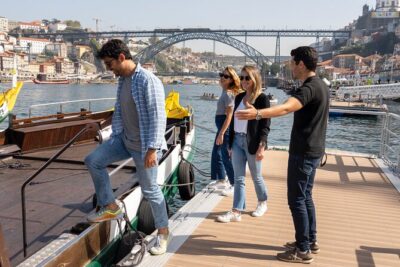
Porto Walking Tour, Lello Bookshop, River Cruise and Cable Car
Read our review →
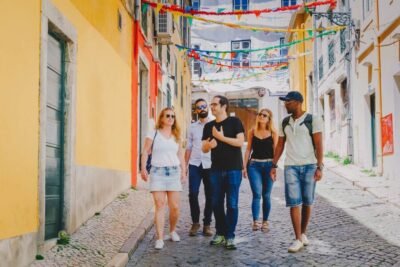
Best of Lisbon Walking Tour: Rossio, Chiado & Alfama
Read our review →
Experience Porto’s Charm: 3-Hour Guided Walking Tour
Read our review →
Enjoy a Guided Levada Walk in the Rabaçal Valley
Read our review →Browse the lists this tour appears in