
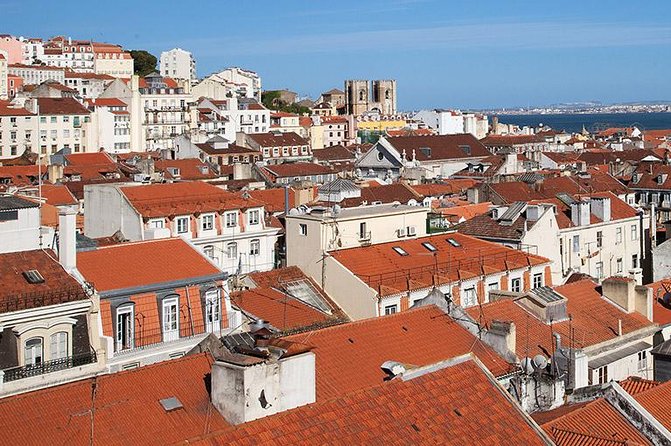
Reviewed · WALKING TOURS
Lisbon: Alfama District Walking Tour
Alfama goes uphill fast, then rewards you hard. This 2.5-hour walking tour is a practical way to understand Lisbon’s oldest neighborhood through streets, viewpoints, and legend-filled stops. You’ll learn how Alfama survived the 1755 earthquake and still feels like home to locals, not just postcards.
I especially liked the Tagus River viewpoint moments built into the route, because they make the climbs feel worth it. I also love how the tour mixes famous landmarks with the tighter, older lanes of Alfama, so you get both the big picture and the lived-in detail.
One thing to consider: this is a hill-walking experience. The tour is listed for moderate physical fitness, so wear shoes you trust and plan for uphill as part of the deal.
In This Review
- Key things I found most compelling
- Entering Alfama on Foot: Why the Route Matters
- Starting at Praça do Comércio, Then Climbing Into the Old District
- Alfama First Stop: The 1755 Earthquake Story You Can Still Feel
- São Jorge Castle Stop: Hilltop Views Plus Real Narrow Streets
- Miradouro da Senhora do Monte: The View Stop That Reframes Lisbon
- Lisbon Cathedral and the Working Side of Alfama
- Price and Value: What $31.46 Really Buys
- How Much Walking to Expect (And How to Make It Pleasant)
- Who This Tour Suits Best
- Final Thoughts: Should You Book This Alfama Walking Tour?
- FAQ
- Where does the tour start?
- What time does the tour begin?
- How long is the tour?
- What’s included in the price?
- Is hotel pickup included?
- What language is the tour offered in?
- Is the tour a lot of walking?
- How big is the group?
- Are children allowed?
- Is free cancellation available?
Key things I found most compelling
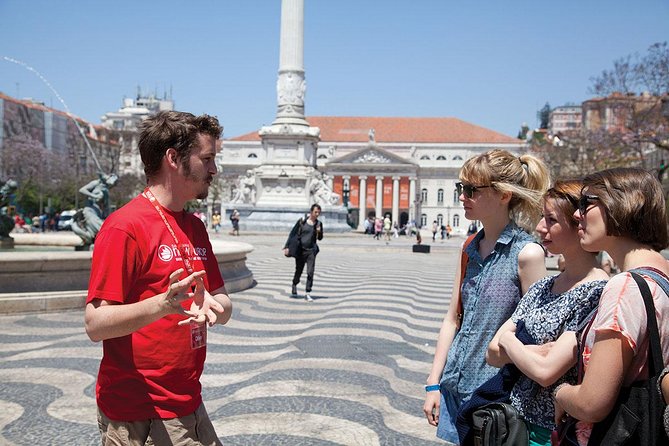
- Real neighborhood structure, starting at Praça do Comércio and winding up into Alfama’s maze of streets
- São Jorge Castle hilltop views over the Tagus, plus tight alleys where you really feel the neighborhood scale
- Miradouro da Senhora do Monte, one of Lisbon’s standout panorama stops with wide city-and-river sightlines
- Alfama’s survival story, including how much original architecture remains after the 1755 earthquake
- Lisbon Cathedral area stops, with a working-class vibe you can spot just by looking around
Entering Alfama on Foot: Why the Route Matters
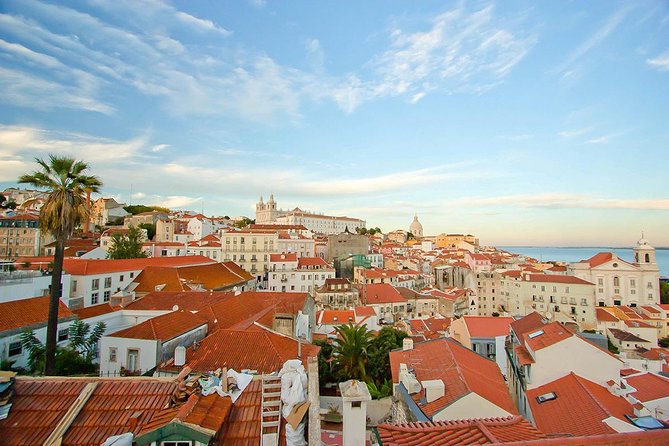
Alfama is not laid out for quick sightseeing. It’s the kind of place where streets bend because people lived there first, and tourists came later. That’s exactly why this walking route works so well. By moving through the neighborhood at a human pace, you start to understand why the views matter and why the hills are part of the city’s personality.
You begin in central Lisbon and then head upward into Alfama. Expect cobblestones, narrow lanes, and the constant sense that you’re walking through a living neighborhood. It’s not just history on a plaque. It’s street geometry, everyday life, and a few carefully chosen viewpoints that give you mental maps of the city.
More Walking Tours in Lisbon
- Lisbon: History, Stories and Lifestyle Walking Tour★ 4.8 · 10,902 reviews
- Best of Lisbon Small-Group Guided Walking Tour★ 5.0 · 4,869 reviews
- Lisbon: Food and Wine Small Group Walking Tour★ 4.9 · 4,082 reviews
- Best of Lisbon Walking Tour: Rossio, Chiado & Alfama★ 4.9 · 2,700 reviews
Starting at Praça do Comércio, Then Climbing Into the Old District
The tour starts at Praça do Comércio in the afternoon, around 2:30 pm, and it ends near Lisbon Cathedral. That timing matters. Midday crowds can be thick in Lisbon. An early afternoon start gives you light for photos at viewpoints without feeling like you’re battling a stampede.
Also, starting from the city center means you get an easy visual transition. You go from big Lisbon energy into something tighter and older. Soon enough, you’re climbing narrow hills that feel more like alleyways than streets. You’ll understand right away why Alfama’s reputation exists. It’s charming, yes, but it’s also steep, compact, and designed for walking.
The tour runs about 2 hours 30 minutes, and that’s a comfortable length for a first look. Long enough to feel like you learned something, short enough that you still have energy left for dinner afterward.
Alfama First Stop: The 1755 Earthquake Story You Can Still Feel
Your first real deep breath is Alfama itself. This is the part where the tour earns its keep. Alfama is known for surviving a devastating event in 1755, and the area still carries much of its older architecture. Even if you don’t know Portuguese terms or local dates, you can see the result in the street patterns, the building scale, and the way the neighborhood holds onto its shape.
This stop is about 40 minutes, and it’s your chance to get oriented before the route tightens even more. Your guide helps you connect what you see with the larger story of Lisbon rebuilding and reshaping itself. That makes later stops much more meaningful. When you reach viewpoints and monuments, you won’t just think, Pretty view. You’ll think, Ah, that makes sense given what happened here.
One more subtle plus: this early stage helps you understand what kind of pace you’re in for. So you can adjust your energy for the uphill sections later.
São Jorge Castle Stop: Hilltop Views Plus Real Narrow Streets

Next is Castelo de São Jorge, also around 40 minutes. The castle complex sits high above Alfama, and the point of this stop is twofold: you get a major landmark, and you get a panoramic sense of how Alfama and the Tagus connect.
The route also leans into what makes Alfama special at street level. You’ll walk through tight, winding cobblestone passages where the walls feel close. One of the best parts is that you don’t just stare at buildings. You experience the neighborhood’s scale and the logic of uphill streets as you move.
Some guides in this area also manage the pace smartly. For example, I’ve heard from guides who use a local lift option to reduce one painful climb segment for the group. That kind of adjustment matters because it keeps the tour enjoyable for people who want history, not just a leg workout.
Also, castle areas naturally spark questions. From where you stand, you can imagine defenses, sightlines, and why people settled here. If you’re into photography, this stop gives you the kind of view where Lisbon looks layered, hills stacked, and the river acting like the city’s backbone.
Miradouro da Senhora do Monte: The View Stop That Reframes Lisbon
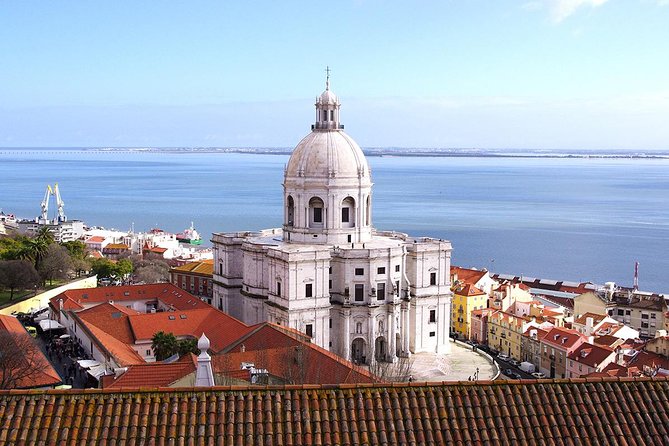
Then comes one of the classic viewpoint stops: Miradouro da Senhora do Monte, about 40 minutes. This is one of the higher vantage points in Lisbon, and it’s a strong “wow” moment built into the itinerary.
From up here, you get a wide panorama that stretches across Lisbon’s hills and gives you a clear read on the Tagus River. You see the city’s patchwork of rooftops and elevations in one sweep. That helps you understand why Alfama feels like it sits in one pocket above everything else.
This stop works especially well if you’re the type of traveler who likes to connect dots. After Miradouro, you can mentally trace where you’ve walked and where you’ll likely explore next. Even if you don’t plan more than a quick stroll after the tour, you’ll feel more confident navigating the area because you’ve seen the bigger shape of the city.
Practical note: viewpoints can get crowded in general, but this is a smaller-group walking tour that typically spreads people out as part of the flow. Still, bring patience and take your time. The best photos usually come when you stop rushing and find your angle.
More Portugal at a stroll:



Lisbon Cathedral and the Working Side of Alfama
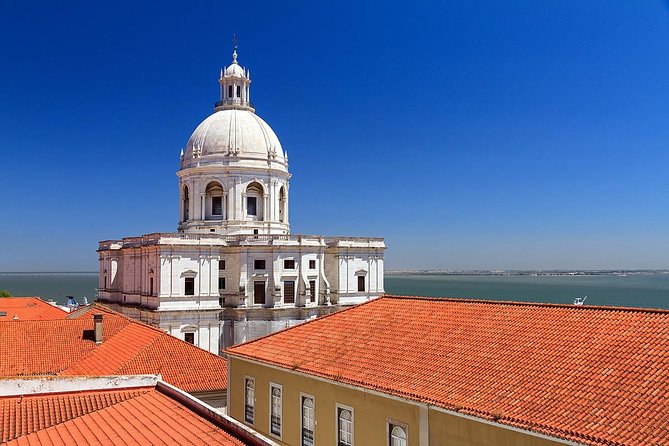
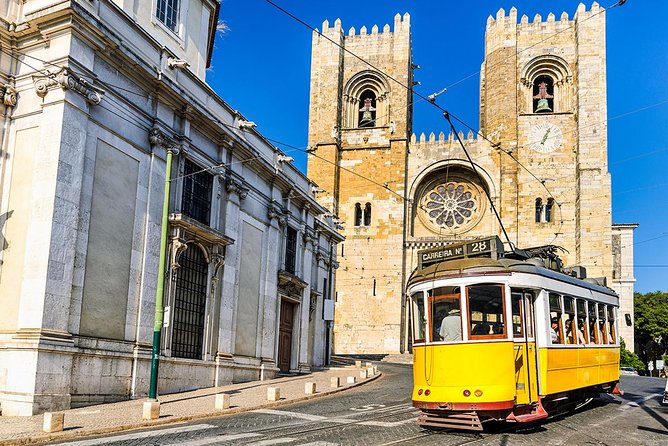
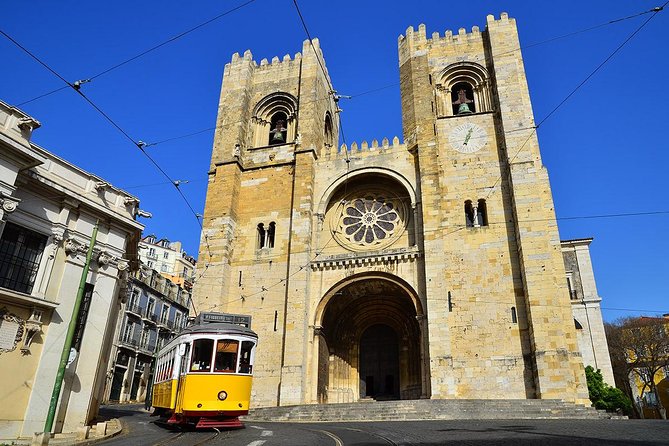
The final stop focuses on the Lisbon Cathedral area and nearby points of interest. It’s around 30 minutes, and it adds a layer that a lot of sightseeing routes skip: the everyday, working-class atmosphere.
Alfama is still popular with locals, including fishermen and their families. You may even spot people selling fresh fish from roadside stalls. That detail is worth your attention because it keeps the neighborhood grounded. Alfama isn’t frozen in time. It’s still used.
In this section, you’ll stop to admire the cathedral, which dates back to the 12th century. The route also passes by the National Pantheon, where important local figures, including presidents and dignitaries, are buried. It also notes that a famous Fado singer is among those interred. That’s a nice connection between Lisbon’s architecture and its music culture.
One small consideration: the stop is described as admiring the cathedral. If you want to go inside for a deeper look, plan to check on access timing with your guide on the day. Sometimes church interiors can be limited by service schedules.
Price and Value: What $31.46 Really Buys
At $31.46 per person, this tour is priced like an efficient introduction, not a full-day excursion. And that’s the point. You’re paying for a local guide, a structured route, and help translating Alfama’s streets and viewpoints into something you can remember.
You also get the advantage of a small group limit, capped at 20 travelers. That usually makes it easier to hear the guide and keep the group together on narrow cobblestone lanes. For a neighborhood like Alfama, group size can make or break the experience.
The tour also uses a mobile ticket, which is simple. No printing required, and you can keep your phone ready for check-in. And there’s no hotel pickup, so you’re not paying for transfer time you could spend exploring.
Another value factor: stops are listed with admission ticket free. That matters when you’re trying to keep costs under control. You still get major sights, and the route focuses on the public-facing experience of streets and viewpoints, not extra paid entrances.
How Much Walking to Expect (And How to Make It Pleasant)
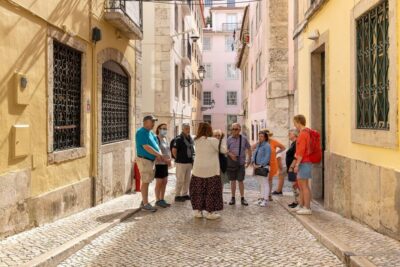
This is a walk with hills. The tour is rated for travelers with moderate physical fitness, and that’s accurate based on the neighborhood terrain. You’ll be going uphill, then working downhill and around, often on uneven cobblestones.
To enjoy it, I’d treat it like a “good shoes day.” Wear sneakers with grip or comfortable walking shoes. Bring water if you tend to get thirsty. And don’t underestimate how quickly steep lanes can add up. You can be fit and still feel it, especially if you’re not used to Lisbon’s slopes.
The good news is the route is paced with multiple stops. Each segment has a purpose, so you’re not just suffering for the sake of suffering. If your guide offers a way to reduce a particularly tough segment, take it. The goal is to learn and see, not to prove anything to your legs.
Also, because the tour lasts about 2.5 hours, you’re not stuck for half a day. You’ll finish with enough energy left to explore the cathedral area on your own, or head to dinner without feeling destroyed.
Who This Tour Suits Best
This tour is best for you if you want a guided “first encounter” with Alfama. You’ll like it if you enjoy:
- history and local stories explained in plain language
- viewpoint time that helps you navigate the city later
- walking routes that show you how neighborhoods actually work
It also fits well if you’re traveling with someone who needs a balance of sights and explanation. Guides on this route tend to be very interactive. I’ve especially liked hearing how guides connect street corners to everyday life, not just monuments.
Families can consider it too. Children up to 13 are welcome for free, and the tour keeps the group size manageable.
For travelers who want minimal walking, though, Alfama is always going to be steep. You can still do it, but you should go in with realistic expectations about uphill cobblestones.
Final Thoughts: Should You Book This Alfama Walking Tour?
Yes, I’d book it if you want an efficient, story-forward introduction to Lisbon’s oldest neighborhood. This route gives you the key Alfama ingredients: narrow streets, a major hilltop landmark at Castelo de São Jorge, a high viewpoint at Miradouro da Senhora do Monte, and a grounded ending near Lisbon Cathedral.
What tips the decision for me is the combination of structure and flexibility. The stops are clear, but guides often tailor the walk to the group. If you like tours that teach you what you’re seeing as you walk, this is a strong choice.
Go in wearing comfortable shoes, and treat it like a neighborhood walkthrough, not a checklist. You’ll leave with a much better sense of where Lisbon’s hills are pulling you, and why Alfama still feels like Lisbon’s home base.
FAQ
Where does the tour start?
The tour starts at Praça do Comércio, 1100-148, Portugal.
What time does the tour begin?
The start time is 2:30 pm.
How long is the tour?
The tour lasts about 2 hours 30 minutes.
What’s included in the price?
It includes a walking tour and a local guide.
Is hotel pickup included?
No, hotel pickup and drop off are not included.
What language is the tour offered in?
The tour is offered in English.
Is the tour a lot of walking?
It’s listed for travelers with moderate physical fitness, and you should expect hills and walking on cobblestones.
How big is the group?
The tour has a maximum of 20 travelers.
Are children allowed?
Yes. Children up to 13 years old join for free.
Is free cancellation available?
Yes. You can cancel for a full refund up to 24 hours in advance of the experience start time. After that, it’s not refunded.
What Lisbon sent us most recently
- 3 Hour Lisbon Private Guided Tour via Tuk Tuk
★ 5.0 · 116 reviews - Lisbon: Private Boat Trip, Guided Walking Tour, Bike & Tram
★ 4.8 · 116 reviews - Lisbon Market and Food Tour with Cooking Class and Lunch
★ 5.0 · 117 reviews - From Lisbon: Sintra and Cascais Private Day Tour
★ 4.8 · 117 reviews - Lisbon: Tagus Estuary Nature Reserve Birdwatching Boat Tour
★ 4.9 · 117 reviews - Lisbon: Private Half-Day Tour with Hotel Pickup
★ 4.8 · 117 reviews - Sintra Private Tour from Lisbon
★ 5.0 · 118 reviews - Pastel de Nata Cooking Class in Lisbon
★ 5.0 · 118 reviews
Walking Tours, compared.

Best of Lisbon Small-Group Guided Walking Tour
Read our review →

Porto Walking Tour, Lello Bookshop, River Cruise and Cable Car
Read our review →
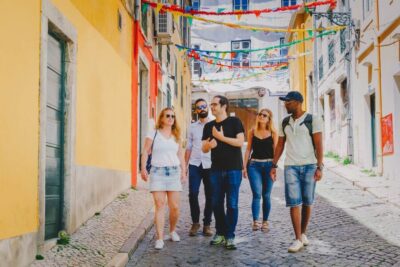
Best of Lisbon Walking Tour: Rossio, Chiado & Alfama
Read our review →
Experience Porto’s Charm: 3-Hour Guided Walking Tour
Read our review →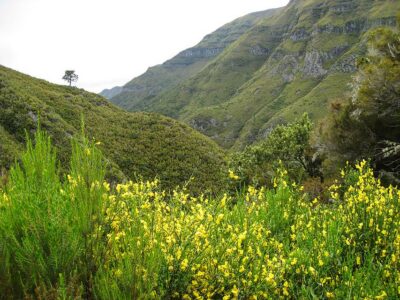
Enjoy a Guided Levada Walk in the Rabaçal Valley
Read our review →Browse the lists this tour appears in