
Reviewed · BELEM & JERONIMOS TOURS
Lisbon: Belem Walking Tour with Jeronimos Monastery Entry
Belem history hits fast when you walk in with tickets ready. This 3 to 3.5 hour Jerónimos Monastery and Belem tour is built around smart timing, clear English explanations, and the kind of architecture you cannot read from a sign. I really like that the entrance ticket is included and the guide helps you see the details, not just the big postcard moments. I also love the built-in stop for the original Pastéis de Belém, served as part of the story, not as an afterthought.
One possible drawback: the Belém Tower may be closed for restoration, so you might get more outside viewing and context than full access inside the tower during your dates.
In This Review
- Key highlights to know before you go
- Skip the Queue at Mosteiro dos Jerónimos
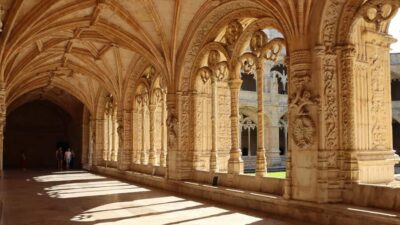
- Upper Cloister Views and the Manueline Meaning
- Lower Cloister, Chapter Room, Refectory, and Pessoa’s Tomb
- Santa Maria de Belém Church and the Burials You Should Know
- The Belem Walk to Empire Square Garden and the Discoveries Monument
- Pastéis de Belém Stop That Fits the Story
- Belém Tower Views During Restoration: What You Will Actually Get
- Price and Value: Why $70 Can Make Sense Here
- Timing, Meeting Point, and What to Wear
- Who This Tour Is Best For
- Should You Book This Jerónimos and Belem Walking Tour?
- FAQ
- How long is the Jerónimos and Belem walking tour?
- Is the Jerónimos Monastery entrance ticket included?
- Do I get to try Pastéis de Belém on this tour?
- Where do I meet the guide?
- Is the tour only indoors?
- What time does the tour start?
- Is the Belém Tower included in the tour if it is under restoration?
- What should I bring for the tour?
- Is this tour suitable for people with mobility issues?
Key highlights to know before you go
- Skip the Jerónimos Monastery line with tickets handled for you, and a guide meeting you at the south entrance area
- Upper Cloister views plus guided explanations of what the design meant in the age of Portuguese voyages
- Lower cloister spaces including the Chapter Room, old Refectory, and Fernando Pessoa’s tomb moved there in the 20th century
- Santa Maria de Belém Church and Manueline architecture, with burials tied to the Avis dynasty and navigation era
- Pastéis de Belém included, with the original custard tart linked to the monastery’s old recipe tradition
- Belém Tower visit depends on restoration, so plan on outside views if interior access is restricted
Skip the Queue at Mosteiro dos Jerónimos
If you have ever tried to enter Lisbon’s Jerónimos Monastery at peak times, you know it can feel like a waiting game. This tour keeps things practical. Your guide is set up to help you get moving through access faster, with the entry ticket already purchased for you.
That alone is a big part of the value. Not everyone wants to spend part of a short Lisbon day standing in a long line, especially when you are headed for places that are visually dense. With a guide leading the way, you get a clear sense of where to look first, what to notice in the carvings, and how the complex fits into Portugal’s 15th and 16th century expansion across the seas.
Also, you are not just dropped in a building and left to figure it out. Guides who lead this tour, such as Luis or Leonardo, are repeatedly praised for pacing and for answering questions instead of racing past them. You will likely hear explanations that connect art and architecture to the political and navigation context, so the walls start making sense.
More Walking Tours in Lisbon
- Lisbon: History, Stories and Lifestyle Walking Tour★ 4.8 · 10,902 reviews
- Best of Lisbon Small-Group Guided Walking Tour★ 5.0 · 4,869 reviews
- Lisbon: Food and Wine Small Group Walking Tour★ 4.9 · 4,082 reviews
- Best of Lisbon Walking Tour: Rossio, Chiado & Alfama★ 4.9 · 2,700 reviews
Upper Cloister Views and the Manueline Meaning
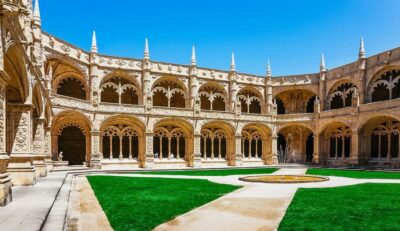
The visit begins with a historical walkthrough, then you enter the monastery around 9:30 in the morning. The first major wow factor is the Upper Cloister, where the architecture frames the view and gives you that “how did they build this” feeling.
Here is why I like starting at the cloister level. It lets you read the complex in layers. You get the big picture of the design, then the guide explains the meanings behind the construction and why it mattered socially at the time. The guide ties it back to the Great Portuguese Navigations, so you understand that these stone choices were not only religious, they were also tied to national ambition and identity.
Practical tip: wear shoes you can walk in comfortably. You will be on your feet for a good chunk of the tour, and the monastery areas can be busy even when you skip lines.
Lower Cloister, Chapter Room, Refectory, and Pessoa’s Tomb
After the Upper Cloister, the tour shifts to the lower section with specific spaces that many self-guided visitors miss because they do not know what they are looking at.
You are guided through:
- the Chapter Room
- the old Refectory
- and the tomb of Fernando Pessoa
That Pessoa detail is a great example of how the tour helps you connect eras. The tomb location is not “from the 1500s,” it was moved there only in the 20th century. A guide’s explanation makes that feel less random and more meaningful. You begin to see how the monastery stays important long after the Age of Discovery.
Another small advantage: monastery interiors can feel quiet and low-information if you only rely on plaques. Some guides bring help with visuals and explanations that keep you oriented, like reference images to make carvings and layout easier to understand while you stand in front of them.
Santa Maria de Belém Church and the Burials You Should Know
Next comes the church, Santa Maria de Belém Church, and this is where the architecture becomes more emotional. The building is described as a high point of Manueline architecture, a style that blends late Gothic structures with Renaissance elements. If you have been trying to understand Manueline beyond a basic definition, this stop is the payoff.
The guide also helps you connect the church to who is buried there, and why it matters. You will learn about prominent names from the Avis dynasty, including King D. Manuel I and his son João III. You also hear about major figures tied to the navigation era, including Vasco da Gama and Luiz Vaz de Camões.
This is the kind of context that changes your visit. Without it, you might notice tombs as “old things.” With it, you understand those names as a curated statement about power, exploration, and Portuguese identity.
The Belem Walk to Empire Square Garden and the Discoveries Monument
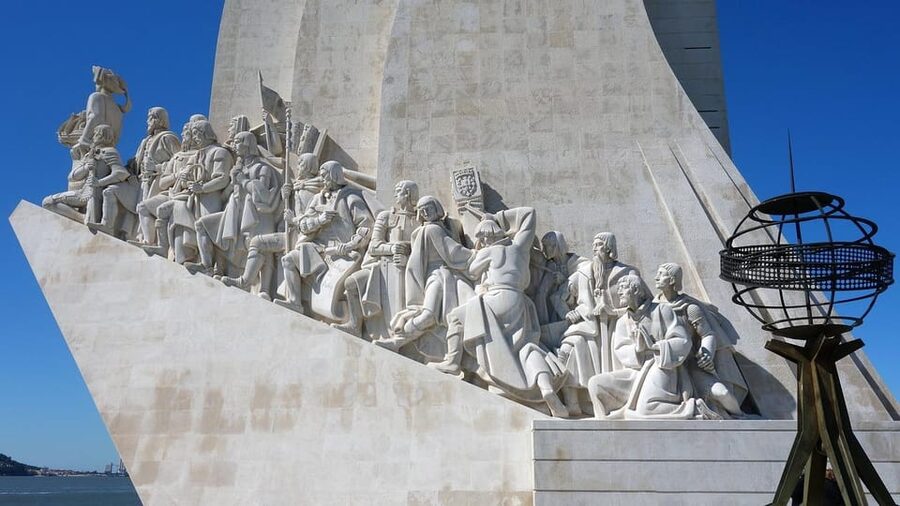
After the monastery, you walk through the Belém area with short, manageable stretches. One stop is Empire Square Garden, followed by time for sightseeing at Monument to the Discoveries.
What makes this monument worth your attention is the story behind it. It was erected in 1960 to mark the 500th anniversary of Infante D. Henrique’s death, often called the key figure in Portuguese navigation efforts. You also see other navigation-era characters represented there, built to communicate the era’s cast and values.
The guided time at the monument is short, about 20 minutes, so it is not a long museum lesson. Instead, the guide steers you toward what to notice quickly so you get the meaning without losing the rest of your day.
If the weather is hot, take your time on the walking breaks. This tour moves at a steady walking pace, and you are outside at points in between major indoor stops.
More of Belem between tower and cloister:



Pastéis de Belém Stop That Fits the Story
Yes, you are getting a pastry stop. But the timing and the framing are what make it work.
You stop at Pastéis de Belém to try the original Lisbon custard tart, the one everyone talks about. The tour connects the tart to the monastery: the recipe tradition is traced back to the monks of Jerónimos Monastery, and it has been sold at the same establishment since the mid-19th century.
This matters because it turns a snack into a cultural clue. You are tasting something that became a symbol of Belém, not just consuming sugar because it is there.
Most important, the tour includes the tart as part of the experience, so you do not have to hunt down where to buy it or worry about whether the line will slow you down. The included stop is about 30 minutes, enough time to eat and regroup before the final stretch.
Belém Tower Views During Restoration: What You Will Actually Get
Then you head toward the star attraction in Belém, the Belém Tower, with a walk of about 15 minutes from the monument area.
This tower is tied to the Jerónimos Monastery as a UNESCO World Heritage Site, and the architecture is another example of Manueline style. It also served as a defensive point against invaders trying to reach Lisbon’s capital.
One big, practical note: the tower may be under restoration and may not be visitable during your tour dates. The tour data also signals that the tower can be closed. In that situation, the value shifts to what your guide shares outside, including orientation, design explanations, and context so you still get something useful even without interior access.
If you are visiting specifically for tower interiors, plan backup time in your schedule for a second look on your own if you have extra hours. But if you are there for the story and the architecture, this tour still gives you a strong ending.
Price and Value: Why $70 Can Make Sense Here
The price is $70 per person for a 3 to 3.5 hour experience, and it only feels expensive if you compare it to a self-guided wander.
Here is where the value comes from:
- Monastery entrance tickets are included, which is a real cost you would otherwise pay
- You get skip-the-line access, meaning your time stays focused on learning and seeing
- You get an English-speaking expert guide who explains what you are actually looking at, especially inside the monastery where there is limited interpretive information
- You also get the original Pastéis de Belém included, which saves both money and decision time
Is it worth it? For me, it becomes worth it when your goal is more than checking boxes. If you want to understand why Jerónimos is shaped the way it is, why Manueline matters, and why the names connected to Portugal’s voyages show up here, a guided format turns the visit into a sharper memory.
You also get a clear structure, which matters on a trip where every hour counts.
Timing, Meeting Point, and What to Wear
The meeting point is right in front of Mosteiro dos Jerónimos, near the south entrance area by where queues form. The instructions say to pay attention to a photo marking so you do not get mixed up with other groups.
Punctuality matters. The tour also asks you not to be late, since it needs to keep pace and start with the group on time.
Because this is Lisbon and you are by the water, plan for weather swings. The tour runs rain or shine, so bring what you need for comfort. You will be walking in sun at points and spending time outdoors between major stops.
What I would pack based on the tour info:
- comfortable shoes
- sun hat and sunscreen
- umbrella, since it runs in rain
And one more practical thing: keep noise down. The tour notes that making noise and alcohol or drugs are not allowed, so treat it like a sightseeing program and you will stay in sync with the flow.
Who This Tour Is Best For
This is a great fit if you:
- want architecture and history explained clearly in English
- would rather spend your limited Lisbon time learning than waiting in lines
- enjoy connecting art to real historical events like the Age of Discovery
It is also a good choice if you like an organized walking route. Short walks between stops keep it from turning into an exhausting all-day shuffle.
One caveat: it is not suitable for people with mobility impairments or wheelchair users, since it is a walking tour.
If you are traveling as a couple or a small group, you may find the experience can feel more personal. One guest noted a group size as small as four people, which suggests that on some dates you could get extra attention.
Should You Book This Jerónimos and Belem Walking Tour?
I think you should book this tour if your priority is Jerónimos Monastery with context, plus the Belém area in a time-efficient way. The skip-the-line approach plus the included Pastéis de Belém makes the morning feel efficient instead of chaotic.
I would not pick it if your top goal is only photos at any cost, because the guide’s focus means you will spend time listening at specific stops. And if Belém Tower access matters most to you, check your tour date expectations since restoration can limit interior entry. Even then, the outside viewing and explanations can still work well, especially if you care about Manueline design and Portuguese navigation symbolism.
If you want an organized, story-rich Belem morning that gets you into the right rooms and helps you understand what you are seeing, this is an easy yes.
FAQ
How long is the Jerónimos and Belem walking tour?
The tour runs about 3 to 3.5 hours.
Is the Jerónimos Monastery entrance ticket included?
Yes. Entry tickets to the Jerónimos Monastery are included in the tour price, and your tickets are handled in advance so you do not need to buy them on site.
Do I get to try Pastéis de Belém on this tour?
Yes. You get an original Pastéis de Belém custard tart as part of the experience.
Where do I meet the guide?
The guide waits in front of the Jerónimos Monastery entrance near the south entrance to the church, by the area where queues form. The meeting point is marked with a photo to avoid confusion.
Is the tour only indoors?
No. You do a guided visit inside the monastery and church, then you also walk through Belém, including stops like Empire Square Garden, the Monument to the Discoveries, and Belém Tower.
What time does the tour start?
The monastery visit begins around 9:30 in the morning.
Is the Belém Tower included in the tour if it is under restoration?
Belém Tower may be undergoing restoration and cannot be visited during some tours. If that happens, you may still get outside viewing and information, but interior access is not guaranteed.
What should I bring for the tour?
Bring comfortable shoes, sunscreen, a sun hat, and an umbrella for rain. The tour runs rain or shine.
Is this tour suitable for people with mobility issues?
No. The tour is not suitable for people with mobility impairments or wheelchair users.
Portugal at a Stroll
- Sintra & Cascais Day Tour with Pena Palace Entry and Gardens Walk
★ 5.0 · 962 reviews - Lisbon Roots – Small group Food & Culture Walking Tour w/tastings
★ 5.0 · 910 reviews - Lisbon: Starter Walking Tour to the highlights in German
★ 4.9 · 781 reviews
What Lisbon sent us most recently
- Lisbon: Private Boat Trip, Guided Walking Tour, Bike & Tram
★ 4.8 · 116 reviews - 3 Hour Lisbon Private Guided Tour via Tuk Tuk
★ 5.0 · 116 reviews - Lisbon Market and Food Tour with Cooking Class and Lunch
★ 5.0 · 117 reviews - From Lisbon: Sintra and Cascais Private Day Tour
★ 4.8 · 117 reviews - Lisbon: Tagus Estuary Nature Reserve Birdwatching Boat Tour
★ 4.9 · 117 reviews - Lisbon: Private Half-Day Tour with Hotel Pickup
★ 4.8 · 117 reviews - Pastel de Nata Cooking Class in Lisbon
★ 5.0 · 118 reviews - Sintra Private Tour from Lisbon
★ 5.0 · 118 reviews
Belem & Jeronimos Tours, compared.

Private Lisbon Sightseeing Tuk-Tuk Tour: Alfama, Belém & More
Read our review →
Bike Tour from Lisbon to Belém + Liquor & Pastry
Read our review →
Bike Tours Lisbon – Center of Lisbon to Belém
Read our review →
Belém Walking Tour with Jerónimos Monastery Ticket
Read our review →
Browse the lists this tour appears in