
Reviewed · WALKING TOURS
Lisbon: City Highlights Guided Walking Tour
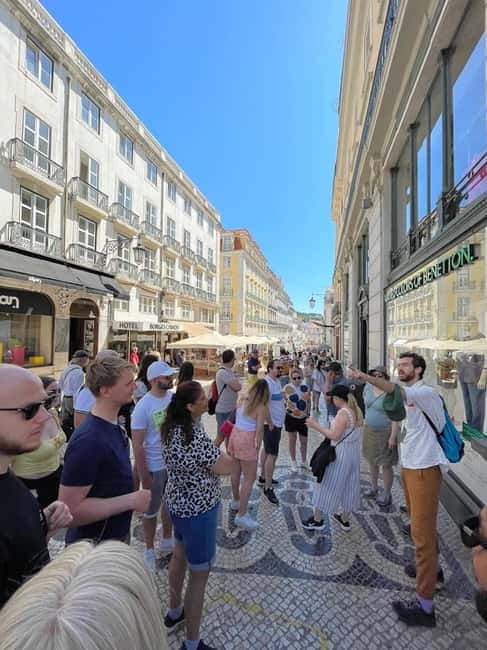
Lisbon street corners have a way of teaching fast. This guided walking tour links major landmarks like Praça do Comércio with the backstory behind Lisbon’s rebuild, politics, and traditions.
I especially like the focus on the city’s “why,” not just the “what.” You also get a practical rhythm for seeing big sights on foot, plus guide-led stops that nudge you toward local culture, including church architecture that most people miss on their own. One thing to consider: it is a walking tour, and while it is generally easy, you may hit a few uphill stretches.
In This Review
- Key Highlights at a Glance (What You’ll Actually Get)
- Starting at Praça do Comércio: How the Tour Sets the Scene
- Baixa Pombalina and Chiado: The Streets That Explain Lisbon’s 1755 Rebuild
- São Domingos Station: The Church Stop That Turns Heads
- Rossio, the Train Station Zone, and Santa Justa Area: Classic Lisbon in Motion
- The Jewish Memorial and Portuguese Turning Points in One Guided Storyline
- Food Culture Along the Route: What to Look For (and What Is Not Included)
- Walking Pace, Comfort, and Group Size Reality Check
- The Guides Are the Difference Maker (Samuel, Tiago, Walter, Kate, Jose, Claudia)
- Price and Value: Why $17 Can Be a Good Deal
- Practical Advice Before You Go
- Should You Book This Lisbon Walking Tour?
- FAQ
- What is the duration of the Lisbon City Highlights Walking Tour?
- Where does the tour start?
- How much does the tour cost?
- Is the tour in English?
- What major sights are included on the walk?
- Is Ginjinha included?
- Is the walking pace difficult?
- Are gratuities included in the price?
- What are the cancellation rules?
- Can I reserve without paying right away?
Key Highlights at a Glance (What You’ll Actually Get)
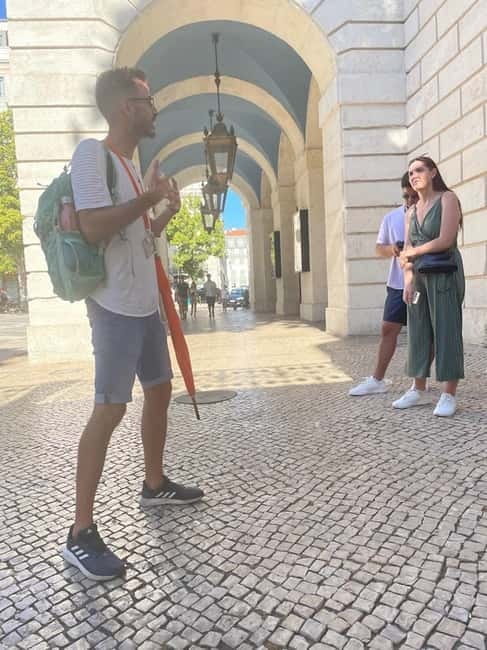
- Praça do Comércio kickoff: Start in Lisbon’s most beautiful square, then move into the city’s core.
- São Domingos Church wow factor: Expect one of the most unusual churches in Lisbon, covered with real stories, not just facts.
- Baixa Pombalina and Chiado context: You’ll connect neighborhoods to the 1755 earthquake rebuild.
- Major sights in a tight loop: City Hall, Augusta Street and Arch, Santa Justa Elevator area, Rossio Square, and the train station zone.
- Culture and food stops: You’ll pass places tied to Lisbon’s everyday life, including Ginjinha culture and classic cafés.
- Guides with strong storytelling and useful tips: Multiple guides (Samuel, Tiago, Walter, Kate, Jose, Claudia, Beatrice) are singled out for clarity, humor, and restaurant and transport advice.
Starting at Praça do Comércio: How the Tour Sets the Scene
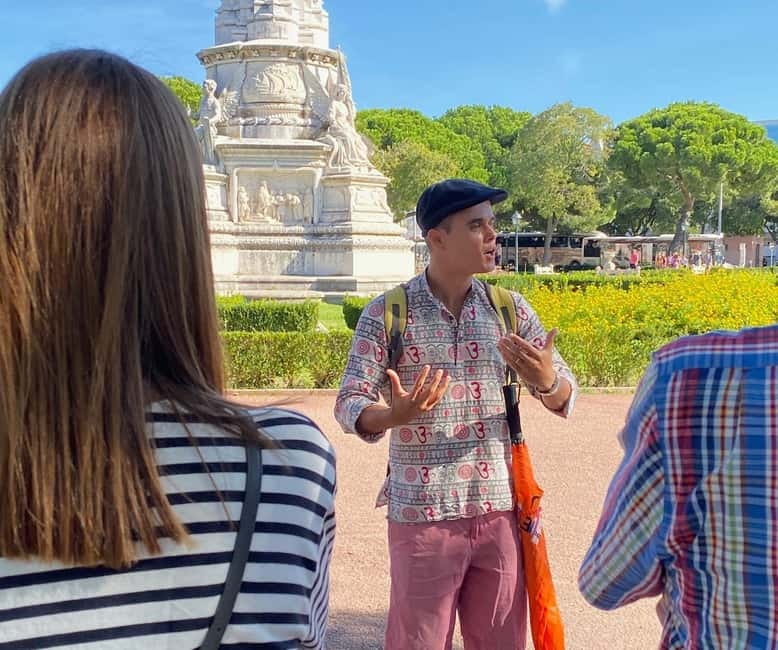
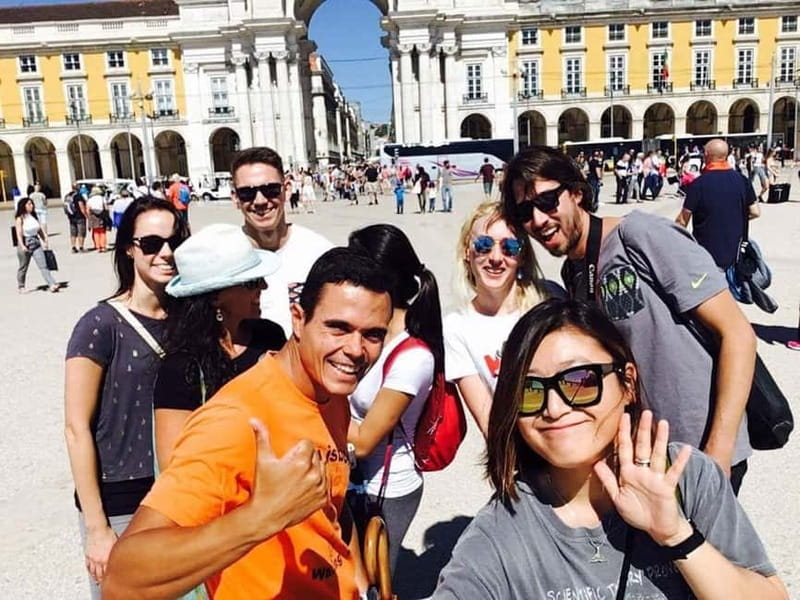
You begin at Praça do Comércio, which is Lisbon at postcard-size, but grounded in real history. The square is a strong anchor because it is open, easy to orient yourself, and it feeds directly into the walk through Baixa.
Look out for the guide with an orange umbrella at Praça do Comércio, between the big arch and the statue in the middle. This matters more than it sounds. Several guests noted that meeting location mix-ups can happen in busy squares, and the tour is paced tightly, so finding the guide promptly keeps you from rushing later.
From there, the tour moves into the city’s center in a way that feels logical. You get the “big view” energy first, then you start threading through streets where the details matter. That sequence helps you understand why Baixa and Chiado became the city’s social and cultural core, including the long list of artists, writers, poets, and politicians tied to these streets since the 1700s.
More Walking Tours in Lisbon
- Lisbon: History, Stories and Lifestyle Walking Tour★ 4.8 · 10,902 reviews
- Best of Lisbon Small-Group Guided Walking Tour★ 5.0 · 4,869 reviews
- Lisbon: Food and Wine Small Group Walking Tour★ 4.9 · 4,082 reviews
- Best of Lisbon Walking Tour: Rossio, Chiado & Alfama★ 4.9 · 2,700 reviews
Baixa Pombalina and Chiado: The Streets That Explain Lisbon’s 1755 Rebuild
Baixa and Chiado are romantic neighborhoods, but the tour keeps it grounded. You learn how these areas were heavily affected by the Great Earthquake of Lisbon in 1755 and how the city was largely rebuilt in the 1700s, becoming one of Europe’s early earthquake-proof urban designs.
What I like here is that the guide doesn’t treat the rebuild like a headline. The story shows up in the street layout and the monument sequence you walk through. When you are standing in the right place, the earthquake story stops being abstract and turns into something you can visually track.
As you move through the center, you pass familiar names and landmarks that tend to blur together when you visit independently:
- City Hall of Lisbon
- Augusta Street and the famous arch
- Rossio Square
- The train station area
- Camões Square
- Carmo area, including the Square and Monastery of Carmo
This is where a good guide really earns the price. The best tours in Lisbon help you see the layers, and the local storytelling style here seems designed for that.
São Domingos Station: The Church Stop That Turns Heads
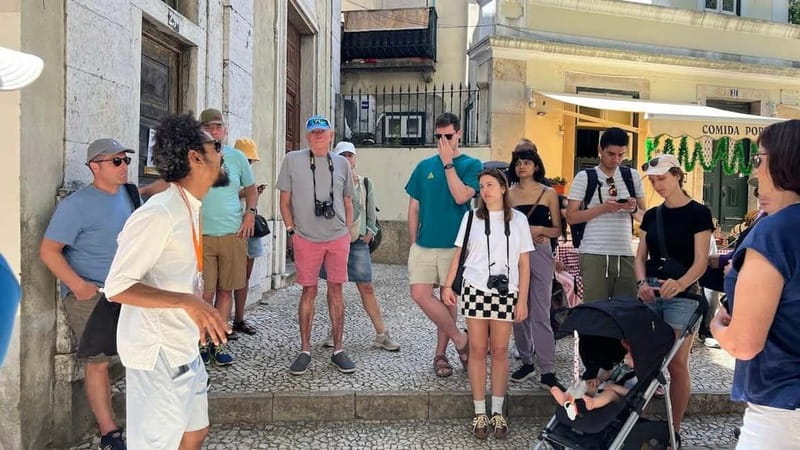
If you only pick one “wow” moment from this tour, it is the religious stop tied to São Domingos Station and the church connection the guide explains along the route.
You are going to see São Domingos Church, often described as one of the most unique churches in the world. In plain terms, it is a Lisbon highlight because it mixes drama and craft in a city that is otherwise famous for tile work, viewpoints, and street life. The guide stories help it land emotionally, not just visually.
One guest praised the way the guide narrated this particular stop, calling out how the storyline made the church feel personal instead of like a quick photo stop. That kind of pacing matters here. Churches are easy to rush. This tour’s approach aims to slow you down without dragging.
Quick reality check: if you are sensitive to noise or crowds, this is a central Lisbon area where foot traffic can be heavy. The upside is that your guide’s route keeps you from wandering blindly.
Rossio, the Train Station Zone, and Santa Justa Area: Classic Lisbon in Motion
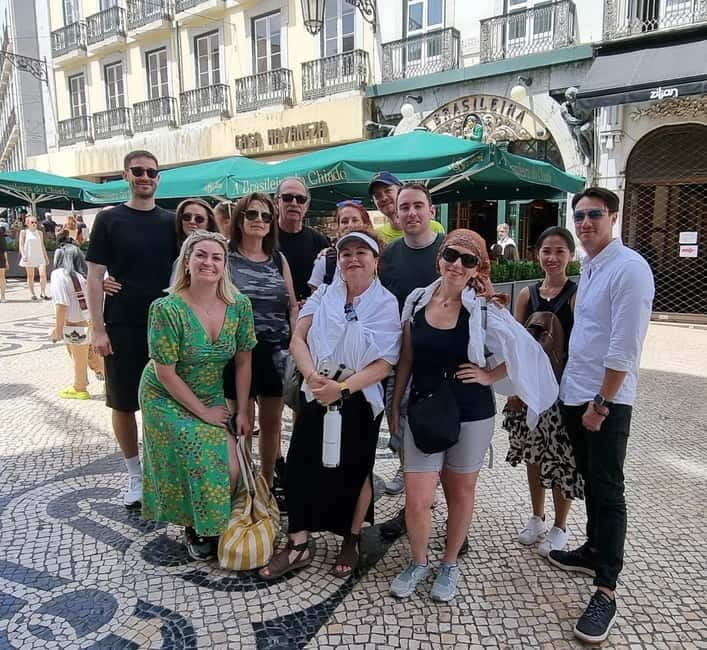
After the Baixa and Chiado lead-in, you get a concentrated dose of central Lisbon architecture and landmarks. The tour mentions Rossio Square and the train station area as part of the key sightseeing run.
This section is useful for two reasons.
First, you see how Lisbon’s different identities connect. Rossio is a civic and social anchor, while the train station zone highlights Lisbon’s movement and travel energy. Second, you are still walking. That means you are not just arriving at stops, you are learning the “in-between” geography, which makes your independent explorations easier later.
You also pass Santa Justa Elevator (or at least the area around it) as part of the walk. Even if you do not ride the elevator, knowing where it sits in the city helps you plan future viewpoints. The tour’s route makes the elevator feel less like a separate attraction and more like part of the city’s vertical personality.
The Jewish Memorial and Portuguese Turning Points in One Guided Storyline
Lisbon history is complicated, and this tour tries to keep it intelligible without sanding off the darker edges. You learn about key shifts in Portugal’s story, including:
- The end of the monarchy
- A change of the capital linked to Portugal becoming more connected with foreign power
- The Jewish massacre
- The longest dictatorship in Europe
- The revolution that changed the country
You also visit a Jewish memorial during the walk. That stop gives the tour more weight than the typical “highlights only” walking route.
I like that the guide places these events inside the everyday geography of Lisbon. Instead of only hearing about history in a lecture tone, you connect political and social change to neighborhoods and buildings you can point to.
One practical note: these topics are emotionally serious. If you prefer history told lightly, tell yourself you are in for a respectful but direct storytelling style.
More Portugal at a stroll:



Food Culture Along the Route: What to Look For (and What Is Not Included)
This tour includes plenty of cultural signposts tied to food and drink, even if you are not sitting for a long meal.
You will pass the original Ginjinha shop and see the city’s Ginjinha culture referenced in the itinerary. The drink itself is not included, so plan on it as an optional add-on if you want to try it.
You also pass:
- Casa do Alentejo
- A Brasileira Café (mentioned as part of the route)
- An original Ginjinha shop
Food spots like these work well on a walking highlights tour because you get context. You learn what these places represent in Lisbon’s daily rhythm, not just how they look on Google. Several guides are praised for recommending where to eat and what to order, and that advice can be especially helpful during your first days in the city.
One more thing I appreciate: the tour seems designed to help you connect Lisbon’s sweetness and liqueur culture to the wider city story. That makes a food stop feel earned, not random.
Walking Pace, Comfort, and Group Size Reality Check
The tour is listed at 150 minutes, about 2.5 hours. Many reviews describe it as not physically demanding, with only a few uphill bits, plus a comfortable overall walking pace.
Still, treat it like a city-center walk, not a sightseeing stroll in a theme park. You will be on your feet for the better part of two hours, and Lisbon’s cobblestones can add effort even when the route looks flat on a map.
A note about groups: most reviews are positive about pacing and guide performance, but a handful mention group size may vary. Some guests expected smaller groups based on other listings or platform descriptions and ended up with larger groups. If you hate crowds, I suggest booking with a flexible mindset and arriving early enough to settle.
Also, one review wished there were audio devices so the guide could be heard more clearly through earphones. Audio is not listed as included here, so if hearing the guide clearly is your priority, arrive close to the leader and keep your attention forward.
The Guides Are the Difference Maker (Samuel, Tiago, Walter, Kate, Jose, Claudia)
At $17 per person, the price is reasonable mainly because the guide performance seems to be the real core of the value. Across reviews, the same patterns show up again and again:
- Clear English
- Humor and engaging storytelling
- A good sense of pacing across stops
- Tips that go beyond landmarks, especially transport and where to eat or drink
Specific guide names are repeatedly praised:
- Samuel gets credit for lots of history and an enjoyable walk.
- Tiago is praised for funny, engaging delivery, plus practical recommendations.
- Walter is singled out for stories and “tips for transportation” style advice.
- Kate is praised for professional, well-paced explanations and a strong wrap-up with local shopping.
- Jose is described as keeping things interesting and fun, while also adding getting-around tips.
- Claudia and Beatrice are highlighted for clear instruction and a steady, organized flow of information.
What that means for you: if you want a Lisbon orientation that turns into a better trip for the days after, pay attention to the guide’s “what next” recommendations. Those are often more valuable than an extra photo of a façade.
Price and Value: Why $17 Can Be a Good Deal
A 2.5-hour guided walk that hits major landmarks, adds story context, and includes an English-speaking local guide is a solid value at $17.
Here is why that price makes sense:
- You are not just seeing one neighborhood. You are walking through central Lisbon in a route that links Praça do Comércio to Baixa and Chiado.
- You get explanation at multiple stops, including the São Domingos church highlight and major squares like Rossio.
- You also get guide-led recommendations, so the tour can reduce the guesswork for food and transport later.
One caution: this is not a long museum day. If you are looking for ticketed attractions, waiting lines, or deep interior time at many venues, you might feel the pace is too “outside.”
But if your goal is to get your bearings fast and understand why the city looks the way it does, this price is easy to justify.
Practical Advice Before You Go
A few small tips will make the experience smoother.
First, wear shoes you trust on cobblestones. Lisbon is pretty, but the ground can be a little unforgiving.
Second, bring water if you are going in warmer months. The tour length is short enough to stay comfortable, but Lisbon walking still adds up.
Third, plan to listen, not only look. This tour is built on interpretation, especially for the earthquake rebuild story and the political timeline that follows Portugal’s dramatic 1900s events.
Finally, if you care about audio clarity, stay near the guide and face forward. One review specifically suggested audio devices as an improvement, which implies you should manage your position and expectations.
Should You Book This Lisbon Walking Tour?
Book it if you want a smart first introduction to Lisbon’s center, and you like history told through places you can walk to. The route connects major highlights like Praça do Comércio, Rossio Square, Augusta Street’s arch, and São Domingos, while also giving you context for Lisbon’s 1755 earthquake rebuild and the country’s political shifts.
Skip it or pair it with something else if you want mostly indoor time, museum focus, or minimal walking. Also, if you strongly dislike crowds, treat group size as a variable and go in with that in mind.
If you are on your first or second day in Lisbon, this is the kind of tour that helps you move through the city with more confidence, and with a short list of places to eat and routes to use later.
FAQ
What is the duration of the Lisbon City Highlights Walking Tour?
The tour lasts about 150 minutes, roughly 2.5 hours.
Where does the tour start?
The tour starts at Praça do Comércio. Meet the guide with an orange umbrella at Praça do Comércio, between the big arch and the statue in the middle.
How much does the tour cost?
The price is listed as $17 per person.
Is the tour in English?
Yes, it is a live tour guide in English.
What major sights are included on the walk?
You’ll see Praça do Comércio and then move through Baixa and Chiado, with stops or views around City Hall of Lisbon, Augusta Street and its arch, Santa Justa Elevator area, Rossio Square and the train station area, São Domingos Church, the Jewish memorial, the original Ginjinha shop, Casa do Alentejo, Carmo square and monastery, a Brasileira Café, Camões Square, and more.
Is Ginjinha included?
No, Ginjinha is listed as not included.
Is the walking pace difficult?
It is generally described as not physically demanding, with only a few uphill bits.
Are gratuities included in the price?
No. Gratuities are listed as not included.
What are the cancellation rules?
Free cancellation is offered up to 24 hours in advance for a full refund.
Can I reserve without paying right away?
Yes. The tour offers reserve now & pay later, so you can book your spot and pay nothing today.
What Lisbon sent us most recently
- 3 Hour Lisbon Private Guided Tour via Tuk Tuk
★ 5.0 · 116 reviews - Lisbon: Private Boat Trip, Guided Walking Tour, Bike & Tram
★ 4.8 · 116 reviews - Lisbon Market and Food Tour with Cooking Class and Lunch
★ 5.0 · 117 reviews - From Lisbon: Sintra and Cascais Private Day Tour
★ 4.8 · 117 reviews - Lisbon: Tagus Estuary Nature Reserve Birdwatching Boat Tour
★ 4.9 · 117 reviews - Lisbon: Private Half-Day Tour with Hotel Pickup
★ 4.8 · 117 reviews - Sintra Private Tour from Lisbon
★ 5.0 · 118 reviews - Pastel de Nata Cooking Class in Lisbon
★ 5.0 · 118 reviews
Walking Tours, compared.
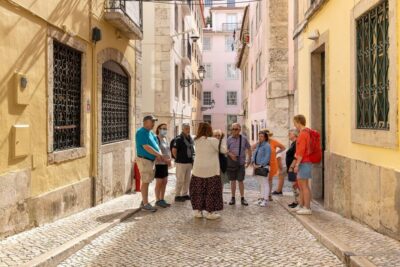

Best of Lisbon Small-Group Guided Walking Tour
Read our review →

Porto Walking Tour, Lello Bookshop, River Cruise and Cable Car
Read our review →
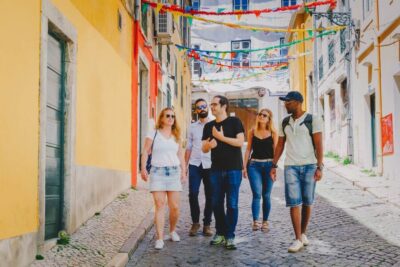
Best of Lisbon Walking Tour: Rossio, Chiado & Alfama
Read our review →
Experience Porto’s Charm: 3-Hour Guided Walking Tour
Read our review →
Enjoy a Guided Levada Walk in the Rabaçal Valley
Read our review →Browse the lists this tour appears in