
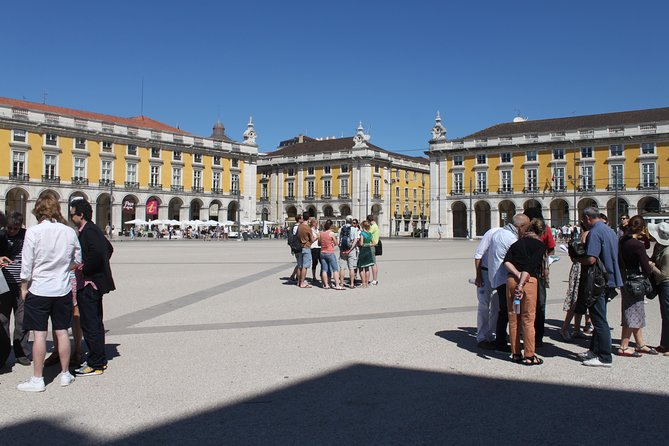
Reviewed · WALKING TOURS
Lisbon Essential Walking Tour: History, Stories and Lifestyle
Lisbon stacks its story in layers, and this 3-hour walk is a fast way to see how they fit. You start in Bairro Alto, move through viewpoints and two major churches, then wind down into Alfama before finishing at Lisbon Cathedral. The small-group pace, max 15 people, keeps it personal and makes it easier to ask questions as you go.
I especially like the way the route mixes architecture with real-life moments, from Jesuit art in São Roque to the 1974 Carnation Revolution at Carmo. You also get practical perks, like a tram trip plus a coffee and pastry stop in Baixa. One drawback to plan for: it is still real walking on hills, so wear good shoes and bring water if you get warm easily.
In This Review
- Key highlights you should care about
- A 3-hour Lisbon route that actually helps you plan the rest of your trip
- Bairro Alto to São Pedro de Alcântara: hills, rebuilds, and instant city views
- Igreja de São Roque: where Jesuit architecture turns into a walking art museum
- Carmo Convent and Church: Gothic stones and the 1974 Carnation Revolution
- Santa Justa elevator area, then a much-needed break in Baixa
- Praça da Figueira and the tram ride up toward Portas do Sol
- Alfama alleys, fado roots, and the route ending at Lisbon Cathedral
- What you really get for $30.25, and what to budget on your own
- Making the most of the walk: shoes, pace, and smart questions
- Who should book this walking tour, and who might choose another option
- Should you book the Lisbon Essential Walking Tour?
- FAQ
- How long is the Lisbon Essential Walking Tour?
- How much does the tour cost?
- What’s included in the price?
- Is the Santa Justa elevator ticket included?
- Are there any entrance fees at the church stops?
- Where does the tour start and end?
- How big are the groups?
- What language is the tour offered in?
- Is free cancellation available?
Key highlights you should care about
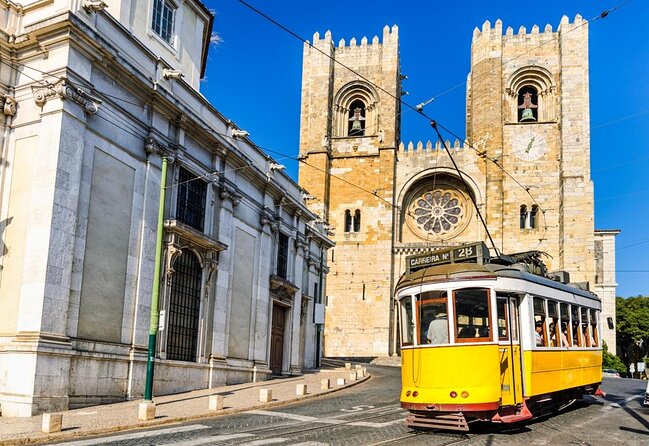
- Iconic Lisbon viewpoints: São Pedro de Alcântara and Portas do Sol give you the city’s hill-and-river logic fast
- Churches that teach history: São Roque (Jesuit, ornate inside) and Carmo (Gothic and Revolution-linked)
- Tram time included: you get a local ride as part of the sightseeing flow, not as an afterthought
- Coffee and cake break in Baixa: a proper rest stop, not a quick snack on the move
- Perfect first-day orientation: the route hits major neighborhoods without trying to do everything
A 3-hour Lisbon route that actually helps you plan the rest of your trip
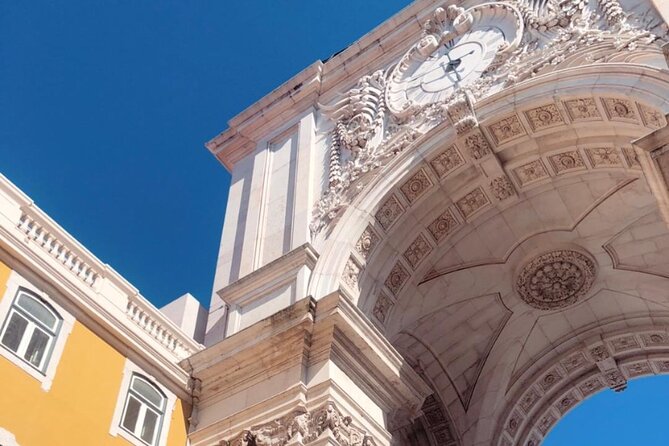
This is the kind of tour I like on day one because it does two jobs at once. First, it shows you what to look at, where to stand for views, and how neighborhoods connect on Lisbon’s hills. Second, it gives you enough context that later visits to museums or viewpoints feel less like random postcard stops.
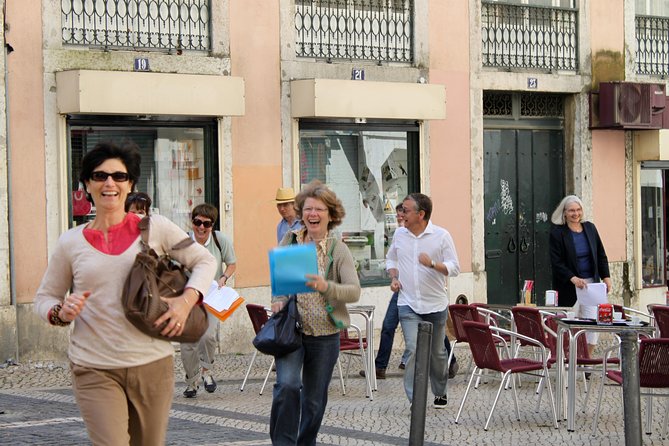
The tour runs about 3 hours and keeps groups to 15 travelers. That matters, because Lisbon streets can get tight, and a smaller group means you spend less time waiting in the street and more time learning and moving. You’ll also be with a professional guide in English, and the guides you might get can be teachers of the city like Paolo, Beatrice, Ricardo, Ana, Sofia, Lucie, or Joao, all mentioned as standout voices in the tour experience.
One more practical note: it is a walking-focused day. Most people can participate, but if walking uphill is tough for you, you’ll want to go slow, take breaks when the group pauses, and keep an eye on your energy.
More Walking Tours in Lisbon
- Lisbon: History, Stories and Lifestyle Walking Tour★ 4.8 · 10,902 reviews
- Best of Lisbon Small-Group Guided Walking Tour★ 5.0 · 4,869 reviews
- Lisbon: Food and Wine Small Group Walking Tour★ 4.9 · 4,082 reviews
- Best of Lisbon Walking Tour: Rossio, Chiado & Alfama★ 4.9 · 2,700 reviews
Bairro Alto to São Pedro de Alcântara: hills, rebuilds, and instant city views
You kick off in Bairro Alto, a neighborhood layered with history and elevation. The guide sets the stage by explaining how Lisbon developed across hills and districts, and how the area changed after the 1755 earthquake drew families from Baixa and Bairro districts as the city rebuilt.
Then you get the pay-off: the route heads toward Miradouro São Pedro de Alcântara. This is one of those viewpoints where you finally understand Lisbon’s layout. From up here you can see the Baixa area and the south bank of the Tagus River, and suddenly the rest of your sightseeing makes more sense.
What I like about this part of the walk is that it’s not just “stand here, take a photo.” The view is used as a learning tool. You get a mental map early, which helps later when you try to navigate from Alfama to the river or back toward the Cathedral.
Igreja de São Roque: where Jesuit architecture turns into a walking art museum
Next comes Igreja de São Roque, a church tied to the Jesuits and to some of the earliest worldwide Jesuit work. The outside can look austere, but the inside is a different story: expect gilding, tiled surfaces (azulejo-style decoration), and paintings with strong Mannerist and Baroque influences.
This is a stop I think many visitors underestimate. You might arrive expecting a quick look at a church interior. Instead, it works like a crash course in how faith, art, and power shaped Portuguese cities. If you like visual details, you’ll probably spend a bit longer than planned, just because the decorations reward patient looking.
Tip for your own visit: slow down inside. Don’t rush the first room. Let your eyes adjust, then notice how the tiles, paintings, and ornamentation relate to each other. It makes the whole interior feel more coherent.
Carmo Convent and Church: Gothic stones and the 1974 Carnation Revolution
Heading downhill, you’ll reach Igreja do Carmo, which centers on the Convento do Carmo. It’s known for its Gothic architecture, and it also carries major political meaning because the Carnation Revolution began here in 1974, ending nearly five decades of dictatorship.
This stop is valuable because it connects Lisbon to a modern turning point, not just medieval or early-modern storylines. You’re looking at architecture, yes, but you’re also standing at a site that helped change Portugal’s direction in living memory.
A small practical consideration: this part of the day can feel like a shift from ornate art to something more solemn. If your group is moving fast, ask the guide to pause a moment for the Revolution context. It makes the site land, instead of becoming another “important building” checkmark.
Santa Justa elevator area, then a much-needed break in Baixa
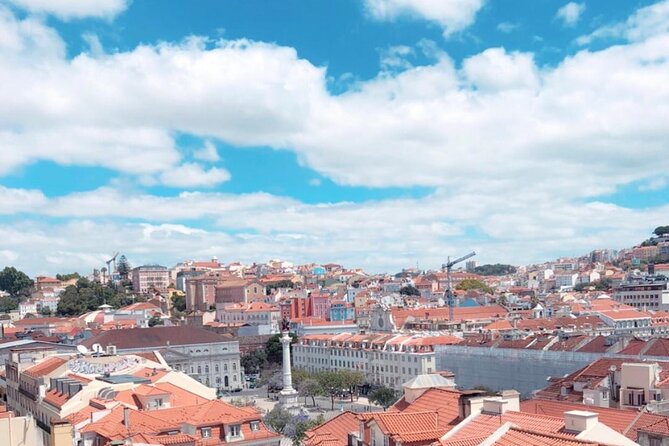
As you move on, you arrive at Elevador de Santa Justa, a striking monument in Gothic Revival style. Even if you do not pay for the elevator itself, this is a strong viewpoint moment. The ticket to ride it is not included, but the area still gives you a sense of scale and perspective over the city.
Then comes one of my favorite tour ingredients: a coffee and pastry break in Baixa, with the ticket included. After hills and churches, this stop gives your legs a reset. It also gives you a chance to ask your guide for practical next steps, like where to find good tarts, where to grab dinner, or how to time other sights so you avoid the worst crowds.
If you’re traveling with kids or multiple ages in your group, the break is a quiet win. It keeps everyone happier, and it reduces the “we only have 10 minutes left” stress that can ruin the last half of a walking tour.
More Portugal at a stroll:



Praça da Figueira and the tram ride up toward Portas do Sol
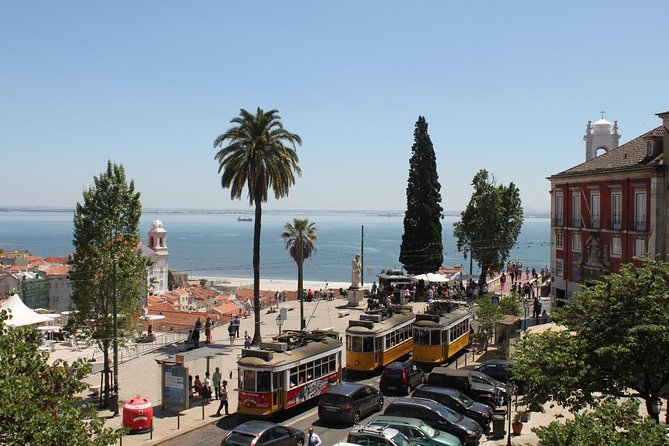
In central Baixa, you’ll see Praca da Figueira and other points of interest that help you understand how the city’s core connects to its viewpoints. Then you take a tram ride, included, which the route uses to climb back toward the castle area and toward Portas do Sol.
Tram time is more than fun. In Lisbon, a tram ride can explain the city better than a map does. You feel the slope, you see how neighborhoods stack, and you understand why certain areas became hubs.
I also appreciate that the tram moment is placed right before you head into Alfama. That pacing helps. You’re not scrambling from one steep street to another immediately. You get transport, perspective, then you’re ready for the maze of Alfama.
Alfama alleys, fado roots, and the route ending at Lisbon Cathedral
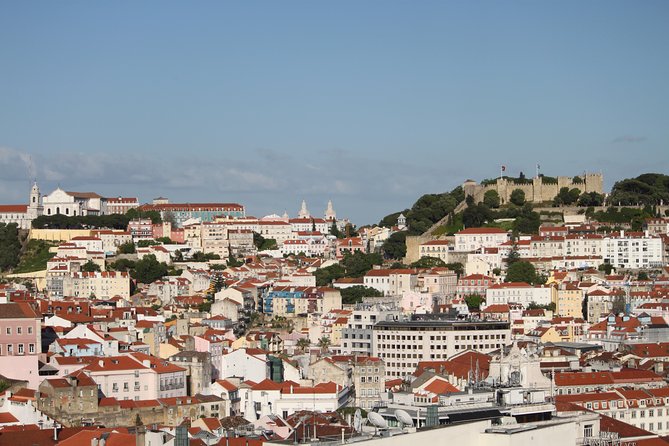
At Portas do Sol, the tour opens up into Alfama, one of Lisbon’s oldest and most traditional neighborhoods. This is where you’ll hear about fado houses and the neighborhood’s long-time festival culture, especially saints’ days like St. Anthony.
The guide also points out key landmarks in the area, including the Monastery of São Vicente de Fora and the National Pantheon. Even if you do not enter, knowing they are here helps you plan what to do next day or later in your trip.
Then the tour finishes at Lisbon Cathedral, which dates to 1150, just a few years after Lisbon was taken back from the Moors. Like much of Lisbon, the Cathedral has been altered over time, so you’ll see a mix of architectural styles rather than one single era.
Why I like ending here: it gives you a “history anchor” for the whole walk. You started with neighborhoods and viewpoints, you covered churches and political change, and you land at a site that helps tie the story together across centuries. It also gives you a strong landmark to use for your next plans, whether that means continuing on foot, grabbing a tram, or heading toward the river.
What you really get for $30.25, and what to budget on your own
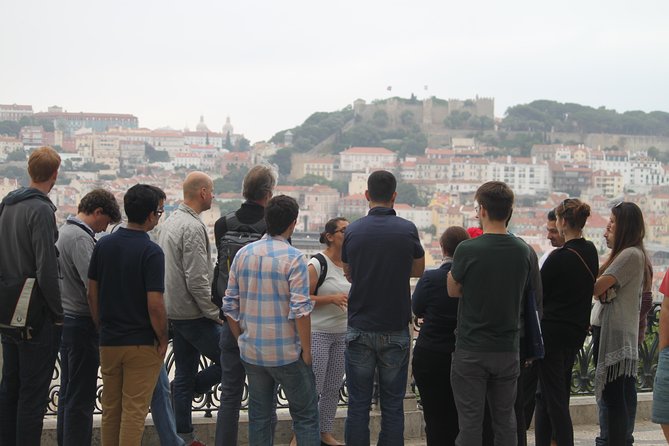
At $30.25 per person, this tour is priced like a good first-day value, not like a premium private guide. You get a professional guide, insurance, a tram trip, and a coffee and cake break. Those included extras matter in Lisbon, where attractions and transport can add up fast if you’re paying out of pocket each time.
Most of the sights on the walk are marked as free entry. The one clear add-on is the Santa Justa elevator ticket, which is not included. If you think you’ll want the elevator viewpoint experience itself, set aside extra cash. If you’re mostly after the exterior look and the panoramic sense of the city, you might be fine without paying.
In other words: the price feels reasonable if you want orientation, a few major landmarks, and one included “treat stop.” It feels less ideal if you hate walking and think you’ll skip most of the sightseeing. For those people, a more transport-heavy plan might make more sense.
Making the most of the walk: shoes, pace, and smart questions
This tour is described as fun and informative in the best way, and the guides mentioned in the experience tend to bring energy and clear explanations. Guides like Paolo and Ricardo are highlighted for connecting historical layers and telling stories that make the city feel usable, not abstract. Ana and Beatrice are often praised for organization and humor, which helps when streets get busy and timing gets tight.
Still, you can make the experience smoother with a few simple choices:
- Wear comfortable shoes. The route includes hill walking, and people have specifically recommended comfort for this reason.
- Bring water, especially if you run warm. Lisbon sun and slopes can sneak up on you.
- Ask your guide for a next-day plan before you leave the last stops. Many guides share restaurant and fado listening recommendations, and those suggestions can save you time searching on your own.
- If you want photos, plan for them at viewpoint stops like São Pedro de Alcântara and Portas do Sol. You’ll get the best results there with less rushing.
One small caution I’d take seriously: your booking details need to match the correct meeting location. One past experience included a booking not reaching the guide and an incorrect meeting place, but the situation was handled on the ground. You’ll avoid stress by double-checking your exact meeting point in the map link before you arrive.
Who should book this walking tour, and who might choose another option
Book this if you want a structured introduction to Lisbon’s big ideas. It’s ideal for first timers who want to understand neighborhoods, architecture, and a few major historic moments without spending a full day on museums. It’s also a solid fit for mixed-age groups, since the pace includes pauses and a food break.
It’s also good if you enjoy guided storytelling. The experience stands out when your guide can connect details, like why Jesuit art looks the way it does in São Roque, or how the Carnation Revolution tied back to the Carmo site. Guides praised for clarity and passion can turn a church interior into a memorable stop.
Consider something else if:
- You struggle with hills or longer walks, since this is still a walking tour even with tram time included.
- You only want a ride and minimal walking. This route is designed to move through neighborhoods, churches, and streets.
- You already know Lisbon’s highlights and want something more niche, like a specific museum deep dive. This is built for orientation, not specialization.
Should you book the Lisbon Essential Walking Tour?
Yes, I’d book it if your first day needs structure and you want to leave with a mental map, not just photos. The combination of Bairro Alto to Alfama, major church stops, and an included tram plus coffee break gives you a lot of Lisbon for the money.
Skip it only if walking uphill is a real problem for you, or if you’d rather spend your time on fewer stops at a slower pace. If you can handle comfortable shoes and a little stamina, this tour is one of the most efficient ways to start building your own Lisbon itinerary.
FAQ
How long is the Lisbon Essential Walking Tour?
The tour lasts about 3 hours.
How much does the tour cost?
The price listed is $30.25 per person.
What’s included in the price?
Included features are a professional guide, a tram trip, and a coffee and cake break, plus liability and personal accident insurance.
Is the Santa Justa elevator ticket included?
No. The Santa Justa elevator admission is not included.
Are there any entrance fees at the church stops?
Many of the listed stops are marked as free admission, while the Santa Justa elevator is listed as not included.
Where does the tour start and end?
It starts in Lisbon, Portugal and ends at Lisbon Cathedral, with both endpoints listed within Lisbon.
How big are the groups?
The tour has a maximum of 15 travelers.
What language is the tour offered in?
The tour is offered in English.
Is free cancellation available?
Yes. You can cancel up to 24 hours in advance for a full refund.
More Historical Tours in Lisbon
- Lisbon: Daytime or Sunset Boat Cruise with History and Wine
★ 5.0 · 1,053 reviews - Explore Lisbon by Tuk Tuk: History and Viewpoints
★ 5.0 · 840 reviews - Private Tuk Tuk Tour Through Lisbon’s Historical Streets
★ 5.0 · 734 reviews
What Lisbon sent us most recently
- 3 Hour Lisbon Private Guided Tour via Tuk Tuk
★ 5.0 · 116 reviews - Lisbon: Private Boat Trip, Guided Walking Tour, Bike & Tram
★ 4.8 · 116 reviews - Lisbon Market and Food Tour with Cooking Class and Lunch
★ 5.0 · 117 reviews - From Lisbon: Sintra and Cascais Private Day Tour
★ 4.8 · 117 reviews - Lisbon: Tagus Estuary Nature Reserve Birdwatching Boat Tour
★ 4.9 · 117 reviews - Lisbon: Private Half-Day Tour with Hotel Pickup
★ 4.8 · 117 reviews - Sintra Private Tour from Lisbon
★ 5.0 · 118 reviews - Pastel de Nata Cooking Class in Lisbon
★ 5.0 · 118 reviews
Walking Tours, compared.
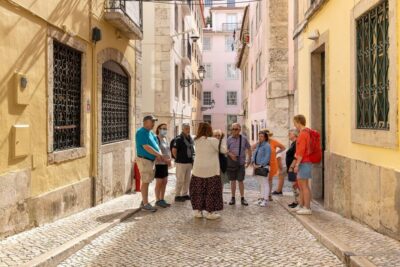

Best of Lisbon Small-Group Guided Walking Tour
Read our review →
Porto Walking Tour, Lello Bookshop, River Cruise and Cable Car
Read our review →

Best of Lisbon Walking Tour: Rossio, Chiado & Alfama
Read our review →
Experience Porto’s Charm: 3-Hour Guided Walking Tour
Read our review →
Enjoy a Guided Levada Walk in the Rabaçal Valley
Read our review →Browse the lists this tour appears in