
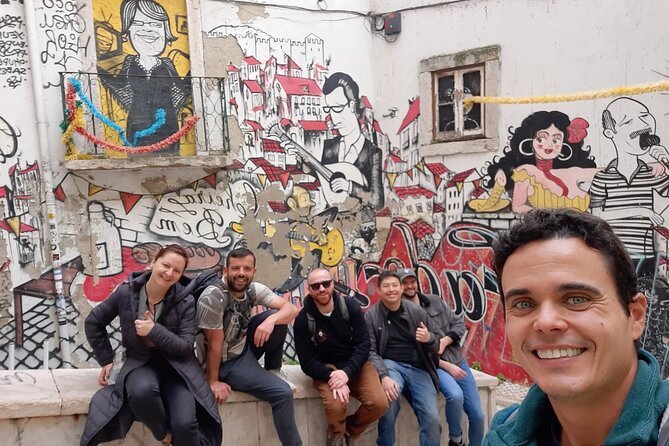
Reviewed · WALKING TOURS
Lisbon Highlights Guided Walking Tour
Lisbon clicks when you walk it. This 2.5-hour guided walking tour connects famous corners to the stories that shaped the city, from the 1755 earthquake to Chiado views.
I like two things a lot. First, it is strong value for the price, since the stops are timed well and you get a professional guide. Second, it ends on a photo-ready viewpoint, so you finish with something you can frame immediately.
One thing to consider: you are on your feet for about 2.5 hours through central Lisbon, with some hills, so wear comfy shoes and plan for a steady pace.
Key takeaways before you go
- 1755 earthquake, told where it happened at Praça do Comércio
- Augusta Street Arch and Rua Augusta, explained as symbols and city-planning choices
- Monarchy and royal escape stories tied to Municipal Square and Rossio Square
- Iconic landmarks with practical context, including Santa Justa Elevator and Rossio Station
- Food-and-drink culture stops, like ginjinha and Lisbon’s classic meeting places in Chiado
- Small groups (max 20), which makes Q and A feel realistic, especially based on guide energy from Jose Guia, Shiri, and Telma
In This Review
- Why This 2.5-Hour Lisbon Walk Is a Smart First-Day Move
- Praça do Comércio: Start Where Lisbon Rebuilt Itself
- Augusta Street Arch, Municipal Square, and the Meaning Behind Symbols
- Rua Augusta: A Street With a City-Planning Story
- Santa Justa Elevator and the Eiffel Tower Connection
- Rossio Square: Old Roots and Big Political Escape
- São Domingo Church and the Lisbon Tragedy Behind It
- A Ginjinha and Casa do Alentejo: Lisbon Flavor and Moorish Echoes
- Avenida da Liberdade and Rossio Station Architecture
- Chiado Turns: Carmo Square and the Unfinished Church Story
- Luís de Camões Square and Café A Brasileira Writer Culture
- Finishing at São Pedro de Alcântara: Your View Reward
- Price and Value: What You Pay for, and Why It Works
- Group Size, Guides, and the Tour Pace That Keeps Moving
- What to Do Before You Book (and What to Bring)
- Should You Book This Lisbon Highlights Guided Walking Tour?
- FAQ
- How long is the Lisbon Highlights Guided Walking Tour?
- Where do I meet, and where does the tour end?
- Is the tour offered in English?
- What is included in the price?
- Are there admission tickets needed at the stops?
- What if the weather is poor?
Why This 2.5-Hour Lisbon Walk Is a Smart First-Day Move
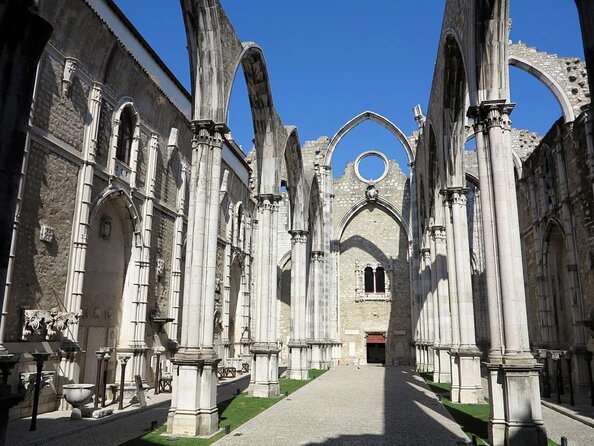
If you are trying to understand Lisbon quickly, this is a very usable way to do it. The route stays in central areas you will likely revisit later, so the facts the guide shares do not feel random. Instead, the city’s layout, its big turning points, and its famous buildings start to make sense in the order you see them.
At $21.72 per person for about 2 hours 30 minutes, it sits in the budget-friendly zone. You are paying for a guide to interpret what you are looking at, not for attractions with separate ticket costs. All the listed stops are admission ticket free, which helps keep the tour from turning into a surprise expense.
It also books ahead on average (43 days), which usually means the schedule is popular. If your trip dates are set, I would lock it in early so you get the time slot that fits your day.
Who this suits best: first-timers who want an easy orientation, budget travelers who still want good storytelling, and mixed-age groups who can handle a walking tour. The tour has also been enjoyed by families ranging from teens to grandparents, which tells me it is paced for regular sightseers, not marathon walkers.
Praça do Comércio: Start Where Lisbon Rebuilt Itself
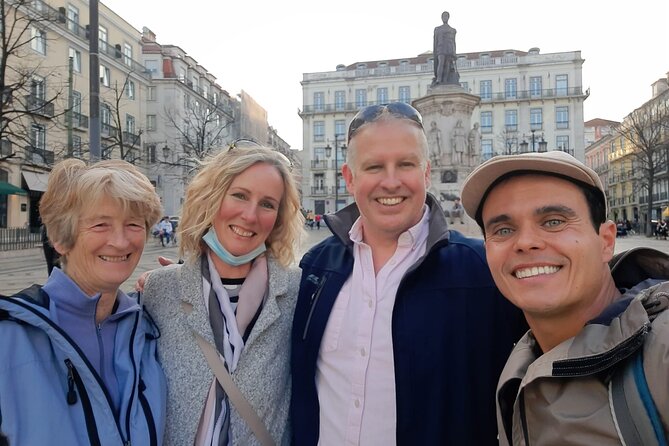
You begin at Praça do Comércio, the biggest square in Lisbon. This matters because it is wide open, easy to orient yourself, and a perfect place to set the tone. From there, the guide ties your view of the square to the Great Earthquake of Lisbon, the one that destroyed about 80% of the city.
That earthquake piece is not just trivia. It is the key to understanding why Lisbon looks the way it does today. When you hear how the disaster reshaped the city, you start to recognize the difference between what is old and what is rebuilt, even as the buildings look seamless from far away.
Practical tip: use this first stop to get your bearings for the rest of the walk. If you know which direction the river sits, the rest of central Lisbon feels less like a maze.
More Walking Tours in Lisbon
- Lisbon: History, Stories and Lifestyle Walking Tour★ 4.8 · 10,902 reviews
- Best of Lisbon Small-Group Guided Walking Tour★ 5.0 · 4,869 reviews
- Lisbon: Food and Wine Small Group Walking Tour★ 4.9 · 4,082 reviews
- Best of Lisbon Walking Tour: Rossio, Chiado & Alfama★ 4.9 · 2,700 reviews
Augusta Street Arch, Municipal Square, and the Meaning Behind Symbols
Next comes the Arco do Triunfo along Augusta Street. The arch is imposing for a reason, and the guide focuses on what it represents to the city. This is a classic walking-tour move that works: instead of just pointing at a landmark, the guide explains why it was made and what message it carries.
Then you head to Municipal Square, where the City Hall is located. Here, the story shifts from architecture to political change, including the end of Portugal’s Monarchy. This is one of the stops that helps you connect the visible with the historical. When you later see plaques, monuments, or street names, you understand what they are reacting to.
Rua Augusta: A Street With a City-Planning Story
You move by Rua Augusta, described as Lisbon’s most important street. The guide’s angle here is especially helpful if you like to understand the “why” behind a city, not just the “what.” You learn why the area was built as a grid, which ties right back into the earthquake rebuilding theme.
This is also where the tour pacing feels smart. Rua Augusta gives you a long stretch to walk, so you are not constantly stopping and starting. At the same time, the guide can explain the pattern while you can still look down the street and understand what they mean.
Santa Justa Elevator and the Eiffel Tower Connection
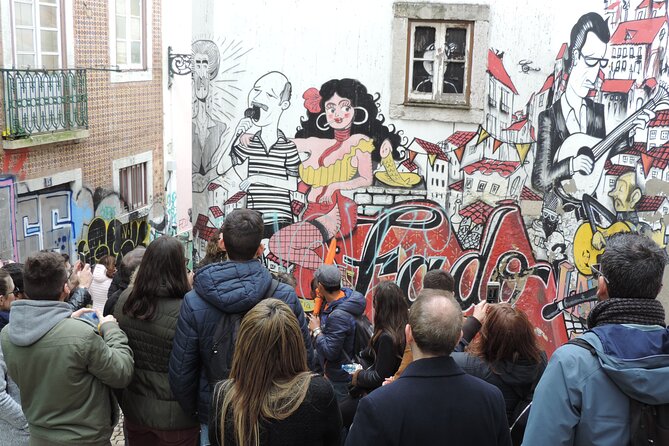
One of the most famous photo stops is Elevador de Santa Justa. The tour keeps it tight, but it is a highlight for good reason. You also get the detail that it is the only elevator of this kind in Portugal, plus a connection the guide explains to the Eiffel Tower.
Even if you do not plan to ride it, seeing it as a symbol is worth the stop. It helps you see Lisbon as a city that borrowed ideas, adapted them, and then made them its own.
A quick thought before you go: if you are the kind of traveler who likes to compare designs, keep your eyes open for the way this structure looks different from the street-level buildings around it.
Rossio Square: Old Roots and Big Political Escape
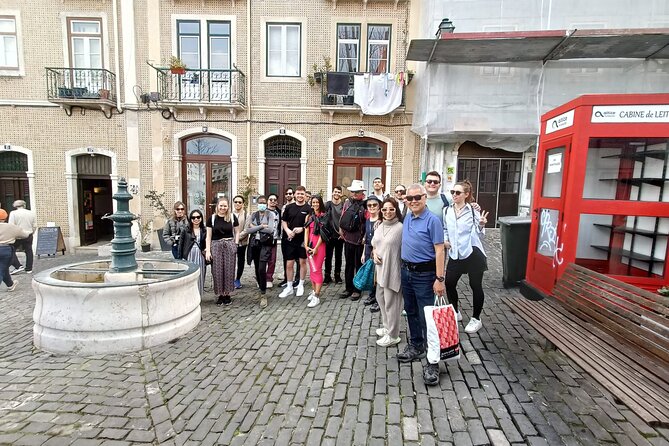
At Praca Dom Pedro IV, you hit Rossio Square, noted as the oldest square in Lisbon dating back to the 13th century. The guide also brings in two heavier themes: Portuguese stones and the escape of the Portuguese Royal family to a foreign country.
This is another stop where the guide’s storytelling makes the space feel larger than it is. A square can look like a simple public room, but when you hear about royal escape routes and political shifts, it suddenly feels like the stage for key moments.
If you like to take photos, this is a good place to pause for a second. Squares give you more angles, and you can capture architecture plus streetscape in one frame.
More Portugal at a stroll:



São Domingo Church and the Lisbon Tragedy Behind It
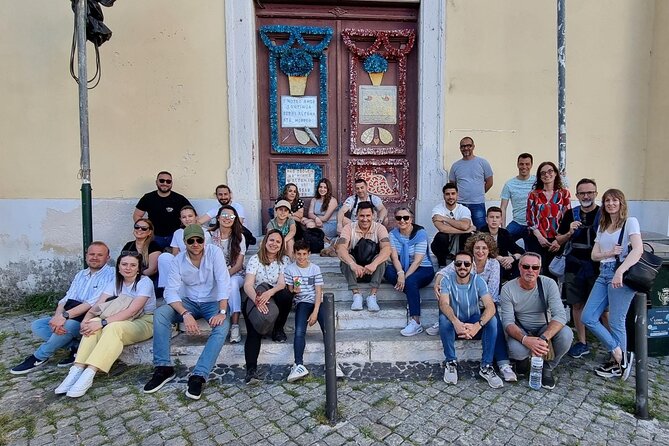
You then see Igreja de S Domingos. The tour calls it one of the most unique churches in the world, and the guide explains the saddest episode connected to it. This is exactly the kind of stop that makes a walking tour feel more human. It is not just “look at this building,” it is “this building holds a story people still remember.”
Whether you are religious or not, church architecture often becomes more interesting when you understand the event behind it. If you have a soft spot for architecture with emotion, this is a strong moment in the walk.
A Ginjinha and Casa do Alentejo: Lisbon Flavor and Moorish Echoes
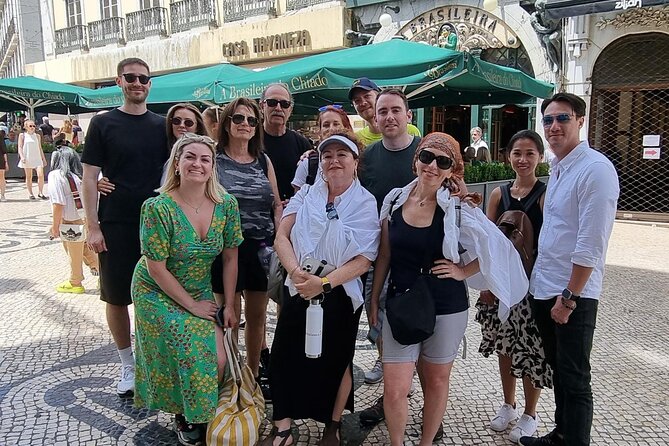
Two stops later, you get a break from pure monuments and lean into Lisbon’s everyday culture.
First, you visit A Ginjinha and learn about ginjinha, the famous Lisbon liquor. The guide also explains why this shop became an institution. This is a practical kind of sightseeing, because Lisbon’s food and drink are not just side quests. They are part of how the city’s identity sticks.
Then you see Casa do Alentejo, and the guide connects it to Moorish influence in Portugal’s history. It is a great pairing: one stop is a tasting culture story, the next is a visual building story tied to deeper historical layers.
If you are trying to plan what to eat and where to go after the tour, these are the kinds of stops that help you make choices with confidence. You start to see the city’s connections instead of collecting random recommendations.
Avenida da Liberdade and Rossio Station Architecture
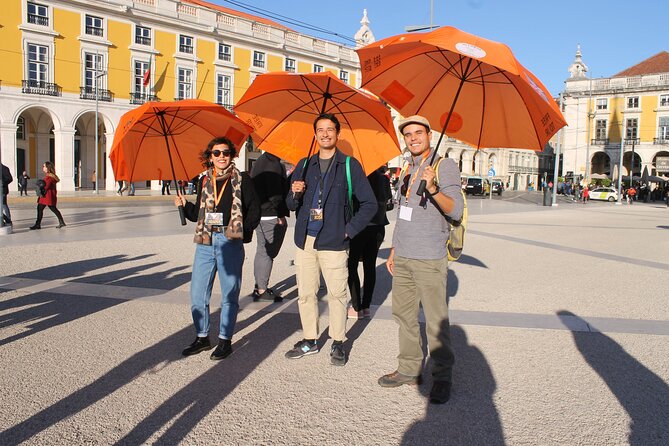
Next up is Avenida da Liberdade, often compared to Lisbon’s Champs Elysees. The guide also covers when it was built, which helps you place the boulevard in time instead of just calling it impressive.
Then you reach Estacao Do Rossio, the first central station in Lisbon, and the tour points out the architecture style that is just found in Portugal. Station buildings can be a snooze on tours, unless a guide brings out what is visually distinctive and why it matters. Here, the focus is on the design language so you can actually notice it.
This is also a good stretch for snapping a few clear photos. Stations tend to give you tall lines and strong geometry, and that makes pictures come out cleaner.
Chiado Turns: Carmo Square and the Unfinished Church Story
As you reach the Chiado area, the tour includes Museu Arqueologico do Carmo and Carmo Square. You will see why the church is unfinished, which is one of those Lisbon details that always feels mysterious until someone explains it.
The guide also ties in the Portuguese dictatorship and the revolution that put an end to it. That context matters because it tells you why certain buildings and sites feel different from their neighbors. Lisbon is full of layered eras, and Chiado is where multiple threads overlap.
One more advantage of getting this info during a guided walk: you do not have to stop and research on your phone in the middle of a crowded area. You walk, you hear, you remember.
Luís de Camões Square and Café A Brasileira Writer Culture
The walk continues through Praca Luis de Camoes, where you will notice the fancy shops in Chiado and stop around the Café A Brasileira area. The guide explains it as a meeting point for writers and poets in the 20th century, and you also hear about Luis de Camões, one of Portugal’s most important poets.
Even if you do not plan to step inside cafés, this part helps you understand why people linger here. It is a cultural crossroads, and the tour connects the name on the square to a wider creative scene.
Finishing at São Pedro de Alcântara: Your View Reward
The tour ends near São Pedro de Alcântara, with the viewpoint as the final payoff. The highlight says you finish at a famous viewpoint ideal for city photos, and that is exactly what the ending gives you.
Viewpoints can be awkward if you arrive with no context. On this tour, you arrive with a route in your head, so the city feels readable. You recognize the streets you walked, and you have a better sense of where the river side sits compared with the uphill areas you crossed.
This is also a smart place to slow down, take a last look, and decide what you want to see next on your own.
Price and Value: What You Pay for, and Why It Works
Let’s talk value, because the price is clear: $21.72 per person.
Here is why it feels like good value:
- You get a professional guide who connects landmarks to stories, not just a route map.
- All fees and taxes are included.
- The itinerary lists admission ticket free for every stop, so you are not paying entry fees as you go.
Where you might want to adjust your expectations: you are not buying museum time or a long ride. This is an orientation-style walk. You come away with context, key locations, and photo spots, then you choose what to explore deeper afterward.
And that fits Lisbon perfectly. The city rewards repeat visits, and a great walking tour gives you the mental map to enjoy that second and third day.
Group Size, Guides, and the Tour Pace That Keeps Moving
This experience runs with a maximum of 20 travelers. In practical terms, that matters. It usually means the guide can stop for questions without the whole group getting lost, and you do not feel like you are in a giant herd.
The reviews also give you a sense of what the guide energy looks like. Names that came up include Jose, Jose Guia, Shiri, Thelma, and Anna-Elyse/Ann-Elisa. The common thread across those comments is clear communication, engaging storytelling, and useful suggestions for where to eat and what to do next.
One more practical note from reviews: the walking speed felt right, and hills were manageable as expected. Still, I would treat it as a real walking tour and dress for movement, not sightseeing in flip-flops.
What to Do Before You Book (and What to Bring)
If you are deciding whether to book, think about your own style.
This tour is a great fit if you:
- Want a guided overview without spending a ton on admissions
- Like learning why places matter, not just what they are called
- Plan to wander Chiado and central Lisbon afterward
Bring:
- Comfortable walking shoes for uneven sidewalks and uphill stretches
- Water, especially if you are traveling in hotter months
- A camera or phone with enough space for the viewpoint photos at the end
Ask your guide questions like:
- What should we see next if we love architecture
- What is worth skipping if we only have half a day
- Where do locals tend to start their evenings in central Lisbon
Those are the exact kinds of things guides often share during the walk, and it saves you time later.
Should You Book This Lisbon Highlights Guided Walking Tour?
Yes, if you want an efficient, story-based first look at central Lisbon. For the money, you get a guided walkthrough of the city’s major landmarks, with the 1755 earthquake thread running through key stops, plus culture stops like ginjinha and Chiado poet lore around Luis de Camões.
Skip it only if you:
- Want a transportation-heavy or ride-heavy tour with minimal walking
- Are looking for a long, deep museum session instead of a street-level overview
- Have limited mobility and cannot comfortably handle about 2.5 hours on foot
For most people, especially first-timers and budget travelers, this is a solid way to get your bearings fast and then enjoy Lisbon at your own speed after.
FAQ
How long is the Lisbon Highlights Guided Walking Tour?
The tour lasts about 2 hours 30 minutes.
Where do I meet, and where does the tour end?
You start at Praça do Comércio 574, 1100-148 Lisboa, Portugal. The tour ends at Praça Luís de Camões, Largo Luís de Camões, 1200-243 Lisboa, Portugal, next to the monument.
Is the tour offered in English?
Yes. The tour is offered in English.
What is included in the price?
The price includes a professional guide and all fees and taxes.
Are there admission tickets needed at the stops?
No. Each stop listed has admission ticket free, so you are not paying separate entry fees during the walk.
What if the weather is poor?
This experience requires good weather. If it is canceled due to poor weather, you will be offered a different date or a full refund.
What Lisbon sent us most recently
- From Lisboa: Sintra, Cabo da Roca & Cascais Private Full Day Tour
★ 5.0 · 39 reviews - Best of Sintra and Cascais Private Full Day Tour
★ 5.0 · 39 reviews - Private Sailing tour in Lisbon – Day Time, Sunset and Night
★ 4.5 · 39 reviews - Tuk Tuk Lisboa – Sightseeing Tours
★ 4.5 · 39 reviews - Private Experience Óbidos Nazaré and Fátima or Aveiro and Óbidos
★ 5.0 · 39 reviews - Belém and Jerónimos Monastery Private Walking Tour & Ticket
★ 4.5 · 39 reviews - Lisbon Private Luxury Tour
★ 4.5 · 39 reviews - Exclusive Lisbon Progressive Dinner & Wine Tour
★ 5.0 · 40 reviews
Walking Tours, compared.
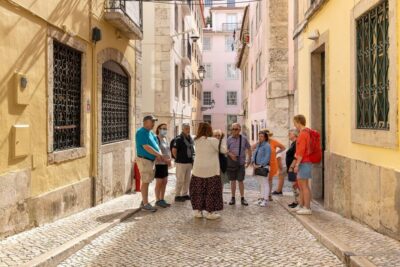

Best of Lisbon Small-Group Guided Walking Tour
Read our review →

Porto Walking Tour, Lello Bookshop, River Cruise and Cable Car
Read our review →

Best of Lisbon Walking Tour: Rossio, Chiado & Alfama
Read our review →
Experience Porto’s Charm: 3-Hour Guided Walking Tour
Read our review →
Enjoy a Guided Levada Walk in the Rabaçal Valley
Read our review →Browse the lists this tour appears in