
Reviewed · WALKING TOURS
Lisbon: Iconic Landmarks Walking Tour
Lisbon’s turning points fit on one walk. You start at Praça do Comércio on the riverfront, then move through the city’s big chapters, from the Age of Discovery to the 1755 earthquake and Portugal’s democratic comeback.
I like two things most. First, the storytelling has clear cause and effect, linking the Age of Discovery to what Lisbon endured in 1755 and what Portugal changed in 1974. Second, the tour builds in viewpoint breaks, including Miradouro de Sao Pedro de Alcantara and a photo stop at the Santa Justa Lift area, so you get photos and orientation without rushing.
One consideration: it is a 2-hour walking tour and it is not suitable for wheelchair users. Bring comfortable shoes, and plan to keep moving at a steady city pace.
In This Review
- Key highlights worth planning around
- Starting at Praça do Comércio, where the city begins to make sense
- Baixa Pombalina on foot, seeing the earthquake recovery in architecture
- Miradouro de Sao Pedro de Alcantara, then Santa Justa Lift for rooftop views
- Carmo Convent ruins, the 1755 earthquake you can still see
- Bairro Alto stroll, where exploration stories get grounded
- The Carnation Revolution and Portugal’s democracy, explained where you can feel it
- How the 2-hour format works, and how to get the most out of it
- Value and who this tour is best for
- Should you book this Lisbon Iconic Landmarks Walking Tour?
- FAQ
- How long is the Lisbon Iconic Landmarks Walking Tour?
- Where does the tour start?
- What is the price per person?
- What is included, and what is not included?
- What languages are offered for the live guide?
- Is the tour wheelchair friendly, and what should I bring?
Key highlights worth planning around

- Praça do Comércio start: a riverside hub for merchants and travelers, used to set the tone fast
- Baixa Pombalina rebuild story: Lisbon’s earthquake recovery shown through grand architecture
- Carmo Convent ruins stop: a physical reminder of the 1755 earthquake
- Photo windows built in: Miradouro de Sao Pedro de Alcantara and the Santa Justa Lift area
- Age of Discovery street stories: sailors and explorers explained where they lived and gathered
- Carnation Revolution context: the peaceful 1974 transition away from the Salazar dictatorship
Starting at Praça do Comércio, where the city begins to make sense
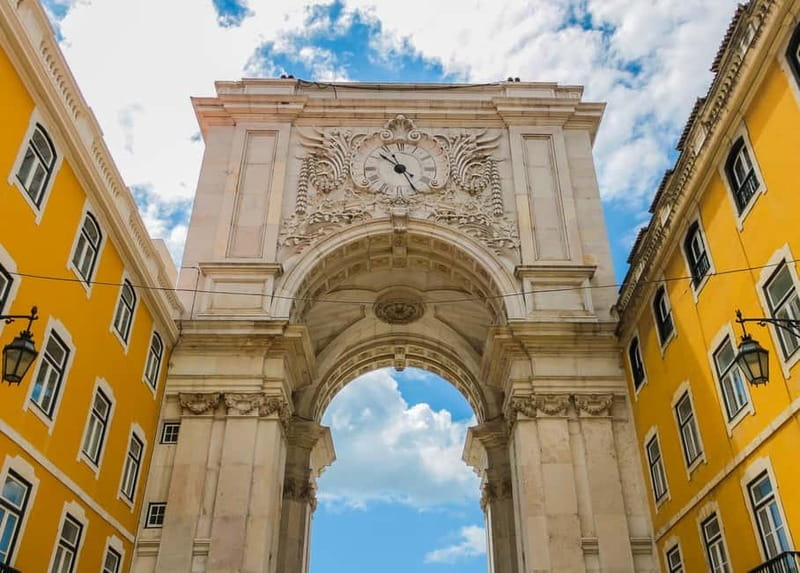
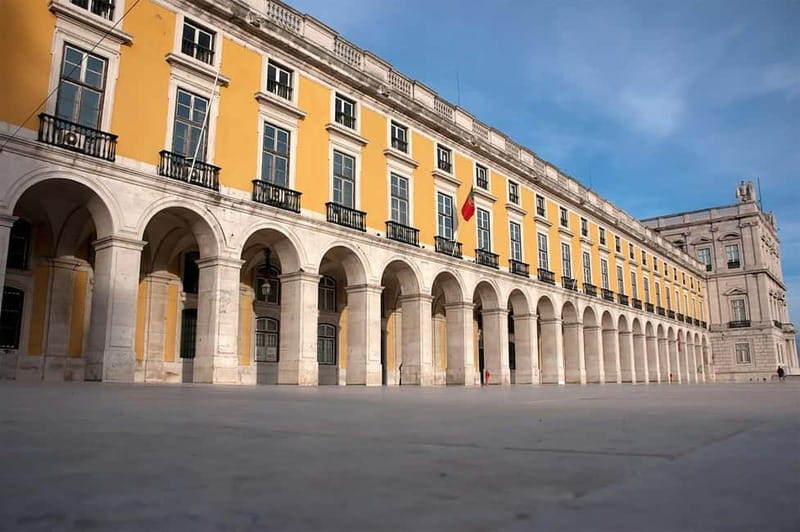
The tour kicks off by the statue at Praça do Comércio, one of Lisbon’s easiest places to orient yourself. Even before you start walking, you get the vibe of Lisbon as a gateway city. This square was a hub for merchants and travelers, so it is a smart place to start if you want the city to feel connected instead of random.
From here, you learn the big “why” behind what you are seeing. The guide ties Lisbon’s growth to movement across the Atlantic during the Age of Discovery, and then to the shock of the 1755 earthquake. That framing matters because it makes the later stops click. You are not just collecting monuments, you are following a timeline through streets and spaces.
Expect a lively riverside atmosphere at the start, plus a bit of time to take in the panorama. If you like to photograph first and understand later, you will appreciate this order.
More Walking Tours in Lisbon
- Lisbon: History, Stories and Lifestyle Walking Tour★ 4.8 · 10,902 reviews
- Best of Lisbon Small-Group Guided Walking Tour★ 5.0 · 4,869 reviews
- Lisbon: Food and Wine Small Group Walking Tour★ 4.9 · 4,082 reviews
- Best of Lisbon Walking Tour: Rossio, Chiado & Alfama★ 4.9 · 2,700 reviews
Baixa Pombalina on foot, seeing the earthquake recovery in architecture
After the initial square time, the route shifts into Baixa, the reconstructed core of Lisbon. Baixa Pombalina is where you can feel the city’s reset after the earthquake that nearly destroyed it. This is not a vague lesson, either. The architecture is part of the message, because the rebuilding created an urban plan you can literally walk through.
This stop works well if you want practical history. The guide explains how Lisbon responded, what changed, and why the rebuilt parts look the way they do. When you understand the reason the streets and buildings are shaped that way, you start to spot patterns as you walk.
There is also a “breather” rhythm built into the tour. You get time to keep moving, but the pace is not frantic. It is enough to see a section of the city without turning your day into nonstop sprinting.
Miradouro de Sao Pedro de Alcantara, then Santa Justa Lift for rooftop views
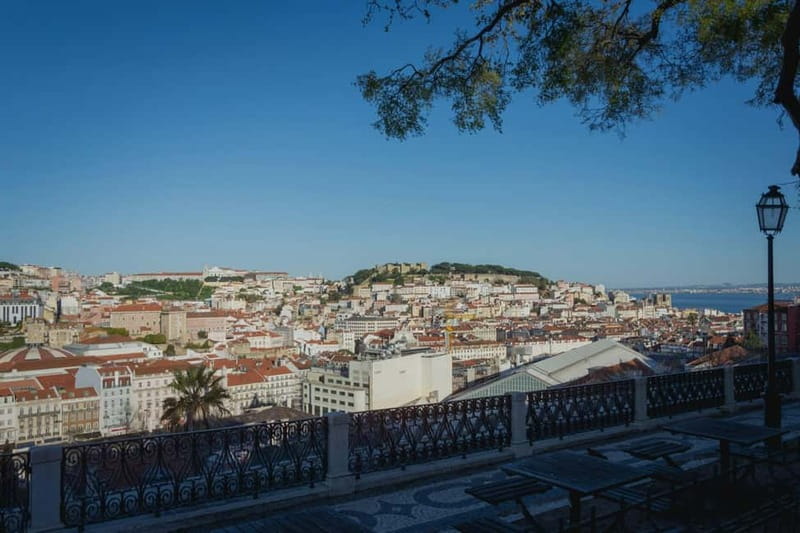
One of the best ways to enjoy Lisbon is to see it from above. That is why the tour includes a photo stop at Miradouro de Sao Pedro de Alcantara. This viewpoint gives you a quick mental map of the hills and rooftops, so the rest of the neighborhoods feel less steep and more navigable.
Next comes the Santa Justa Lift area, again as a photo stop. This is a smart move on a short walking tour. You get the big visual payoff without forcing everyone to commit to a longer ticketed attraction. Entrance to paid attractions is optional, and not included in the tour, so you can decide on your own after you see how your energy and schedule feel.
I especially like that the tour is designed around time to look and photograph. Guides on this experience are praised for making it easy to hear the explanations clearly, while still giving you a chance to stop, frame a shot, and move on when you are ready.
Carmo Convent ruins, the 1755 earthquake you can still see

The Carmo Convent ruins are the emotional anchor of the tour. The ruins are described as a striking reminder of the 1755 earthquake, and that is exactly how they land: you are staring at the physical aftermath, not just hearing about it.
The guided stop here lasts about 20 minutes, which is long enough to make the place meaningful. The guide helps you understand why the ruins are powerful. They are a reminder that recovery was not instant, and that Lisbon’s identity includes both destruction and rebuilding.
This stop also gives your brain a break from the viewpoint and city-walk part of the tour. If you tend to feel overwhelmed by too many dates and names, ruins like these do a lot of the explaining for you. You can look around, absorb what happened, then get the interpretation from the guide.
Bairro Alto stroll, where exploration stories get grounded
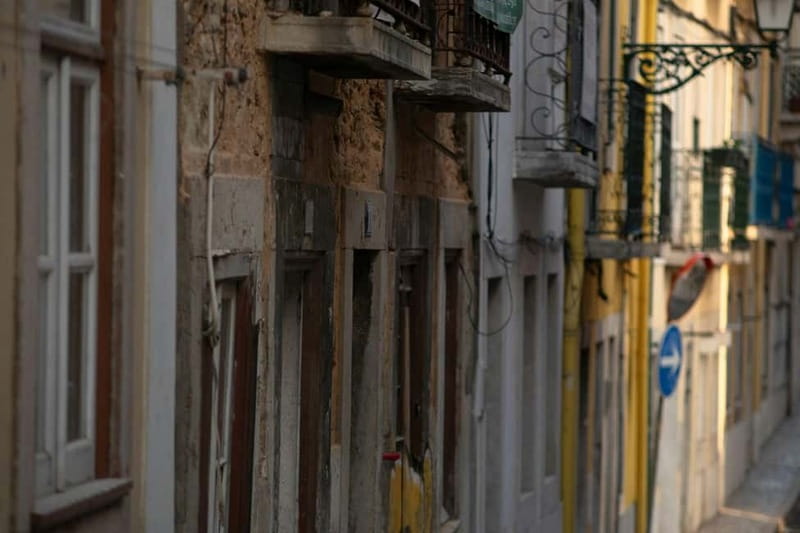
Then you head into Bairro Alto, a historic district known for charm and tradition. The tour walks through it for about 20 minutes, so you get a sense of neighborhood life without spending all morning here.
What makes Bairro Alto especially good on this tour is the way it connects Lisbon’s maritime past to everyday streets. The guide shares stories about sailors and explorers who set off on daring voyages during the Age of Discovery. You start to understand that this was not only a royal and academic storyline. It was people heading out, working, planning, and living in the city.
Also, Bairro Alto is the kind of place where you can keep wanting to look around after the tour ends. The guide does not just “point and move.” The explanations help you notice details, like how streets connect and where you might want to come back later for a stroll.
More Portugal at a stroll:



The Carnation Revolution and Portugal’s democracy, explained where you can feel it
One of the most important chapters in Lisbon is political, not just architectural. This tour includes the story of the Carnation Revolution, the peaceful restoration of democracy in 1974. It also covers what life was like under the Salazar dictatorship and how Portugal changed afterward.
Why this matters on a walking tour: politics often feels abstract when you only read dates. On the streets, the story gets anchored. You hear how the country moved from authoritarian rule toward democratic restoration, and it changes how you think about Lisbon as a capital. It is not only about ships and earthquakes. It is also about people deciding what kind of future they wanted.
If you are the kind of traveler who likes context, you will probably appreciate that the guide ties this political shift into the same city narrative as the older chapters. The result feels like one Lisbon story, not five unrelated stops.
How the 2-hour format works, and how to get the most out of it

This experience is built for a 2-hour window, so timing is everything. You start at Praça do Comércio, then move through a sequence of walks and short stops, including photo time at Miradouro de Sao Pedro de Alcantara and the Santa Justa Lift area, plus the guided focus at Carmo Convent ruins.
Here is the practical benefit of that structure: you get variety without exhausting yourself. Two hours is long enough to learn something real, but short enough that you can still plan your afternoon. That is the sweet spot for first-time visitors who want orientation plus meaningful context.
You should plan around the walking nature of the tour. It is not listed as wheelchair friendly, so you will want to judge it carefully if you have mobility needs. Comfortable shoes are explicitly recommended, and you will feel why once you are in the older parts of the city.
Weather is mentioned as rain or shine, so bring what you need for Lisbon’s conditions that day. If clouds roll in, viewpoints still work, they just shift from “postcard blue sky” to “moody layers over the rooftops.”
Value and who this tour is best for
The price is $4.72 per person, which is unusually low for a guided 2-hour walking tour with multiple major stops. Even if you only care about landmarks, you still get value because the guide helps you connect what you see to why it matters. If you are traveling on a budget, this is one of those options that protects your time and your spending.
I also like that the guide provides insider tips on where to eat, drink, and explore in Lisbon. Food planning is one of the hardest parts of visiting a new city, and this type of local advice can save you from guesswork. Guides on this tour have been praised for recommending food and drink and for giving clear, easy explanations in English and Spanish.
This tour is a great fit if:
- you want a first introduction to Lisbon’s core areas in a short time
- you care about real stories behind landmarks, especially the 1755 earthquake and 1974 democracy shift
- you like photo stops built into the schedule, not an afterthought
It is less ideal if:
- you need wheelchair accessibility, since it is not suitable for wheelchair users
- you want only one neighborhood, or only ticketed attractions
- you dislike walking tours even for a couple of hours
Should you book this Lisbon Iconic Landmarks Walking Tour?
If you want a fast, story-led way to understand Lisbon, this is an easy yes. The timing fits real travel schedules, the stops cover major themes, and the price gives you a lot of guidance for very little money.
I would book it if you are arriving soon and want your bearings. Start your Lisbon day with this, then use the rest of your time to wander on your own in the neighborhoods that felt most real to you.
Skip it if mobility limits make a walking-only format hard, or if you are mainly interested in paying for attractions rather than learning why the places matter.
FAQ
How long is the Lisbon Iconic Landmarks Walking Tour?
The tour lasts 2 hours.
Where does the tour start?
It starts at the statue at Praça do Comércio.
What is the price per person?
The price is $4.72 per person.
What is included, and what is not included?
Included: an expert English-speaking local guide and insider tips on where to eat, drink, and explore in Lisbon. Not included: food and drinks, and entrance to paid attractions (optional after the tour).
What languages are offered for the live guide?
The live tour guide language options are Spanish and English.
Is the tour wheelchair friendly, and what should I bring?
The tour is not suitable for wheelchair users. You should bring comfortable shoes.
What Lisbon sent us most recently
- From Lisboa: Sintra, Cabo da Roca & Cascais Private Full Day Tour
★ 5.0 · 39 reviews - Best of Sintra and Cascais Private Full Day Tour
★ 5.0 · 39 reviews - Private Sailing tour in Lisbon – Day Time, Sunset and Night
★ 4.5 · 39 reviews - Tuk Tuk Lisboa – Sightseeing Tours
★ 4.5 · 39 reviews - Private Experience Óbidos Nazaré and Fátima or Aveiro and Óbidos
★ 5.0 · 39 reviews - Belém and Jerónimos Monastery Private Walking Tour & Ticket
★ 4.5 · 39 reviews - Lisbon Private Luxury Tour
★ 4.5 · 39 reviews - Exclusive Lisbon Progressive Dinner & Wine Tour
★ 5.0 · 40 reviews
Walking Tours, compared.
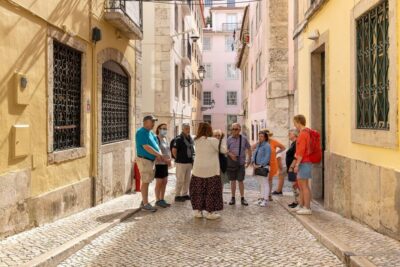

Best of Lisbon Small-Group Guided Walking Tour
Read our review →
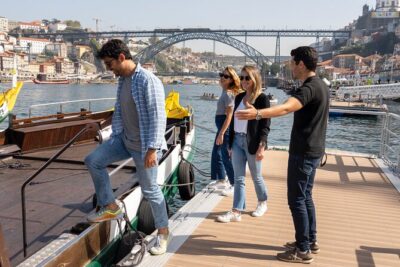
Porto Walking Tour, Lello Bookshop, River Cruise and Cable Car
Read our review →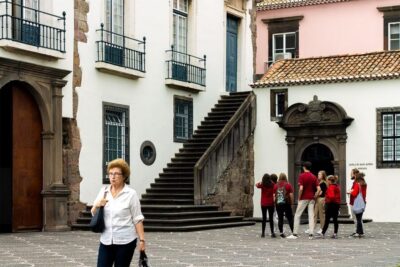

Best of Lisbon Walking Tour: Rossio, Chiado & Alfama
Read our review →
Experience Porto’s Charm: 3-Hour Guided Walking Tour
Read our review →
Enjoy a Guided Levada Walk in the Rabaçal Valley
Read our review →Browse the lists this tour appears in